
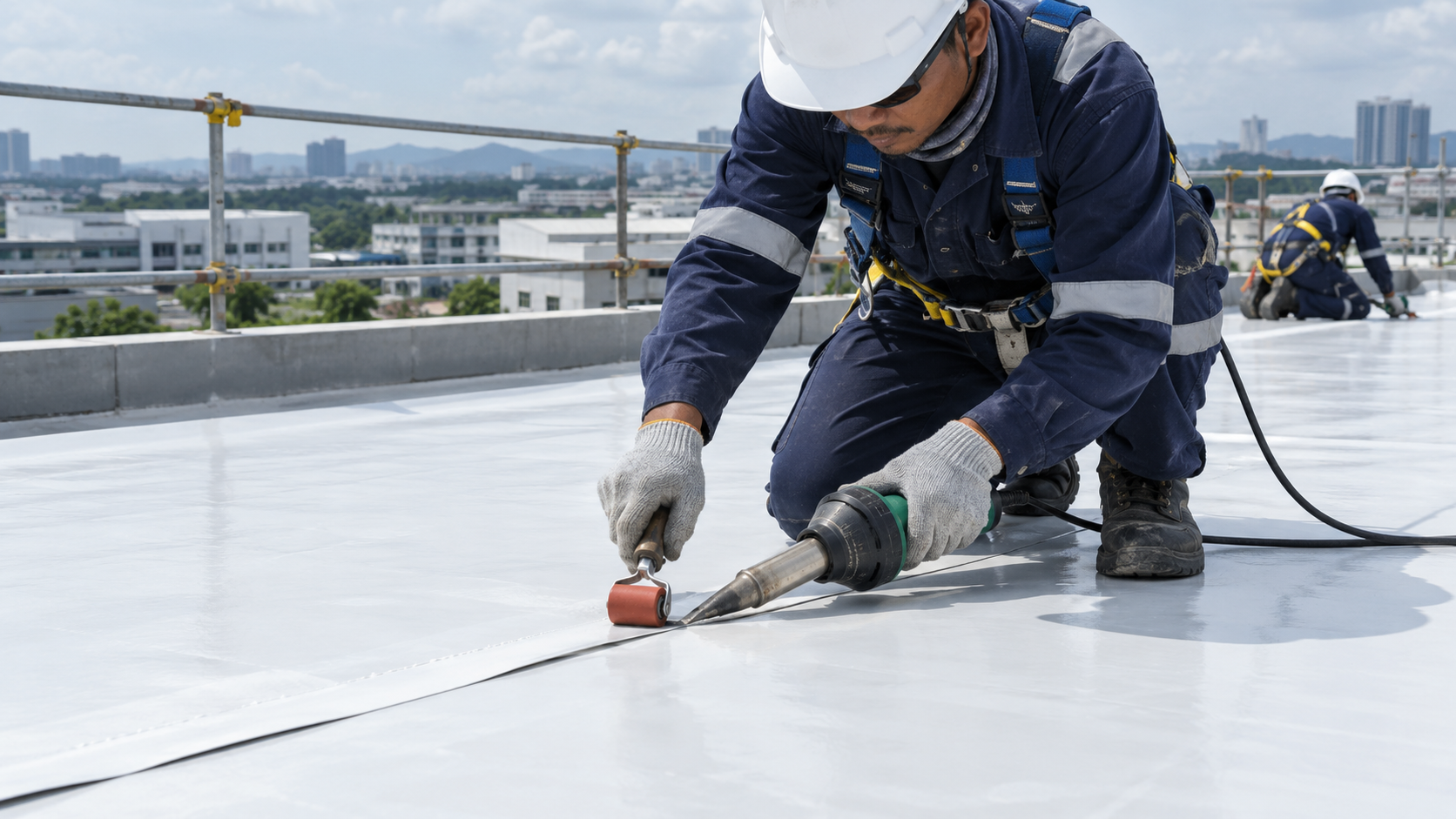
A commercial roof leak is rarely just a wet ceiling problem. It can interrupt tenants, damage stock, affect electrical rooms, disturb production, or create safety complaints that management must answer quickly. When the roof is large, occupied, difficult to access, or filled with M&E services, the waterproofing team’s technical discipline matters as much as the product selected. This is where CIDB certification becomes relevant: not as a marketing label, but as one part of verifying whether the team is prepared to work responsibly on a Malaysian commercial building.
CIDB Certification Matters Because Commercial Roof Work Is a Controlled Site Activity
Commercial roof waterproofing involves more than applying a coating over a slab or metal deck. The team may need to work at height, coordinate with building operations, manage access routes, protect existing services, and follow site safety requirements. A CIDB-certified or properly registered team is more likely to understand that waterproofing work sits inside a construction environment, not outside it.
For a building owner or facility manager, CIDB certification helps confirm that the contractor or applicator has gone through a recognised industry registration or competency pathway relevant to construction work in Malaysia. The exact meaning depends on the company registration, personnel certification, trade category and project scope, so it should still be verified before appointment.
For commercial roof waterproofing, CIDB certification is important because it helps confirm that the team is recognised within Malaysia’s construction framework and understands site requirements such as safety, access control, workmanship responsibility and project coordination. It does not replace technical assessment, but it gives the decision-maker a stronger starting point when shortlisting waterproofing teams.
This distinction is important. Certification does not automatically guarantee that a particular roof leak will be solved. It does, however, reduce the risk of appointing a team that treats a commercial roof like a small residential patching job.
A Commercial Roof Has Risks That a Simple Product Choice Cannot Solve
Many commercial roof failures are not caused by the waterproofing material alone. They often involve roof details that demand proper inspection and sequencing before any system is applied.
On a reinforced concrete roof, ponding water may indicate poor falls, blocked outlets, depressed screed areas or previous patching that changed the drainage path. If a coating is applied without addressing these conditions, water may continue to sit on the surface and stress the waterproofing system.
On a metal roof, the vulnerable points are often lap joints, screw fasteners, penetrations, gutters, ridge caps and areas where sealants have hardened or detached. A coating that performs well on a clean, stable surface may fail early if rust, movement or loose fasteners remain untreated.
On a roof with plant rooms, air-conditioning supports, cable trays, skylights or pipe penetrations, the detailing is usually more important than the open roof area. Water often enters through terminations, corners and penetrations before appearing far away inside the building.
A CIDB-certified team is not valuable merely because it holds a credential. It matters because commercial waterproofing requires methodical work: inspection, surface preparation, detail treatment, safe access, correct application and site coordination. These steps must happen in the right order.
The Certification Should Match the Actual Waterproofing Scope
One common mistake is to ask, “Are you CIDB certified?” and stop there. For commercial roof waterproofing, the better question is: “Does your certification, experience and proposed method match this roof condition?”
A team may be registered for construction-related work, but the building owner should still check whether the proposed applicators understand the waterproofing system being used. For example, a liquid-applied roof coating, cementitious waterproofing system, torch-on membrane, sealant repair, metal roof restoration and expansion joint treatment each require different preparation and detailing.
Before approving a commercial roof waterproofing team, ask for evidence that connects to the actual project:
• Current CIDB-related registration or personnel documentation, where applicable
• Company profile and relevant commercial or industrial roof experience
• Proposed waterproofing system and method statement
• Product data sheet and application requirements
• Surface preparation and detail treatment plan
• Safety, access and work sequencing arrangements
• Warranty terms and what conditions may void the warranty
This list is not about collecting documents for