Tile grouting may look like a simple finishing step, but in reality it requires careful attention to detail. For first-time homeowners or workers new to tile finishing, overlooking small factors can easily lead to problems — one of the most common being grout whitening.
White marks on grout joints can affect the overall appearance of tiled surfaces, making newly installed tiles look aged or poorly finished. Understanding why this happens and how to prevent it is essential for achieving clean, long-lasting grout lines.
Why Does Grout Turn White?
Grout whitening is not caused by a color change in the grout itself. Instead, it is a surface phenomenon related to environmental conditions during curing.
In low-temperature and high-humidity environments, components in epoxy grout — particularly curing agents — can react with moisture and oxygen. This reaction produces a white, salt-like crystalline substance on the surface. The visual effect resembles frost or haze, which is why grout joints appear whitened.
Moisture involved in this reaction may come from several sources:
▪️Humidity in the surrounding air
▪️Residual water trapped inside tile joints
▪️Condensation formed by temperature differences between grout and environment
The good news is that once grout is fully cured, this whitening will not recur — even if the area later experiences humidity or cooler temperatures.
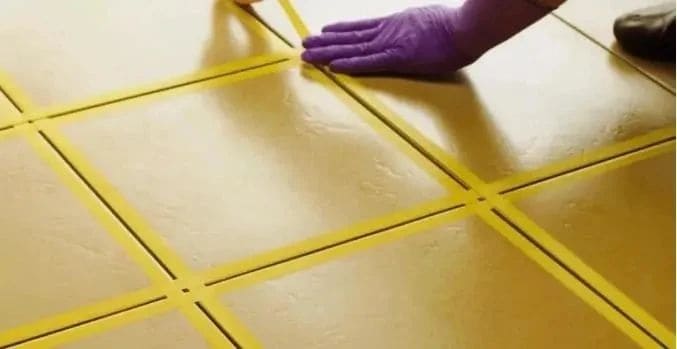
Common Causes of Grout Whitening
Understanding the typical triggers helps prevent the issue before it occurs.
1. Damp or low-temperature installation environment
During rainy seasons or prolonged humid weather, moisture levels indoors can rise significantly. If doors and windows are not sealed in time, humid air enters the workspace and interferes with grout curing.
2. Tile gaps not fully dried
Grouting soon after tile installation is one of the most frequent causes. Moisture trapped in adhesive layers or joints — especially in bathrooms, kitchens, and balconies — can migrate into fresh grout.
3. Condensation from temperature differences
In cool environments, localized heating (such as bathroom heaters or warm air blowers) creates temperature gradients. This can cause condensation to form on grout surfaces during curing.
4. Chemical cleaner residue
Using oxalic acid or strong alkaline cleaners before grouting may leave chemical residues inside tile joints. These residues can react with grout components and contribute to whitening.
How to Effectively Avoid Grout Whitening
Preventing grout whitening mainly involves controlling moisture and ensuring proper surface preparation.
1. Control the installation environment
Maintain a temperature between 10 °C and 30 °C and relative humidity below 70 % during grouting and curing.
Use a thermometer and hygrometer to monitor conditions, or check local weather forecasts before scheduling work.
2. Ensure tile joints are completely dry
Before grouting, confirm that tile gaps contain no residual moisture. This is especially important for recently tiled surfaces or damp-prone areas such as bathrooms and balconies.
If necessary, allow additional drying time or use ventilation and fans.
3. Avoid grouting during humid weather
Rainy days, monsoon periods, or high-humidity evenings are unsuitable for grouting.
If work cannot be postponed, use air-conditioning or dehumidifiers to stabilize indoor humidity.
4. Use proper joint cleaning methods
Avoid oxalic acid or strong alkaline cleaners before grouting.
Instead, clean joints mechanically (vacuuming or brushing) and wipe with a neutral cleaner if needed. Ensure joints are dry before application.
Kesimpulan
Grout whitening is largely an environmental curing issue rather than a product defect. By controlling temperature and humidity, ensuring dry tile joints, and avoiding chemical contamination, grout lines can cure cleanly and maintain their intended color and finish.
Careful preparation and scientific installation practices not only improve grout aesthetics but also enhance durability — preventing costly rework later and ensuring tiled surfaces look refined for years to come.