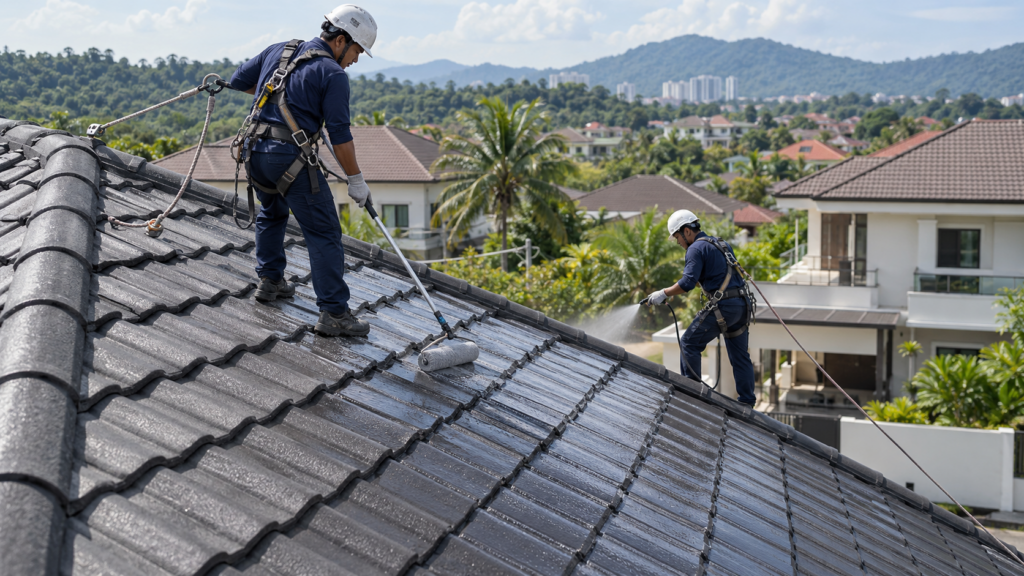
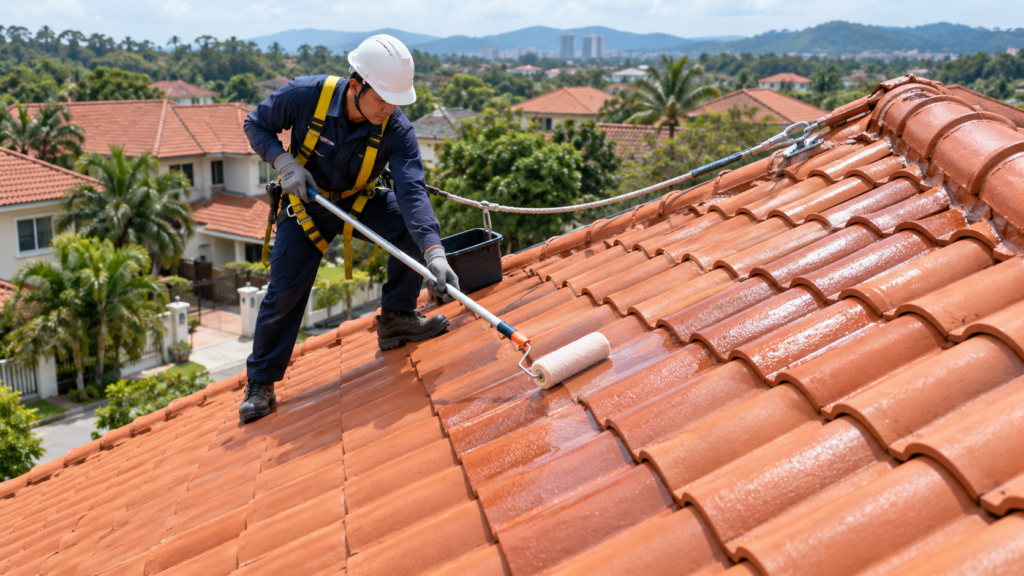
A 10-year tile roof waterproofing warranty in Petaling Jaya offers long-term peace of mind, but a warranty period alone does not determine how well a roof will perform.
For homes across Petaling Jaya (PJ), tile roofs are constantly exposed to severe tropical weather—intense UV heat, sudden downpours, wind-driven rain, and natural structural movement. Over time, these conditions affect tiles, ridge mortar, flashing, valleys, and vulnerable joints.
In this guide, we break down what a 10-year warranty actually covers, why tile roofs leak, key inspection areas, and what homeowners should check before choosing a long-term waterproofing solution.
What Does a 10-Year Tile Roof Waterproofing Warranty Cover?
A 10-year tile roof waterproofing warranty covers specific system defects—like material degradation, peeling, or loss of elasticity—under defined written terms. However, it does not cover every leak. Leaves and debris cause rainwater to back up during heavy downpours. Once water pools above tile overlaps or flashing edges, it flows backward underneath the tiles directly into your home.
Non-waterproofing issues, such as cracked tiles, loose ridge mortar, blocked gutters, or unsealed wall joints, fall under general roof repairs rather than warranty coverage.
Before accepting a long-term warranty, clarify whether it covers materials, workmanship, or both. Check for exclusions regarding structural movement or future roof modifications (like solar panels), and confirm any required maintenance checks. Ultimately, a reliable 10-year warranty must be backed by a proper diagnostic inspection, suitable materials, and transparent written terms.
Why Do Tile Roofs Leaks in Petaling Jaya?
Tile roof leakage in PJ is rarely caused by a single visible crack. Instead, leaks stem from aging components, structural expansion, and improper drainage paths.
1. Thermal Expansion and Contraction
During the day, roofing materials absorb intense heat and expand. As sudden evening rains cool the roof down, materials contract rapidly. Over time, this repeated movement weakens ridge mortar, joint sealants, and flashing interfaces.
2. Home Extensions and Previous Repairs
Many established homes in Petaling Jaya have undergone extensions or partial modifications over the years. Connections between original tiles and newer flashing, repaired valleys, or mixed sealants are frequent failure points.
3. Hidden Water Travel
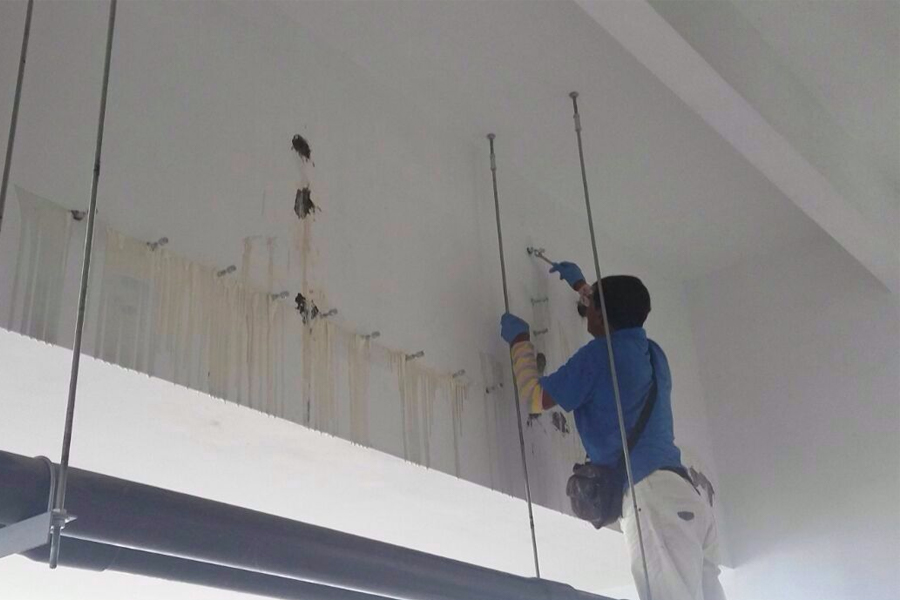
The location of a ceiling stain is rarely the actual point of entry. Rainwater often enters through a cracked ridge, valley, or junction, travels several meters along roof trusses or underlayment, and drops into the ceiling board elsewhere. Simply patching above the stain will not solve the underlying leak.
💡 Need a Professional Roof Inspection in PJ?
Don’t guess where the leak is coming from. Contact QingLong Waterproofing to arrange an expert site diagnostic and receive a custom solution tailored to your roof’s actual condition.
What Should Be Checked Before Tile Roof Waterproofing?
Before initiating tile roof waterproofing, a professional site diagnosis is essential to identify the root cause of water ingress rather than simply applying a superficial protective coating. Key structural areas require thorough inspection and specific corrective measures:• Roof tile condition, including cracks, looseness, and surface powdering
• Ridge Capping: Assessed for cracking, loose mortar, or dried sealants, requiring mortar restoration, flexible ridge sealing, or targeted waterproofing coatings.
• Roof Valleys: Checked for debris buildup, rust, and backflow leakage, which are resolved by clearing valley drainage, repairing flashing, or installing waterproof underlayment.
• Tile Joints: Evaluated for displacement, cracks, and alignment shifts, which call for tile realignment, replacing broken tiles, and applying elastomeric sealants.
• Wall Junctions: Examined for separation gaps and degraded wall flashing, requiring high-elongation joint sealants and wall-to-roof transition membranes.
• Gutters & Downpipes: Inspected for overflow, organic growth, and blockages, which must be addressed through drainage clearing, re-angling gutters, and proper edge detailing.
Does Waterproofing Material Affect a 10-Year Warranty?
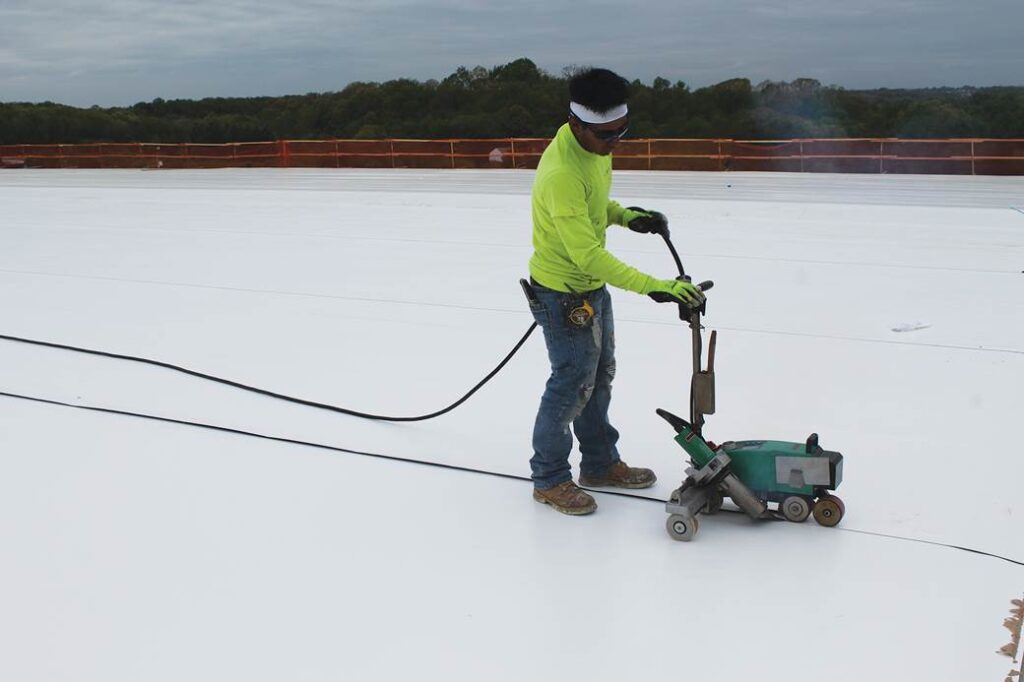
Yes. Material suitability and surface preparation directly govern long-term performance. Even the highest-grade liquid coating or membrane will fail if applied over dust, moss, loose mortar, or compromised sealants.
There is no single “magic product” suitable for every tile roof. The correct system depends on:
• Existing roof age and material condition
• Substrate slope, stability, and drainage paths
• Previous repair attempts and sealant compatibility
• Environmental exposure and foot traffic needs
As a waterproofing manufacturer, supplier, and professional service provider, QingLong Waterproofing delivers comprehensive site inspections, technical recommendations, certified application, and long-term warranty support.
Is a 10-Year Tile Roof Waterproofing Warrnaty Worth It?
A 10-year tile roof waterproofing warranty is extremely valuable, but its true worth depends entirely on the quality and engineering of the system behind it. To provide lasting protection, a long-term warranty must be supported by an accurate root-cause diagnosis, thorough substrate repair and surface preparation, engineered high-performance materials, and certified professional workmanship backed by complete documentation.
Homeowners should be cautious of vague, unsubstantiated claims—such as promises of “10 years no leaking”—that lack formal written terms, a clearly defined scope of coverage, or a proper structural inspection. Ultimately, the true value of a long-term waterproofing warranty comes from the sound engineering and thorough application behind the work, rather than just a promise printed on paper.
Frequently Asked Questions (FAQs)
1. My Petaling Jaya house has a roof leak. What are my options—should I purchase waterproofing products to DIY, or schedule a professional site inspection?
Scheduling a professional site inspection is always the best first step for a leaking roof in Petaling Jaya. Rainwater usually enters through a ridge, valley, or flashing meters away from the ceiling stain and travels along rafters before dripping down. DIY coatings and sprays only provide temporary emergency patches because they cannot fix structural defects like cracked mortar or shifted tiles. A professional diagnostic finds the true entry point, addresses underlying issues, and ensures a permanent repair.
2. Can a liquid waterproof spray or coating alone stop my leak?
Not if there are underlying defects. Applying a coating over broken mortar, misaligned tiles, or flashing gaps only provides temporary relief. Physical repairs must be completed before or alongside the waterproofing application.
3. How do clogged gutters cause leaks inside the house?
Leaves and debris cause rainwater to back up during heavy downpours. Once water pools above tile overlaps or flashing edges, it flows backward underneath the tiles directly into your home.
4. What should I check in a roof waterproofing warranty?
Confirm if it covers both materials and workmanship. Ensure you understand exclusions regarding broken tiles, clogged gutters, structural shifting, or solar panel additions, and insist on clear written terms rather than verbal promises.