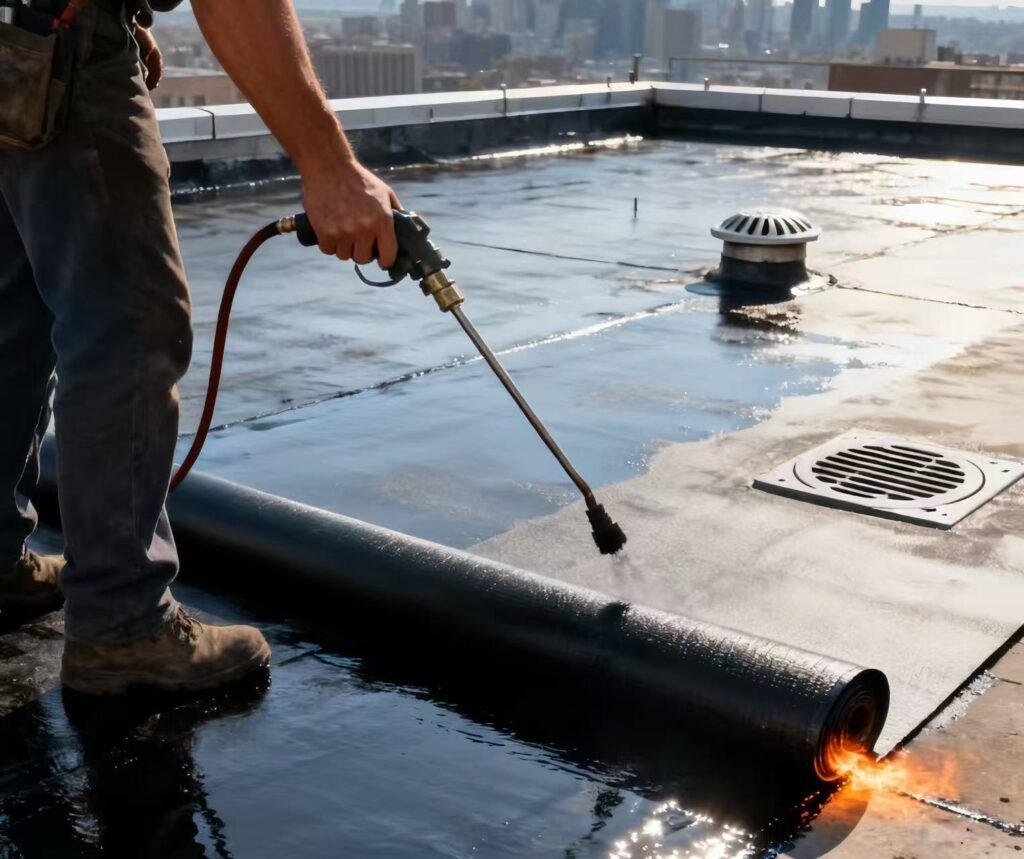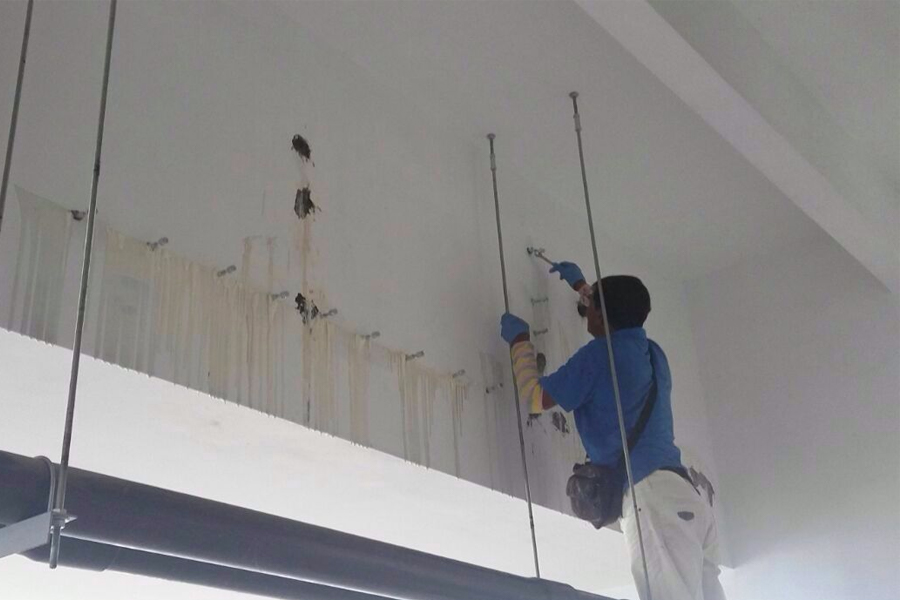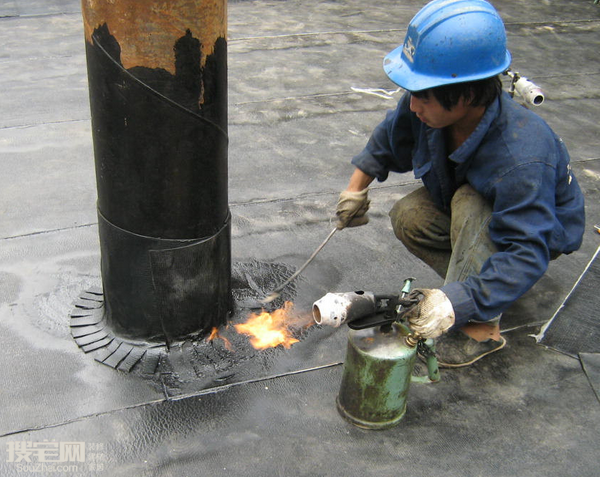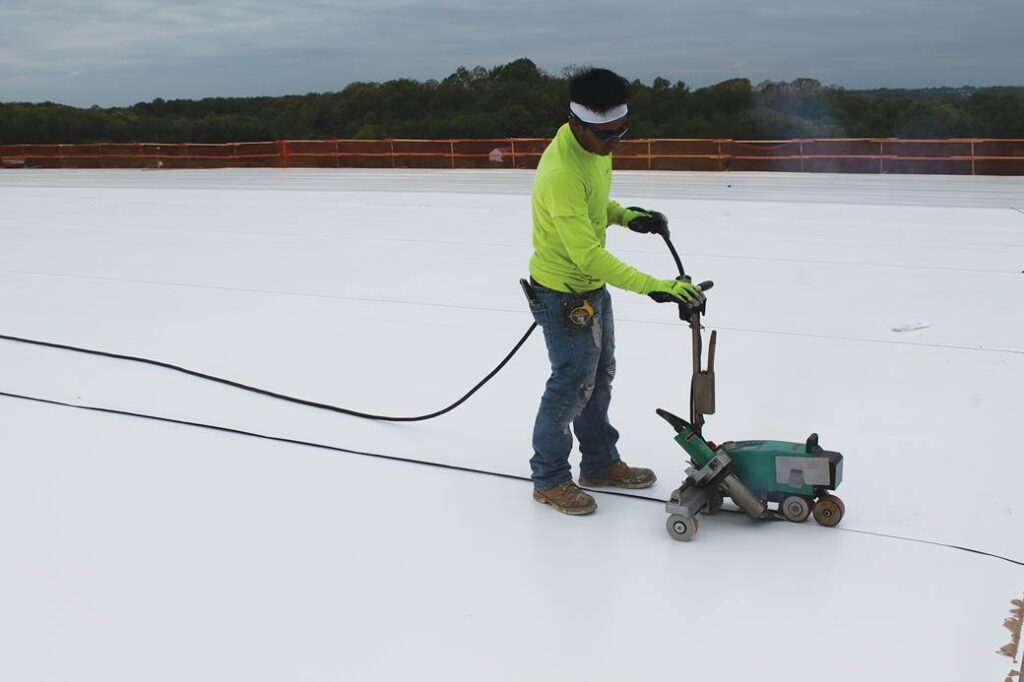
When a purchaser searches for a Sabah TPO membrane manufacturer, the real concern is usually not only “Who can supply the membrane?” It is “Will this roofing system last on my project?” For TPO roofing, lifespan is not determined by the membrane roll alone. It is affected by membrane specification, roof design, seam welding, drainage, fastening, detailing, maintenance access and whether the supplier can support the application properly in Sabah’s site conditions.
A good manufacturer or supplier should help you verify these factors before the material reaches the roof.
TPO Membrane Lifespan Starts With the Roofing System, Not Just the Roll
TPO, or thermoplastic polyolefin, is commonly used as a single-ply waterproofing membrane for flat and low-slope roofs. It is valued because welded seams can form a continuous waterproofing layer when the membrane is installed correctly. However, treating TPO as a simple “buy and lay” product can shorten its service life.
A TPO membrane lasts longer when the full roof system is correctly specified, installed and maintained. Membrane thickness, seam welding quality, roof falls, outlet detailing, substrate condition, fastening method and exposure to foot traffic all affect durability. A thicker or more expensive membrane cannot compensate for poor drainage, weak seams or badly detailed penetrations.
For Sabah projects, this system view matters because many roofs are exposed to strong sun, sudden heavy rain, coastal air in some areas and practical access limitations. These conditions do not automatically make TPO unsuitable, but they do make detailing and installation control more important.
A buyer should therefore ask the manufacturer or supplier not only for product availability, but also for technical data sheets, recommended build-up, installation method, compatible accessories and guidance on site inspection.
Membrane Specification: Thickness, Reinforcement and UV Exposure
One of the first lifespan factors is the actual TPO membrane specification. Two membranes may both be called “TPO”, but their thickness, reinforcement, surface formulation and intended use may differ.
Thickness affects puncture resistance and tolerance against site abuse, but it should not be considered in isolation. Reinforcement affects dimensional stability and resistance to movement. UV exposure also matters because an exposed roof membrane must remain stable under sunlight over time. If the roof will be fully exposed, the selected membrane must be designed for exposed roofing use, not merely treated as a concealed waterproofing layer.
For new users, the important point is this: the product data sheet should match the roof condition. A membrane intended for a protected build-up should not be casually specified as an exposed roof finish. If the roof has regular maintenance traffic, rooftop equipment or service walkways, protection details may also be needed at access routes.
When evaluating a Sabah TPO membrane manufacturer or supplier, ask for:
current product technical data sheet;
recommended substrate and roof build-up;
compatible welding method and accessories;
requirements for insulation, separation layer or protection layer if applicable;
installation and maintenance guidance.
These documents do not replace site judgement, but they show whether the product is being specified within its intended use.
Seam Welding Is Often More Critical Than the Flat Roof Area
Many TPO roof failures do not begin in the middle of an undisturbed sheet. They begin at seams, corners, penetrations, outlets, terminations or areas where site workmanship was difficult. This is why the installer’s welding control is a major lifespan factor.
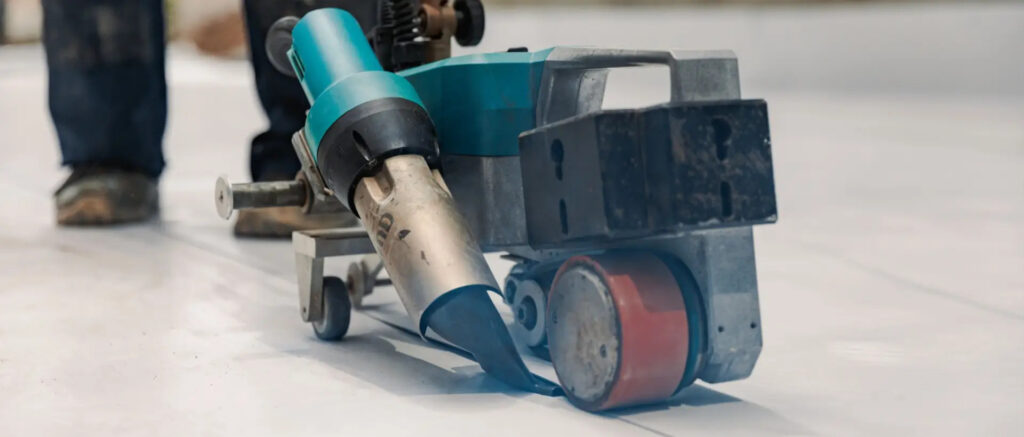
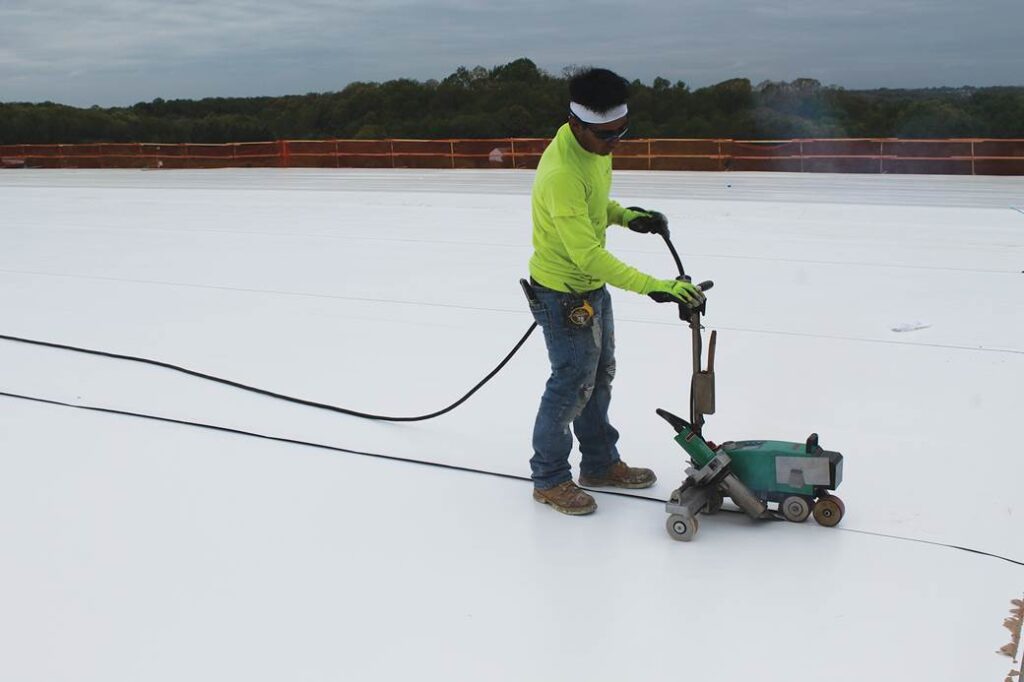
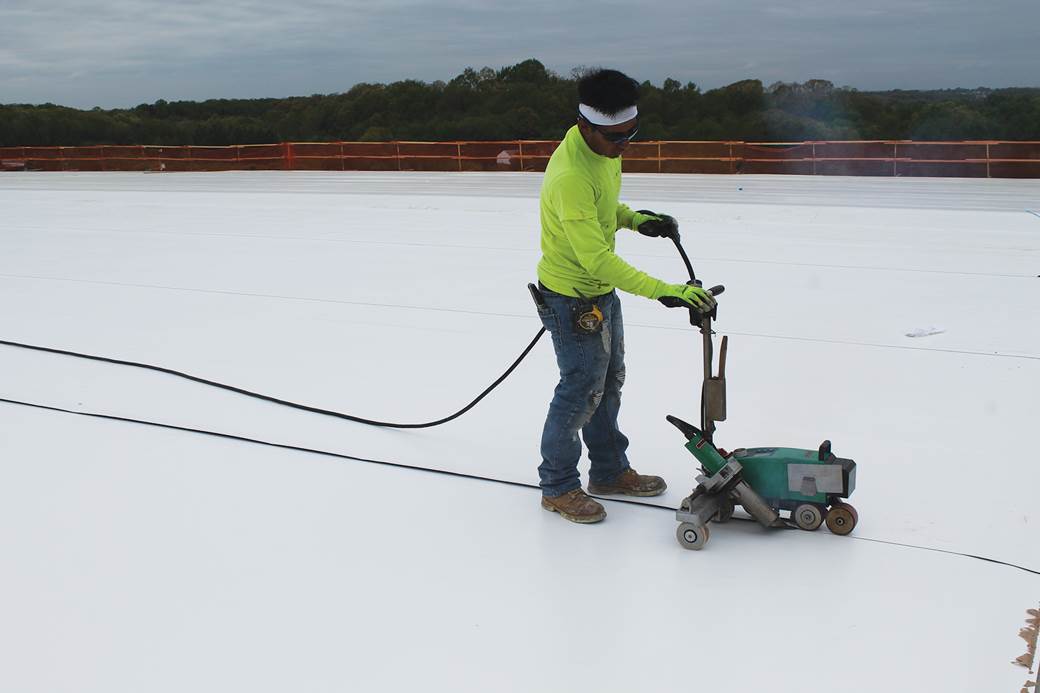
TPO membranes rely on heat-welded laps. If the welding temperature, speed, pressure or surface cleanliness is wrong, the seam may look acceptable from a distance but perform poorly under ponding water or wind uplift. Dust, moisture, uneven substrate and poor access around rooftop equipment can also affect weld quality.
In Sabah, sudden rain during installation can be a practical issue. A roof area that becomes wet before welding or before detailing is completed may need to be dried, cleaned and rechecked. Rushing seam work to beat weather can create hidden weak points.
Good installation control should include trial welds, seam checks and proper treatment of T-joints, corners and pipe penetrations. The larger the roof, the more important it is to maintain consistent workmanship from one area to another.
A manufacturer or technical supplier should be able to explain what welding control is required, not merely deliver membrane rolls to site.
Drainage, Ponding Water and Roof Falls Affect Real Service Life
A TPO membrane may be waterproof, but that does not mean the roof should be designed to hold water unnecessarily. Ponding water increases the stress on seams, outlets, laps, terminations and weak details. It also makes inspection harder because dirt, algae and debris may hide damage or block drainage points.
For Sabah buildings, intense rain can quickly expose poor falls or undersized outlets. If rainwater cannot discharge efficiently, water may remain around roof drains, behind parapets or near equipment plinths. Over time, these areas become more vulnerable than the open roof surface.
The issue is not only the membrane. Roof drainage must be considered as part of waterproofing performance. Before specifying TPO, the following should be checked:
whether the roof has adequate falls toward outlets;
whether outlets are correctly positioned and sized;
whether overflow routes exist when drains are blocked;
whether parapet bases and scuppers are properly detailed;
whether old screed has hollow, cracked or uneven areas.
If a roof already has ponding problems, installing a new membrane over the same geometry may preserve the problem instead of solving it. The waterproofing may still fail prematurely because the cause of stress was left unchanged.
Coastal Exposure and Wind Uplift Change the Detailing Requirements
In coastal parts of Sabah, salt-laden air may affect metal components such as fasteners, termination bars, flashings, gutters and roof accessories. The TPO sheet itself is only one part of the system. If fixing elements corrode or termination details loosen, water can enter behind the membrane even when the main sheet remains intact.
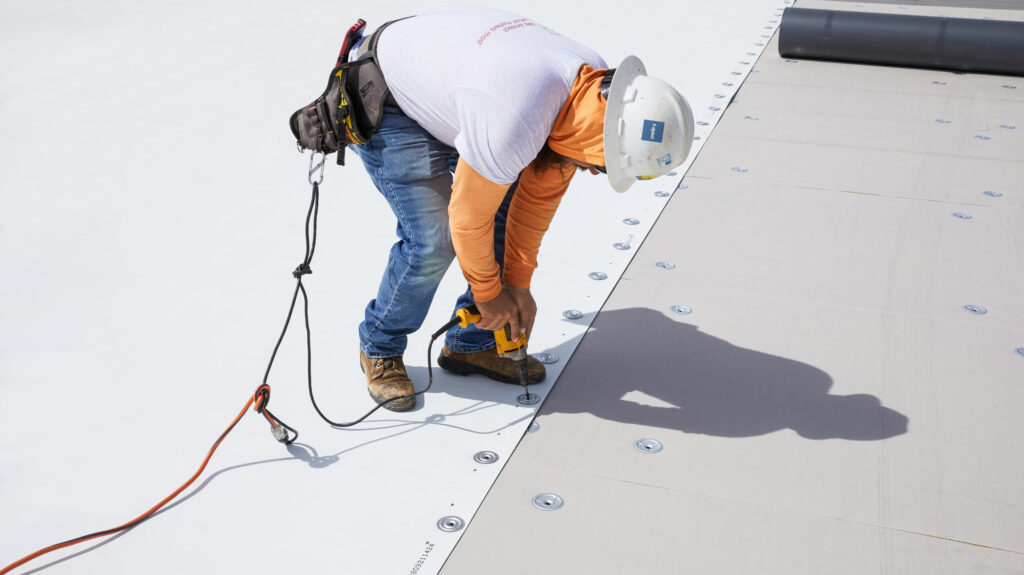
Wind uplift is another factor. Exposed roofs, taller buildings, open surroundings and roof edges can experience higher uplift forces. The membrane attachment method must suit the project condition. Mechanically fastened, adhered or ballasted systems have different requirements, and each must be designed with the roof structure, substrate and exposure in mind.
This is where manufacturer or supplier support becomes important. The right discussion is not simply, “How long can TPO last?” A better question is, “Is this TPO roof system properly designed for the wind exposure, edge details, substrate and fixings on this building?”
For projects with complex roof geometry, many penetrations or high exposure, the detailing package may matter as much as the membrane brand.
Maintenance Access Can Shorten or Extend TPO Roof Lifespan
After installation, a TPO roof still needs sensible maintenance. The membrane may be exposed to service contractors maintaining air-conditioning units, solar equipment, water tanks, antennas or other rooftop systems. Dragged tools, sharp metal edges and repeated foot traffic can damage the membrane surface.
A roof with no planned walkway may suffer avoidable punctures. A roof with no inspection schedule may allow blocked outlets, loose termination details or minor cuts to become leakage points. Maintenance does not need to be complicated, but it should be planned.
For building owners and facility managers, inspection should focus on vulnerable details rather than only the open field of the membrane. Outlets, corners, pipe penetrations, seams, roof edges, equipment bases and previous repair patches should be checked first.
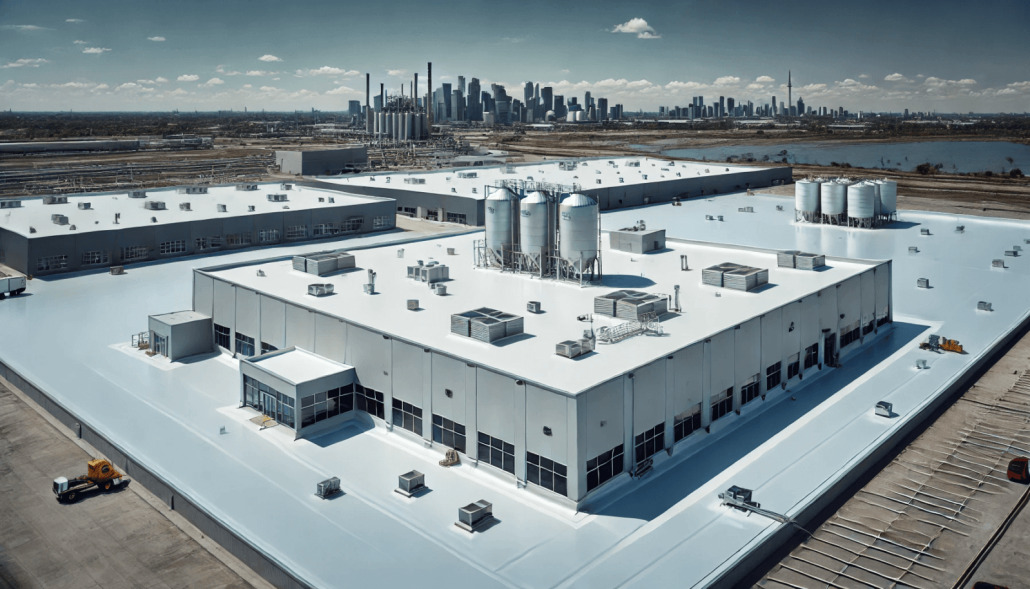
If the roof is used regularly by maintenance personnel, protective walkway pads or designated access paths may be required. This is especially relevant for commercial and industrial roofs where rooftop activity is more frequent than expected.
 How to Evaluate a Sabah TPO Membrane Manufacturer or Supplier
A suitable supplier should help reduce uncertainty before purchase. Price per roll is only one part of the decision. The more important question is whether the supplier can support the full waterproofing decision.
When comparing options, check whether the manufacturer or supplier can provide technical documents, compatible accessories, application guidance and support for site-specific questions. If the supplier cannot explain substrate preparation, seam welding, detailing and limitations, the project may depend too heavily on installer assumptions.
QingLong Waterproofing supports waterproofing projects in Malaysia as a waterproofing manufacturer, products supplier and service provider. For TPO membrane or other roof waterproofing requirements, QingLong can review the project condition, intended roof use and application constraints before recommending a suitable waterproofing approach. This is useful where the project requires both material supply and practical technical guidance.
For purchasers, the decision should not be based only on whether the membrane is available in Sabah. It should be based on whether the selected system is suitable for the roof and whether the supplier can support correct application.
Conclusion
The lifespan of a TPO roofing membrane is shaped before installation begins. Product specification matters, but roof falls, drainage, seam welding, wind exposure, coastal detailing, substrate condition and maintenance access often decide whether the system performs as expected.
If you are evaluating a Sabah TPO membrane manufacturer for a roof project, do not stop at roll thickness or price. Ask how the full roof system will be detailed, installed, checked and maintained. For project-specific advice, you can contact QingLong Waterproofing to discuss the roof condition and suitable waterproofing options.