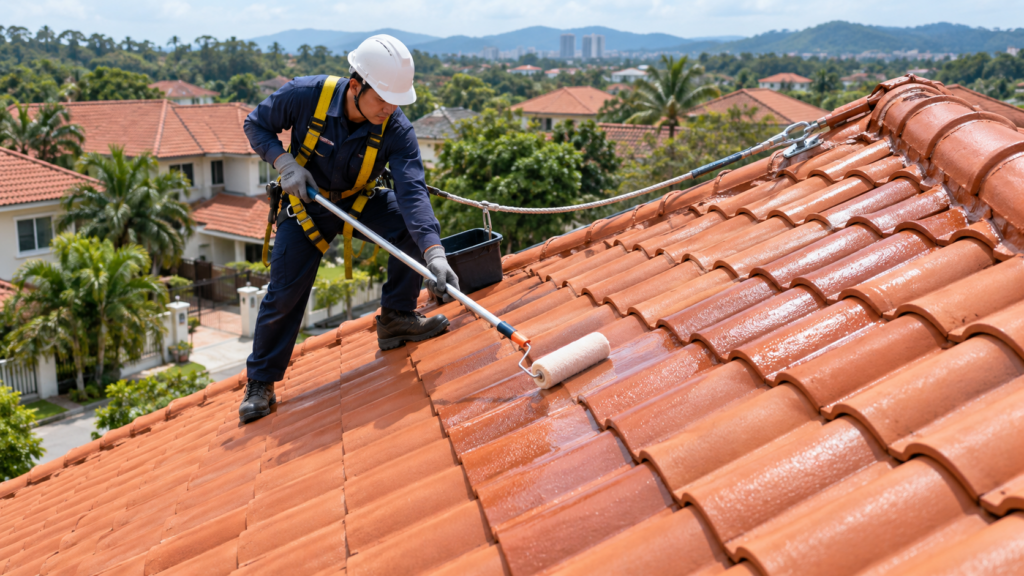
A tiled roof in Kota Kinabalu may look mostly intact from the ground, yet still leak during wind-driven rain. The difficult question is whether the roof needs a waterproof coating, selected tile replacement, or a more serious repair to the roof details beneath the tiles. Choosing too quickly can waste money: coating a roof with hidden broken tiles or failed flashing may only hide the real entry point, while replacing tiles unnecessarily can increase cost without solving poor detailing at valleys, ridges or wall junctions.
A Tile Roof Works by Shedding Water, Not by Holding Water
A pitched tile roof is different from a concrete flat roof. It is designed to shed rainwater down the slope through tile overlap, roof pitch, ridge detailing, valleys, gutters and flashings. The tiles are part of the weather barrier, but they are not the only defence.
This matters because tile roof leakage is often not caused by “porous tiles” alone. Water may enter where the roof system is interrupted, such as:
• Cracked or displaced roof tiles
• Ridge caps with failed mortar or sealant
• Valleys where water flow is concentrated
• Wall flashing beside extensions or higher walls
• Roof penetrations, vents or pipe openings
• Rusted metal flashing or fixings
• Blocked gutters causing backflow under tile edges
A coating may improve the surface water resistance of tiles, but it cannot correct a roof slope problem, rebuild a failed valley, or replace missing tile overlap. Before deciding on Kota Kinabalu tile roof waterproofing, the inspection should identify whether the leak is coming through the tile surface, through damaged tiles, or through roof details.
When Roof Coating Can Be a Reasonable Option
For a tiled roof, waterproof coating is most suitable when the roof tiles are generally sound, the roof pitch and drainage are working, and the leakage risk is mainly from surface ageing, minor hairline cracks or absorbent tile surfaces. It should not be treated as a substitute for replacing broken tiles, repairing flashing or correcting roof movement.
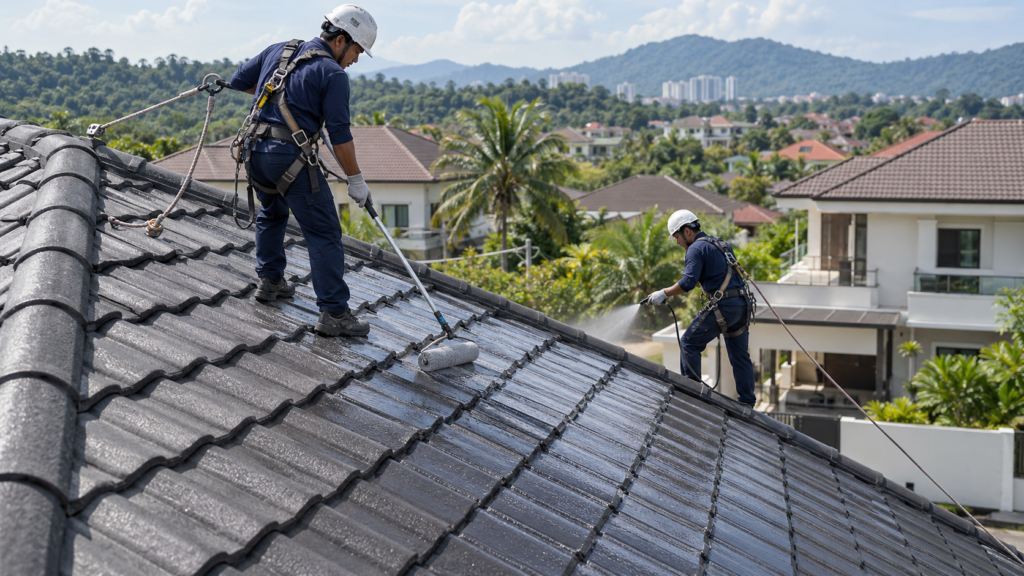
Coating may be considered when the roof structure is still stable and the tiles remain properly seated. In this situation, a roof coating can help reduce water absorption, improve surface protection and extend the service life of the existing roof covering. For homeowners who want to avoid major roof replacement, this can be a practical maintenance approach if the roof is not already in poor mechanical condition.
However, coating depends heavily on preparation. Old tiles often carry dirt, biological growth, chalking, previous paint or weak surface layers. If these are not cleaned and stabilised properly, the coating may bond to the contamination rather than to the tile. That increases the risk of peeling, blistering or early failure.
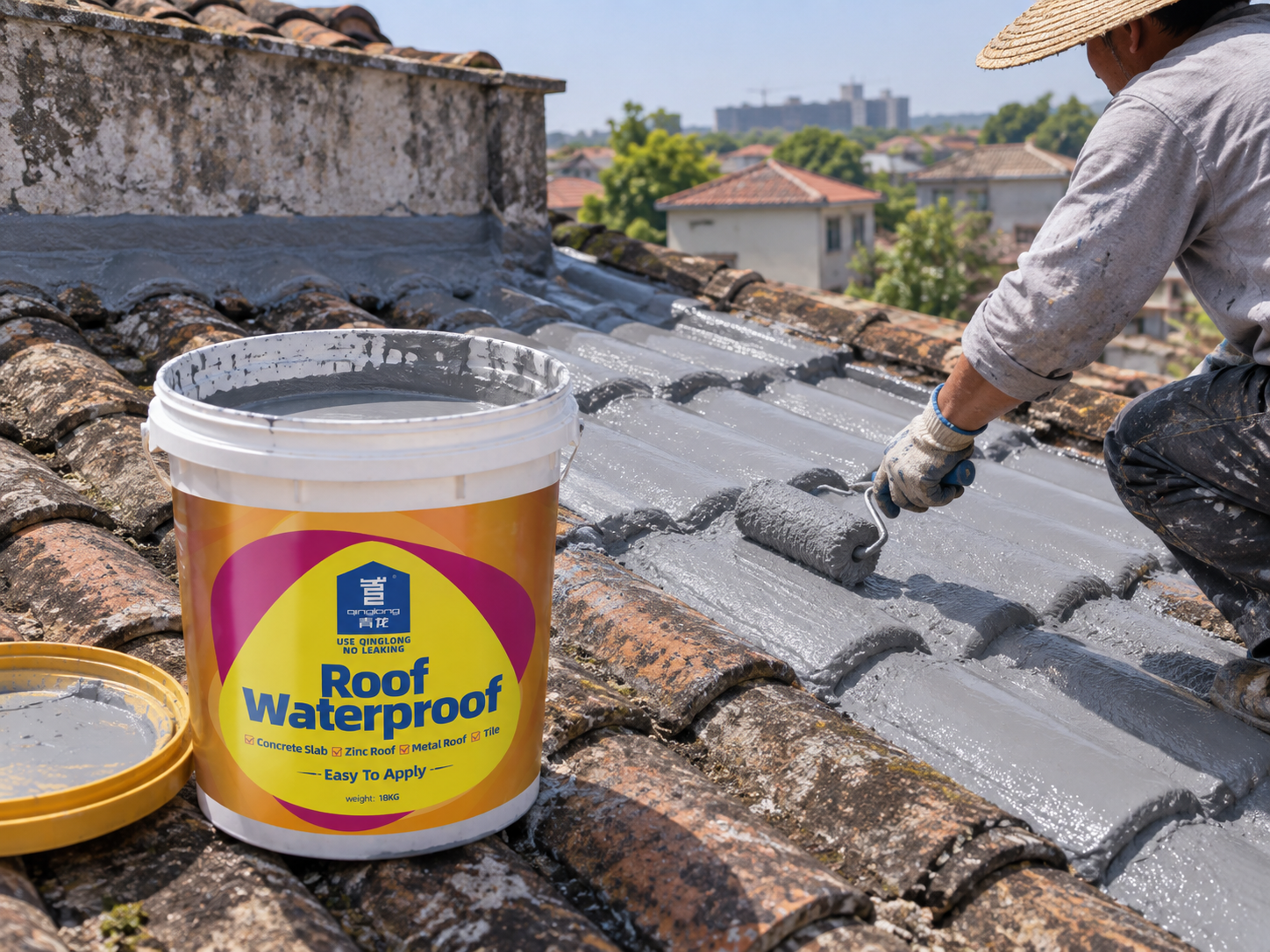
For exposed tile roofs, a suitable coating should be compatible with the existing tile surface and intended for roof exposure. QingLong’s roofing waterproof coating range may be relevant where the roof condition supports a coating-based approach, but the actual selection should still be checked against substrate condition, roof exposure and application requirements.
When Tile Replacement Is the Better Decision
Tile replacement becomes more appropriate when the visible roof covering has lost its basic function. A coating cannot restore tile geometry. If tiles are cracked, badly displaced, sagging, missing, delaminating or no longer overlapping correctly, the roof may continue to admit water even after coating.
Replacement or local re-roofing should be considered when inspection finds repeated defects across the roof slope, not just isolated surface wear. For example, if many tiles have broken corners, the issue is no longer only waterproofing performance. It becomes a roof covering problem. The tiles are physically unable to shed water reliably.
Tile replacement may also be necessary when leakage is linked to movement below the tiles. Battens, timber members, corroded fixings or uneven roof planes can cause tiles to sit incorrectly. In that case, applying a coating over the surface may temporarily improve appearance but will not correct the path that rainwater follows under wind pressure.
The same applies to valley and flashing failures. If rainwater is entering at a wall junction or roof valley, replacing or repairing the detail is usually more important than coating the open roof area. A roof can have good tiles and still leak if the termination points are weak.
Kota Kinabalu Conditions That Affect the Choice
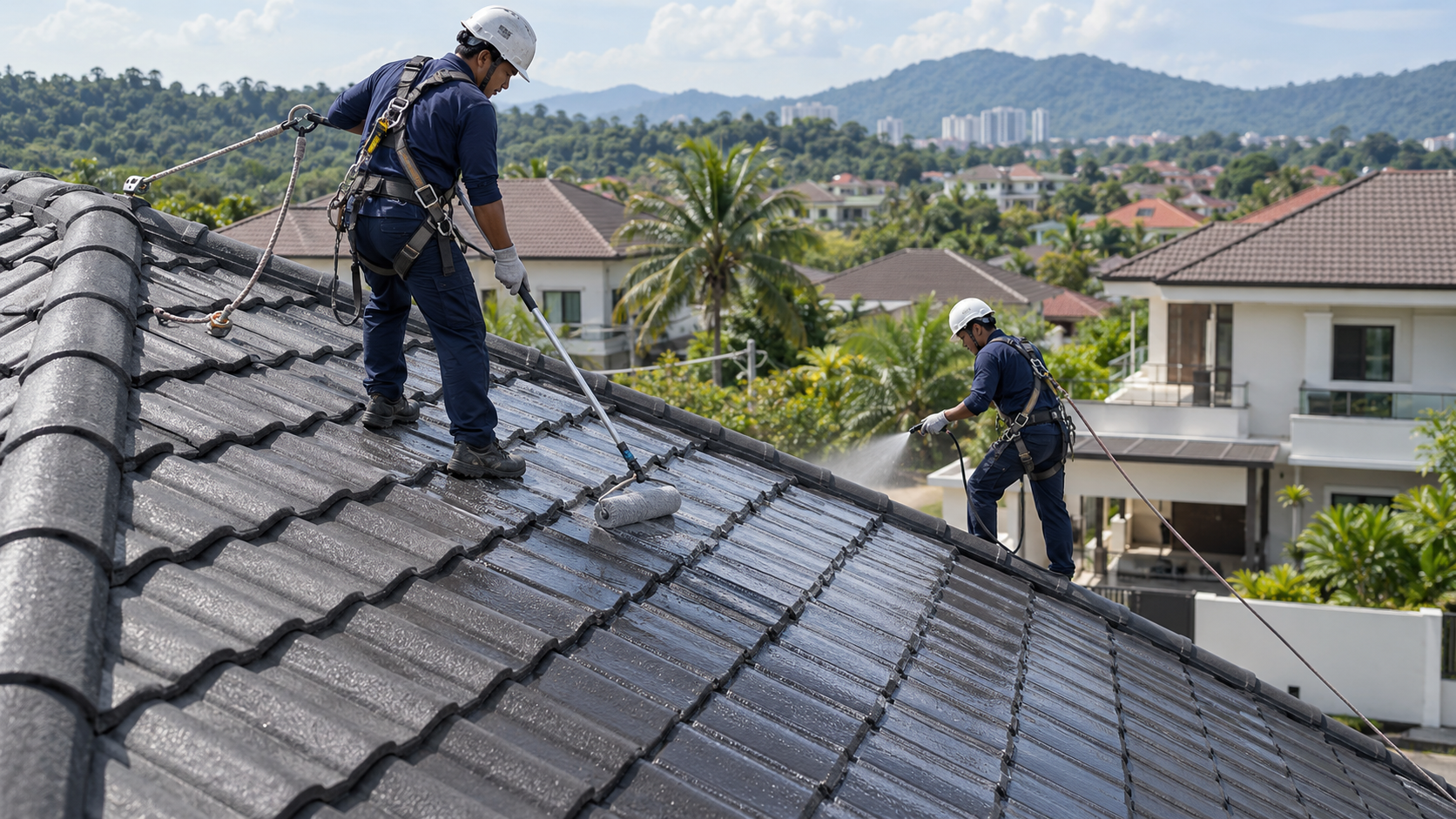
Kota Kinabalu’s coastal setting makes certain roof details more important during inspection. Salt-laden air can accelerate corrosion on metal flashing, screws, gutters and roof accessories. If these components are already rusting, a coating applied only to the tiles may leave the vulnerable metal details untreated.
Wind-driven rain is another factor. During heavier storms, rain does not always fall neatly down the roof slope. It can be pushed under tile laps, against ridge lines or into sidewall junctions. A roof that performs during normal rain but leaks during strong wind may have an overlap, ridge, flashing or valley issue rather than a simple surface waterproofing issue.
Surface preparation can also be more demanding near shaded or damp areas where algae, moss or biological growth forms on tiles. These areas must be cleaned properly before any coating is considered. Otherwise, the coating system may fail at the bond line, especially where moisture is trapped under surface contamination.
These local conditions do not automatically mean every tiled roof in Kota Kinabalu needs replacement. They simply mean the decision should not be based only on how the tiles look from outside. The weak point may be a detail that is small, concealed or only exposed during certain rain directions.
What Should Be Checked Before Approving Coating or Replacement
The best repair scope usually comes from a roof-level inspection, not from looking only at the ceiling stain inside the house. Water can enter at one point and travel along battens, underlayment, ceiling framing or slab edges before appearing elsewhere.
Before choosing between coating and tile replacement, the inspection should confirm several practical points:
• whether tiles are cracked, loose, displaced or excessively weathered
• whether ridge caps, valleys and wall flashings are intact
• whether gutters and downpipes discharge water properly
• whether rusted metal parts are contributing to leakage
• whether previous sealant patches are still bonded or already failing
• whether the roof has ponding, poor fall or blocked drainage points
• whether there is evidence of water tracking under the tiles
This inspection changes the repair decision. If only a few tiles are damaged, selective replacement plus detail repair may be enough. If most tiles are intact but absorbent and weathered, coating may be considered. If the roof has widespread tile movement or failed under-roof support, replacement becomes more realistic.
The Practical Decision: Coat, Replace, or Combine Both
In many tile roof leakage cases, the answer is not purely “coating” or “replacement”. A combined approach may be more sensible. Damaged tiles can be replaced first, flashing and ridge details repaired, and then a suitable roof coating applied to improve surface protection on the remaining sound tiles.
This avoids two common mistakes. The first is coating over broken or unstable tiles and expecting the coating to perform like a new roof. The second is replacing large roof areas while leaving the real leak point, such as a wall flashing or valley, unresolved.
The repair method should follow the defect pattern:
If the tiles are structurally sound but weathered, coating may be a practical maintenance option. If damage is localised, replace the affected tiles and repair the related detail. If damage is widespread or the roof covering is no longer seated correctly, tile replacement or partial re-roofing should be considered before any coating is applied.
QingLong Waterproofing can assist with reviewing the roof condition, identifying whether a coating system is suitable, and recommending a repair approach based on the actual roof details. If you are unsure which option fits your property, you can discuss your tiled roof leakage condition with QingLong Waterproofing.
Conclusion
For Kota Kinabalu tile roof waterproofing, coating is not automatically a cheaper version of tile replacement. It is a different repair method with different requirements. Coating works best when the roof covering is still sound and the main issue is surface ageing or minor water absorption. Tile replacement is more appropriate when the roof can no longer shed water properly because of cracked, displaced or unstable tiles. The right decision starts with finding whether water is entering through the tile surface, damaged roof covering, or roof details such as ridges, valleys and flashings.