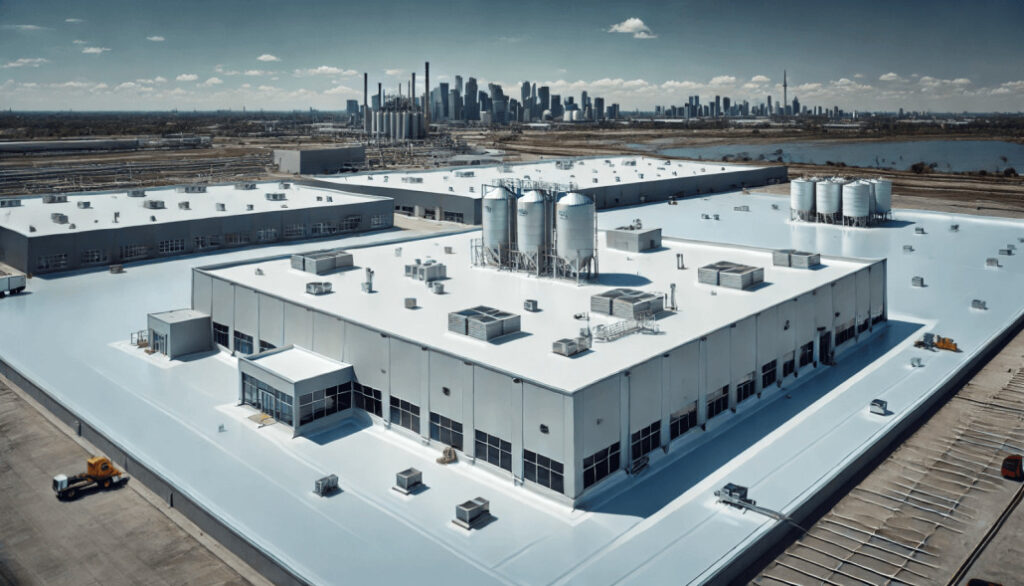
For many warehouse and factory owners in Malaysia, roof leakage is often treated as a maintenance issue. In reality, it is a business risk. A single roof leak can damage inventory, interrupt production, create workplace safety hazards, and increase maintenance costs over time. In industries where uptime and product protection are critical, delaying waterproofing repairs often leads to far greater expenses than proactive prevention.
Malaysia’s tropical climate presents unique challenges for industrial buildings. Frequent heavy rainfall, year-round humidity, intense UV exposure, and rapid temperature changes continuously stress roofing systems. Without a properly designed waterproofing system, even a well-constructed warehouse can eventually experience water seepage.
The good news is that most roof leaks can be prevented or repaired with the right waterproofing system. By understanding the common causes of leakage and selecting the right waterproofing system, building owners can significantly extend the service life of their roofs while reducing long-term maintenance costs.
Common Causes of Warehouse Roof Leaks in Malaysia
Malaysia’s tropical climate creates a unique combination of environmental conditions that accelerate roof deterioration. Unlike countries with four seasons, Malaysian buildings experience continuous cycles of rain, heat, humidity, and thermal expansion throughout the year. See some of the common reason for water leakage.
Aging Roofing Systems
As roofing materials age, their waterproofing performance gradually declines. Prolonged exposure to sunlight, heavy rain, and humidity can cause coatings to crack, sealants to deteriorate, and roofing components to weaken, allowing rainwater to penetrate the roof and cause leaks inside the warehouse.
Poor Drainage and Water Ponding
Malaysia’s frequent heavy rainfall can overwhelm poorly designed or poorly maintained drainage systems. When water is unable to drain efficiently, it accumulates on the roof, placing continuous pressure on the waterproofing layer and increasing the risk of membrane failure and water seepage.
Failed Roof Joints and Penetrations
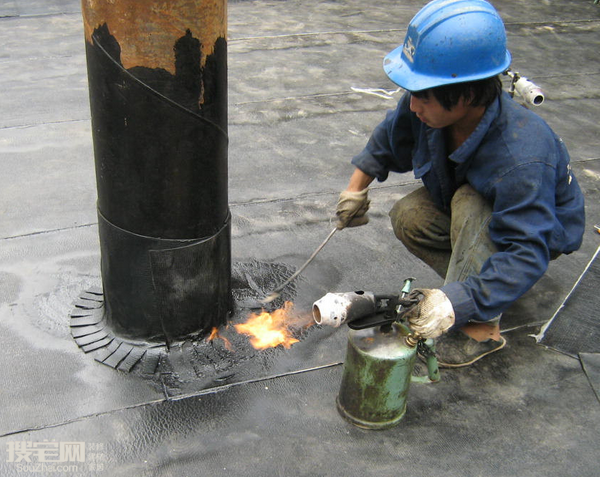
Roof joints, expansion joints, and penetrations around pipes, HVAC units, and skylights are common weak points. Continuous thermal movement causes sealants to crack or separate over time, creating gaps that allow rainwater to enter the building.
Concrete Cracks and Structural Movement
Concrete naturally expands and contracts with temperature and moisture changes, which can lead to hairline cracks over time. Even small cracks can allow water to penetrate the structure, potentially causing reinforcement corrosion and long-term structural damage if left untreated.
Corrosion on Metal Roofs
Metal roofs are durable and widely used for warehouses, but continuous exposure to rain, humidity, and UV radiation can lead to corrosion. As rust develops, it weakens roof panels, screws, and joints, creating openings where rainwater can seep through and cause recurring roof leaks.
Steps to Fix a Leaking Warehouse Roof
Step 1: Inspect the Roof
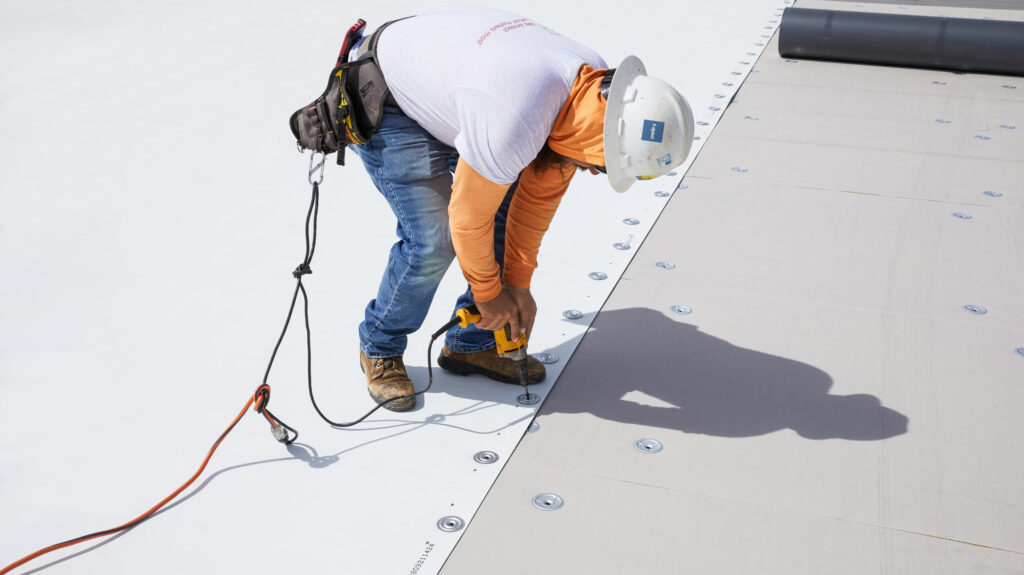
A professional assessment helps identify the exact location of the leakage, the extent of the damaged area, the overall condition of the roof, and the performance of the existing waterproofing system. This allows hidden problems to be detected before they develop into more serious structural issues.
Step 2: Identify the Root Cause
Repairing only the visible leak is often a temporary solution. It is equally important to determine why the roof failed in the first place. Common causes include deteriorated waterproof membranes, structural movement, poor workmanship, concrete cracks, drainage failures, and aging roofing materials. Addressing the root cause helps prevent recurring leaks and ensures a more durable, long-term repair.
Step 3: Select the Right Waterproofing System
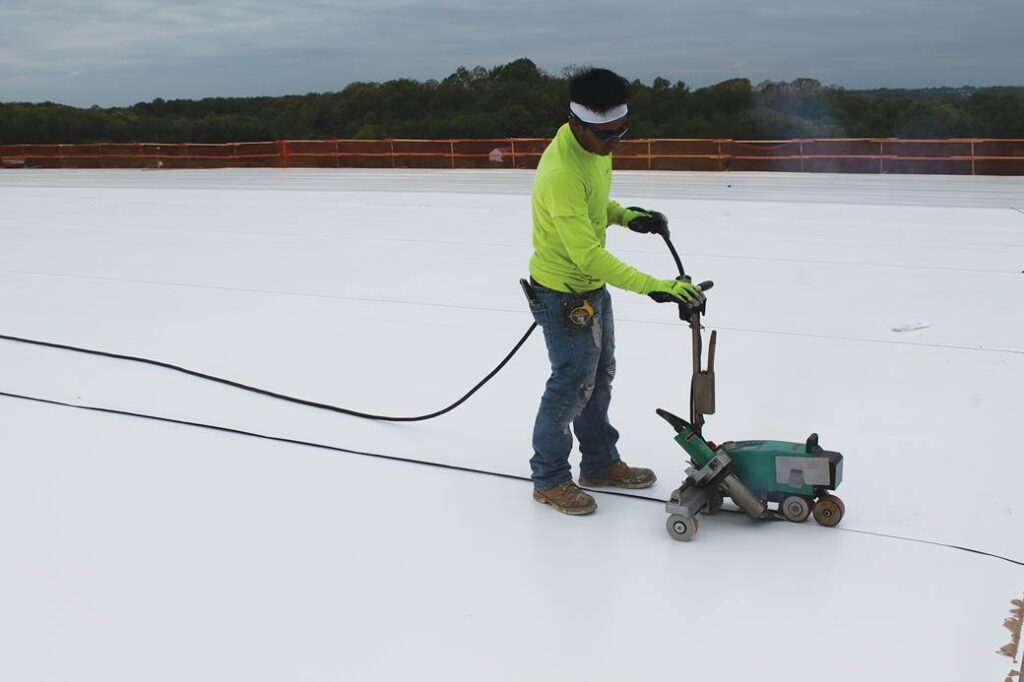
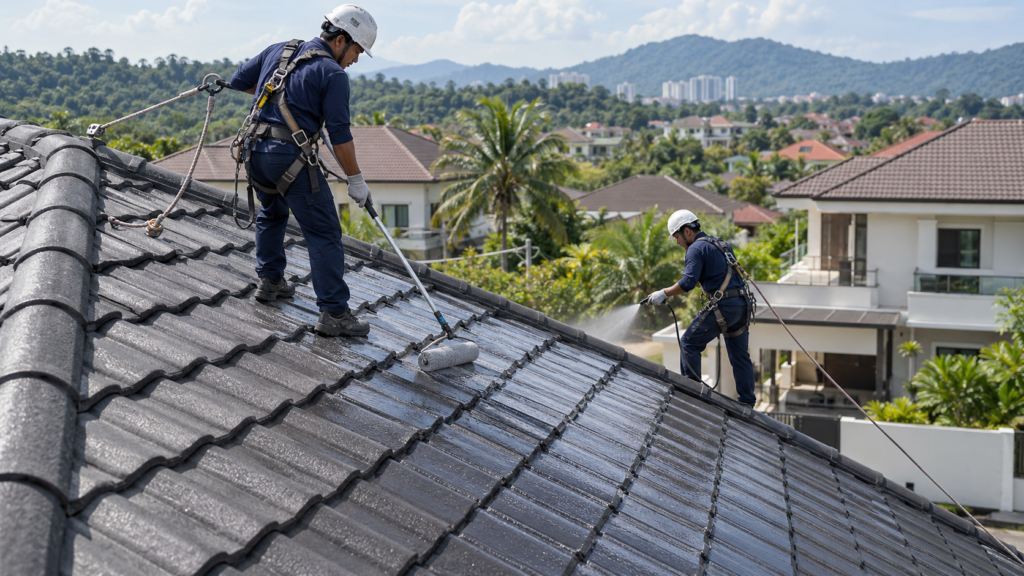
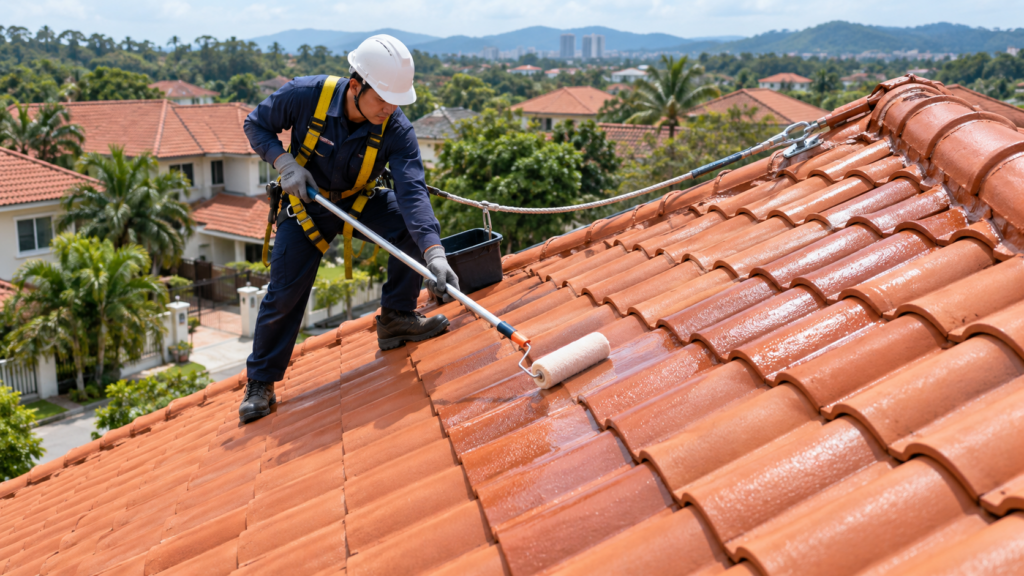
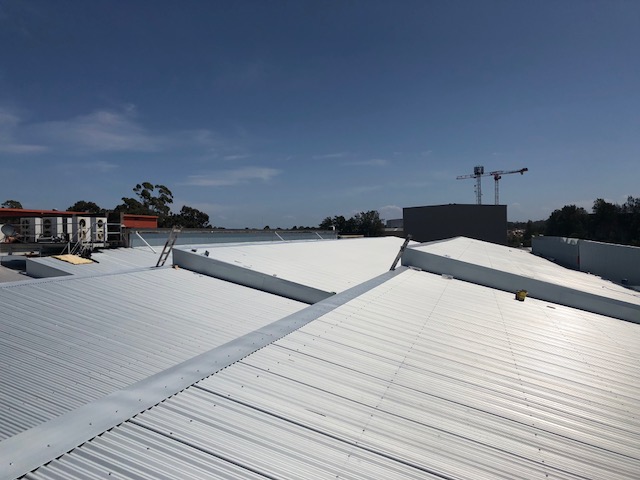
For metal roofs, QingLong typically recommends high-performance acrylic or polyurethane waterproof coating systems combined with anti-rust treatment and joint sealing to create a seamless protective layer that withstands Malaysia’s climate.
For concrete roofs, polyurethane waterproof coatings provide excellent flexibility and crack-bridging performance, while polymer cement waterproofing systems are suitable for structural concrete areas requiring durable moisture protection.
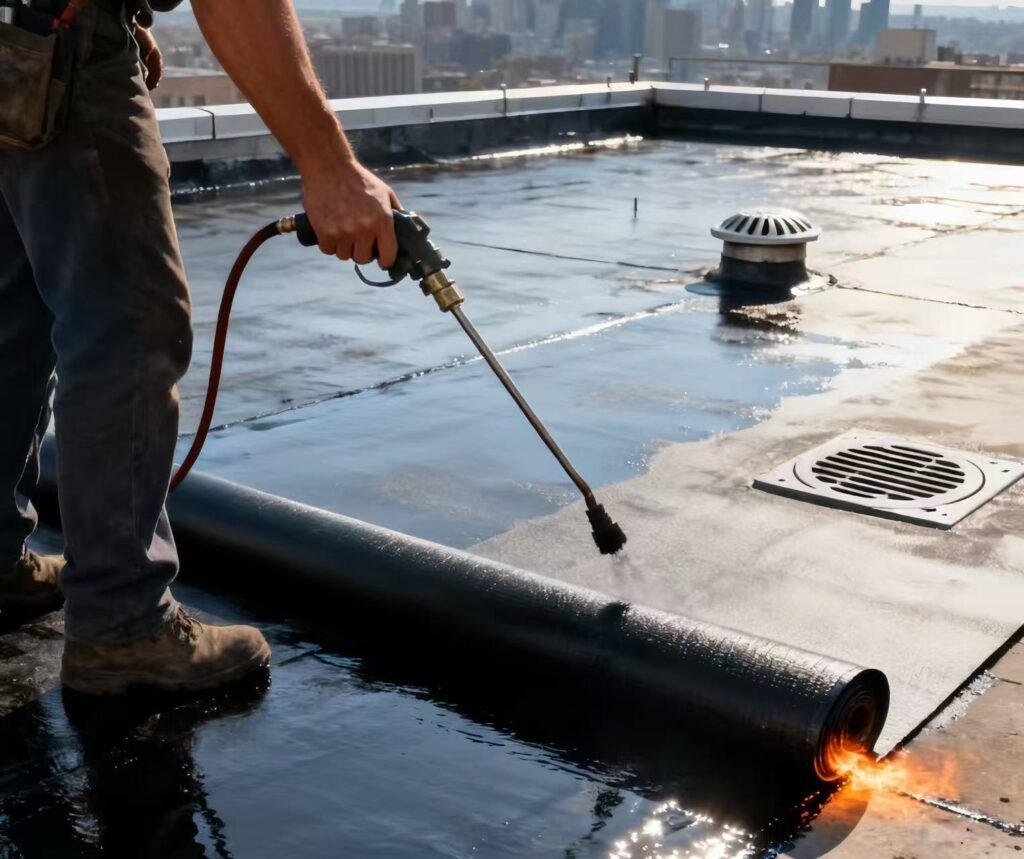
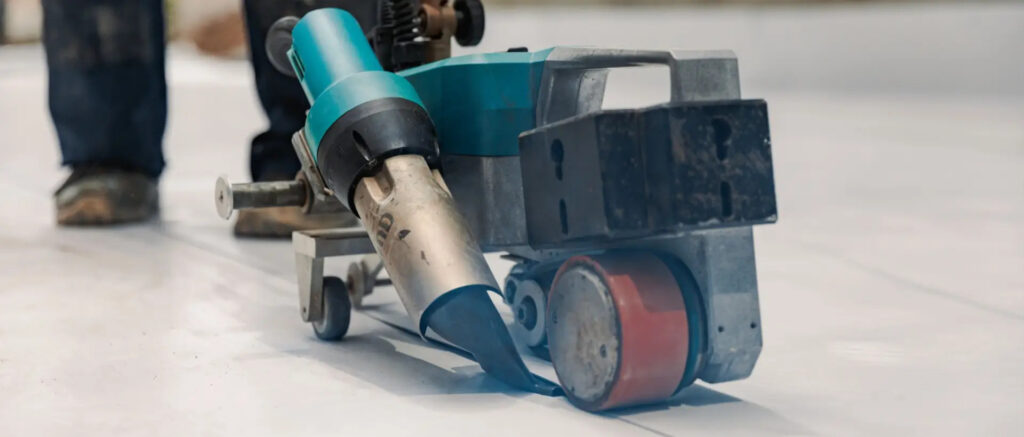
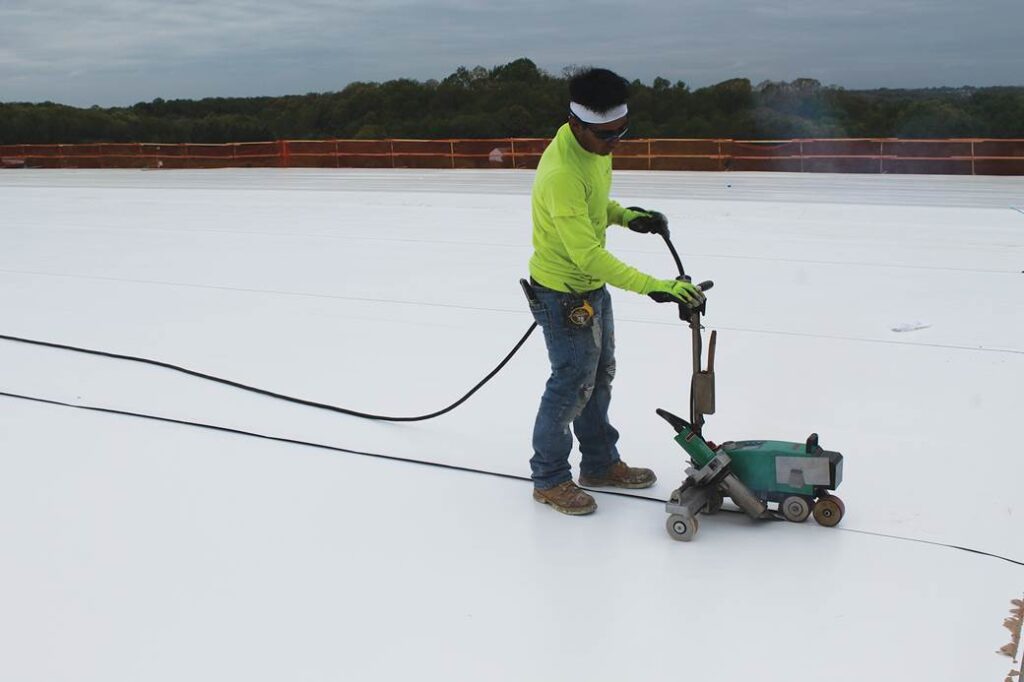
For aging flat roofs, high-quality torch-on waterproof membranes remain one of the most reliable long-term solutions, offering excellent resistance against standing water, heavy rainfall, and UV exposure.
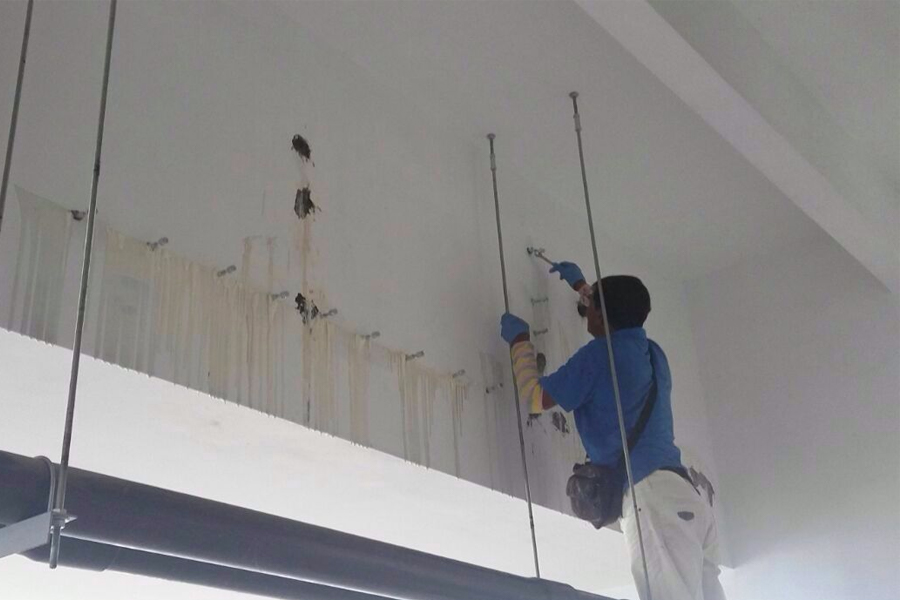
Where active water seepage is detected through cracks or construction joints, PU Injection technology effectively seals leakage from within the concrete structure before surface waterproofing is applied.
Selecting the appropriate waterproofing system based on roof type, building condition, and environmental exposure ensures longer service life and improved waterproofing performance.

As a specialist in industrial waterproofing, QingLong Waterproofing Malaysia provides complete waterproofing systems designed specifically for Malaysia’s tropical climate. Depending on project requirements, solutions may include:
Polyurethane Waterproof Coating
Polyurethane (PU) waterproof coating is one of the most effective solutions for protecting concrete roofs, flat roofs, podium decks, and aging roof surfaces. Once applied, it forms a seamless waterproof membrane that adheres strongly to the substrate, preventing water from penetrating through cracks and joints. Its excellent flexibility also allows it to accommodate structural movement caused by Malaysia’s changing weather conditions.
In addition to providing superior waterproof protection, PU waterproof coating offers outstanding UV resistance, crack-bridging capability, and long-lasting weather durability. These properties make it an ideal choice for industrial buildings and warehouses that require reliable, low-maintenance roof protection against heavy rainfall, high humidity, and prolonged sun exposure.
High Elastic Acrylic Waterproof Coating (CQ103)
QingLong CQ103 High Elastic Acrylic Waterproof Coating is specifically designed to protect metal roofs, factory roofs, and aging warehouse roofs from Malaysia’s harsh weather conditions. Its highly elastic formula accommodates thermal expansion and contraction while forming a seamless waterproof barrier that effectively prevents water infiltration.
In addition to its excellent waterproofing performance, CQ103 offers outstanding UV resistance, heat-reflective properties, and strong adhesion to various roofing substrates. These features help reduce roof surface temperatures, minimize maintenance requirements, and extend the service life of industrial roofing systems.
Torch-On Waterproof Membrane
Torch-On Waterproof Membrane is one of the most trusted waterproofing systems for large commercial and industrial buildings due to its exceptional durability and long-term waterproof performance. It creates a robust, continuous waterproof barrier that effectively resists heavy rainfall, standing water, and harsh weather conditions, making it ideal for Malaysia’s tropical climate.
This system is widely used for warehouses, manufacturing facilities, commercial buildings, basement roof slabs, and podium structures. With its excellent puncture resistance and long service life, Torch-On Waterproof Membrane provides reliable protection for buildings that require a durable, low-maintenance waterproofing solution.
Non-Tar Polyurethane Waterproof Coating (CQ107)
Designed for demanding industrial environments, CQ107 provides outstanding waterproof performance while maintaining flexibility under continuous thermal movement.
Drainage Improvement Solutions
Waterproofing alone cannot solve drainage problems. QingLong also emphasizes proper drainage management through gutter repairs, downpipe maintenance, and drainage optimization to minimize standing water and extend roof lifespan.
Preventive maintenance is the most effective and cost-efficient strategy for extending the lifespan of a warehouse roof and maximizing the performance of its waterproofing system. Rather than waiting for leaks to occur, regular inspections and timely maintenance help identify potential issues early, preventing minor defects from developing into costly structural repairs.
Warehouse owners should schedule professional roof inspections at least every six months, especially before and after the monsoon season. Regular maintenance should also include cleaning gutters and drainage systems to prevent water ponding, repairing small cracks promptly, inspecting roof joints, sealants, and penetrations, removing debris after heavy storms, and recoating waterproofing systems according to the manufacturer’s recommended maintenance schedule.
By adopting a proactive maintenance programme, businesses can significantly reduce the risk of recurring roof leaks, minimize unexpected downtime and repair costs, and ensure long-term protection for their buildings, equipment, and inventory. Investing in routine maintenance today not only preserves the integrity of the roofing system but also safeguards business operations for years to come.

With more than 30 years of waterproofing experience, QingLong Waterproofing has developed complete waterproofing systems for residential, commercial, industrial, and infrastructure projects.
In Malaysia, QingLong’s waterproofing solutions have been applied across numerous landmark developments, including MY07 Data Centre, MY06 Data Centre, Tenpower Banting, ND Paper, Cosmos Project, Forest City, and Country Garden Danga Bay.
These projects involve waterproofing for roofs, external walls, lift pits, water tanks, floor slabs, underground structures, expansion joints, and pipe penetrations—demonstrating QingLong’s capability in delivering comprehensive waterproofing systems for complex industrial environments.
Rather than relying on a single product, QingLong emphasizes a complete waterproofing system approach, combining coatings, membranes, drainage design, crack repair, and preventive maintenance to achieve long-term building protection.
Whether you need a new waterproofing system, roof refurbishment, or professional leak repair, QingLong provides reliable waterproofing solutions designed for Malaysia’s tropical climate. If you’re experiencing roof leaks or signs of waterproofing failure, contact our experts for a professional assessment and the most suitable long-term waterproofing solution for your building.
Frequently Asked Questions (FAQ)
1. What causes warehouse roof leaks in Malaysia?
The most common causes include UV exposure, aging waterproof membranes, blocked drainage systems, cracked concrete, failed roof joints, and rust on metal roofs.
2. What is the best waterproofing system for warehouse roofs?
The ideal solution depends on the roof type. For concrete roofs, polyurethane (PU) waterproofing and torch-on membranes are popular choices. For metal roofs, acrylic or PU roof coatings combined with proper joint sealing provide excellent protection.
3. How often should warehouse roofs be inspected?
Professional roof inspections are recommended at least twice a year, preferably before and after the monsoon season, and after severe storms.
4. How long does waterproofing last?
A professionally installed waterproofing system can typically last 10–20 years or more, depending on the product used, roof condition, installation quality, and ongoing maintenance.
5. Can roof leaks be repaired without replacing the entire roof?
Yes. Many leaks can be resolved by repairing damaged areas and applying the appropriate waterproofing system. However, if the roof structure or waterproof membrane has deteriorated extensively, a full replacement or refurbishment may be the most effective long-term solution.