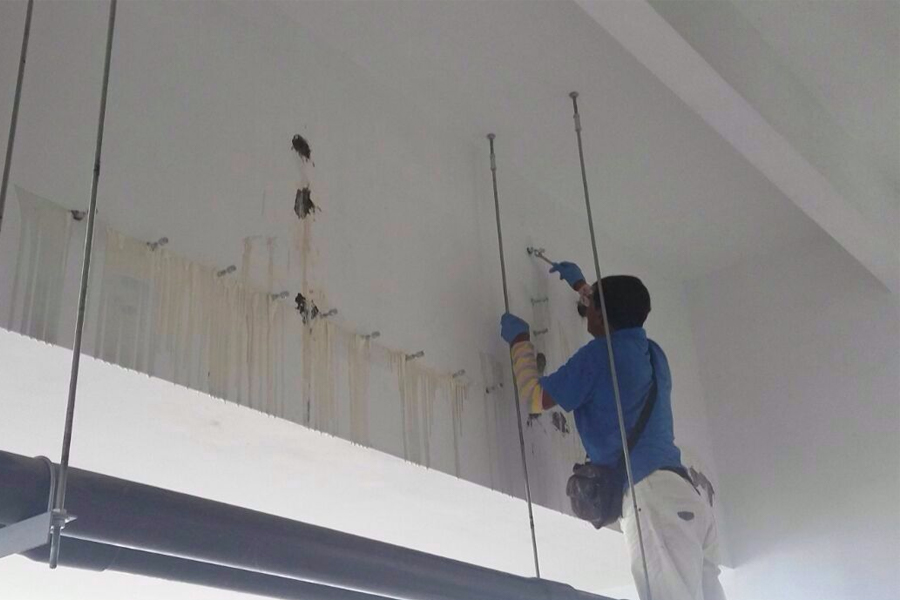
A washroom leak is rarely confirmed by the first stain you see. In a Petaling Jaya condominium, terrace house or commercial unit, water may travel through screed, pipe chases, slab cracks or wall-floor junctions before appearing on the ceiling below. That is why a proper Petaling Jaya washroom waterproofing contractor should not start by naming a coating immediately. The first job is to separate plumbing leakage, surface seepage, failed waterproofing and drainage-related defects so the repair scope matches the actual problem.
The First Check Is Whether the Leak Is Plumbing or Waterproofing Related
Before discussing membranes or coatings, the contractor should determine whether the water source is from the washroom waterproofing layer or from the plumbing system. This matters because the repair method is completely different.
A waterproofing failure usually appears when the washroom is used, washed down or exposed to standing water. A plumbing leak may continue even when the floor is dry, especially if it comes from a pressurised pipe, concealed fitting or drainage connection.
A contractor may check whether the damp area worsens after showering, after flushing, after floor washing or even during periods when the washroom is not used. In strata properties, this step is important because the affected neighbour may see water below, but the source may be from a pipe route, not only the floor finish above.
A washroom waterproofing contractor should first confirm whether the leakage is caused by waterproofing failure, plumbing defects or both. If plumbing is leaking, applying waterproofing on the floor surface will not solve the source. If the waterproofing layer has failed, replacing pipe fittings alone will not stop seepage through the slab.
This early distinction prevents one of the most common mistakes: repairing the visible area while leaving the actual water path untouched.
Floor Traps, Pipe Penetrations and Drainage Details Are Checked Before the Open Floor Area
Many property owners expect the contractor to inspect the middle of the washroom floor first. In practice, the more vulnerable details are often around the floor trap, pipe penetrations, WC outlet, shower kerb and wall-floor junctions.
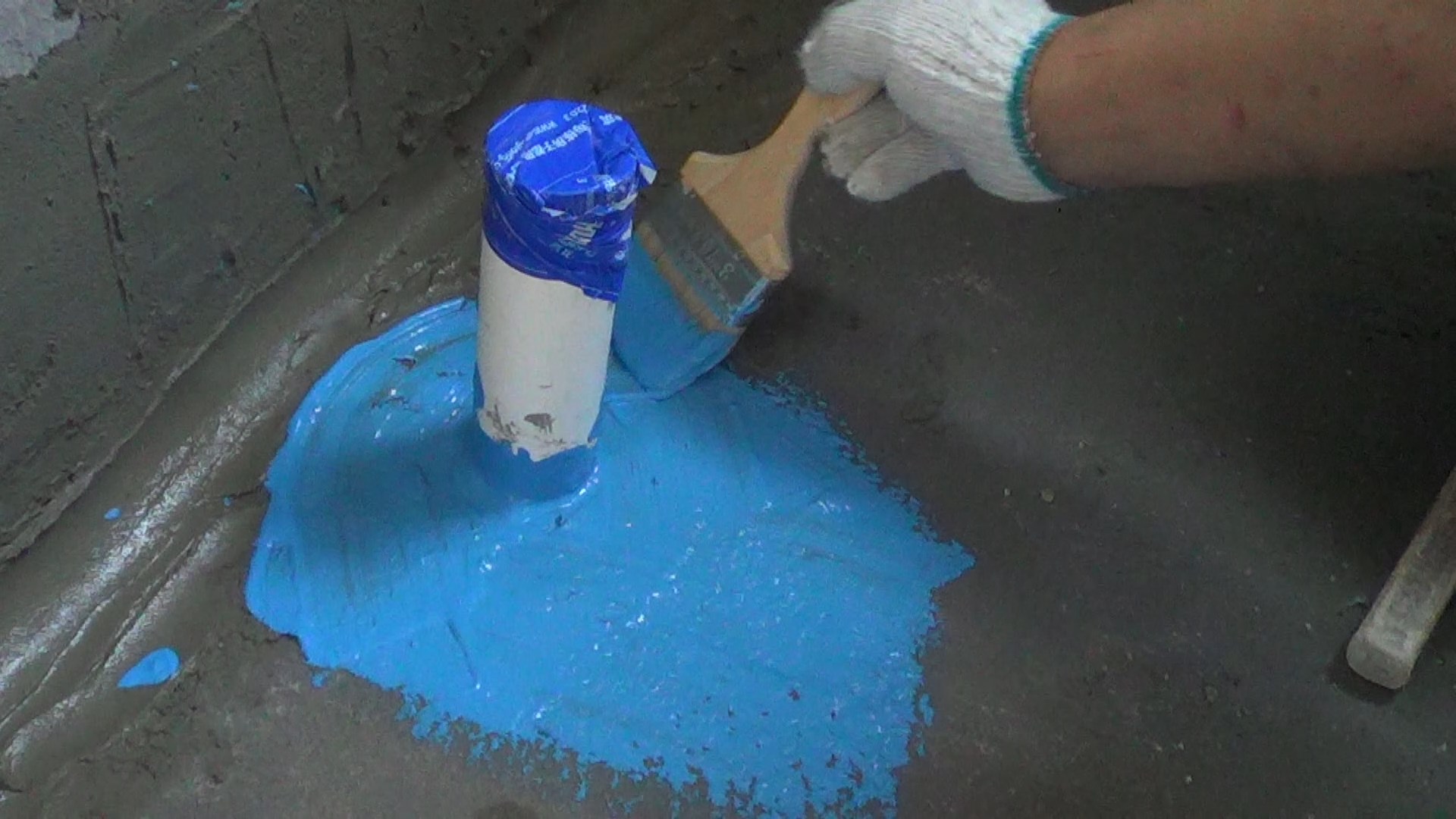
These areas interrupt the waterproofing layer. If the waterproofing was not properly dressed around a pipe, if the sealant has separated, or if the floor trap connection has movement, water can bypass the main floor area even when the tiles look normal.
For a Petaling Jaya apartment or commercial washroom, drainage details deserve careful attention because repair access can be restricted. The contractor may need to understand whether the outlet connects directly through the slab, runs through a pipe sleeve, or is hidden inside a boxed-up area. A small defect at a penetration can create leakage below that looks like a larger floor failure.
The contractor should also observe the fall of the floor. If water collects around the trap or near the shower area, the waterproofing layer is exposed to longer wetting periods. Poor falls do not automatically mean waterproofing failure, but they increase the stress on weak joints and aged sealants.
Tile Condition Tells Only Part of the Story
Tiles are often mistaken as the waterproofing layer. They are not. Tiles and grout reduce surface water entry, but the real waterproofing protection should be beneath or behind them, depending on the system used.
A contractor will normally check for cracked tiles, loose tiles, hollow sounds, deteriorated grout and open joints. These observations are useful, but they do not prove the full condition of the hidden waterproofing layer. For example, a washroom floor may have no visible tile cracks but still leak through a failed pipe penetration. Another washroom may have cracked grout but no active slab leakage yet.
The important question is whether the tile finish is stable enough to be retained. If the tiles are well bonded and the problem is limited to surface seepage, some remedial approaches may be considered, subject to site condition. If many tiles are hollow, debonded or trapping moisture underneath, applying a surface coating over them may create a short-lived repair.
A serious inspection should therefore look beyond “can we coat over the tiles?” and ask:
Are the tiles firmly bonded to the substrate?
Are the grout joints open or powdery?
Is there trapped moisture under the tile layer?
Are the wall-floor corners cracked or separated?
Is water ponding after use?
Has a previous surface repair already failed?
These checks help decide whether the existing tile finish can remain or whether removal is needed to access the failed waterproofing layer properly.
Wall-Floor Junctions Are Often More Important Than the Flat Floor
In many washroom leaks, the failure is not across the entire floor. It may be concentrated where the floor meets the wall, shower kerb, door threshold or pipe boxing. These junctions move and crack more easily than the flat floor area.
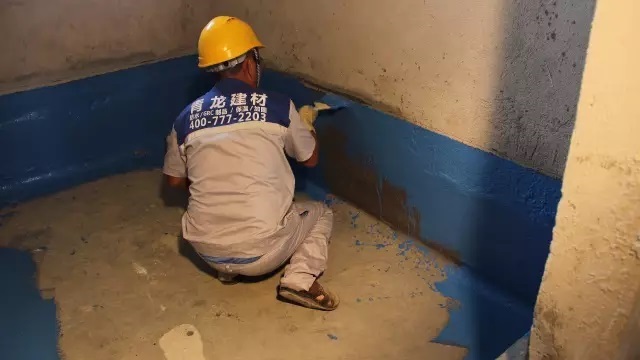
A contractor should inspect whether the waterproofing was turned up at the wall and whether that upturn is still protected. If the waterproofing stops too low, water from showering or washing can enter behind the skirting or wall tile. Once water enters the wall base, it may travel sideways before appearing below or outside the washroom.
Door thresholds also need attention. Some washrooms leak not because water penetrates the middle of the slab, but because water escapes past the threshold, enters the corridor screed and then appears in an unexpected location. This is especially relevant where the washroom has no proper kerb or where the floor level outside is almost the same as the wet area.
For commercial premises in Petaling Jaya, such as offices, clinics, cafes or retail units, washroom leakage may affect ceiling boards, electrical fittings or neighbouring tenancies. In these situations, identifying the junction defect early helps reduce unnecessary hacking and disruption.
A Water Test Should Be Planned, Not Done Randomly
Flood testing or controlled water testing can be useful, but it must be done with a clear purpose. Simply pouring water everywhere may confirm that leakage exists, but it may not identify the entry point.
A more useful approach is staged testing. The contractor may isolate the shower area, floor trap area, wall base or pipe penetration zone to see which condition triggers leakage. If the lower ceiling is accessible, observation during testing can help link the wet area above with the seepage pattern below.
However, water testing is not always suitable immediately. If there is active ceiling damage, electrical risk, severe saturation or an occupied unit below, the contractor may need to coordinate access and protect affected areas first. In strata buildings, management approval may also be required before testing or hacking.
A useful washroom leak test should isolate likely water entry points instead of wetting the entire room at once. Testing the floor trap, shower zone, wall-floor junction and pipe penetrations separately gives better evidence for repair planning and reduces the risk of recommending unnecessary full-floor removal.
The goal is not just to prove a leak. The goal is to decide what repair scope is technically justified.
Previous Repairs Can Hide the Real Failure Point
Many Petaling Jaya property owners call a contractor only after trying sealant, grout repair or transparent coating. These attempts may slow seepage for a while, but they can also hide the original defect.
A contractor should ask what was repaired before, where the product was applied and how long the repair lasted. A repair that failed within weeks may suggest poor adhesion, trapped moisture, active movement or an unresolved pipe defect. A repair that lasted for years before leaking again may point more toward ageing, movement or new cracks.
Previous coating over tiles should be checked carefully. If the coating is peeling, whitening, blistering or separating at joints, applying another layer on top may not be suitable without removing weak material. Waterproofing depends on adhesion and continuity. A new layer cannot perform well if the surface below is unstable.
This is also where product selection becomes site-specific. QingLong Waterproofing supplies and applies different waterproofing materials, including cement-based slurry, transparent waterproof coatings, sealants and joint-sealing accessories. But the correct system depends on whether the contractor is treating a tiled surface, exposed substrate, pipe joint, wall-floor corner or a hacked-and-rebuilt wet area.
 The First Inspection Should Lead to a Repair Decision, Not Just a Quotation
A proper washroom inspection should give the owner a clearer decision, even if further testing is required. The contractor should be able to explain whether the likely repair is localised, surface-based, junction-focused, plumbing-related or requires removal of finishes.
For a homeowner, this avoids paying repeatedly for small repairs that do not address the source. For a property manager, it helps justify the repair scope to residents, tenants or management. For a commercial unit, it helps plan downtime and avoid disturbing operations more than necessary.
The first inspection should clarify:
Whether plumbing needs to be ruled out first
Whether the existing tiles are stable enough to retain
Whether leakage is concentrated at penetrations or junctions
Whether water testing is needed before repair
Whether hacking is technically necessary or only optional
Whether the proposed product matches the actual substrate and exposure
If these points are not checked, the quotation may be based more on guesswork than diagnosis.
Conclusion
The first thing a Petaling Jaya washroom waterproofing contractor checks is not the product to apply, but the water path. Plumbing, floor traps, pipe penetrations, wall-floor junctions, tile condition and previous repairs all change the correct repair method. A good inspection should reduce uncertainty before work begins, not simply confirm that the washroom is leaking.
If your washroom leak is affecting a ceiling below, neighbouring unit or commercial space, QingLong Waterproofing can help assess the site condition and recommend a suitable repair approach. You may contact QingLong Waterproofing to discuss the washroom leakage before deciding on the repair scope.