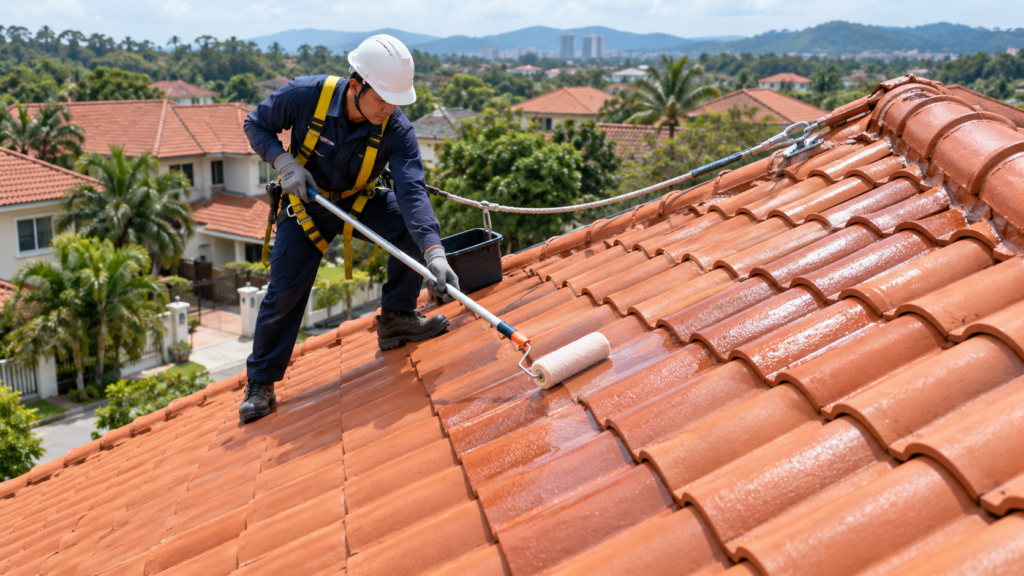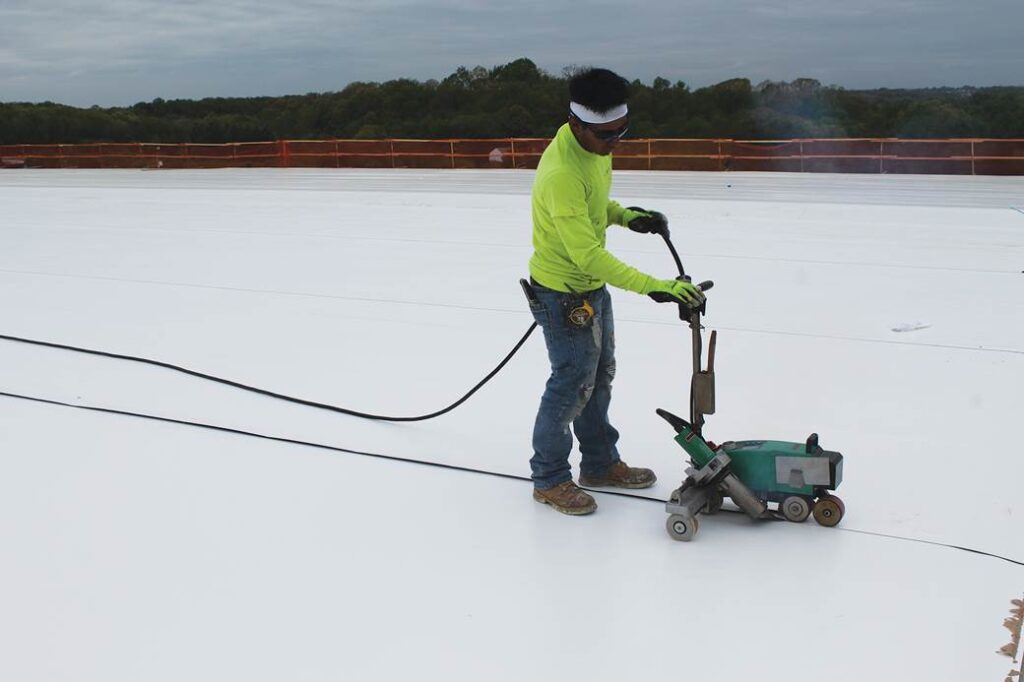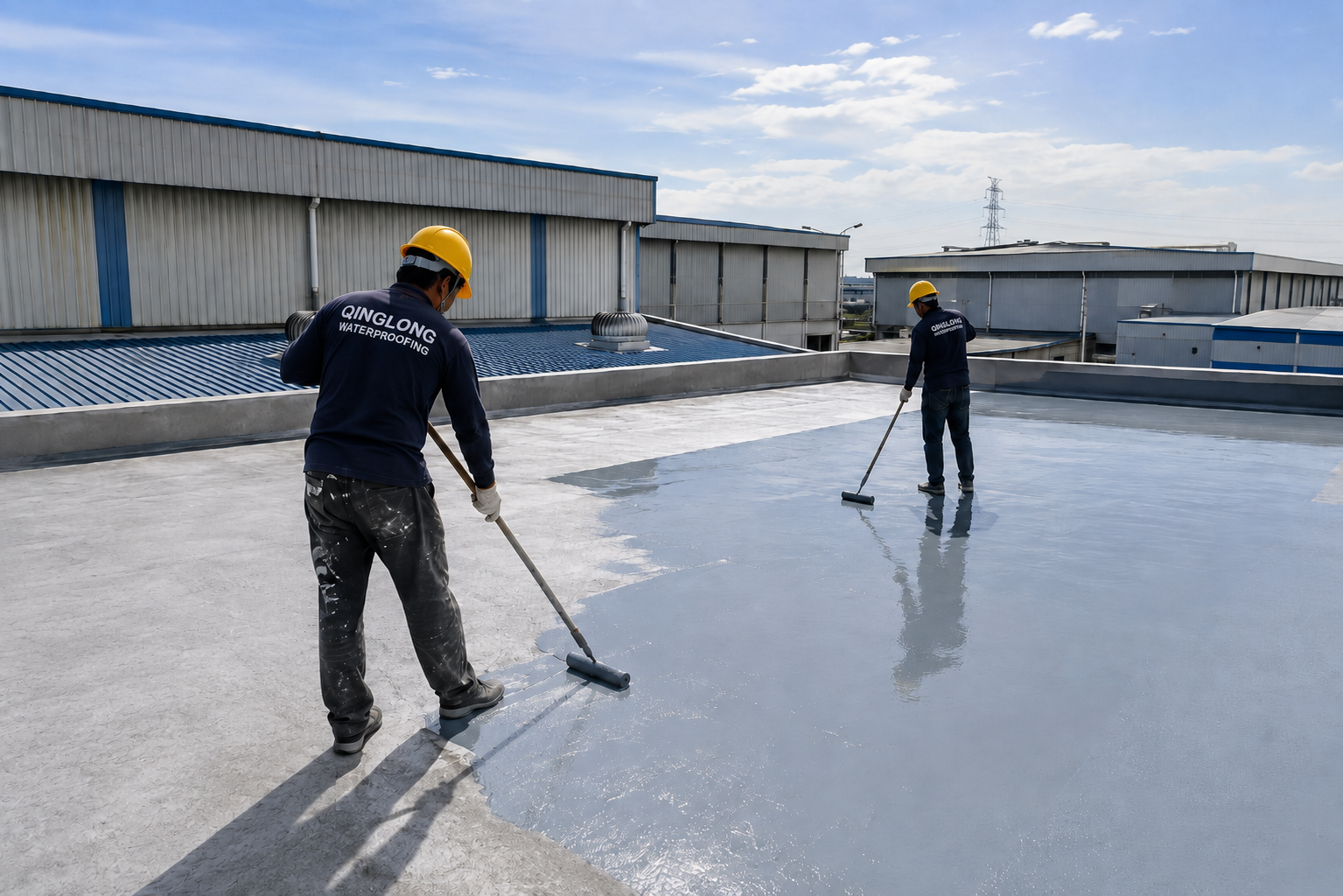
A factory leak is rarely just a wet patch on the ceiling. In an operating factory in Johor Bahru, water may enter through a roof joint, travel along a beam, pass a pipe penetration, then appear several metres away from the actual defect. If waterproofing starts only at the visible stain, the repair may look logical but fail after the next rain. For factory owners and facility managers, the first decision is not which coating to buy. It is whether the leak path has been understood well enough to define the correct repair scope.
Why the Visible Leak Point Is Not Always the Entry Point
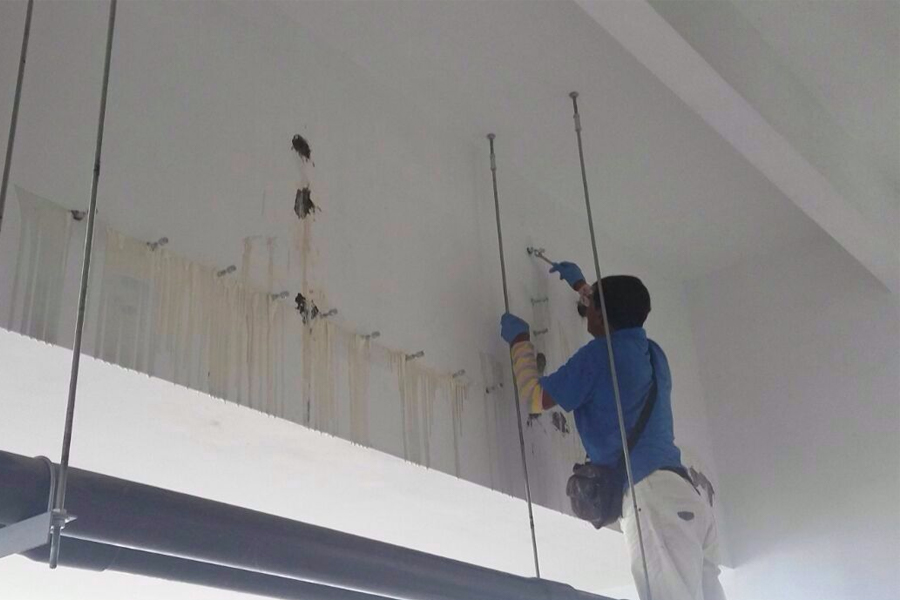
In factory waterproofing, the wet area inside the building is only the exit point of water. It shows where water becomes visible, not necessarily where water entered the building envelope.
This matters because factories often have long-span roofs, metal roof sheets, gutters, skylights, service penetrations, parapet details and internal structural members that can redirect water. Once water passes the outer layer, it may run along purlins, insulation, cable trays, slab interfaces or wall junctions before dripping down.
For Johor Bahru factory waterproofing, the leak path should be traced before repair work is approved. A ceiling stain, damp wall or dripping point may be several metres away from the actual water entry point. Repairing only the visible wet area can leave the original defect untouched.
This is why a “patch where it drips” approach is risky. It may stop the symptom temporarily if the patch blocks one exit route, but water can continue entering elsewhere and appear again at another weak point.

Factory Roofs Create More Than One Possible Water Route
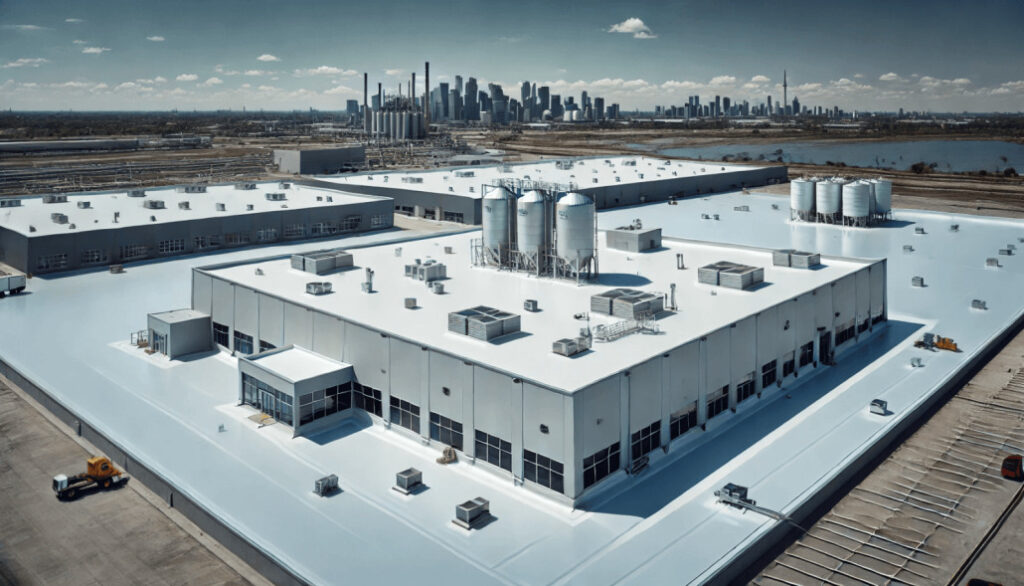
Factory roofs are different from residential roofs because they usually combine large roof areas with multiple operational details. Each detail creates a different leak behaviour.
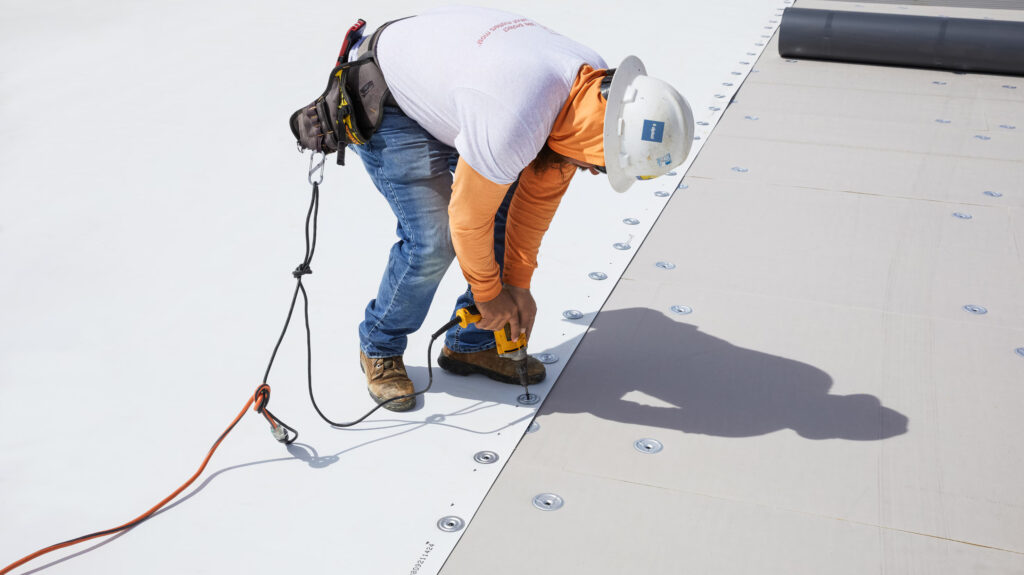
On a metal roof, water may enter through aged fastener washers, open laps, damaged sealant, rusted sheet edges or poorly terminated flashing. The leak may increase during wind-driven rain because rainwater is pushed under laps or side flashings.
At gutters and downpipes, the issue may not be the waterproofing material alone. Blocked outlets, insufficient drainage capacity, backflow at gutter joints or ponding near internal gutters can raise the water level until it enters through a joint that normally stays dry.
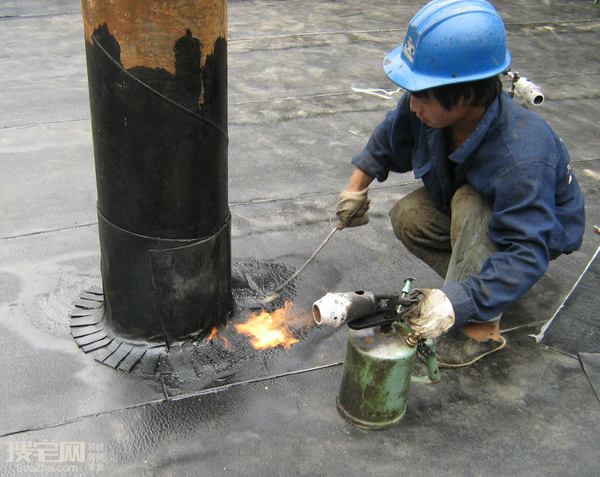
At roof penetrations, the risk is usually detailing. Exhaust ducts, service pipes, vents, cable supports and air-conditioning frames interrupt the roof surface. If the waterproofing or flashing does not turn up, seal and terminate correctly around these points, water can bypass the main roof surface.
For factories with adjoining buildings or later extensions, leak paths can become more complicated. Water may enter at the junction between old and new structures, especially where movement, different roof levels or incomplete flashing details exist.
The practical point is simple: different leak paths require different repair methods. A coating over the general roof area may not solve a failed gutter joint. A sealant repair may not solve movement at a roof-wall junction. A full membrane system may still fail if penetrations are not detailed properly.

What a Proper Leak Path Inspection Should Establish
A useful inspection does not only record where the building is wet. It tests whether the suspected entry point, water travel route and visible damage can be logically connected.
For a factory in Johor Bahru, the inspection may need to consider roof access, production schedules, safety restrictions and whether the leak happens only during heavy rain, after long rainfall or when wind comes from a certain direction. These details help narrow the likely entry path.
A practical inspection should establish:
where water is visible inside the factory;
whether the wet area aligns with roof joints, gutters, penetrations, walls or structural members;
whether there are rust marks, failed sealant, open laps, ponding water or blocked outlets above;
whether water may be travelling along beams, purlins, cable trays or slab interfaces;
whether previous patching has redirected water instead of stopping it;
whether the substrate is dry, sound and suitable for the proposed waterproofing system.
This is not paperwork for the sake of paperwork. It affects the repair decision. If the leak is caused by failed fastener details across a large roof zone, isolated patching may be too limited. If the issue is one poorly sealed penetration, recoating the whole roof may be unnecessary. If water is entering through a wall-roof junction, the repair must include the vertical termination, not only the horizontal roof surface.
Why Previous Factory Leak Repairs Often Fail
Many factory leak repairs fail because the first repair was based on a reasonable but incomplete assumption. Someone saw water dripping, found the nearest roof defect and sealed it. That may be understandable when production is affected and the team wants a fast response.
The problem is that factory leaks can involve more than one defect. A roof may have an obvious hole, but water may also be entering through a gutter joint. A parapet wall may show cracks, but the actual leak may be through the flashing termination below it. A coated roof may appear intact, but adhesion failure around penetrations may allow water to move beneath the coating.
Another common issue is applying waterproofing over an unsuitable substrate. If the surface is oily, dusty, rusted, wet or poorly bonded, a coating or membrane may not adhere as intended. In factory environments, contamination from exhaust, dust, production residue or maintenance activity should be checked before selecting the repair system.
This does not mean every failed repair was done carelessly. Often, the repair scope was simply too narrow for the actual leak path. The better question is not “Which product failed?” but “What water route remained open?”
Choosing the Repair Method After the Leak Path Is Known
Once the leak path is understood, the waterproofing method becomes easier to select. The site demand should guide the system.
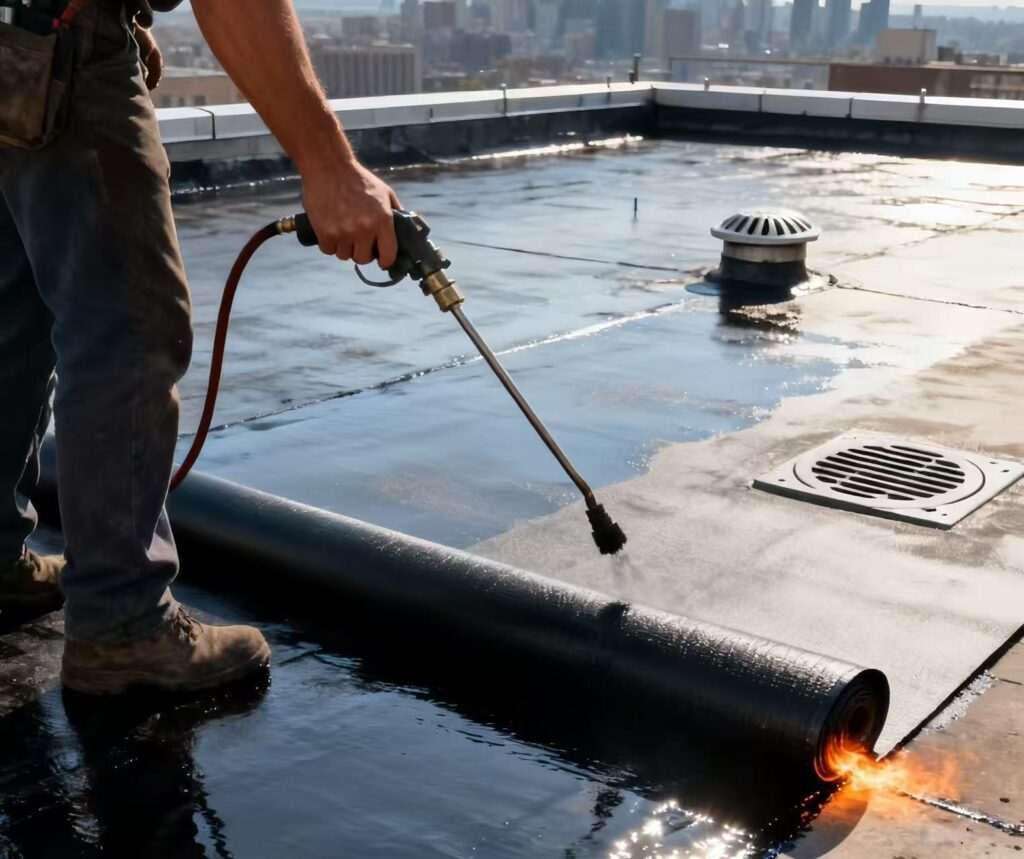
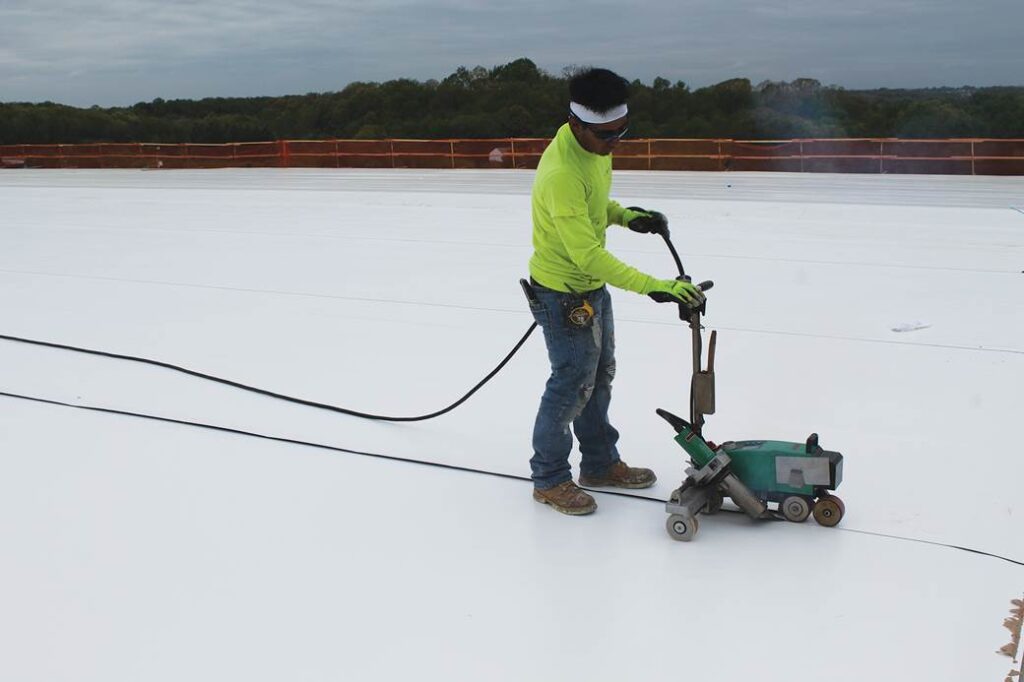
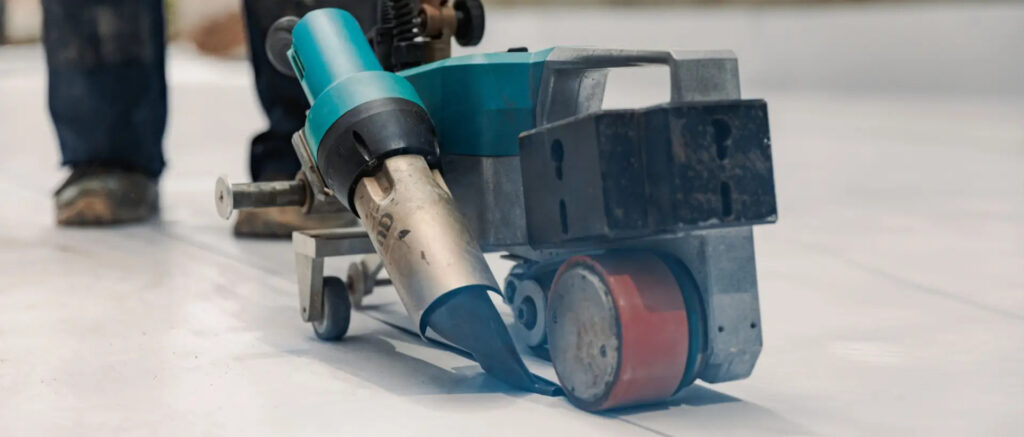
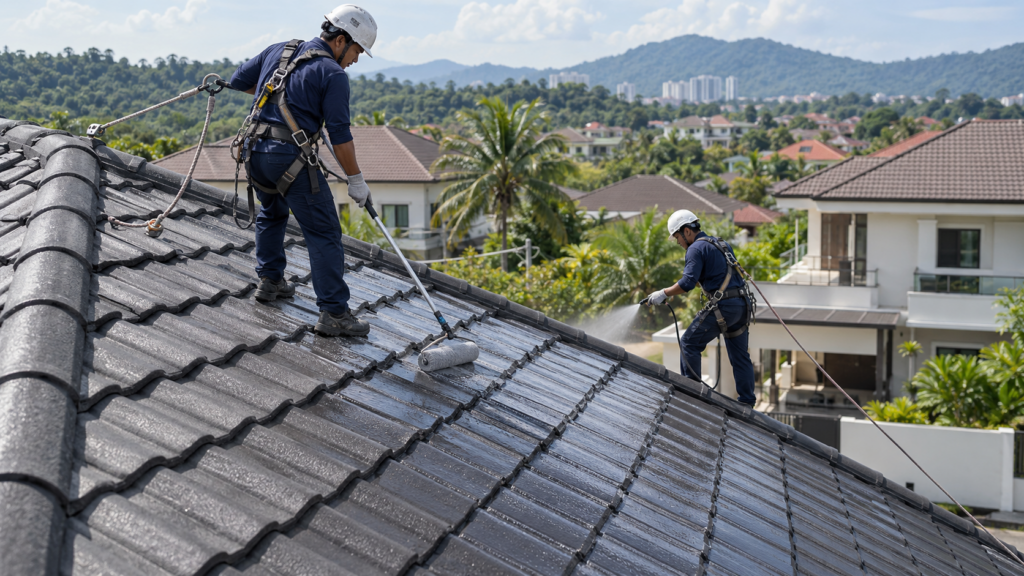
For exposed factory roofs, the waterproofing material must suit UV exposure, roof movement, drainage condition and maintenance access. For metal roofs, the system may need to address fasteners, laps, seams and corrosion-prone areas before the main coating is applied. For concrete roof slabs, cracks, ponding areas, screed condition, outlets and upturn details become more important.
For pipe penetrations and internal or external corners, flexible detailing is usually critical because these areas concentrate movement and stress. QingLong Waterproofing’s wider project experience includes waterproofing works for critical areas such as roofs, external walls, base slabs, pipe penetrations, internal and external corners, and expansion joints in major commercial and industrial projects. The same principle applies to factory leak repair: the system should match the detail, not just the general surface.
Product selection should also consider whether the factory can stop operations, whether work must be phased, and whether the repaired area will be exposed, trafficked or covered. A quick emergency leakage product may help control active water in a limited situation, but it is not the same as a complete waterproofing system for a roof, gutter or wall junction.
Johor Bahru Factory Constraints Should Shape the Work Plan, Not Replace Diagnosis
Factories in Johor Bahru may have practical constraints such as limited access, occupied production areas, neighbouring lots, rooftop equipment and difficulty shutting down operations for long periods. These constraints are real, but they should not become a reason to skip leak path investigation.
Instead, they should influence how the inspection and repair are planned. For example, inspection may need to be arranged around production hours. Temporary protection may be needed below active work zones. Repair work may need to be divided by roof section, gutter line or penetration group rather than closing the entire building area.
This is where a facility manager should be careful with overly simple recommendations. A proposal that says “coat the whole roof” may sound complete, but it may not explain the actual leak route. A proposal that says “seal the crack” may sound economical, but it may ignore connected defects. The stronger proposal is usually the one that explains what was observed, how water is likely travelling, which details are included, and what limitations remain.
Questions to Ask Before Approving Factory Waterproofing Work
Before approving a Johor Bahru factory waterproofing repair, the decision-maker should ask questions that reveal whether the leak path has been properly understood.
Useful questions include: Where is the suspected water entry point? How does that point connect to the visible leak inside the factory? Are gutters, penetrations, roof laps, wall junctions and drainage outlets included in the inspection? Is the proposed material suitable for the substrate and exposure condition? What surface preparation is required before application? Are there areas that cannot be confirmed without further opening, access or testing?
These questions help separate a repair recommendation from a guess. They also reduce the chance of paying for work that only treats the symptom.
Factory waterproofing should begin with the route water takes through the building, not with the most convenient place to apply material. Once the leak path is identified, the repair can be targeted, phased and specified with better confidence. If your factory has recurring leakage or an unclear water entry point, you can contact QingLong Waterproofing to discuss the site condition and suitable waterproofing approach.
Frequently Asked Questions (FAQs)
1. Why does a factory roof leak in a different location from the visible water stain?
Water can travel through roof joints, purlins, beams, insulation, cable trays, wall junctions and other building components before appearing inside the factory. Therefore, the visible dripping point may not be the actual entry point.
2. What causes factory roof leaks?
Common causes include deteriorated sealants, failed fasteners, open roof laps, damaged flashing, blocked gutters, defective penetrations, corrosion, ponding water and movement at roof or wall junctions.
3. Can factory waterproofing be done without stopping production?
In some situations, waterproofing work can be phased around production schedules. The appropriate approach depends on the affected roof area, access conditions, safety requirements and whether the leak requires emergency or full-system repair.
4. Should the whole factory roof be waterproofed if there is only one leak?
Not necessarily. The required scope depends on the cause and extent of the leakage. A localised defect may require targeted repair, while widespread deterioration or multiple related defects may justify a larger waterproofing system.
5. What should I check before choosing a factory waterproofing system?
Consider the substrate, UV exposure, roof movement, drainage condition, existing waterproofing, traffic or maintenance requirements, surface preparation and whether the factory can accommodate the required work schedule.