A wall that stays dry on normal days but becomes damp after rain is often treated as a simple “wall coating” problem. In many Johor Bahru homes and commercial buildings, however, the visible damp patch is only the exit point. Rainwater may be entering through a crack, window edge, pipe penetration, parapet, roof-wall junction or failed exterior paint film before travelling inside the wall system. Good Johor Bahru exterior wall waterproofing starts by asking one question: where is rainwater actually getting into the building envelope, and why does it only appear under certain rain conditions?
Rain Leakage Through an Exterior Wall Is Usually Directional
Exterior wall leakage is different from a pipe leak. A pipe leak normally continues even when there is no rain. Wall seepage caused by rain often appears only when rain hits a certain side of the building, especially during wind-driven rain.
This is why some owners notice a strange pattern. The same wall may remain dry during light rain, but water stains appear after a heavy storm from one direction. A bedroom wall may leak only during afternoon rain. A shoplot façade may leak at the upper corner, while the wall below looks mostly fine from outside.
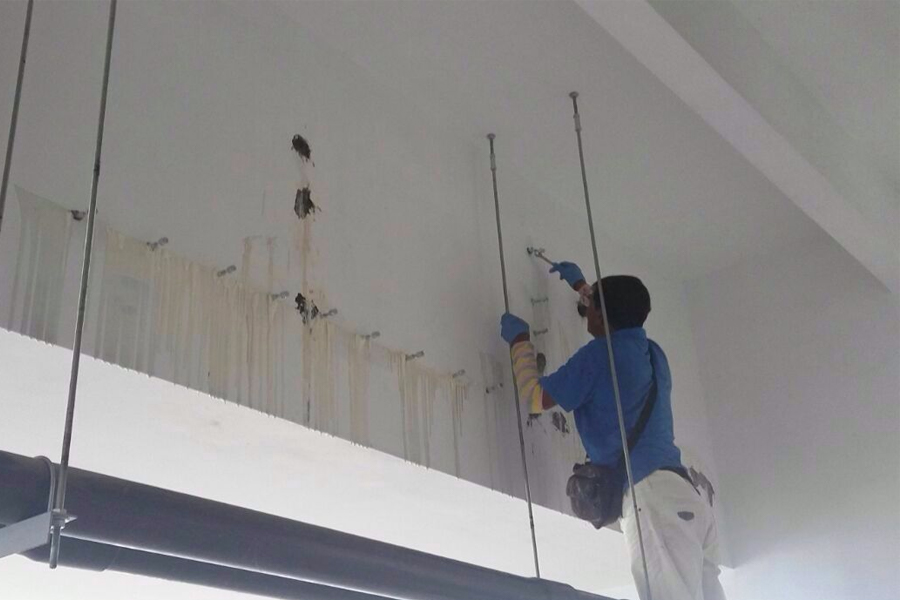
For exterior wall rain leakage, the damp area inside the room does not always identify the water entry point. Rainwater can enter through an upper crack, window perimeter, roof flashing or façade joint, then travel along plaster, beam edges or internal finishes before becoming visible lower down.
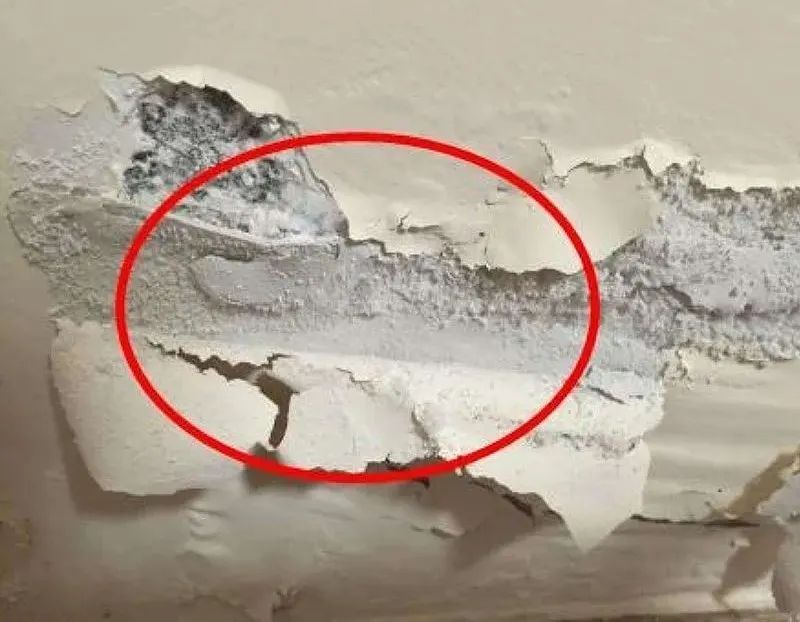
This matters because repainting the damp patch from inside rarely solves the problem. Internal paint blocks the symptom for a short time, but the wall continues to absorb water from outside. If moisture is trapped, peeling paint, powdery plaster, mould growth or repeated staining may return.
The Wall Surface Is Only One Part of the Leakage Path
Many exterior wall repairs fail because the wall is treated as one flat surface. In reality, rainwater usually finds weak points at changes in material, movement areas or poorly sealed details.
On a rendered and painted external wall, water may enter through fine cracks in the plaster or paint film. These cracks may look small, but repeated wetting allows moisture to move into the wall. If the exterior paint has lost adhesion or become chalky, a new coating may not bond properly unless the loose layer is removed.
Around windows, the issue may not be the wall itself. Water can enter at the frame perimeter, sill joint, screw fixing, sealant line or the small junction between the window frame and plaster. If the sealant has hardened, shrunk or separated, rainwater can be pushed into the gap during strong wind.
For homes with air-conditioning pipes, awnings, grilles, signage brackets or façade fixtures, penetrations through the wall are also important. A hole may be sealed on the visible face, but if the sealant does not bond to the pipe sleeve or surrounding plaster, water can still track inward.
Common exterior wall leakage points include:
Hairline or movement cracks in plastered walls
Failed paint film, chalking or peeling exterior coating
Window frame edges, sill joints and screw points
Air-conditioner pipe penetrations and wall sleeves
Junctions between roof, awning, parapet and wall
Expansion joints or construction joints on larger buildings
Gaps around façade fixtures, brackets or signage
The repair method should match the entry path. A flexible exterior wall coating may help on a sound wall surface with fine cracks, but it cannot reliably seal a moving joint, hollow plaster area or badly deteriorated window perimeter by itself.
Why Johor Bahru Rain Can Expose Weak Wall Details
Johor Bahru exterior wall waterproofing often needs to consider how rain actually reaches the façade. The issue is not simply that it rains. The problem is that exposed walls receive rain differently depending on building orientation, surrounding buildings, roof overhangs and wind direction during storms.
A wall protected by a deep roof overhang may stay dry most of the time. Another wall on the same house, especially an exposed side wall or upper-floor wall, may receive direct rain impact. In terrace houses, corner units and renovated homes, side walls, rear extensions and roof-wall junctions often become more exposed than the original building design intended.
For shoplots, factories and commercial buildings, upper façade details matter because rainwater can enter above the ceiling level and appear far from the outside defect. Signage fixings, parapet walls, ledges and façade joints should be inspected before assuming the entire wall needs a new waterproofing coating.
This is also why timing matters during inspection. If the wall is inspected long after the rain has stopped, the surface may look normal. Staining patterns, damp meter readings, exterior crack mapping and observation after rain can give a clearer picture than a quick visual check on a dry day.
When a Waterproof Coating Helps and When It Is Not Enough
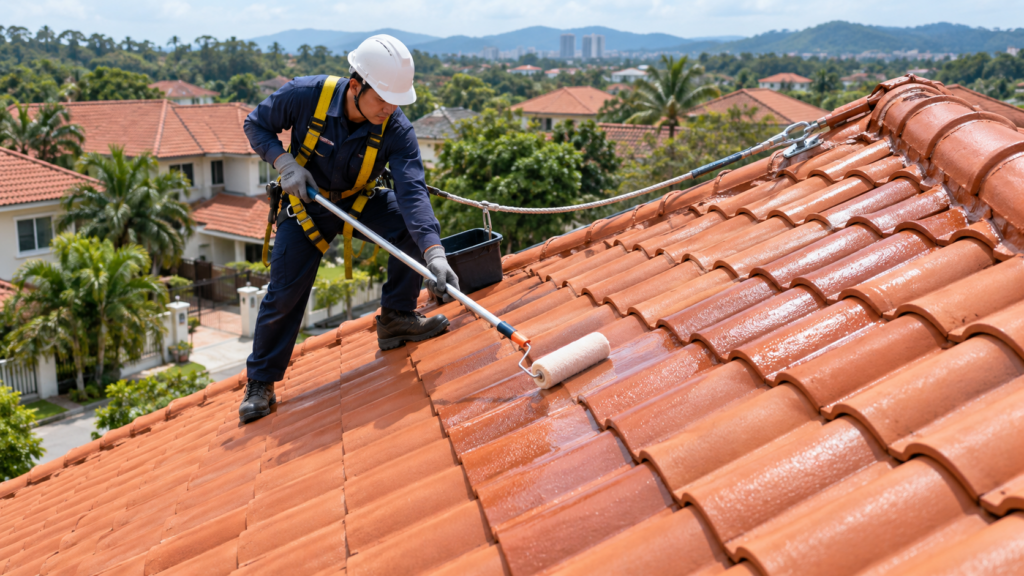
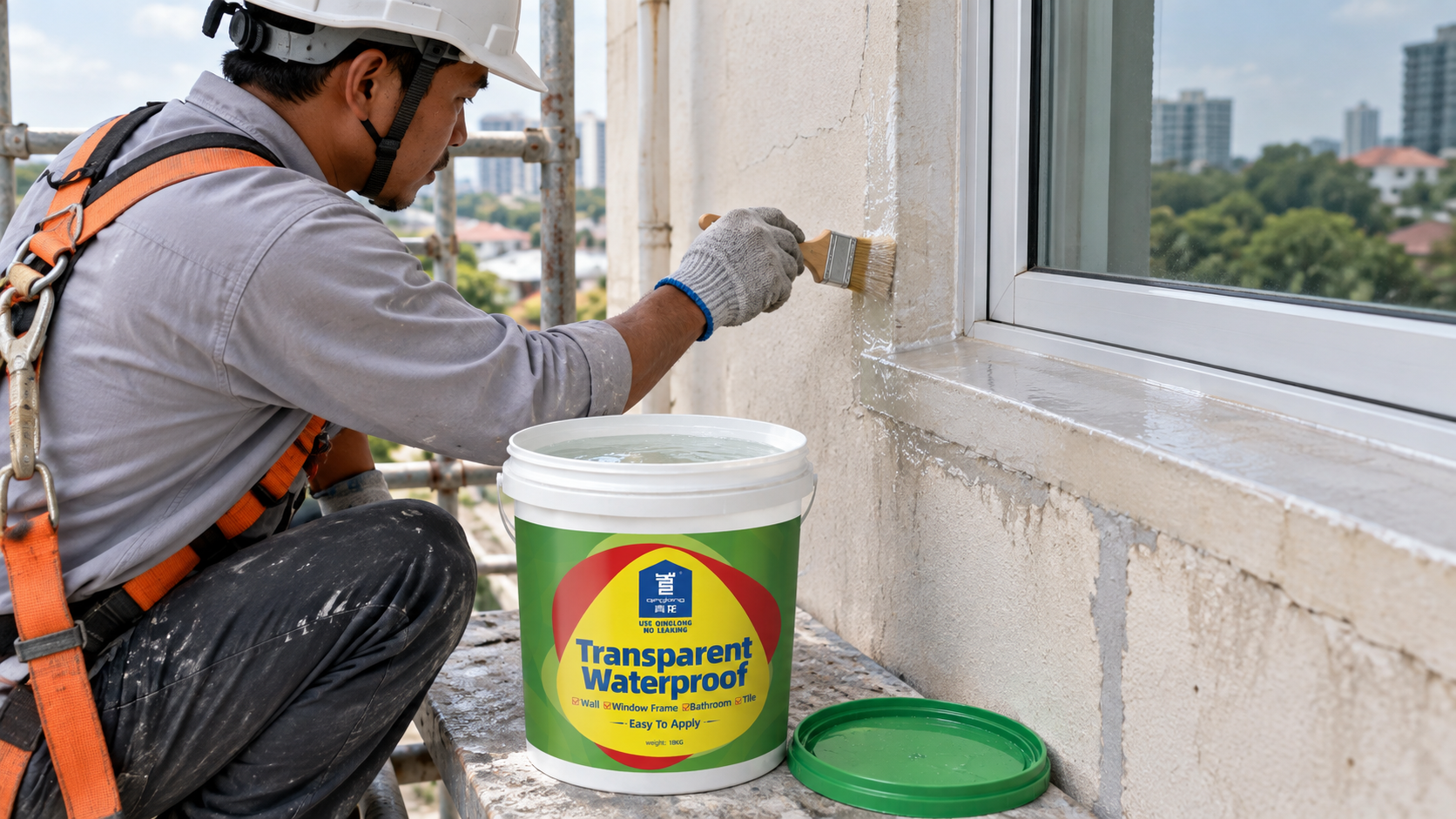
An exterior wall waterproof coating is useful when the wall surface is basically sound but needs protection against rain penetration. For example, QingLong’s exterior wall transparent waterproof coating is designed as a flexible, transparent and colourless solution for exterior walls where the existing appearance needs to be retained, subject to surface condition and application requirements.
However, coating selection should not come before substrate assessment. A coating can only perform properly when it bonds to a stable surface. If the wall has loose paint, powdery plaster, hollow render, active cracks or trapped moisture, these conditions should be corrected first.
A transparent coating is also not the same as structural crack repair. If a crack continues to move, opens through the full plaster thickness or follows a construction joint, the joint may need proper treatment before any surface coating is applied. Likewise, window and pipe gaps may require suitable sealant detailing rather than only brushing coating over the general wall area.
Exterior wall waterproofing is suitable when the main rain entry is through a sound but absorbent or finely cracked wall surface. If water is entering through failed joints, window frames, penetrations, hollow plaster or roof-wall junctions, those defects must be repaired first; otherwise, the coating may protect the wrong area.
This distinction saves money. Coating the entire wall may look like a comprehensive solution, but if the actual leak is at one window sill or awning fixing, the wall may still leak after the work is completed.
The Inspection Should Separate Surface Absorption from Detail Failure
Before approving exterior wall waterproofing work, the owner should understand what the inspection is trying to prove. The goal is not only to find visible cracks. The goal is to separate surface-related seepage from detail-related leakage.
Surface absorption usually shows as widespread dampness, peeling paint, water marks or moisture patches across a broad wall area. It may occur where the paint film has aged or where plaster cracks allow rainwater to enter.
Detail failure is more localised. It often appears around windows, corners, pipe penetrations, beam lines, parapets or wall junctions. The stain may be concentrated even though the defect outside is small. These areas need closer attention because they are often missed when the repair scope is written too generally.
For a landed house, inspection may focus on upper exterior walls, side elevations, balcony-wall junctions, window frames and roof edges. For a commercial building, the inspection may also include façade joints, signage supports, ledges, parapets and access limitations. For higher walls, safe access becomes part of the repair planning, not an afterthought.
A practical repair scope should identify:
The likely entry points
The condition of existing paint or plaster
Whether cracks are static or movement-related
Which joints or penetrations need sealant treatment
Whether the wall can be coated directly or needs preparation
Whether the finish must remain transparent, coloured or repaintable
This helps avoid a vague instruction such as “waterproof the wall”, which can mean very different things depending on the actual defect.
 Choosing the Repair Approach Before Repainting the Wall
Repainting too early is one of the most common mistakes in exterior wall leakage. New paint may improve appearance, but normal exterior paint is not always designed to bridge cracks or resist rainwater penetration through weak details. If waterproofing work is needed, the repair sequence should be planned before final finishing.
In some cases, the correct approach is localised: reseal window perimeters, repair pipe penetrations, treat cracks and repaint the affected wall. In other cases, a full exterior wall waterproof coating may be justified because the surface is generally porous, cracked or exposed to repeated rain impact.
The decision should be based on evidence, not only on the size of the damp patch inside. A small stain can come from a serious façade defect, while a large damp area may come from general surface absorption. The best repair scope is the one that addresses the actual rain entry route and prepares the wall well enough for the chosen material to bond.
If your building has rain-related wall seepage, peeling paint or recurring damp patches, QingLong Waterproofing can help review the exterior wall condition and recommend a suitable repair method. You may contact QingLong Waterproofing to discuss the site condition before deciding whether coating, sealing or more detailed repair is required.
Conclusion
Exterior wall leakage during rain is not always solved by coating the largest visible wall area. The important decision is whether rainwater is entering through the wall surface or through a specific detail such as a window edge, crack, penetration or roof-wall junction. Once that entry route is understood, Johor Bahru exterior wall waterproofing becomes more targeted, more practical and less dependent on guesswork.
Frequenlty Asked Questions (FAQs)
1. Why does my exterior wall only leak when it rains?
Rainwater may be entering through exterior cracks, window edges, pipe penetrations, roof-wall junctions or other façade details. Wind-driven rain can make the leakage appear only during heavy rain or when rain hits a particular side of the building.
2. Does a damp patch inside the house show where the leak is?
Not necessarily. Water can enter at an upper crack, window perimeter or roof-wall junction and travel through plaster, beam edges or internal finishes before appearing as a damp patch elsewhere.
3. Can I simply repaint the damp wall?
Repainting alone may only hide the symptom temporarily. If rainwater is still entering from outside, peeling paint, mould, powdery plaster or recurring stains may return.
4. What are the common causes of exterior wall leakage?
Common entry points include hairline or movement cracks, failed exterior paint, window frame and sill joints, air-conditioning pipe penetrations, roof-wall or parapet junctions, expansion joints and gaps around façade fixtures.
5. How do I know whether my wall needs waterproof coating or repair work?
The key is to identify whether the moisture is caused by general surface absorption or a specific detail failure. Once the actual rain entry route is identified, the appropriate combination of crack treatment, sealing, surface preparation, coating or repainting can be determined.