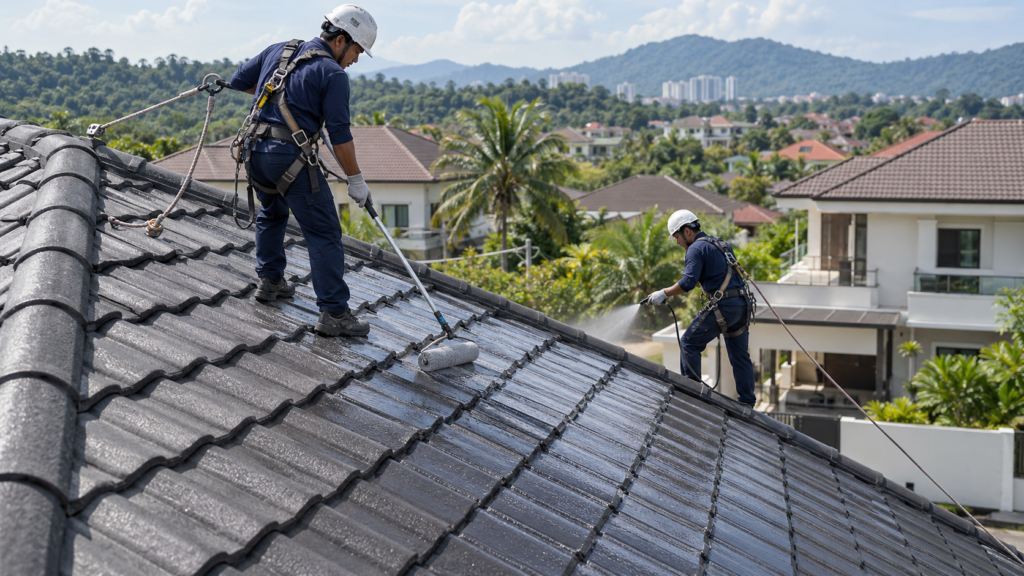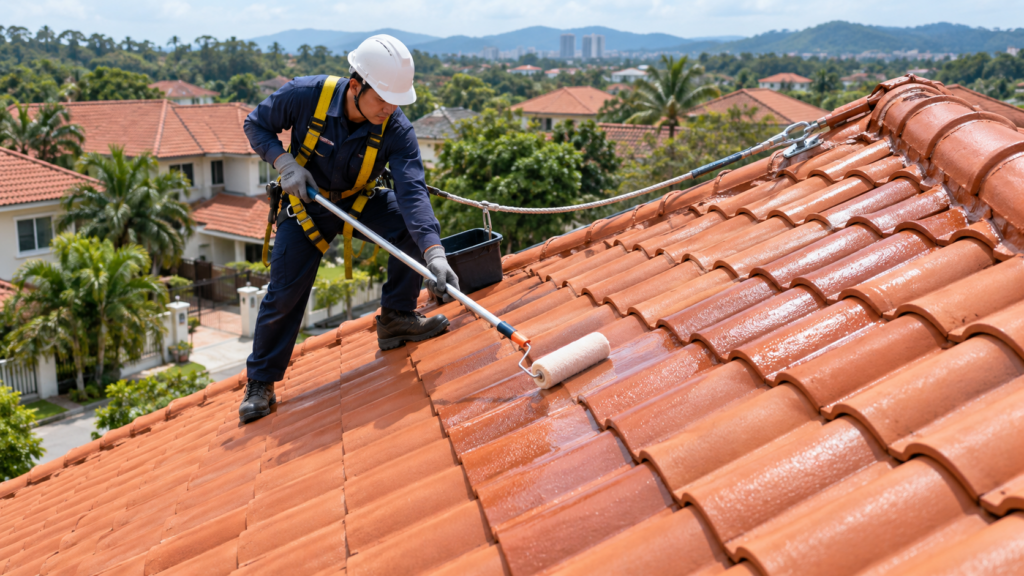
A ceiling stain after heavy rain often makes the repair decision feel urgent. Many owners immediately search for a Kuching waterproofing contractor and ask for a roof coating, balcony repair or wall treatment. That may be the right action, but only after the leak path is understood. Water does not always appear directly below the entry point. It can travel along a slab, roof sheet, screed layer, pipe sleeve or wall junction before showing up indoors. If the diagnosis is wrong, even a good waterproofing material may be applied to the wrong area.
The First Decision Is Not the Product, but the Leak Path
For a leaking house, shoplot or commercial unit in Kuching, the first useful question is not “Which waterproofing product is best?” It is “Where is the water entering, and how is it travelling?”
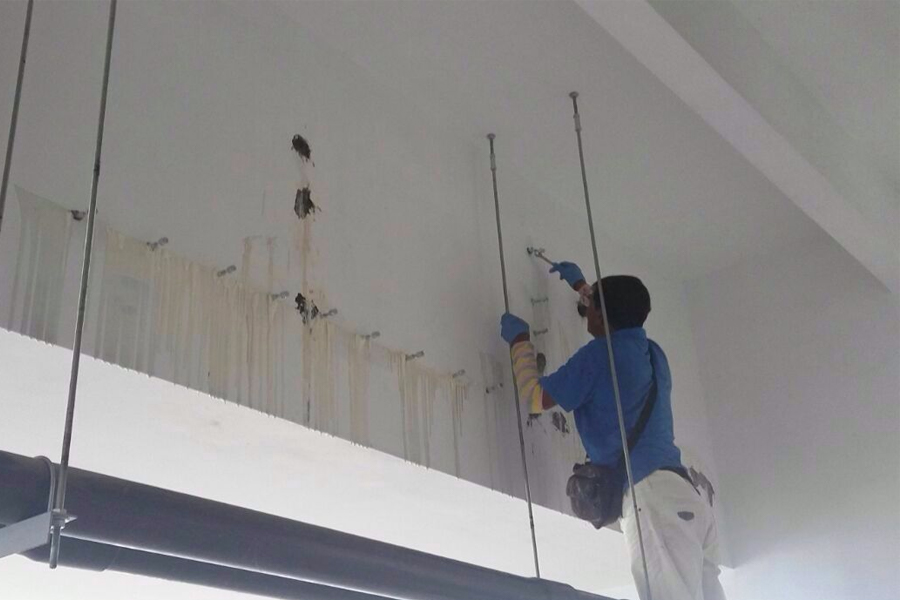
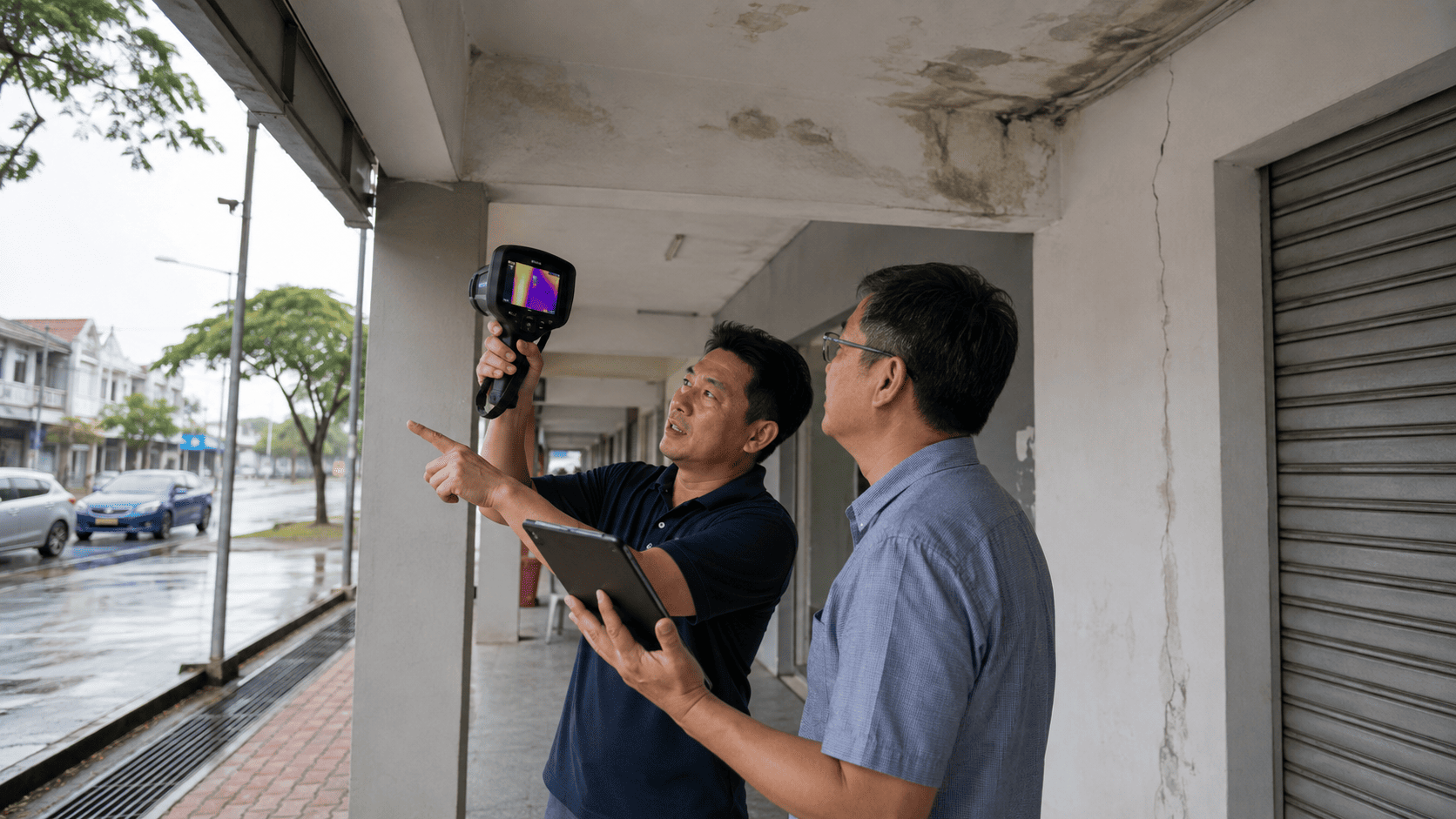
A stain on the ceiling below a flat roof may point to the roof slab, but it may also come from a parapet crack, blocked rainwater outlet, pipe penetration or failed joint around an extension. Dampness near a window may be caused by exterior wall seepage, but it may also come from sealant failure, hairline cracks around the frame, or water tracking from a higher façade detail.
A waterproofing contractor should diagnose the leak source before recommending a repair system. The visible stain shows where water exits, not necessarily where water enters. The practical implication is simple: coating the visible area or patching the nearest crack may stop the symptom temporarily, but it may not solve the actual water entry point.
This matters because different leak sources require different repair scopes. A roof slab repair, metal roof fastener repair, exterior wall coating and balcony tile waterproofing job are not the same technical decision.
Why Rain Timing in Kuching Can Confuse Leak Diagnosis
Kuching’s frequent rain can make leakage easier to notice but harder to interpret. A leak that appears during strong wind-driven rain may involve wall cracks, window edges or roof side laps. A leak that appears only after long rainfall may involve ponding water, blocked outlets or slow water migration through a saturated screed layer. A leak that appears hours after the rain stops may not be coming from the most obvious surface.
This timing information is useful. The owner should note whether the leak appears:
immediately when rain starts,
only during heavy rain,
only when wind comes from one direction,
after several hours of continuous rain,
or after the rain has already stopped.
Each pattern suggests a different inspection path. Immediate leakage may point to an open joint, roof penetration or direct defect. Delayed leakage may indicate trapped water moving through a screed, slab crack or wall cavity. Wind-related leakage may require closer checking of façade details, window frames, parapets and side wall exposure.
A contractor who asks about leak timing is not delaying the repair. That question helps avoid applying waterproofing where the water is not entering.
What a Proper Site Check Should Establish Before Repair
A useful leak inspection does not need to be complicated, but it should be specific. The contractor should connect the indoor symptom with the external building details that could realistically feed that symptom.
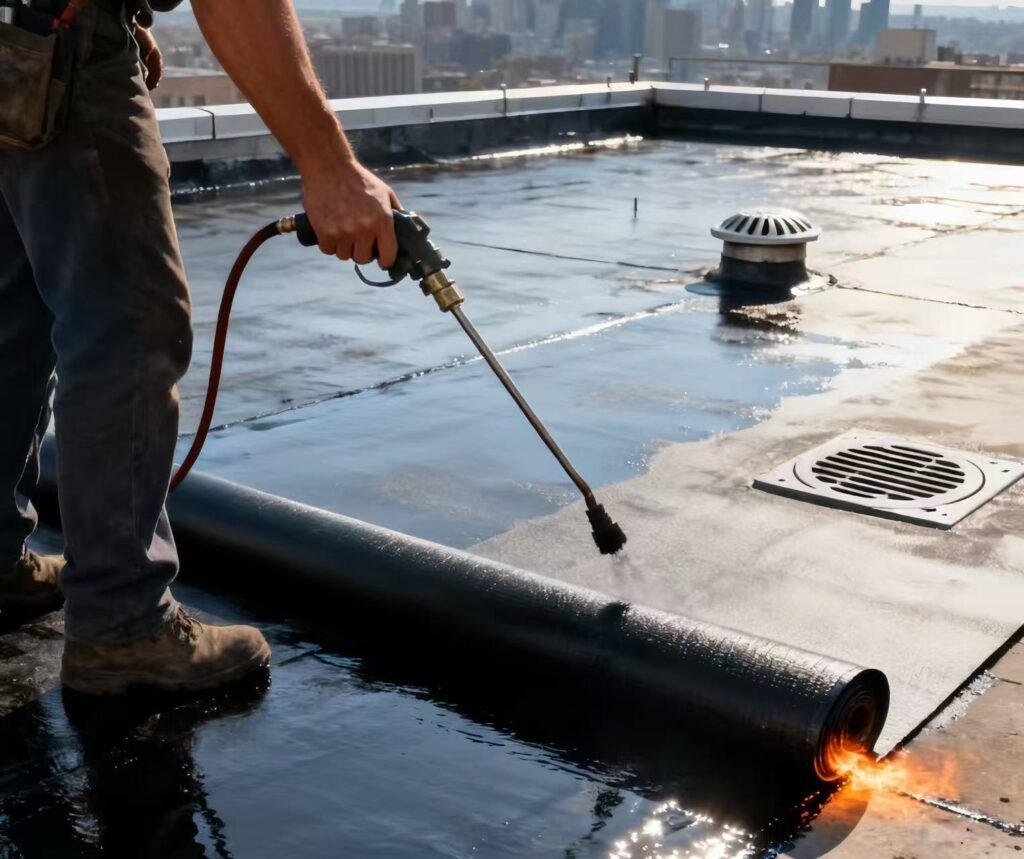
For a roof leak, the inspection may need to check the roof surface, drainage falls, outlets, cracks, old coating adhesion, parapet junctions, pipe penetrations and any previous patching. On metal roofs, fasteners, overlaps, ridge capping, rusted areas and sealant details are often more relevant than the middle of a roof sheet.
For balcony or toilet leakage, the tile surface alone does not confirm the waterproofing condition. Hollow tiles, cracked grout, wall-floor junctions, floor traps, pipe sleeves and door thresholds can all affect the repair decision. If the balcony is above an occupied room, the inspection must also consider whether water is trapped below the tiles.
For exterior wall seepage, the contractor should not only look for visible cracks. Existing paint adhesion, powdery surfaces, construction joints, window perimeter sealant and hairline cracks around openings all influence whether a transparent waterproof coating, exterior wall coating or local crack repair is suitable.
The inspection should answer one practical question: can the existing surface receive a waterproofing system reliably, or must weak material, hollow areas, failed coating, loose tiles or contaminated surfaces be removed first?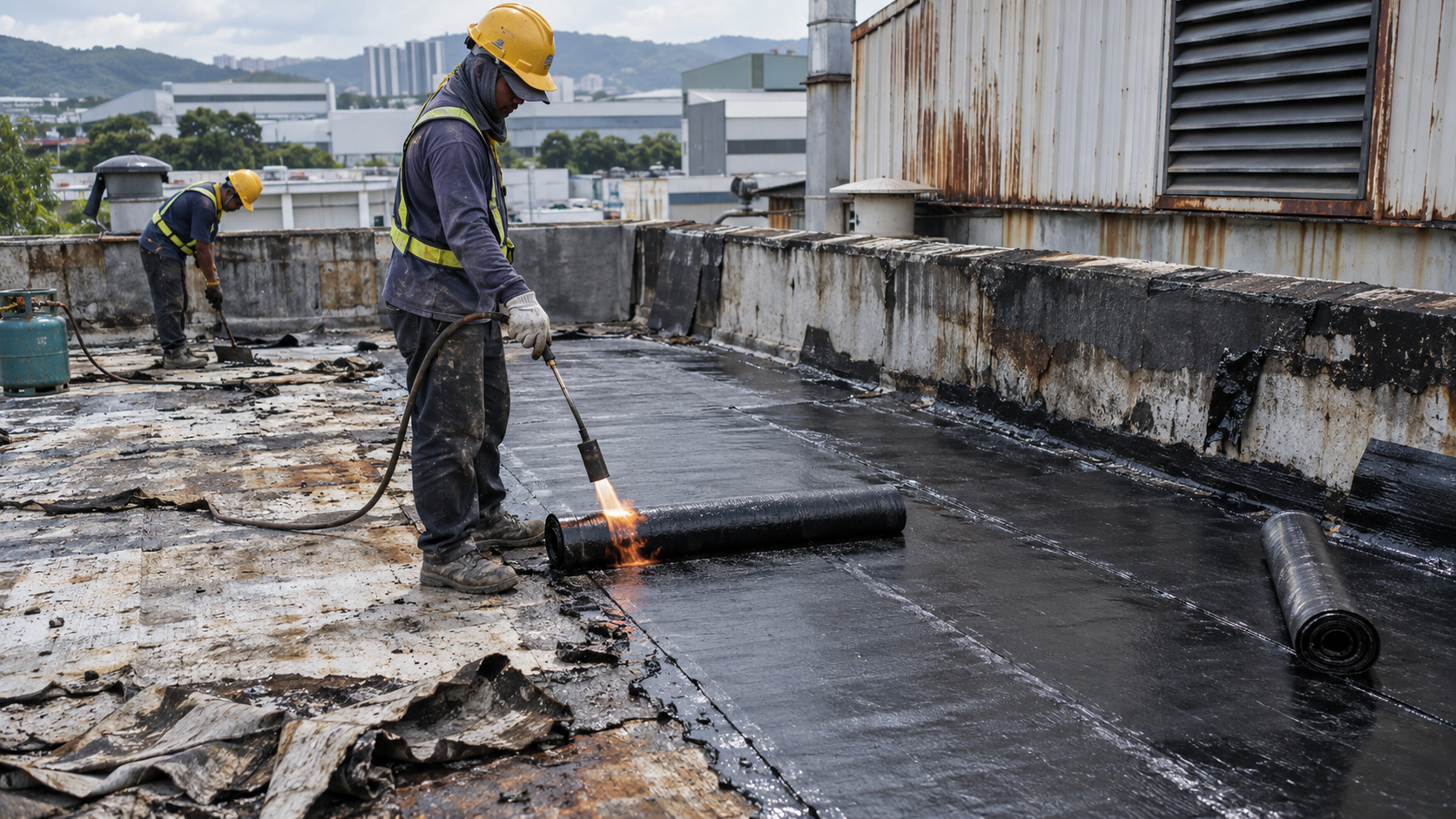
The Correct Repair Scope Depends on What the Diagnosis Shows
Different findings lead to different repair scopes. This is why a general promise to “solve leakage” is less useful than a clear explanation of what will be treated.
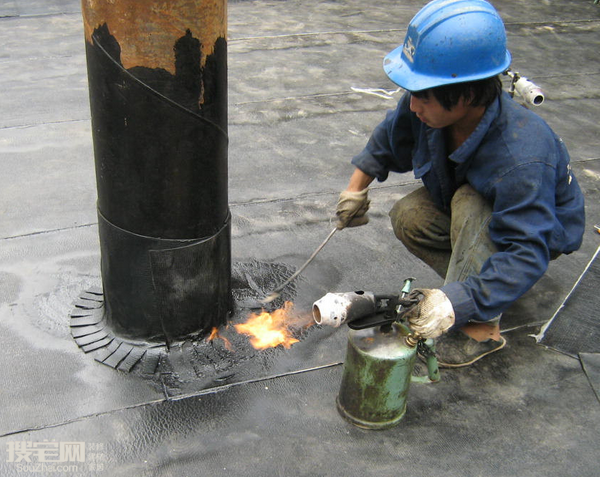
If the leak is from a roof outlet area, recoating the entire roof may not be the most efficient first action. The outlet, surrounding falls and ponding zone may need detailed repair. If the leak is from a parapet wall crack, waterproofing only the roof floor may leave the vertical entry path untreated. If water is entering through a pipe penetration, the repair must address the penetration detail, not just the surrounding slab.
For a tiled balcony, retaining the tiles may be possible only if the surface is stable and the repair system is suitable for the intended finish. If tiles are hollow, debonded or allowing water to remain trapped underneath, a surface coating may hide the problem rather than resolve it. The decision is not simply “remove tiles or keep tiles”; it depends on whether the existing tile layer can function as a stable substrate.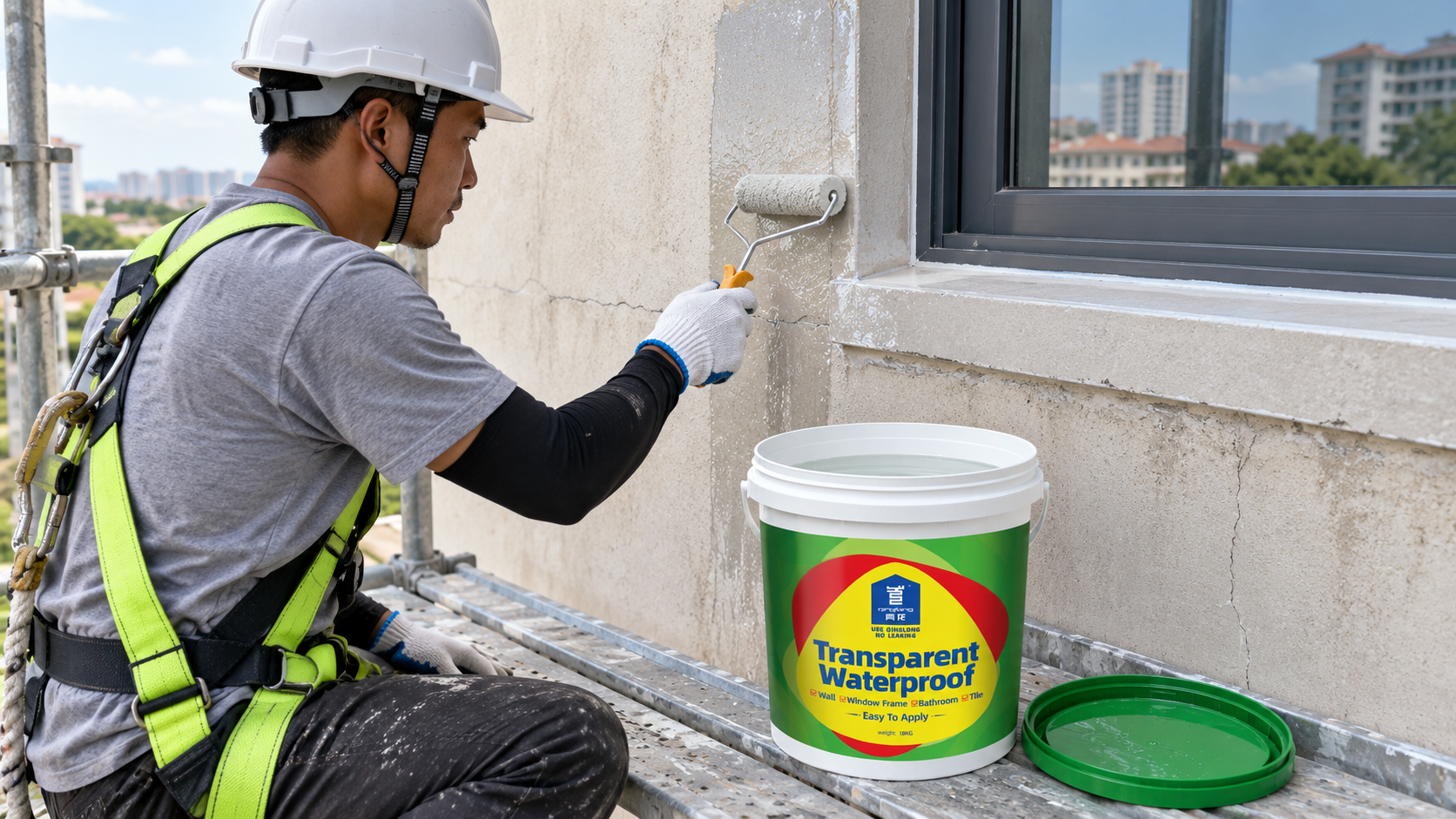
For exterior walls, a transparent coating can be suitable when the owner wants to retain the existing appearance, but the wall still needs sound paint or a compatible surface. If the existing coating is chalky, peeling or poorly bonded, applying a waterproof layer over it may transfer the failure to the old paint layer.
A good diagnosis narrows the repair scope. It helps the owner understand whether the job is a local detail repair, a surface waterproofing treatment, a full system renewal or a combination of several details.
When a Quick Patch Is Acceptable, and When It Is a Risk
Not every leak requires immediate full-scale waterproofing. A temporary patch can be reasonable when water is actively entering, the source is obvious, and the purpose is to reduce damage before a proper repair window. For example, a small open gap around a roof penetration may be temporarily sealed to stop active water ingress.
However, temporary repair becomes risky when it replaces diagnosis. Repeatedly applying sealant to different cracks, adding more coating over an old failed coating, or patching the underside of a leaking slab can make the final repair harder. It may trap moisture, hide the original defect, or create adhesion problems for the next waterproofing system.
This is especially important for occupied homes, rented properties and business premises. Owners naturally want fast action, but fast action should still be guided by evidence. If a contractor cannot explain why the proposed patch relates to the observed leak pattern, the repair may be based on assumption rather than diagnosis.
Choosing a Kuching Waterproofing Contractor Based on Diagnosis Quality
When comparing waterproofing contractors in Kuching, the most useful difference is not always the lowest price or the longest verbal assurance. Look at how the contractor evaluates the leak before quoting.
A practical contractor should be able to explain the suspected entry point, the evidence supporting that suspicion, the surface preparation required, the waterproofing material or system proposed, and the limitation of the repair. If the contractor recommends a coating, ask whether the substrate is sound enough. If the contractor recommends hacking tiles, ask what evidence shows the tile layer is unreliable. If the contractor recommends only sealing cracks, ask whether drainage, joints and penetrations have also been checked.
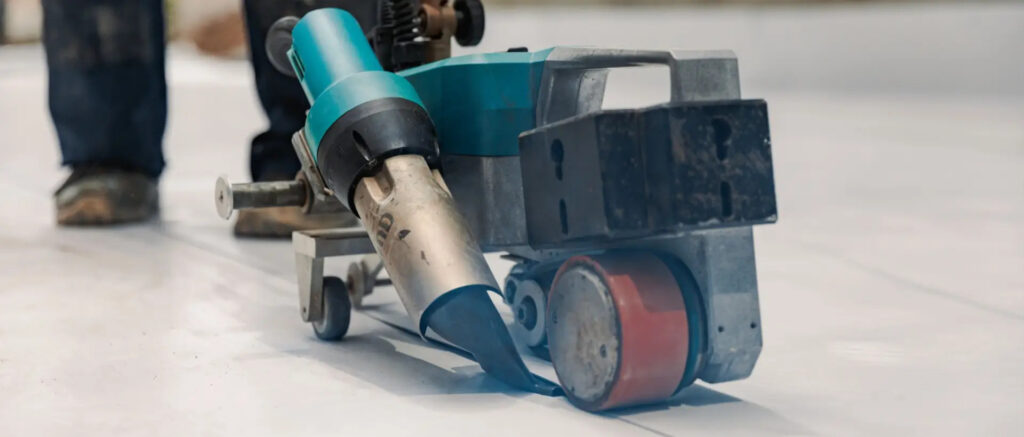
QingLong Waterproofing supplies and applies waterproofing systems for residential, commercial and industrial projects, including roofs, exterior walls, wet areas, penetrations and joint details. Where the correct method depends on site condition, the recommendation should follow the leak diagnosis rather than start with a fixed product.
If you are dealing with recurring leakage or are unsure where the water is entering, you can contact QingLong Waterproofing for a site-condition discussion before deciding on the repair scope.
Conclusion
A leak repair should not begin with guessing the product. It should begin with understanding the path of water. For Kuching property owners, the most important value a waterproofing contractor can provide is a clear diagnosis that connects the visible symptom to the likely entry point. Once that is established, the repair method becomes easier to justify, compare and maintain.
Frequently Asked Questions (FAQs)
1. Should I repair the ceiling stain from inside the room?
An internal repair may improve the appearance, but it usually does not stop water entering from above or outside. The water entry point should be checked before repainting or patching the ceiling.
2. Can waterproofing be done during rainy periods in Kuching?
It depends on the area, material and drying requirement. Some emergency leak control may be possible, but many coatings and membranes need a suitable dry surface and weather window for proper adhesion and curing.
3. Is a full roof recoating always necessary for roof leakage?
No. Some roof leaks come from outlets, joints, fasteners, penetrations or parapet details. A full recoating may be appropriate for an aged roof surface, but the weak details still need to be identified.
4. Can existing balcony tiles be waterproofed without hacking?
Sometimes, but only if the tiles are stable, well bonded and suitable as a substrate for the chosen system. Hollow tiles, trapped moisture and failed grout lines can make tile-over waterproofing less reliable.