An underground leak in Kuching does not always show itself at the entry point. Water may appear at a basement wall, a car park floor joint, a lift pit, a pipe sleeve or the corner between wall and slab, but the source may be outside, above, below or several metres away. This is why underground waterproofing in Kuching should begin with water-entry diagnosis, not immediate patching. The practical question is simple: is water entering through the concrete body, a joint, a penetration, an external drainage weakness or pressure from the surrounding ground?
The Leak Location Is Not Always the Entry Point
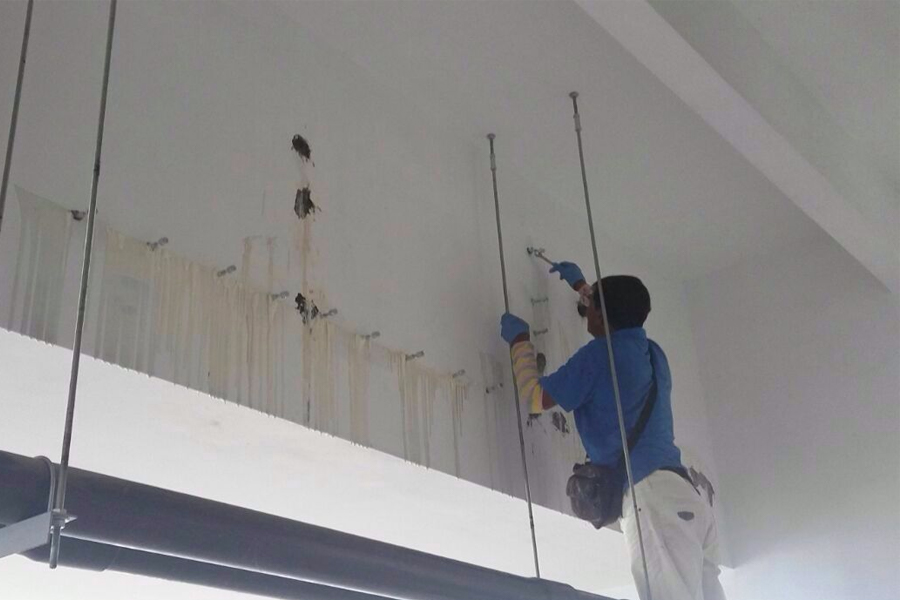
For underground structures, visible dampness is often only the exit point. Water can travel along the interface between concrete and screed, behind wall finishes, through honeycombed concrete, along reinforcement cracks or beside embedded pipes before becoming visible.
A stain at the wall-floor junction, for example, may suggest the corner itself has failed. Sometimes that is true. But it can also mean water is building up behind the retaining wall and finding the easiest path through a construction joint or poorly compacted concrete. A wet patch on the floor may come from below the slab, from a nearby pipe penetration or from water travelling under a topping layer.
For underground waterproofing, the first decision is not which product to apply. The first decision is whether the water is entering through a crack, a construction joint, a pipe penetration, porous concrete, failed external protection or hydrostatic pressure. Each source requires a different repair approach, and surface coating alone may not stop active pressure-driven water.
This matters because underground areas are less forgiving than roofs or external walls. Once soil is backfilled against the structure, the outside face is difficult to access. A repair made only from the internal side must be chosen with a clear understanding of how water pressure is acting on the structure.
Kuching Site Conditions Can Change the Diagnosis
Local conditions should not be used as a vague explanation for every leak. However, in Kuching, rainfall intensity, site drainage, low-lying surroundings and nearby watercourses can affect how underground leaks behave. Some basements or semi-basements remain dry during normal weather but leak after prolonged rain because the surrounding ground becomes saturated and temporary hydrostatic pressure increases.
This pattern provides useful diagnostic information. If seepage appears only after heavy rain, external drainage and ground water movement should be checked. If leakage continues during dry periods, the source may be constant ground moisture, a plumbing-related issue, trapped water behind finishes or water entering from a higher part of the structure.
The timing of leakage is also important. Water appearing immediately during rain may point to direct entry from external openings, surface drainage or exposed wall details above ground level. Water appearing many hours later may suggest water is travelling slowly through soil, cracks, joints or the backfilled zone before reaching the underground wall.
For a property manager or building owner, recording when the leak starts, where it appears and whether it stops after rain is more useful than simply photographing the stain. The pattern helps narrow down the entry route.
Details That Commonly Allow Water Into Underground Areas
Underground waterproofing failures are often concentrated at details rather than across the entire concrete surface. A large retaining wall may look like the problem, but the weakness may be only one joint, sleeve or corner.
The most important areas to inspect include:
• Wall-floor construction joints where the slab and wall were cast at different times
• Pipe penetrations, sleeves, floor traps, sump connections and service openings
• Expansion joints or movement joints that were not properly sealed or protected
• Honeycombed concrete, poorly compacted areas or visible segregation
• Cracks caused by shrinkage, settlement or movement
• Lift pits, sump pits and low points where water pressure concentrates
• External drainage channels, surface falls and outlets near basement walls
• Failed protection board or damaged external membrane where excavation is possible
Each detail tells a different story. A pipe penetration leak often appears as a circular wet zone around the sleeve. A construction joint may show as a continuous line of dampness at the wall-floor junction. Honeycombed concrete may show irregular seepage patches. A movement joint may leak intermittently because it opens and closes with building movement.
The repair implication is not the same. A leaking pipe sleeve may need sealing around the annular gap. A crack with active water may need injection or water-stopping treatment before any coating is applied. A failed external membrane may require excavation if access is possible and the risk justifies it.
Why Internal Patching Often Fails Under Water Pressure
Internal patching can be useful, but only when it matches the leakage mechanism. If water is pushing through a crack or joint from outside, a thin internal surface layer may debond, blister or allow water to reappear at the next weakest point. The patch may look dry for a short period, then fail after the next rain cycle.
This does not mean internal repair is always wrong. In many occupied buildings, excavation is difficult, expensive or disruptive. Internal negative-side waterproofing may be the practical option, especially for basements, lift pits, tunnels, underground rooms and car parks where external access is limited.
The key is to prepare the repair sequence properly. Active leakage may need to be stopped first using a suitable fast-setting or water-plugging material. Cracks and joints may need injection, chasing, sealing or reinforcement depending on movement and water flow. Only after the active pathway is treated should a waterproofing coating or slurry be considered for broader surface protection.
QingLong’s product range includes materials such as Fast Leakage Fix, K11 Waterproof Slurry, waterproof sealant and other waterproofing products for different site conditions. Suitability should still be checked against the actual substrate, water pressure, crack condition and application method rather than selected by product name alone.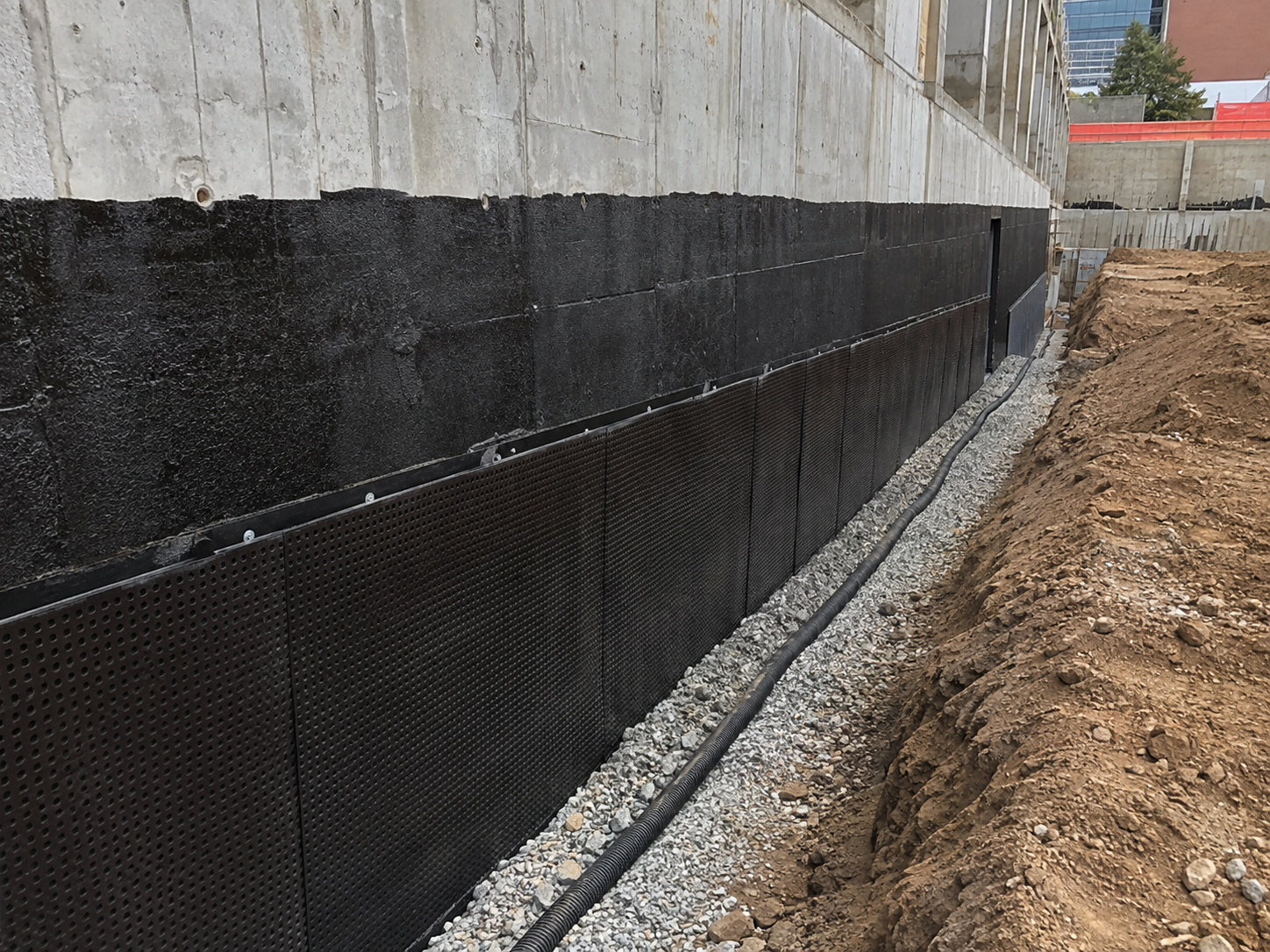
Choosing Between External Waterproofing and Internal Repair
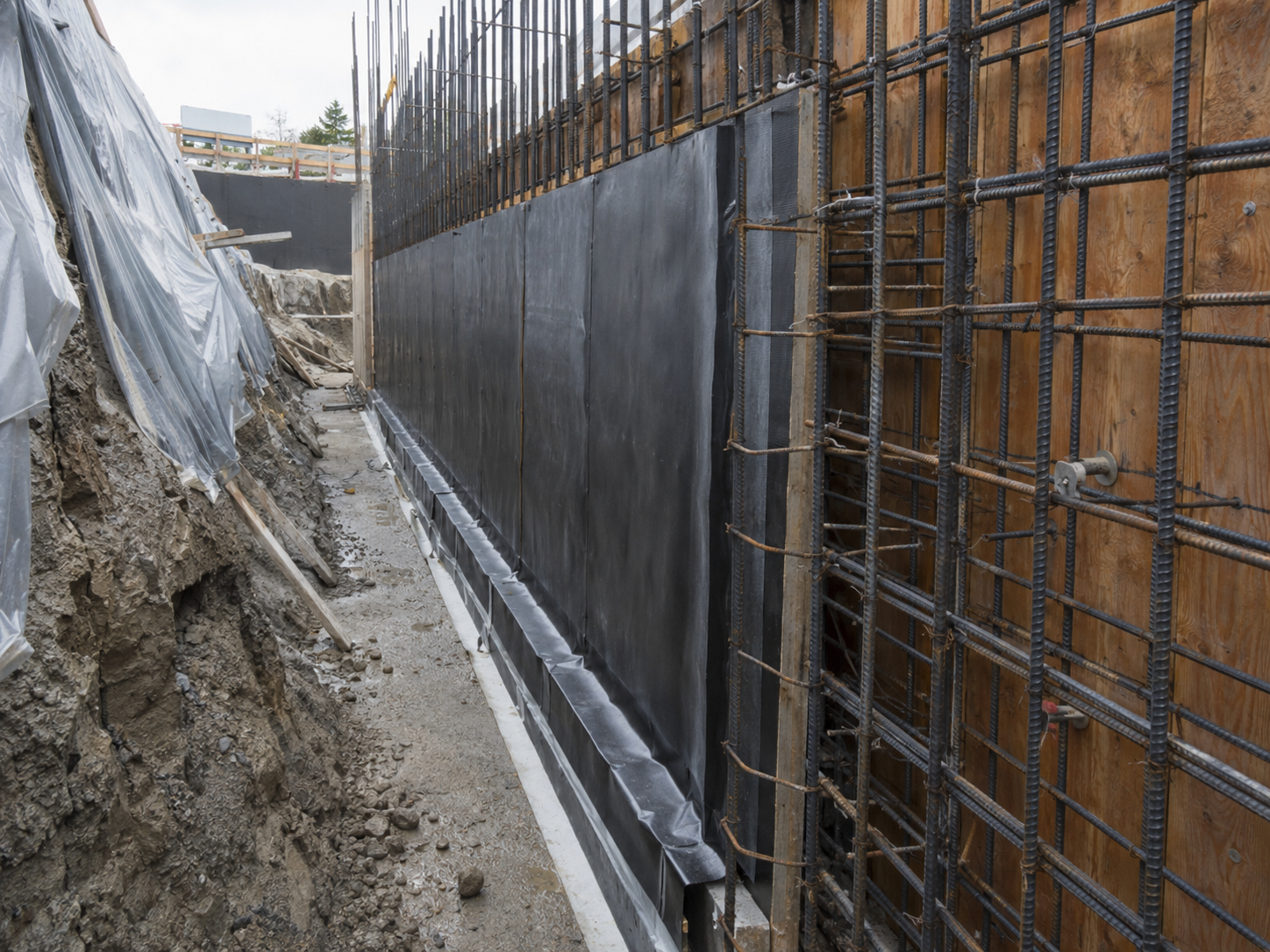
External waterproofing is usually preferred when the structure is accessible before backfilling or when excavation is practical. It addresses water before it enters the concrete, which is generally a stronger approach for retaining walls and base slabs. External systems may include membrane protection, proper termination, drainage board, protection board and attention to pipe sleeves and construction joints.
However, many Kuching properties seeking repair are already completed and occupied. Excavation may affect neighbouring structures, landscaping, access roads, utilities or business operations. In such cases, the owner must compare the technical benefit of external work with the practical disruption and cost.
Internal repair becomes more realistic when the leak source can be isolated and treated from inside. This may include injection at cracks, sealing around penetrations, treating wall-floor junctions, using cementitious waterproofing slurry on prepared concrete or improving sump and drainage management.
A simple way to compare the options is this:
If water is entering across a wide external wall area and excavation is possible, external waterproofing may provide a more complete barrier.
If leakage is concentrated at cracks, joints or penetrations, targeted internal repair may be more practical.
If water pressure is strong and continuous, the repair must address pressure relief, water-stopping and system adhesion, not only surface appearance.
If the structure has movement joints, the waterproofing detail must allow movement rather than rigidly covering the joint.
The right approach depends less on whether the area is called a basement, car park or underground room, and more on how water is entering and how much access is available.
What an Inspection Should Establish Before Work Starts
A proper inspection for underground waterproofing in Kuching should do more than confirm that an area is wet. It should identify the likely entry route, the water pressure behaviour, the substrate condition and the repair access limitations.
Important questions include: Does water appear during rain or all the time? Is the leak active, damp or only stained? Is the concrete sound, hollow, cracked or honeycombed? Are there pipe penetrations nearby? Is the leak at a construction joint or random wall area? Are there external drains, planter boxes, ramps or surface falls directing water toward the structure?
Moisture trapped behind tiles, plaster or coatings should also be considered. Applying a new waterproofing layer over weak plaster, contaminated concrete or loose coatings can create another failure layer. For underground repair, preparation is not cosmetic. It determines whether the waterproofing material bonds to the actual structure or only to a weak surface finish.
Where active leakage is present, the inspection should also decide whether temporary water-stopping is needed before permanent waterproofing. Emergency plugging can stop water flow, but it should not be mistaken for a complete waterproofing system if the surrounding joint, crack or wall remains untreated.
Conclusion
Underground waterproofing in Kuching should be treated as a water-entry investigation first and a material selection exercise second. The visible wet patch may not show where water entered, and internal patching may fail if pressure, joints, cracks or penetrations are not addressed. Before approving repair work, establish the leak pattern, affected details, substrate condition and access constraints. If your basement, underground car park, lift pit or retaining wall is showing seepage, you can contact QingLong Waterproofing to discuss the site condition and suitable repair approach.