When a roof, balcony, basement or external wall starts leaking, many owners first ask whether the waterproofing contractor can solve the problem quickly. For projects in Sabah, there is another practical question before work starts: is the contractor properly registered with CIDB, and are the site personnel allowed to carry out construction work? This matters especially for commercial buildings, strata properties, factories, public facilities and projects where documentation, safety control and contractor accountability are required.
CIDB status does not automatically prove that a waterproofing repair method is correct. But it is an important first filter before allowing a team onto the site.
“CIDB Certified” Can Mean More Than One Thing
In Malaysia, the phrase “CIDB certified” is often used loosely. For a building owner or property manager, it is better to clarify what the contractor actually means.
A waterproofing contractor may be referring to company registration with CIDB, individual construction personnel registration, safety-related site access requirements, or specific skills training. These are not the same thing.
For most project owners, the basic checks should include whether the contractor company is currently registered with CIDB, whether the registration is valid, whether the work scope is suitable for the project type, and whether the workers entering the site have the necessary construction personnel registration cards.
A CIDB-registered waterproofing contractor gives the owner a clearer basis for site access, documentation and accountability. However, CIDB registration should be treated as a compliance requirement, not as proof that the proposed waterproofing system is technically suitable for the leak. The repair method, substrate condition and product specification still need separate review.
This distinction is important because a legally registered team can still propose the wrong repair if the leak source is misunderstood. At the same time, even a technically capable applicator may create risk for the owner if site documentation is incomplete.
What a Sabah Property Owner Should Verify Before Appointing the Contractor
For a Sabah waterproofing contractor, the first verification should be practical and document-based. Do not rely only on verbal confirmation or a logo on a quotation.
Ask for current CIDB-related documents before approval, especially if the work involves commercial premises, occupied buildings, high-rise access, industrial facilities or controlled project sites.
A simple verification set may include:
1. Company CIDB registration details
Check whether the contractor company is registered and whether the registration is still valid.
2. Relevant contractor grade or work scope
For larger projects, the CIDB grade and category may affect whether the contractor is suitable for the project value or type of work.
3. Construction personnel registration cards
Workers entering the site should have valid personnel registration where required.
4. Method statement and work sequence
The contractor should explain how the waterproofing work will be carried out, not only name the material.
5. Product technical data sheet and application requirements
Waterproofing products should be supported by proper technical information, including substrate preparation, coverage, curing and limitations.
6. Safety and access arrangement
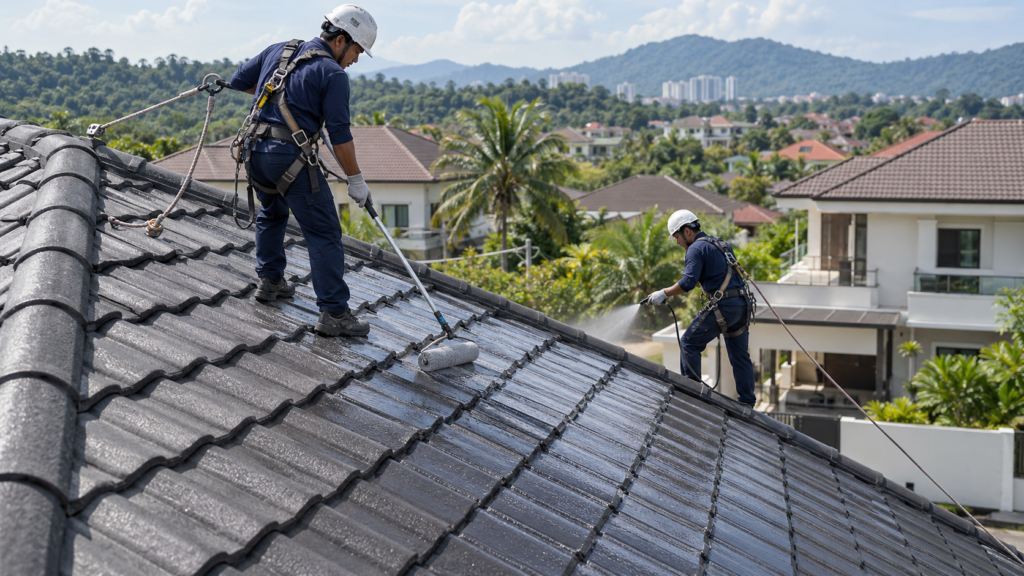
Roof work, façade work, confined areas and wet areas may require different access and safety planning.
These checks help the owner separate a properly prepared contractor from a team that is only offering a quick patch.
CIDB Registration Does Not Replace Leak Diagnosis
One common mistake is to treat compliance documents as if they solve the technical problem. They do not.
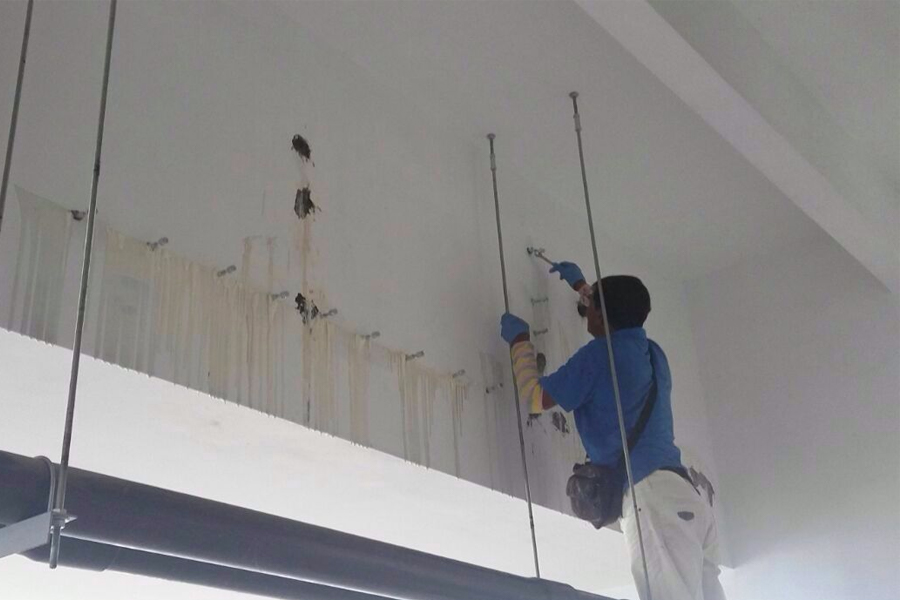
For example, a ceiling stain below a concrete roof does not always mean the entry point is directly above the stain. Water may travel along a screed layer, slab interface, pipe penetration, parapet wall or construction joint before appearing indoors. If the contractor only coats the visible area without tracing the likely water path, the repair may fail even if the team has the required registration.
The same applies to balconies and bathrooms. If tiles are hollow, grout joints are cracked, floor traps are poorly sealed or wall-floor junctions have movement cracks, applying a surface coating without addressing the weak details may only delay the next leak.
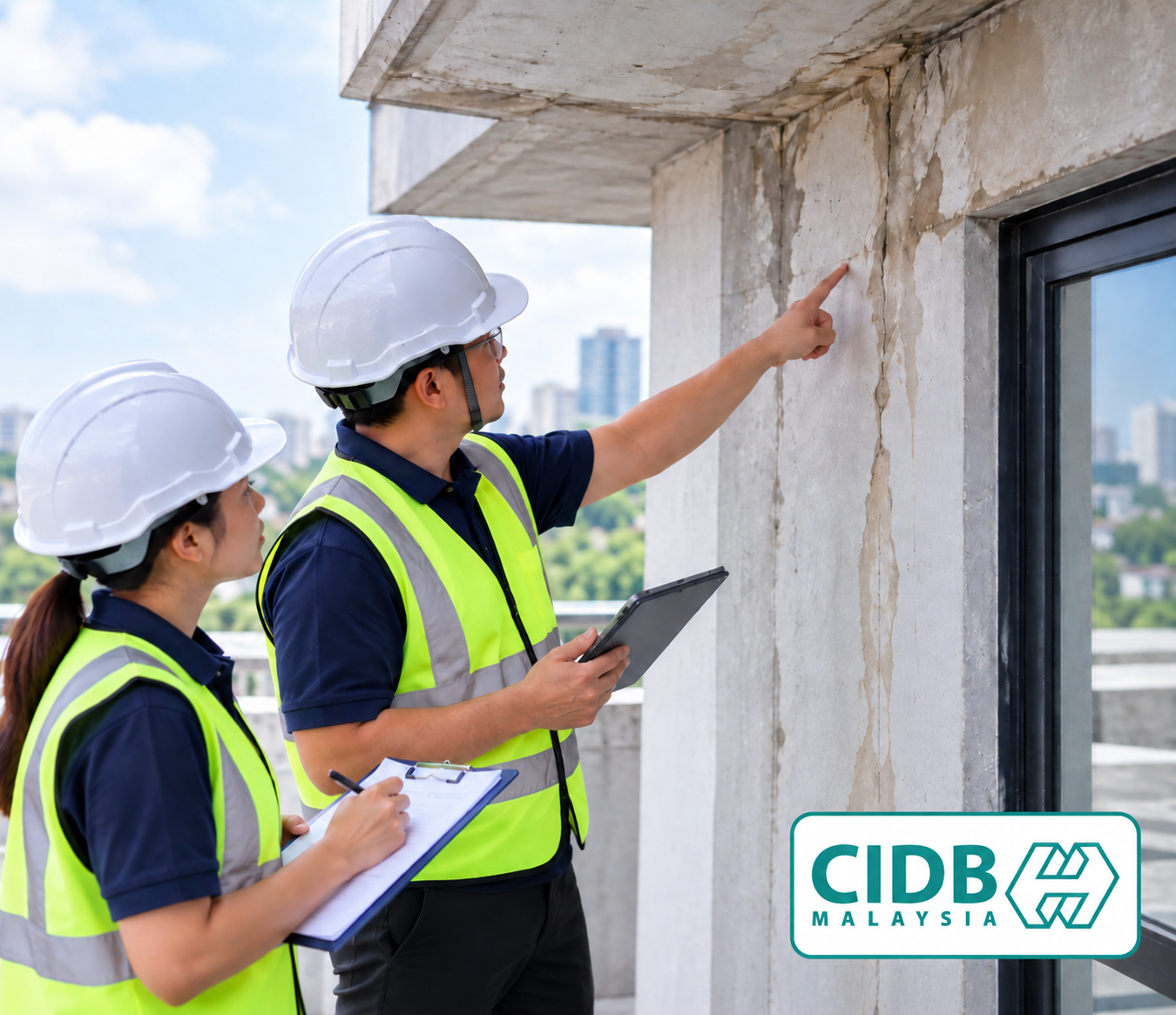
For external walls, repainting or applying a transparent waterproof coating may help only when the substrate, cracks and existing paint adhesion are suitable. If water is entering through window frames, façade joints or failed sealant, the wall coating alone may not stop the seepage.
CIDB status helps confirm that the contractor is recognised within the construction framework. Leak diagnosis confirms whether the proposed repair actually matches the site condition. Both checks are necessary, but they answer different questions.
Why Sabah Projects Need Better Planning, Not Just Fast Repair
Sabah waterproofing projects can involve practical constraints that affect the repair approach. A landed house in Kota Kinabalu, a resort building, a shoplot, a warehouse or an industrial facility may each require different planning because access, material delivery, weather window, working hours and building occupancy are not the same.
For remote or operational sites, the contractor should not arrive with only one generic waterproofing product and decide everything on-site. The owner should expect a clearer repair plan before mobilisation.
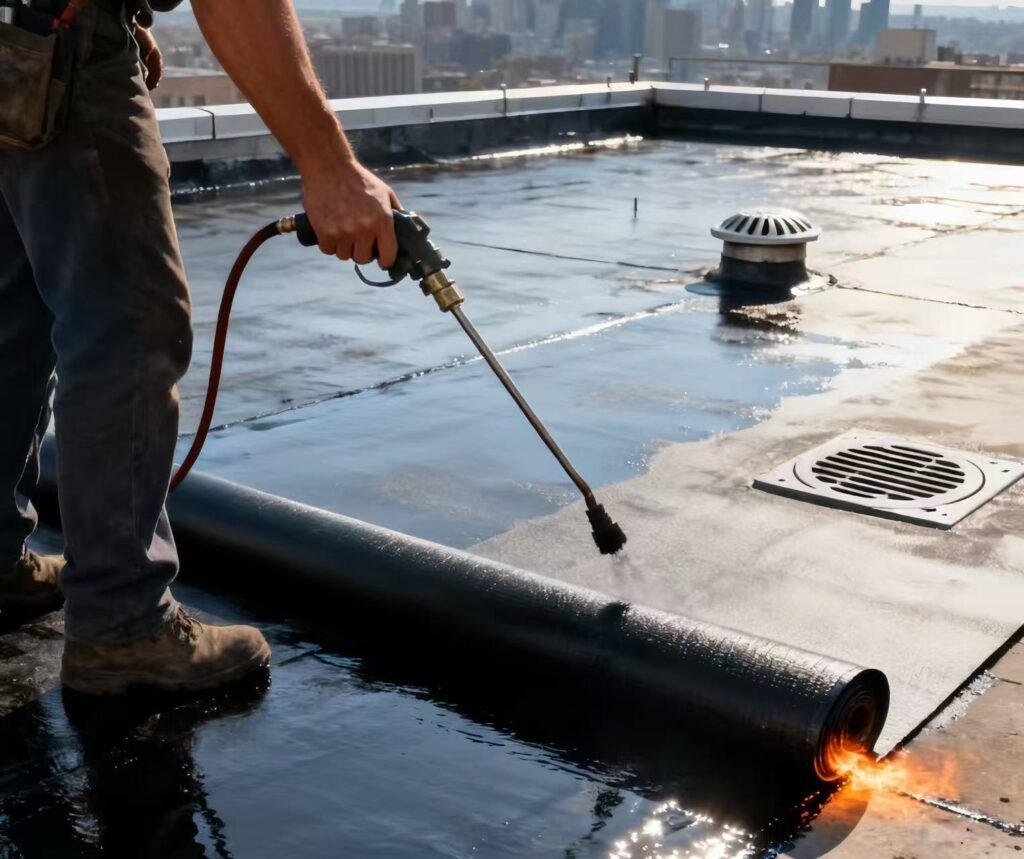
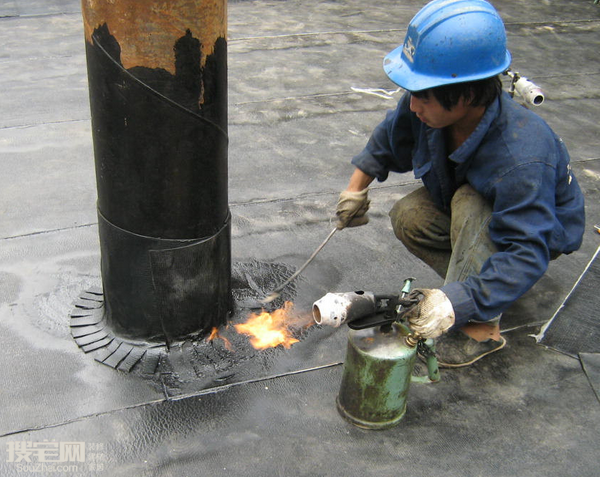
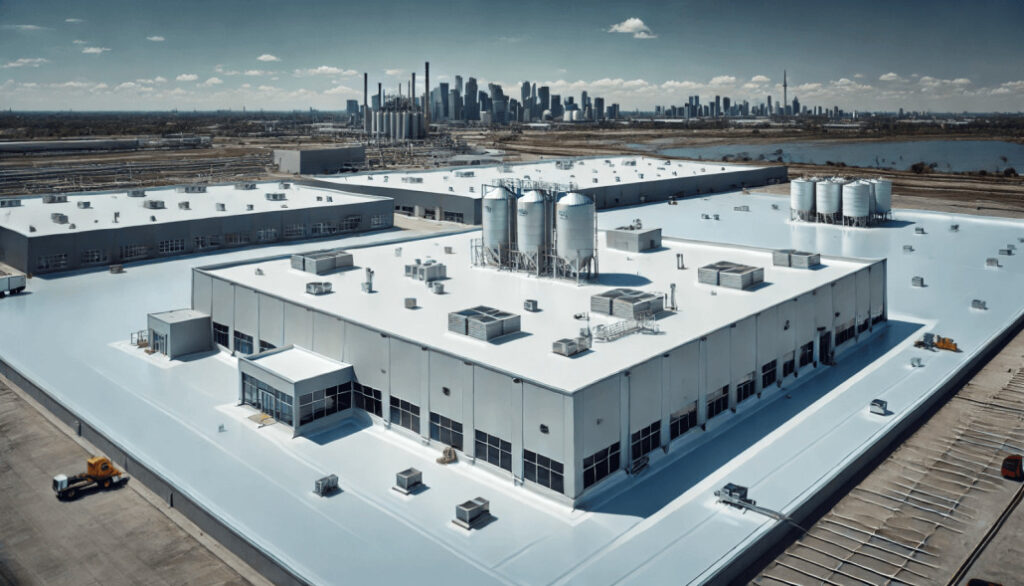
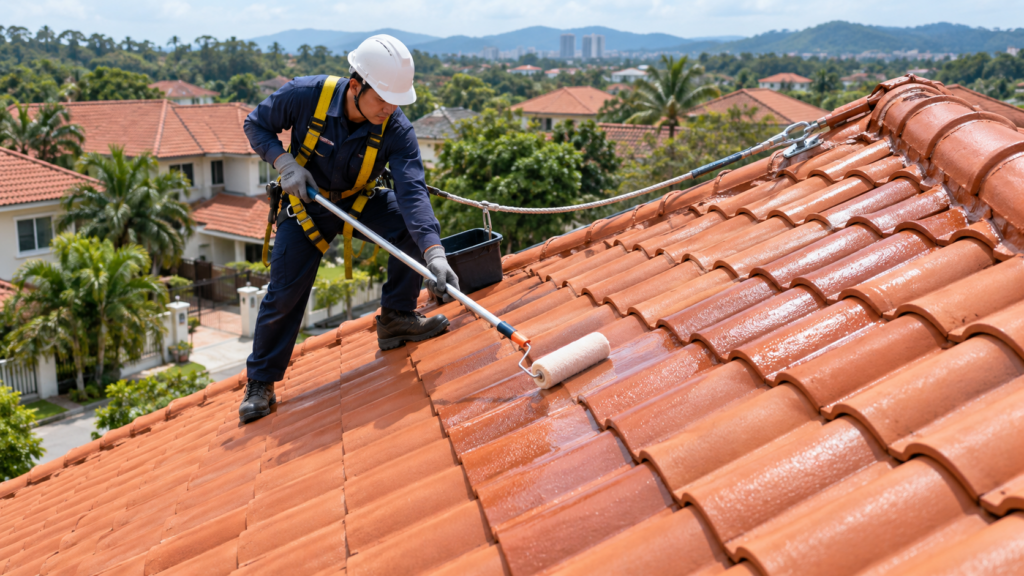
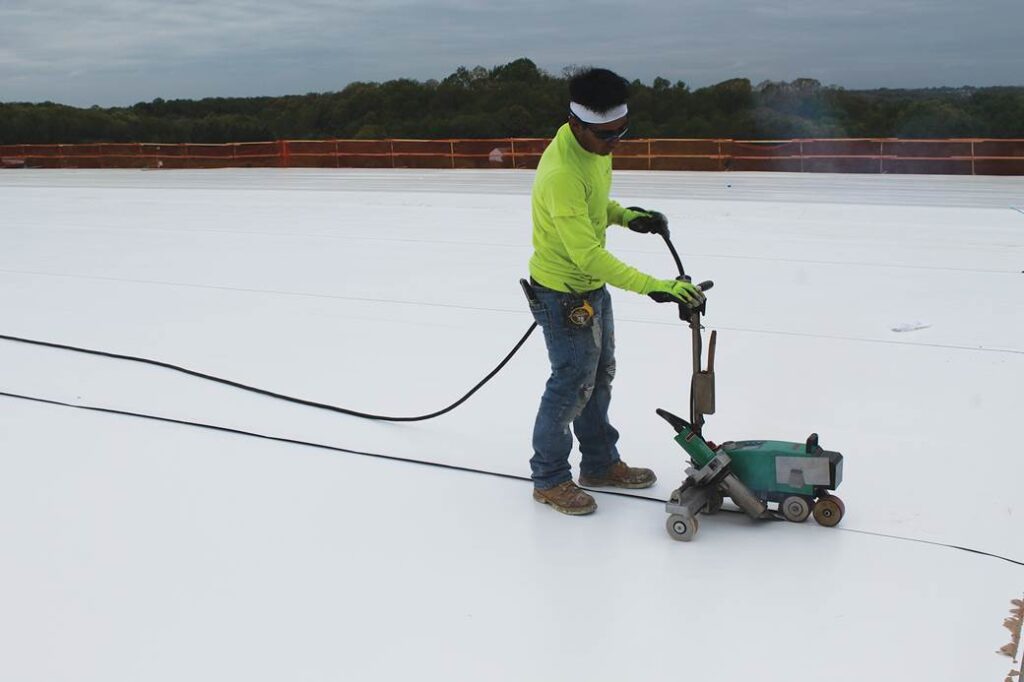
For example, if the work is on an exposed roof, the contractor should assess drainage falls, ponding areas, cracks, outlets, upturns, roof penetrations and existing coating adhesion. If the repair is for a wet area, the discussion should include floor traps, pipe sleeves, wall-floor junctions, tile condition and whether hacking is required. If the issue is façade seepage, access method and joint treatment may be more important than coating the broad wall area.
For waterproofing work in Sabah, the better contractor is not only the one who can mobilise quickly. The contractor should be able to show valid registration where required, explain the leak path, select a system that matches the substrate, and plan around access, curing time, weather exposure and building operation.
This is where contractor selection becomes a project decision, not just a price comparison.
What the Waterproofing Proposal Should Say After CIDB Is Confirmed
Once CIDB-related documents are checked, the next step is to review the waterproofing proposal itself. A useful proposal should not simply state “supply and apply waterproofing” with a lump sum price.
The proposal should identify the work area, existing condition, substrate preparation, waterproofing material or system, detailing method and limitation. For example, if QingLong Waterproofing materials are specified, the proposal should still state where the product is used and why it is suitable for that area.
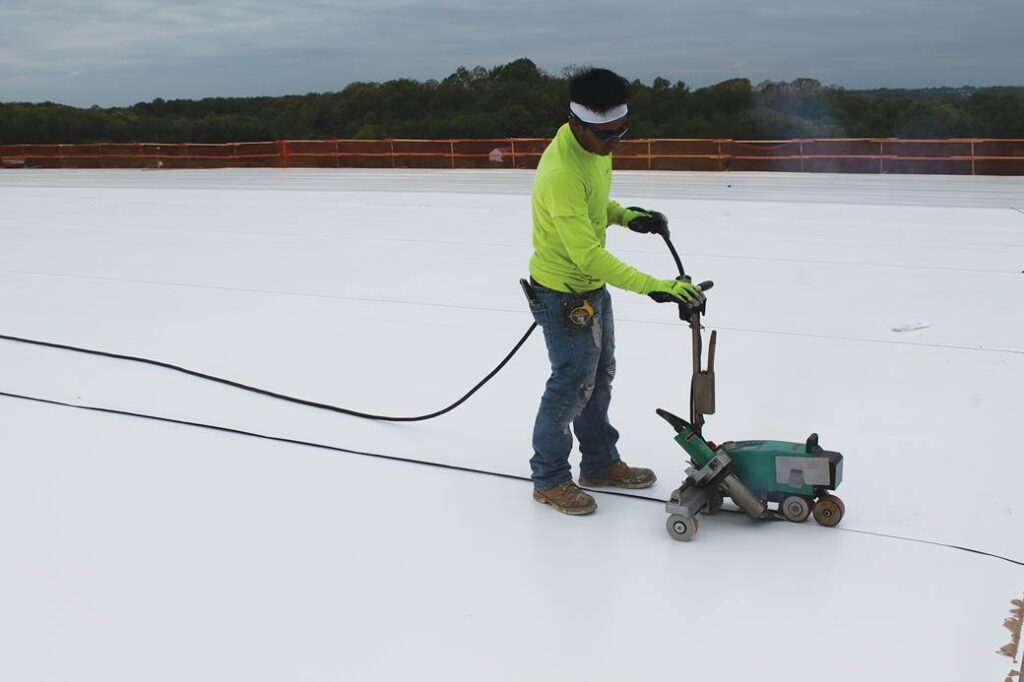
A roof waterproofing coating may be appropriate for an exposed roof when the surface is sound, drainage is acceptable and the coating is designed for weather exposure. A cement-based waterproof slurry such as a K11-type system may be more relevant for certain concrete or wet-area substrates before finishes are installed. A transparent waterproof coating may be considered for selected exterior wall or tile situations where the owner wants to retain the existing appearance, but it should not be treated as a cure for loose tiles, unstable paint or active structural movement.
The key is compatibility between the site condition and the waterproofing build-up. A good contractor should be able to explain that connection clearly.
When to Be Careful Before Approving the Team
A contractor who cannot provide basic documentation should be approached carefully, especially for managed properties or commercial projects. But documentation alone is not enough.
Be cautious if the contractor avoids inspection, recommends the same coating for every surface, refuses to discuss substrate preparation, cannot explain curing time, or gives a warranty statement without clarifying what is covered. Also be careful when the proposal ignores critical details such as pipe penetrations, outlets, cracks, wall-floor junctions, parapet corners or existing membrane termination.
For strata buildings, factories and commercial sites, these gaps can create disputes later because the owner may assume a complete waterproofing repair was done, while the contractor may have only treated the visible surface.
A proper appointment should therefore combine three things: valid contractor documentation, a site-specific diagnosis and a waterproofing system matched to the actual condition.
Final Takeaway
For a Sabah waterproofing contractor, asking “is the team CIDB certified?” is the right starting point, but it should not be the final decision. CIDB-related verification helps protect the owner from compliance and site-access problems. The technical decision still depends on where water is entering, what substrate the waterproofing system must bond to, and whether the proposed repair treats the weak details rather than only the visible symptom.
If you need help reviewing a leaking roof, balcony, wall or wet area in Sabah, QingLong Waterproofing can discuss the site condition and recommend a suitable waterproofing approach. You may contact QingLong Waterproofing for further assessment.