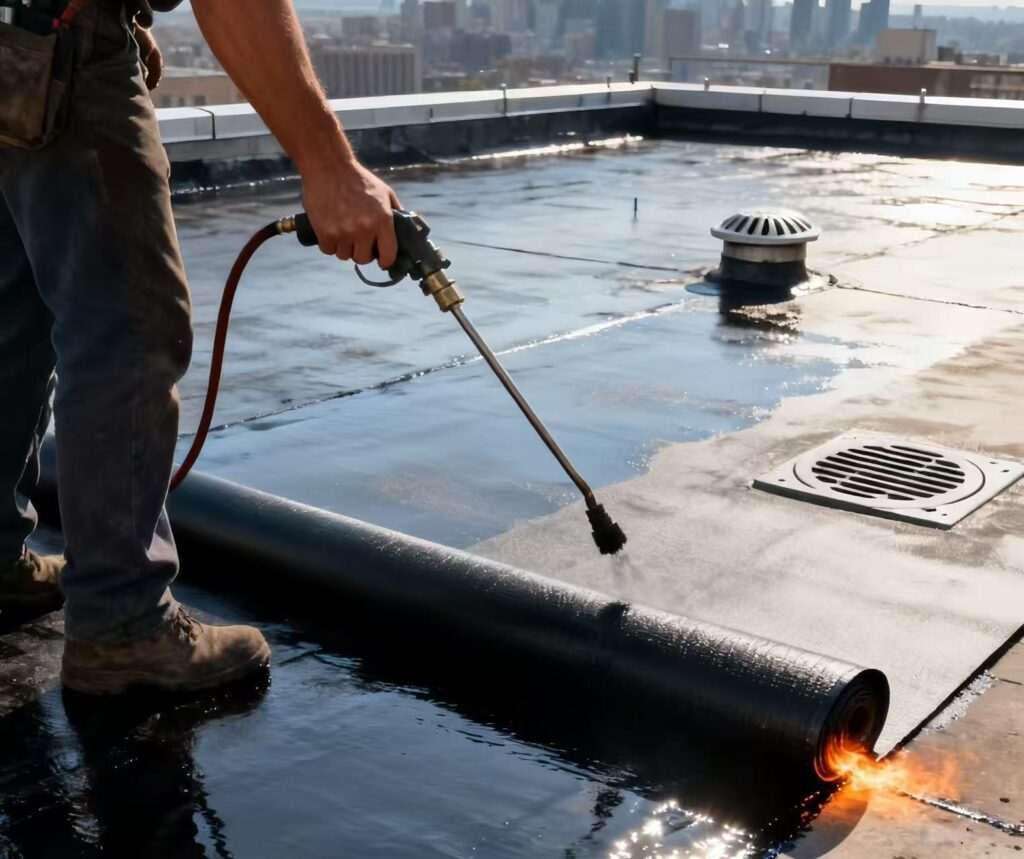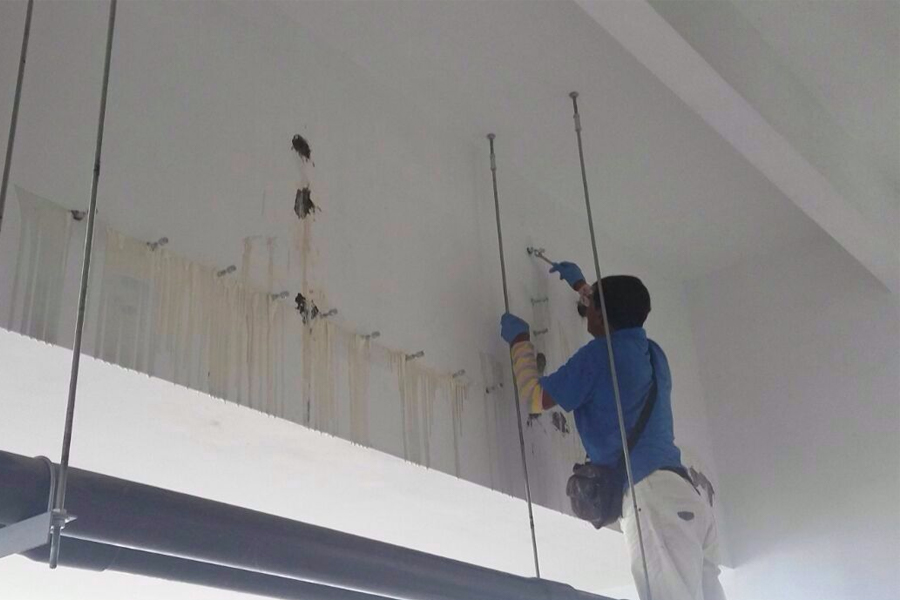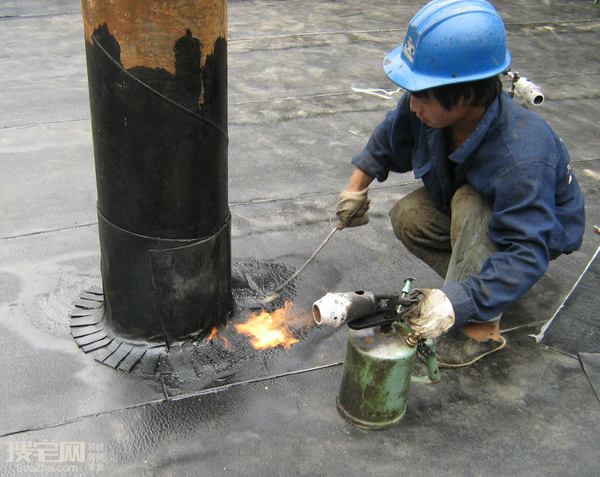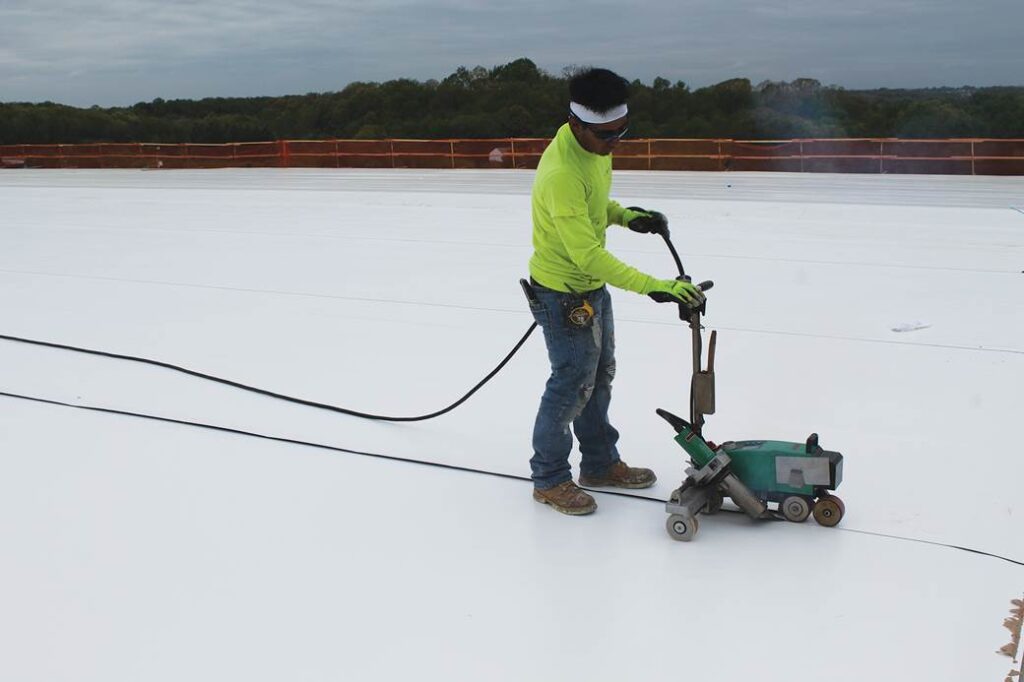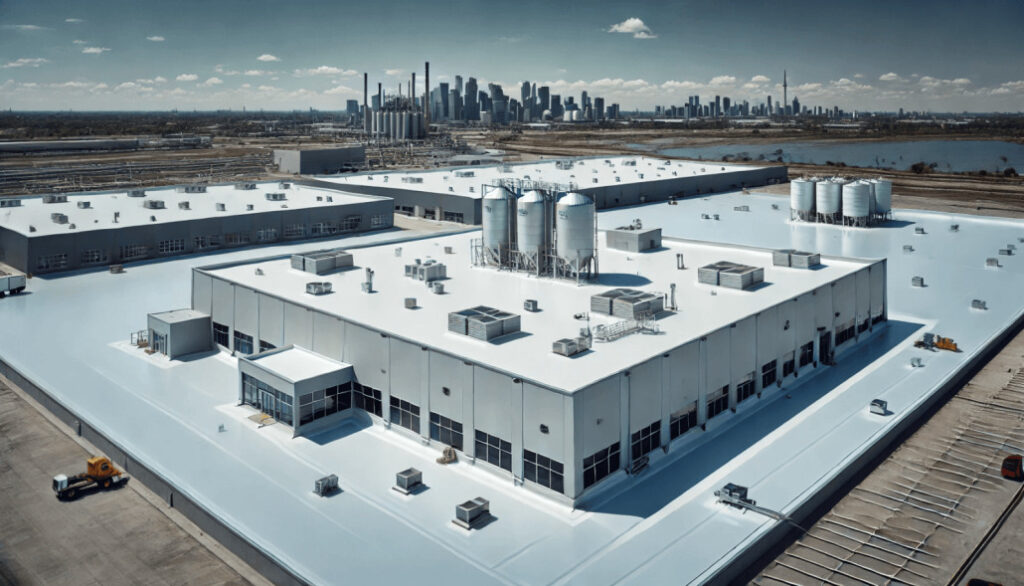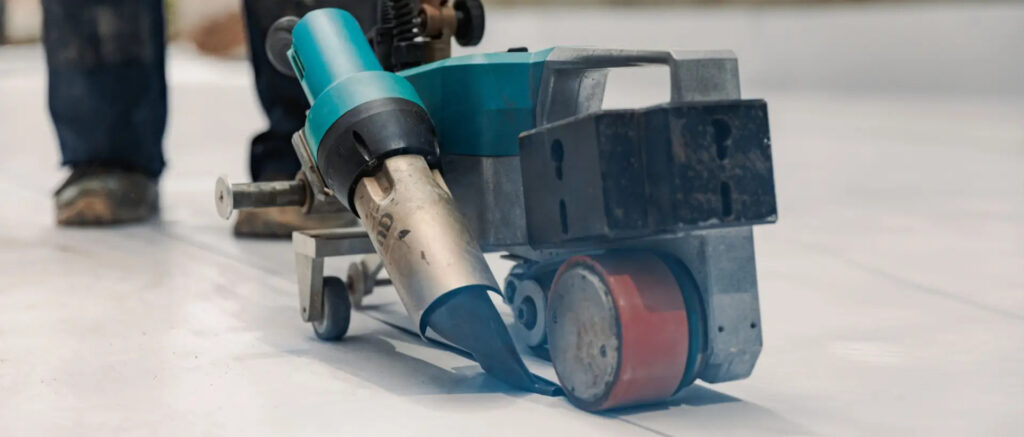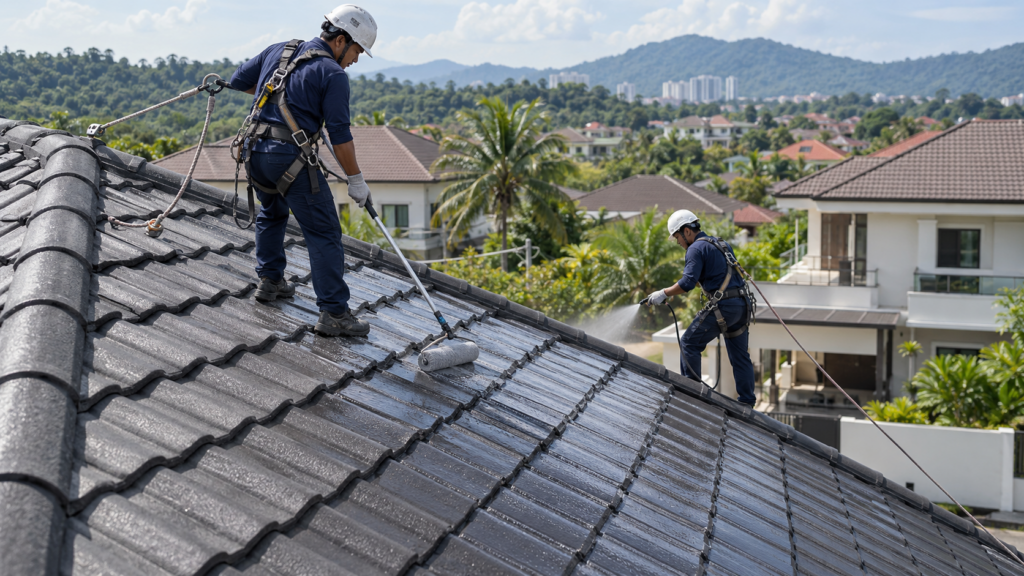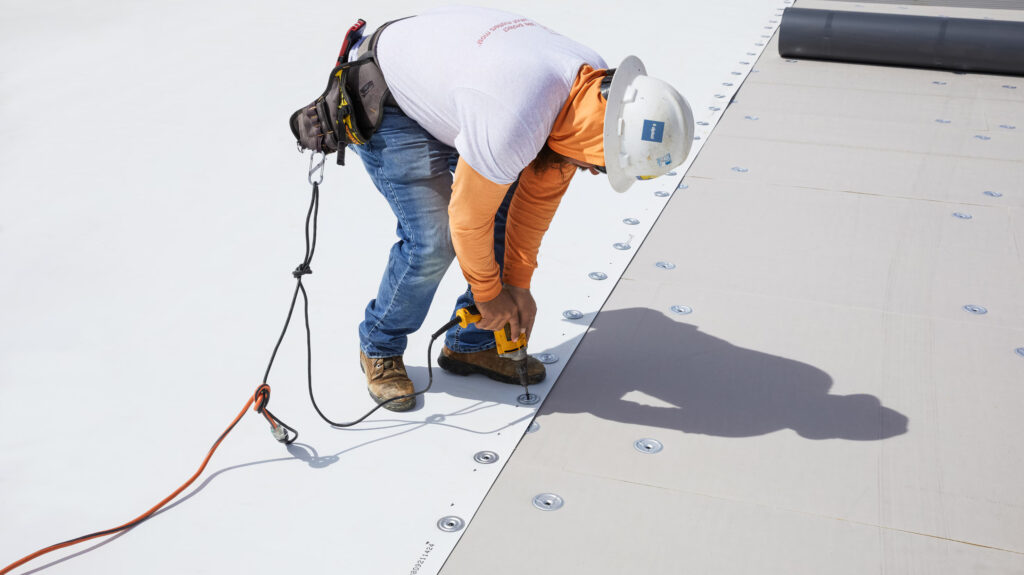
A factory leak is rarely judged only by where water appears on the floor. In a Johor Bahru factory, the entry point may be directly above active production lines, near high-voltage electrical panels, beside stored raw materials, or traveling from a roof detail several meters away.
The First Assessment: Factory Operational Risk
For industrial premises, the primary concern is the consequence of failure. A minor roof drip above an unused corner requires a very different response than a slow leak above an automated assembly line, cleanroom, main switchboard, or finished goods inventory. Before selecting repair materials, contractors must evaluate:
• Internal Exposure: Is the water threatening machinery, stock, electrical systems, or worker safety?
• Rainfall Pattern: Does the leak occur during heavy tropical downpours, coastal wind-driven rain, or prolonged monsoonal storms?
• Operational Limits: Can operations pause safely, or must the repair happen around continuous 24/7 manufacturing shifts?
• Emergency Measures: Is temporary overhead protection required before permanent work begins?
Key Takeaway: Factory waterproofing is about managing operational risk. A solution requiring heavy hacking, long cure times, hot works, or extended shutdowns may be technically sound but operationally impossible.
How Roof Construction Changes the Inspection Route
Many factory leaks are initially reported simply as a "roof leak," but the actual inspection path depends heavily on the roof construction. Rather than inspecting the entire surface at once, experienced contractors tailor their approach to the specific materials and structural details of the building.
For metal sheet roofing, the primary focus is on fasteners, degraded washers, lap joints, ridge cappings, skylight edges, and box gutters. Metal roofs experience continuous thermal movement from intense solar heat, causing the sheets to expand and contract. Because of this dynamic shift, rigid sealants or stiff coatings applied over moving joints will inevitably crack and fail over time.
For concrete roof slabs, the inspection route shifts toward construction joints, parapet wall junctions, membrane blistering, cracks, and blocked drainage outlets. Concrete structures present the challenge of lateral water travel, where water enters through a crack meters away and travels beneath the screed or along internal voids before finally dripping inside the factory.
Finally, factories featuring mixed roof planes—such as metal production roofs connected to concrete plant rooms or office blocks—present unique risks at their transition joints. The differential movement between rigid concrete and flexible metal means a single waterproofing coating cannot handle both substrates, making hybrid detailing essential for a lasting seal.
Why Drainage and Box Gutters Cause “Random” Leaks
In Johor Bahru's high-volume industrial zones—such as Pasir Gudang, Tebrau, and Senai—heavy monsoonal rain events regularly overload factory drainage systems. Water entering at a loose gutter joint can travel along structural steel beams and drip dozens of meters away from the actual roof opening.
Contractors check drainage early because gutters collect massive volumes of water from wide industrial spans. Applying a premium coating to the main roof surface will not stop a leak caused by undersized or overflowing gutters.
Essential Drainage Inspection Checks:
• Box Gutters: Check for seam corrosion (especially critical near coastal industrial environments), joint movement, and inadequate width or fall.
• Drain Outlets: Inspect for debris blockages, silt buildup, and degraded outlet seals.
• Ponding Water: Determine whether standing water on concrete slabs is caused by membrane failure or inadequate slope fall.

Why Penetrations and Terminations Fail First
Factory roofs feature a much higher concentration of structural penetrations than residential buildings. Industrial exhaust systems, HVAC ducts, pipe sleeves, skylights, cable trays, and concrete equipment plinths break the continuous plane of the roof system, creating multiple high-risk transition zones.
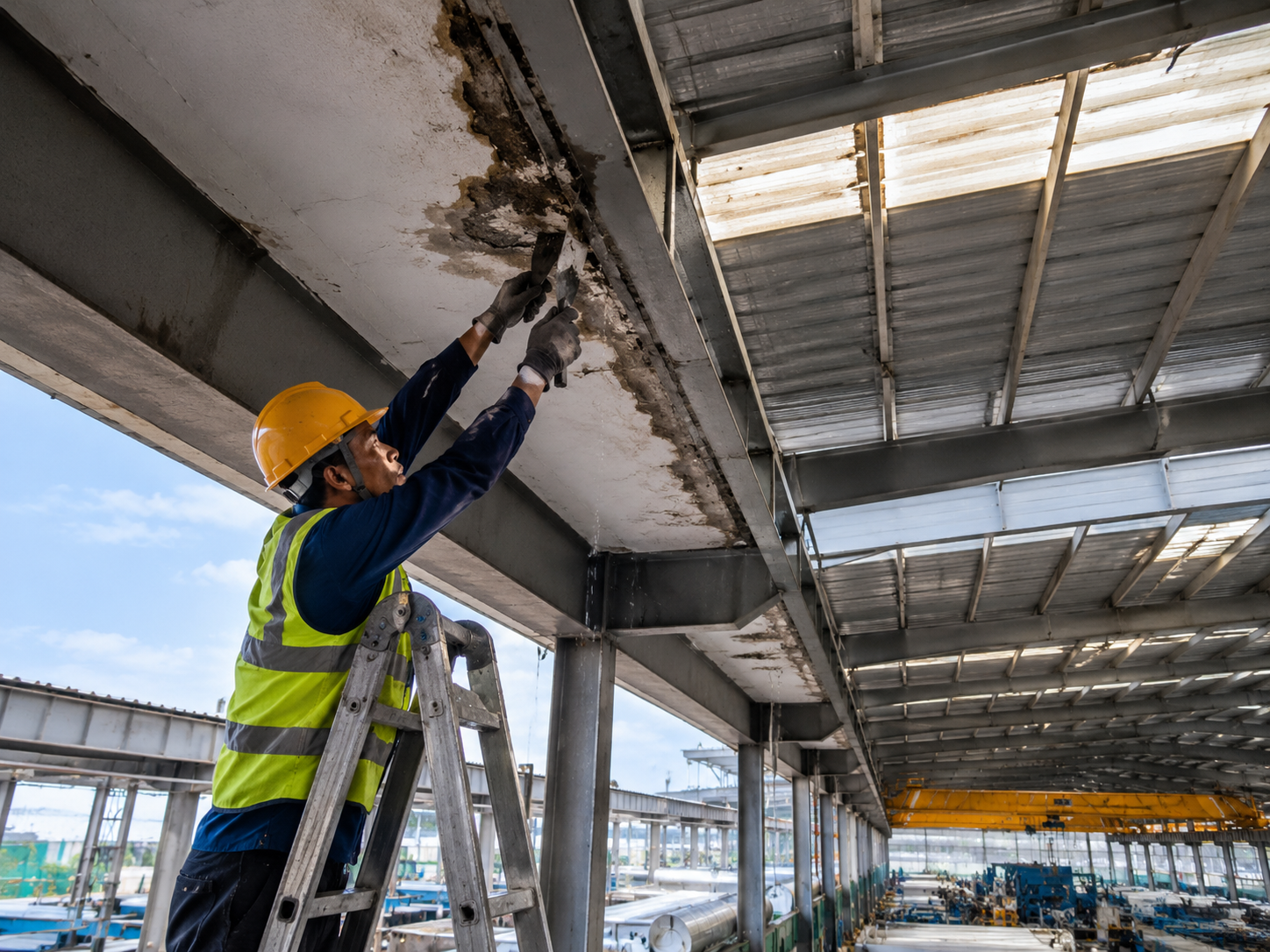
Water typically enters through a compromised roof entry point, such as failed sealant surrounding an exhaust duct, skylight, or pipe penetration. Rather than falling directly below the breach, the moisture travels laterally along structural steel beams, purlins, or beneath the concrete screed layer. It ultimately drips down at a completely different location inside the building, creating an internal floor stain several metres away from the actual source of the leak.
Leaks almost always originate where the waterproofing membrane terminates, changes direction, or meets a different building material. Because failures cluster around these moving joints and interfaces, localized detailing around penetration collars and upturns often resolves the leak completely without requiring a full roof replacement, provided the surrounding substrate remains healthy.
Why Previous Repairs Reveal About Roof History
Most factory roofs in Johor Bahru have received temporary repairs before a major assessment is requested. Existing bitumen patches, silicone smears, or localized acrylic coatings provide critical diagnostic evidence.
• Misidentified Entry Points: The original leak source may have been missed entirely.
• Substrate Contamination: Heavy manufacturing, chemical discharge, or oil residues near roof vents prevent standard coatings from bonding properly.
• Chemical Incompatibility: Applying new membranes directly over unknown or failing sealants leads to delamination.
Evaluating repair history ensures the next waterproofing strategy is designed for long-term adhesion rather than short-term patching.
Access and Site Constraints in Johor Bahru Industrial Hubs
Industrial parks across Johor Bahru—from traditional industrial estates to modern gated parks like Eco Business Park and i-Park—present specific staging challenges. Shared service access, security management rules, narrow alleys, and busy loading bays influence how equipment and scaffolding are deployed.
A practical repair plan accounts for:
• Safety & Protection: Installing safety netting or catch platforms above active production zones.
• Off-Peak Scheduling: Executing high-noise or surface-preparation work during planned maintenance windows or shift changes.
• Environmental Weather Windows: Choosing materials with rapid rain-resistance characteristics to handle sudden afternoon downpours.
Strategic Waterproofing with QingLong Waterproofing
Effective factory waterproofing requires matching the application system to the site's structural substrate, drainage design, and operational limits.
QingLong Waterproofing provides complete industrial waterproofing products and specialized contractor support across Malaysia. Whether your facility faces complex metal roof movement, concrete joint leaks, or severe gutter overflows, our technical team provides targeted, site-specific repair strategies.
Need an accurate diagnostic review of your factory roof in Johor Bahru? Contact QingLong Waterproofing today to discuss your site requirements and schedule a professional technical assessment.
Frequently Asked Questions (FAQs)
1. Why does a leak drip in a different area from where the water enters the roof?
Water follows the path of least resistance. On metal roofs, it flows along purlins, structural steel beams, or insulation foil before dripping. On concrete roofs, water enters through surface cracks or failed joints and travels laterally underneath the screed layer before finding an internal opening, creating floor stains meters away from the actual leak source.
2. Does a factory roof leak mean the whole roof needs to be re-coated?
Not necessarily. Most factory leaks occur at localized failure points—such as degraded fastener washers, skylight borders, box gutter seams, or pipe penetrations. If the main membrane or sheet substrate remains sound, targeted detailing around compromised joints and penetrations can solve the issue without requiring a full roof overlay.
3. Can waterproofing repairs be done without shutting down factory operations?
Yes. Experienced industrial waterproofing contractors select fast-curing, low-odor, cold-applied systems (such as specialized liquid PU or acrylic membranes) that do not require hot works or heavy hacking. Work can be staged around production shifts with safety netting installed over active work areas.
4. Why do patch repairs with standard silicone or bitumen fail quickly on metal roofs?
Metal roofs expand and contract significantly under solar heat. Standard rigid sealants or temporary bitumen tapes cannot handle continuous thermal movement, causing them to crack, split, or lose adhesion within a few months. Long-term repairs require elastomeric, UV-resistant detailing materials engineered for high movement.
5. How do box gutters cause internal leaks in industrial buildings?
Box gutters carry massive water volumes from wide roof spans. During heavy monsoonal rain, undersized gutters, rusted seams, loose joints, or debris blockages cause water to back up and overflow inside the building envelope rather than draining outside.