A factory leak is rarely just a building defect. In Petaling Jaya industrial premises, water dripping near production lines, electrical panels, storage racks or loading areas can quickly become an operational problem. Yet shutting down the whole factory for waterproofing may not be realistic. The better question is not simply “Which waterproofing product should we use?” but “How can the leak be controlled, repaired and protected while the site continues to operate safely?” That decision depends on where water is entering, how the factory is used, and which waterproofing work can be done without interrupting critical activities.
Production Continuity Changes the Waterproofing Decision
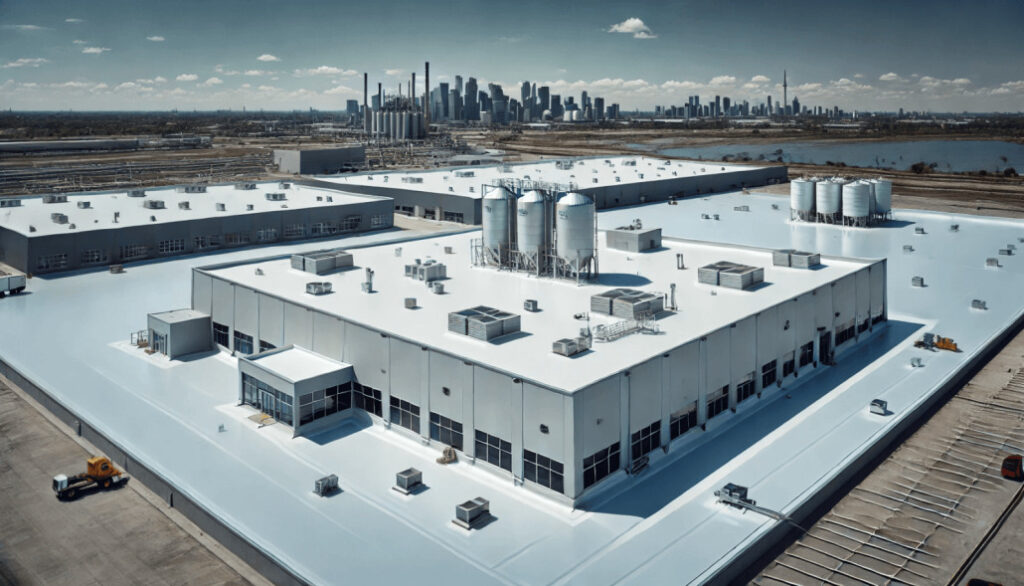
Factory waterproofing in Petaling Jaya must be planned around operations, not only around the leaking surface. A roof, wall or floor may need waterproofing, but the repair method must also consider access routes, machinery layout, working hours, safety zones, curing time and the risk of water entering during the repair period.
For an occupied factory, the most suitable waterproofing approach is often the one that controls risk in stages. A full system renewal may provide better long-term protection, but it may also require access, surface preparation and drying time that conflict with production. A localised repair may reduce disruption, but only works if the defect is limited and the surrounding substrate remains sound.
For a factory that cannot stop production, waterproofing should be planned as a controlled work sequence instead of a single repair activity. The priority is to identify the active water-entry points, isolate work zones, protect sensitive operations, and select a waterproofing system that matches the available access, surface condition and curing window.
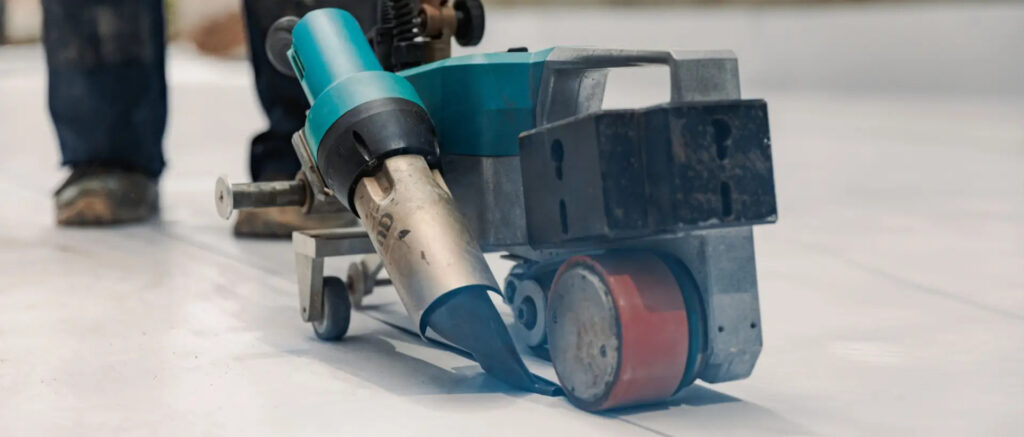
This is why site assessment matters before committing to a method. A coating, membrane, sealant repair or joint treatment may all be valid in different situations, but each has different implications for preparation, drying, odour, traffic, weather exposure and return-to-service timing.
The Leak Location May Not Be the Repair Location
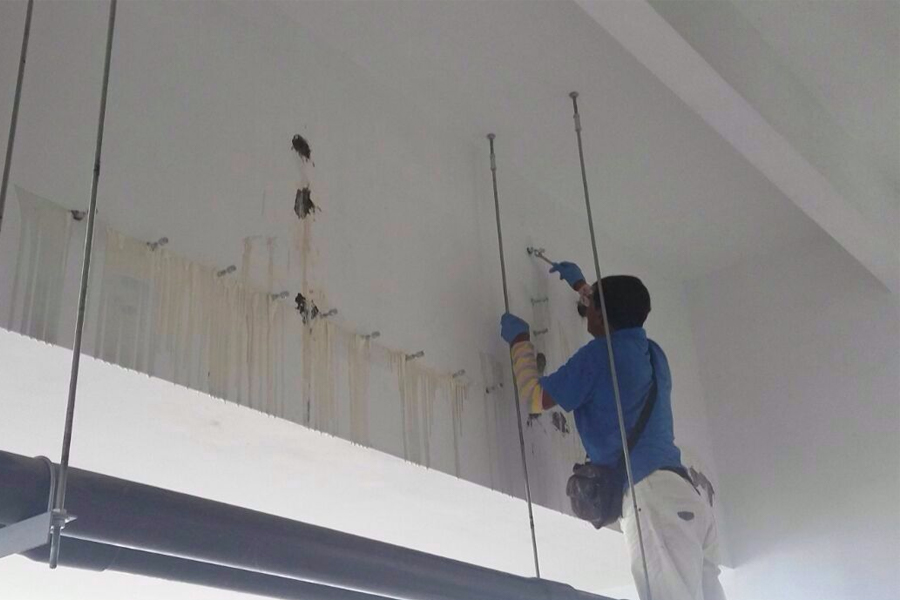
In factories, visible dripping points can be misleading. Water may appear above a machine, racking area or office ceiling, but the entry point may be several metres away. On metal roofs, water can travel along roof sheets, purlins, fastener lines or insulation layers before dripping. On concrete roofs, it can move beneath screed, along construction joints or around pipe penetrations before becoming visible internally.
This matters because repairing only the area directly above the drip may not stop the leak. It may reduce the symptom temporarily while the actual entry path remains open.
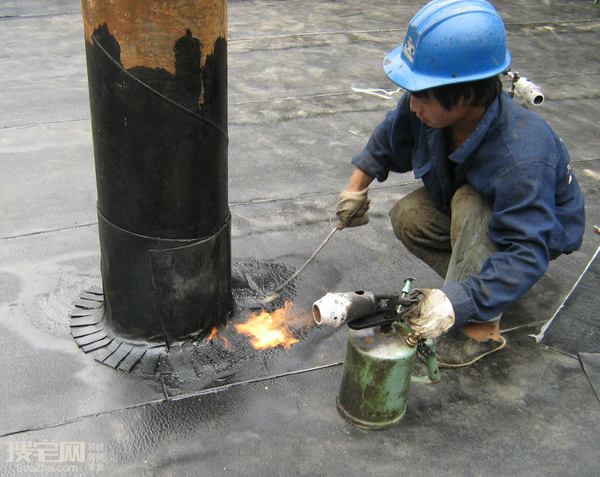
Common factory details that deserve close inspection include roof sheet laps, fasteners, skylight edges, gutter joints, roof penetrations, parapet-to-roof junctions, wall cladding interfaces and drainage outlets. For flat concrete roof areas, ponding zones, cracked screed, failed upturns, expansion joints and pipe sleeves are often more important than the middle of the slab.
A practical inspection should separate three things:
Where water is seen inside the factory
Where water is likely entering the building envelope
How water is travelling between those two points
Only after these are understood can the repair scope be planned properly. Otherwise, the factory may suffer repeated disruption because each repair treats the symptom instead of the source.
Choosing Between Local Repair and Wider System Renewal
Not every factory leak requires recoating the entire roof or wall. At the same time, repeated small repairs can become costly if the existing waterproofing layer is already failing across a wider area. The decision should be based on evidence from the substrate and the defect pattern.
A local repair may be reasonable when the leakage is linked to a clear detail failure, such as an isolated pipe penetration, a damaged roof fastener, a separated sealant joint or a local crack. In this case, the work area can often be contained, scheduled outside peak production hours and completed with less disruption.
A wider waterproofing renewal becomes more sensible when defects are repeated across the roof or wall. Examples include widespread coating delamination, rusting metal roof sheets, failed laps, multiple ponding areas, brittle sealants, cracked screed or repeated leaks appearing in different internal zones. In these cases, patching one area may only push the next leak into another part of the factory.
The trade-off is operational. Local repair reduces immediate interruption but may not address system ageing. Full renewal improves coverage but needs more planning for access, cleaning, surface preparation and weather protection during work. For active factories, the practical answer may be phased renewal: treating the highest-risk areas first, then continuing section by section according to production schedules.
Work Sequencing Matters as Much as Material Selection
A waterproofing product cannot compensate for poor sequencing on an active industrial site. If preparation dust enters production areas, if rain reaches an exposed repair zone, or if a coating is trafficked before it cures, the work may create new problems even when the product itself is suitable.
For factory waterproofing, sequencing should usually consider:
Which production zones must remain active during work
Whether roof access crosses loading bays, service routes or tenant areas
Where temporary protection is needed above machinery or stock
How cleaning, grinding or removal work will be controlled
Whether work can be done during night shifts, weekends or planned maintenance windows
How long the waterproofing material needs before exposure to rain, traffic or equipment
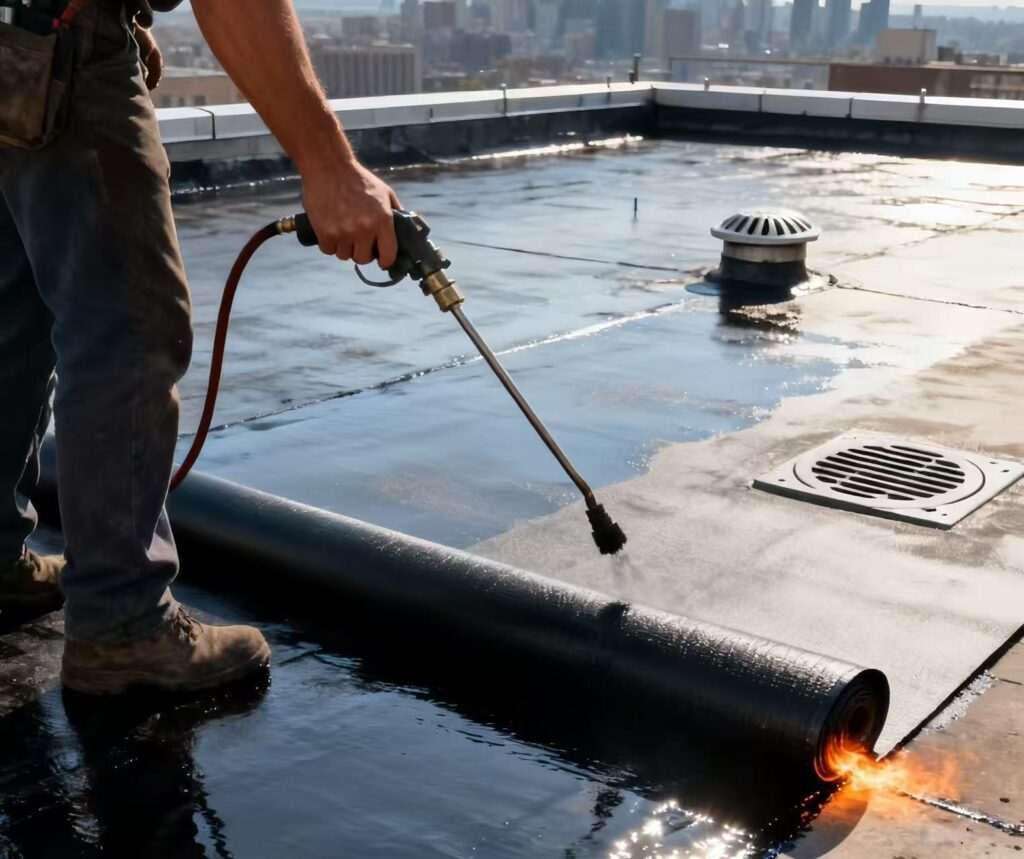
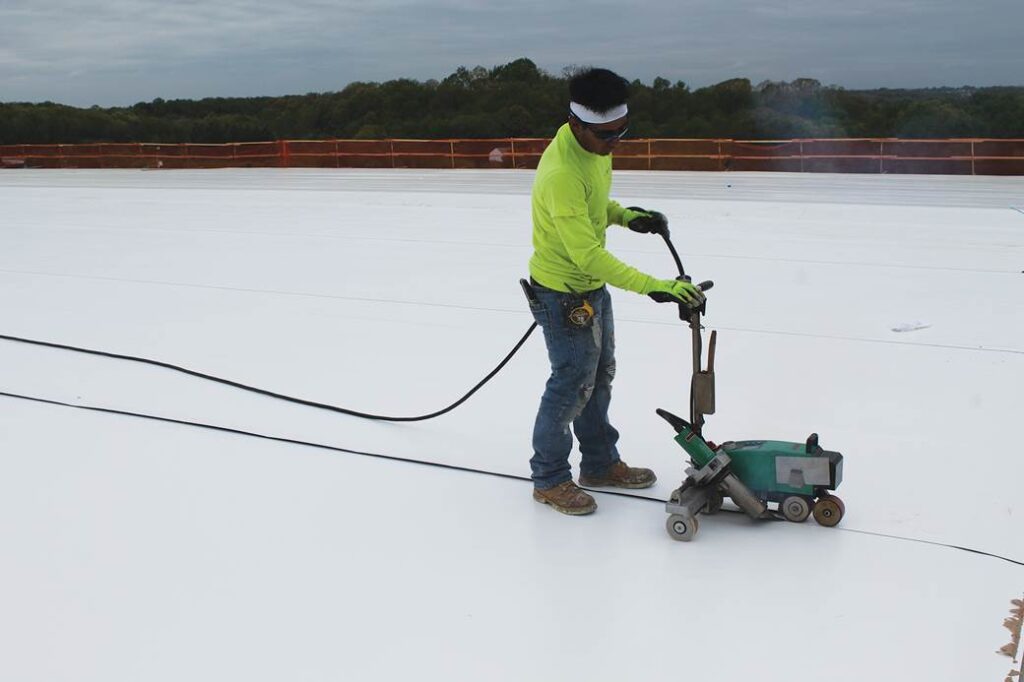
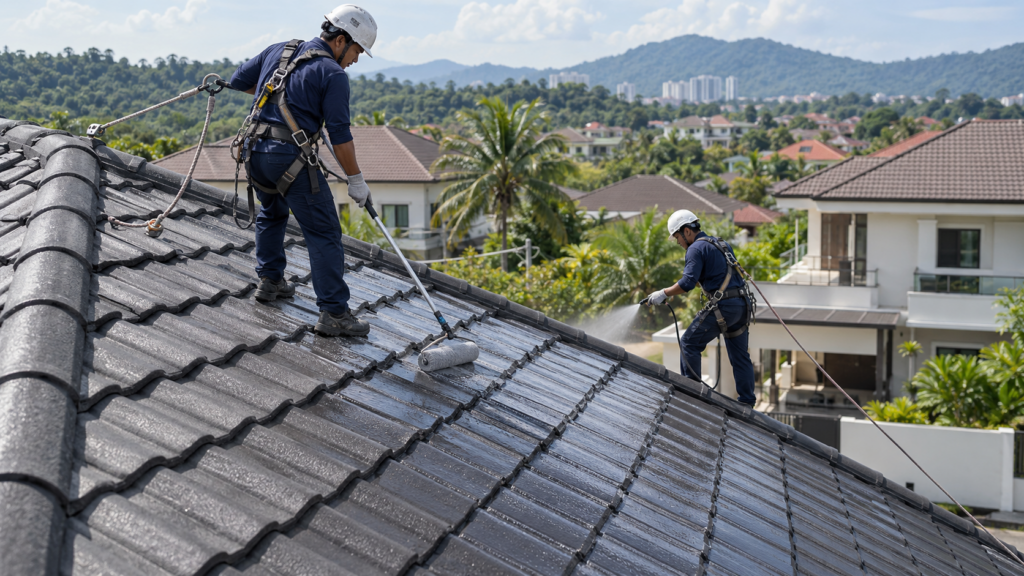
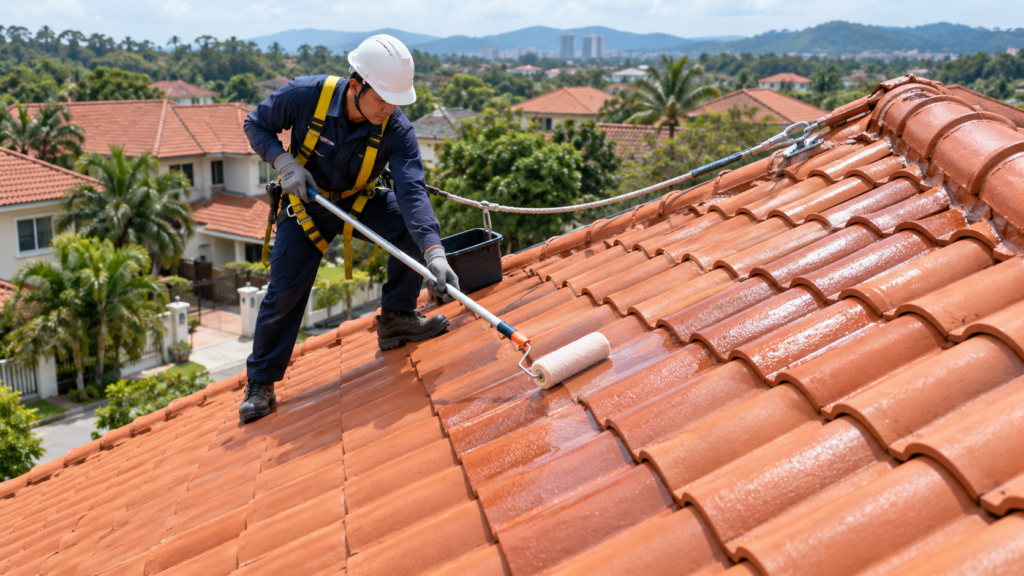
This is especially important for metal roof waterproofing. Repairing fasteners, overlaps and penetrations may require workers to move across the roof while the factory continues below. Safety access, fall protection and roof sheet condition must be considered before any waterproofing work begins.
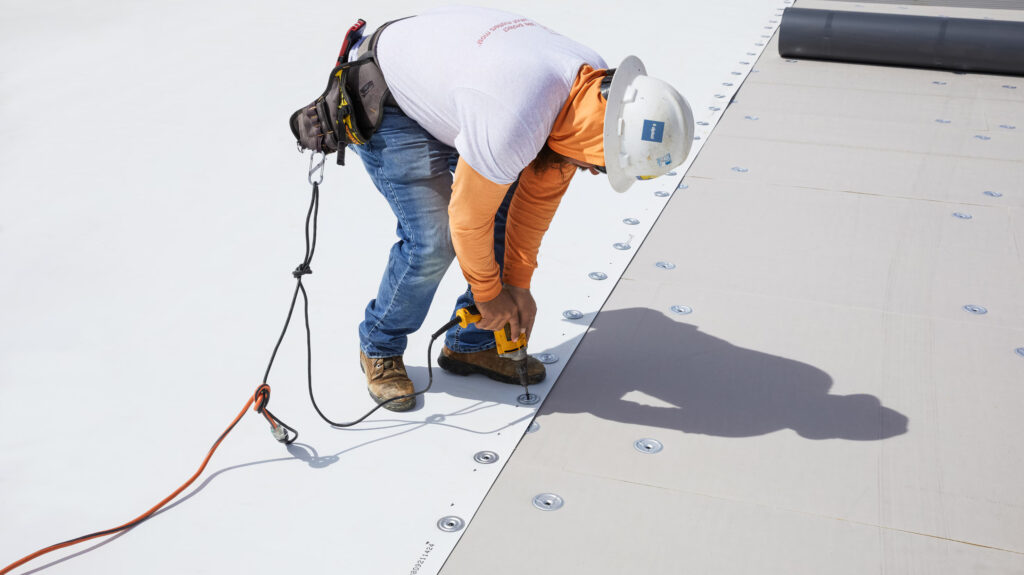
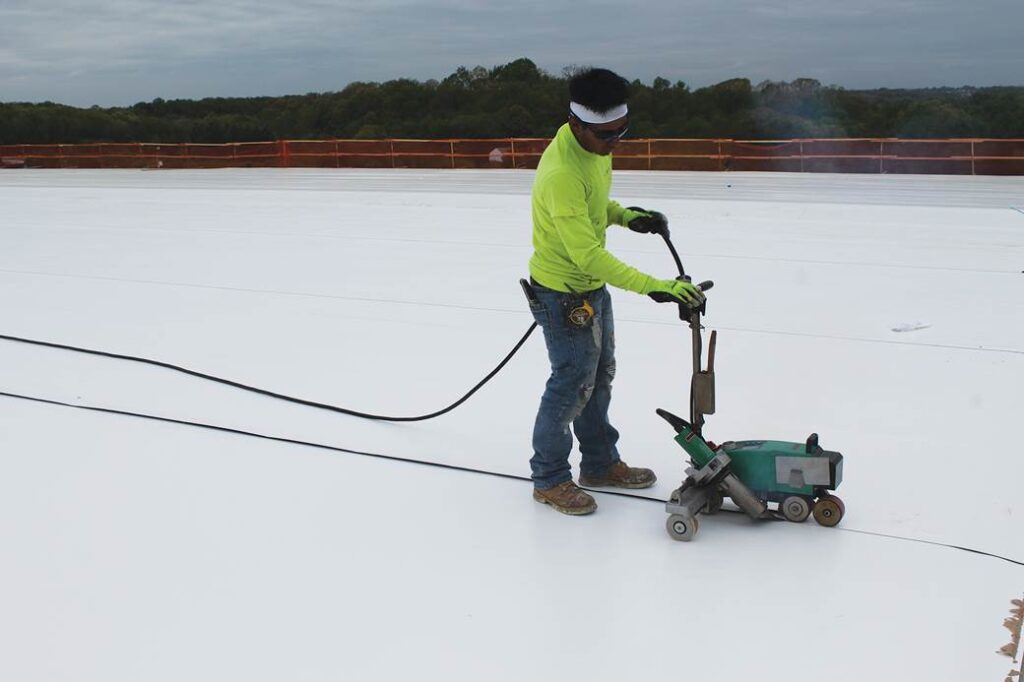
For concrete roof decks, surface moisture and substrate soundness affect system performance. If trapped moisture, hollow screed or loose existing coating is ignored because the factory wants a fast repair, the new waterproofing layer may not bond properly. A shorter shutdown is useful only if the repair still follows the minimum preparation and curing requirements.
Internal Areas Need Different Disruption Controls
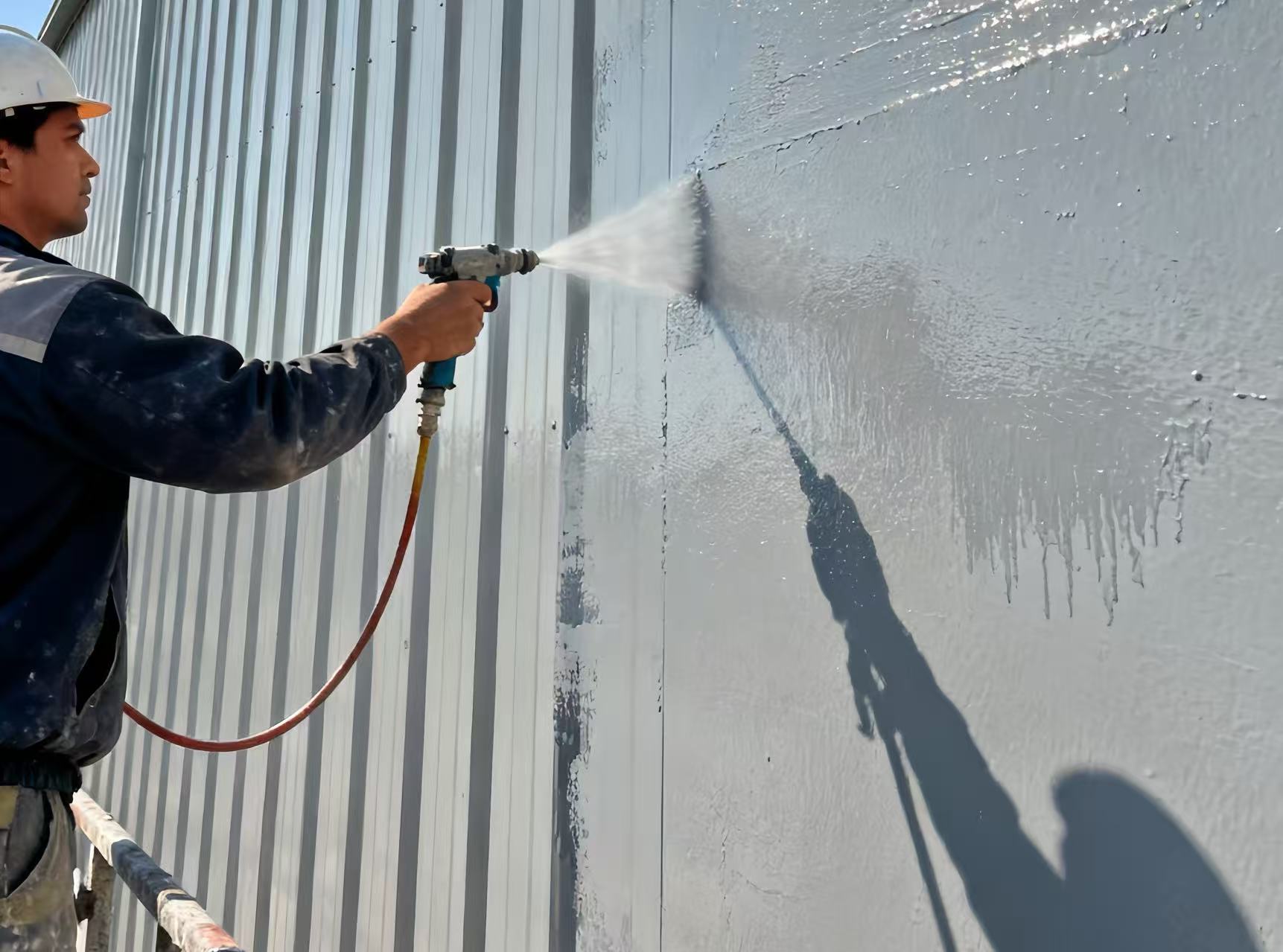
Not all factory waterproofing is roof-related. Water can also enter through basement walls, floor joints, loading bay slabs, wet process areas, toilets, kitchens, tanks, external walls and pipe penetrations. Internal waterproofing creates a different disruption problem because work may take place near staff movement, equipment foundations, drainage channels or finished floors.
For example, waterproofing a wet process area may require cleaning contaminants from the substrate before any coating or slurry can perform correctly. Oil, chemical residue, laitance or loose cement weakens adhesion. If the area remains in use during repair, temporary drainage control may be needed so water does not contaminate freshly applied material.
Basement or retaining wall seepage is another situation where repair from the inside may manage water ingress, but it should not be confused with restoring the original external waterproofing layer. Internal treatments can be useful when external access is not possible, but pressure, movement, cracks and joints must be assessed carefully.
The key point is that internal waterproofing must be coordinated with factory housekeeping and safety. A technically correct system can still fail operationally if forklifts cross the area too early, washdown water reaches uncured material, or workers remove temporary barriers before the repair is ready.
A Practical Waterproofing Plan for an Operating Factory
The best waterproofing plan for an active factory is usually built in layers of control. First, stop urgent water entry where it threatens safety, electrical systems, stock or production. Then investigate the wider defect pattern. Finally, schedule permanent waterproofing work in a way that fits the factory’s operating rhythm.
A practical plan should define the repair area, access method, surface preparation, waterproofing system, curing requirement, temporary protection and handover condition. It should also identify what cannot be guaranteed without further opening-up, removal or testing. This is important for decision-makers because a low-disruption repair sometimes means accepting a narrower scope, while a more durable system may require more preparation and downtime.
The right factory waterproofing method is not always the least disruptive method. It is the method that reduces water ingress while keeping production risk under control. If a quick repair avoids shutdown but leaves failed joints, loose coating or trapped moisture untreated, the factory may face repeated leaks and repeated interruptions.
QingLong Waterproofing provides waterproofing products and service solutions for residential, commercial, industrial and infrastructure projects in Malaysia. For factories, the useful starting point is not a standard package, but a review of the affected area, operating constraints and suitable waterproofing system.
Conclusion
Factory waterproofing without production disruption is a planning decision before it is a product decision. The repair must match the leak source, substrate condition, access limitations and factory schedule. A small targeted repair may be suitable when the defect is clear and isolated. A phased waterproofing programme may be safer when the existing system is ageing across a wider area. Before approving the work, the factory manager should know what will be repaired, what will remain in operation, what must be protected, and how the waterproofing system will be allowed to cure properly.
If leakage is affecting your factory operations in Petaling Jaya, you can contact QingLong Waterproofing for a site discussion and suitable recommendation.
Frequently Asked Questions (FAQs)
1. Can factory waterproofing be carried out without stopping production?
Yes, depending on the leak location, repair scope and site conditions. Work may be completed in phases, during off-peak hours or within isolated zones. However, certain areas may still require temporary access restrictions for safe preparation, application and curing.
2. How do you find the actual source of a factory roof leak?
The visible dripping point is traced against possible entry points such as roof sheet laps, fasteners, skylights, gutters, penetrations, cracks and drainage outlets. Because water can travel along structural components before dripping, the repair area may not be directly above the internal leak.
3. Is localised repair enough to stop a factory leak?
A localised repair may be suitable when the defect is isolated and the surrounding waterproofing system remains sound. If there are multiple leaks, widespread coating failure, deteriorated sealants or ageing roof components, a wider or phased system renewal may be required.
4. Can a leaking metal factory roof be waterproofed?
Yes. Metal roof waterproofing may involve treating loose fasteners, sheet overlaps, penetrations, flashing, gutters and deteriorated sealants before applying a compatible waterproofing system. Rusted or structurally weakened roof sheets should be assessed before coating.
5. How long does factory waterproofing take to cure?
Curing time depends on the waterproofing material, application thickness, substrate condition, ventilation and weather. The treated area must be protected from rain, washdown water, traffic and equipment until it has cured sufficiently.