A leaking factory roof or wall is more than a waterproofing problem. When rainwater reaches production lines, machinery, electrical panels, raw materials, packaging or finished goods, a relatively small leak can become an operational risk.
For factories in Subang and the surrounding Selangor industrial areas, the challenge is often not simply finding a waterproofing material. The bigger question is: How can the leak be repaired properly while keeping as much of the factory operational as possible?
In many cases, factory waterproofing can be carried out in phases rather than through a complete production shutdown. But this depends on the actual source of water ingress, the condition of the building, access requirements, safety risks, production layout, weather and curing requirements.
The right approach is therefore not to start with a product. It starts with diagnosis, followed by a waterproofing plan that fits the factory's operations.
Can a Factory Be Waterproofed Without Stopping Production?
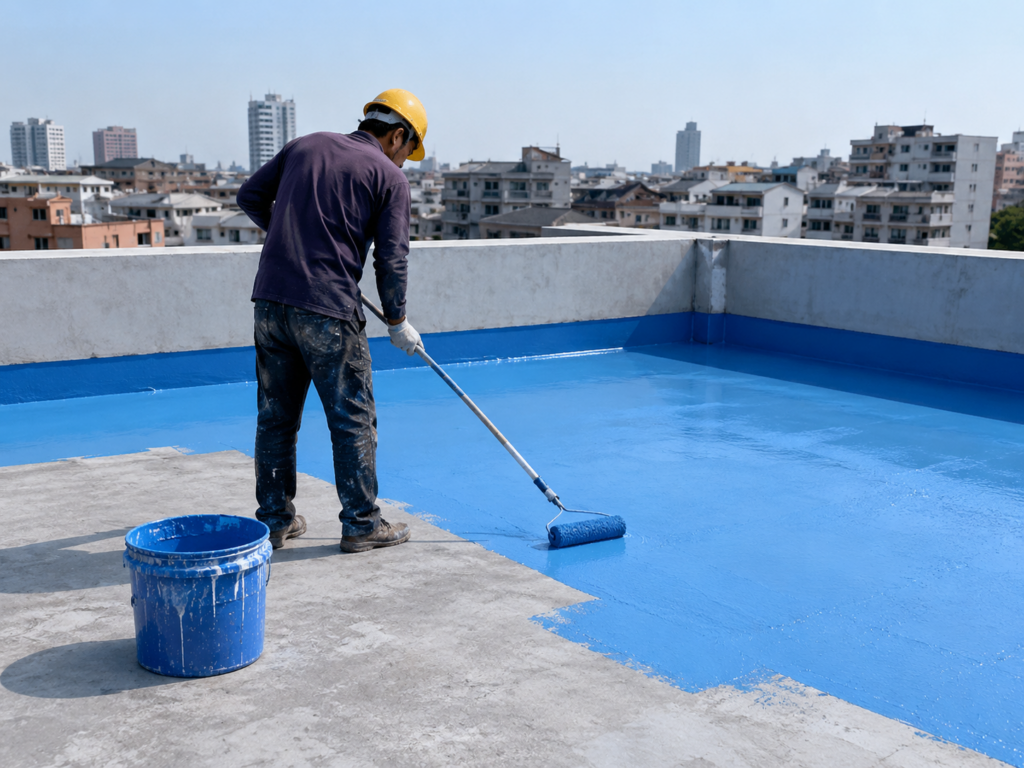
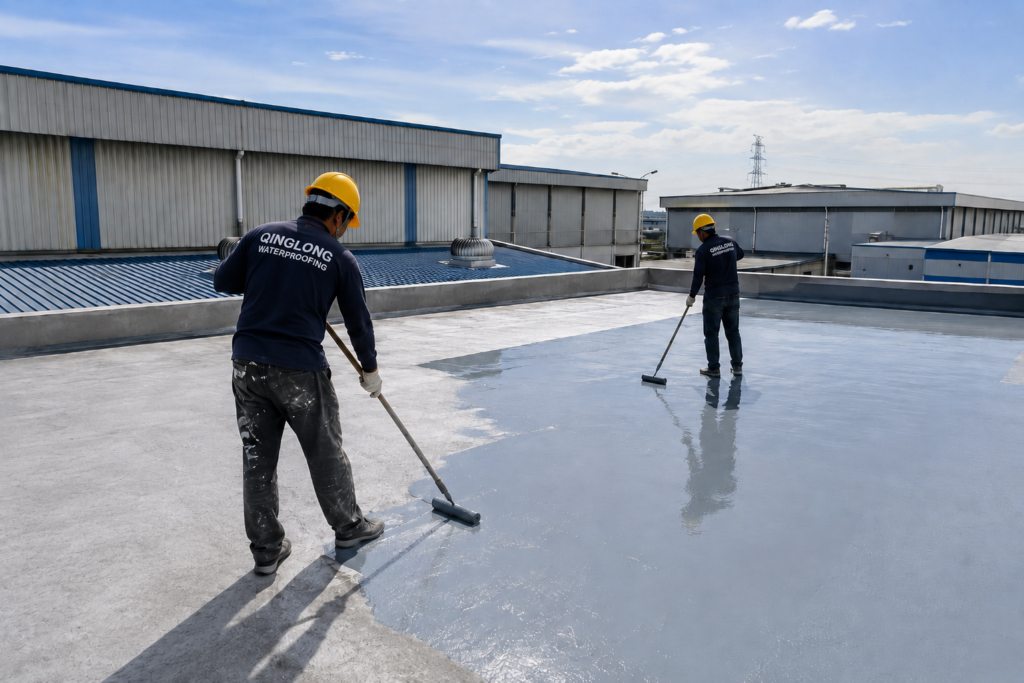
Often, yes—but not in every situation. A factory waterproofing project may be carried out while production continues when the affected area can be safely separated from operational areas and the repair can be completed in controlled phases. For example, a waterproofing team may be able to:
repair a roof section by section;
treat separate roof bays at different times;
waterproof external walls in stages;
schedule disruptive preparation work outside peak production hours;
protect machinery and stored materials below the work area; and
reopen completed areas after the required curing or protection period.
However, a partial or temporary shutdown may be necessary when major demolition, extensive roof replacement, serious structural deterioration or significant safety risks are involved.
Therefore, “no shutdown” should not be treated as a blanket promise. A more practical objective is: Complete the waterproofing with the least necessary disruption while maintaining safe working conditions and proper application of the system.
Find the Actual Source of the Leak Before Planning the Repair
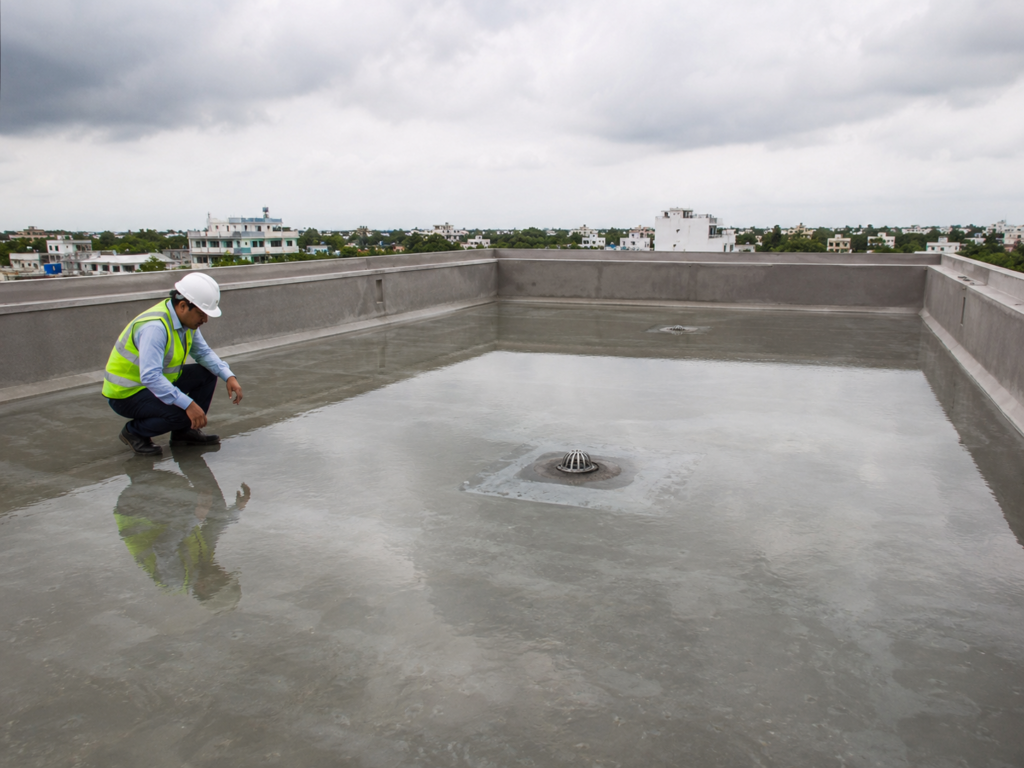
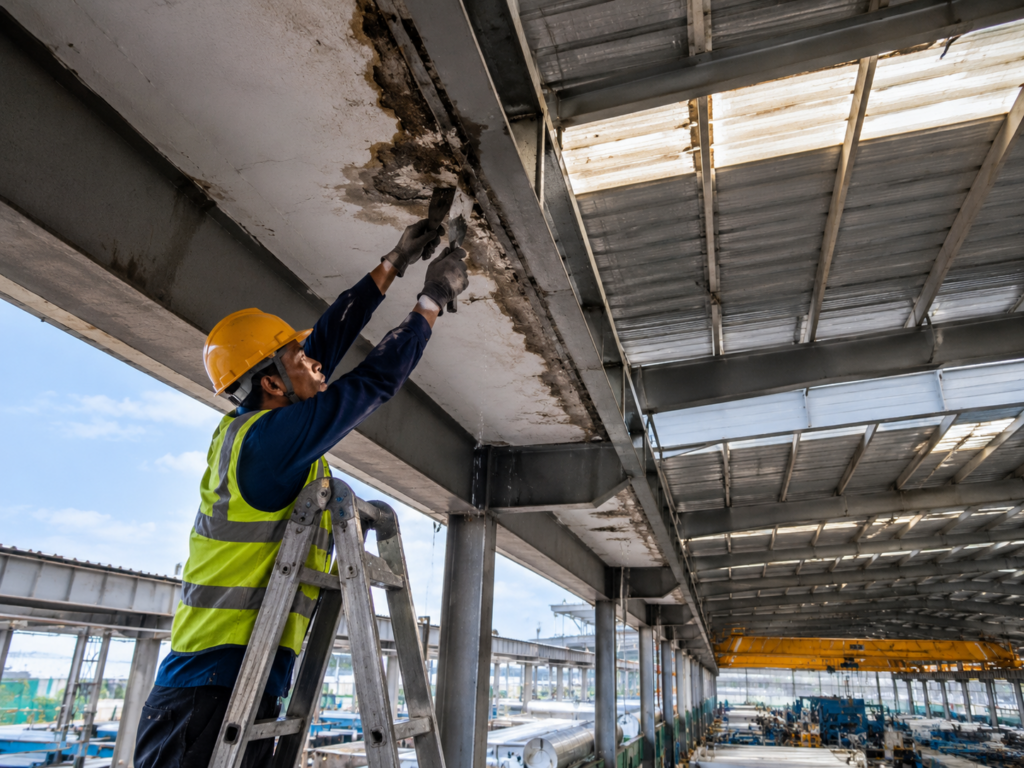
A normal waterproofing inspection looks for water entry points. In a factory, that is only half the job. The inspection also needs to identify what the leak can damage if it worsens before or during repair.
For example, a small roof leak above an open walkway may allow flexible scheduling. The same leak above a packing area, raw material storage, electrical control room or sensitive machinery may need temporary protection before permanent waterproofing begins.
The inspection should usually check:
Roof sheet laps, fasteners, gutters, outlets and roof penetrations
Concrete roof cracks, ponding areas, expansion joints and parapet details
External wall cracks, construction joints and window or louvre edges
Internal dampness patterns, ceiling stains and water tracking paths
Areas below the leak that need temporary shielding or isolation
Work access routes that may disturb production, loading or staff movement
The important point is that the visible drip may not be directly below the entry point. Water can travel along metal roof ribs, slab interfaces, purlins, conduits or ceiling framing before it appears inside the factory. If the repair team only seals the wet spot from below, the factory may avoid shutdown for one day but still face repeated leakage later.
Assess What the Leak Can Affect Inside the Factory
Many factory waterproofing projects involve metal roofs or reinforced concrete flat roofs. These roof types can often be repaired in phases, but the phasing must respect how the waterproofing system works.
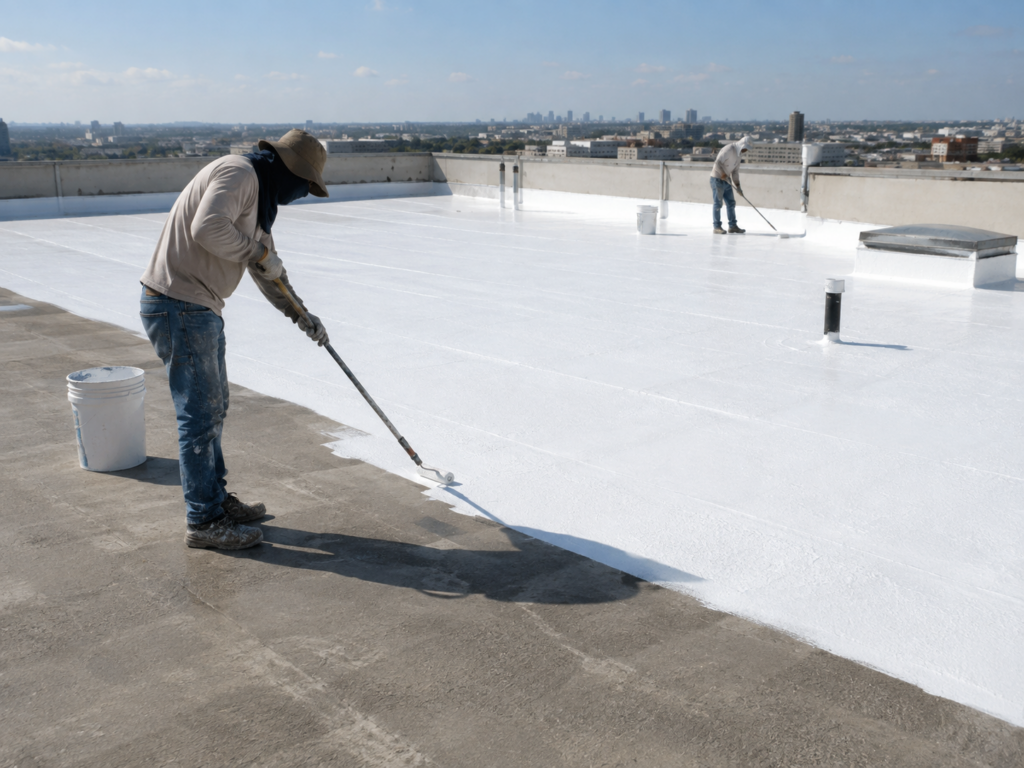
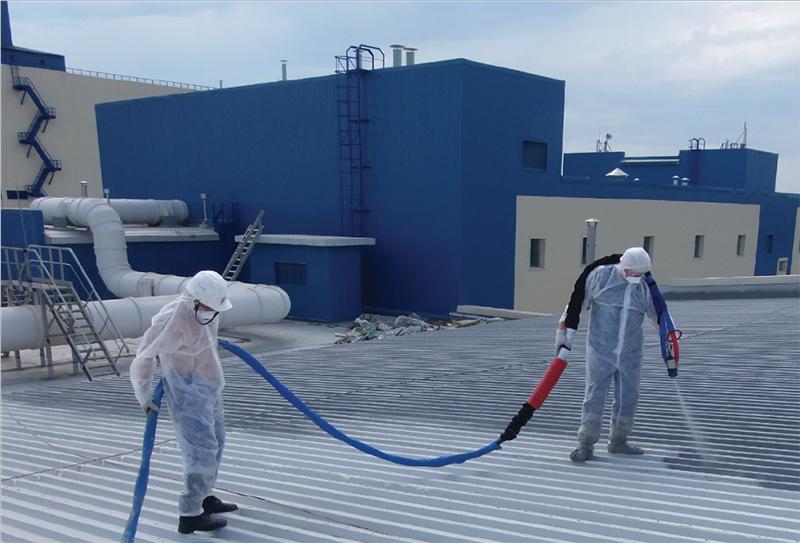
On a metal roof, leakage commonly relates to fasteners, sheet laps, rusted areas, roof penetrations, skylight edges or gutter junctions. Work may be planned bay by bay or roof section by roof section, especially when production below cannot stop. However, temporary end points between phases must be treated carefully. If a coating stops at a random line with poor termination, rainwater can enter at the unfinished edge.
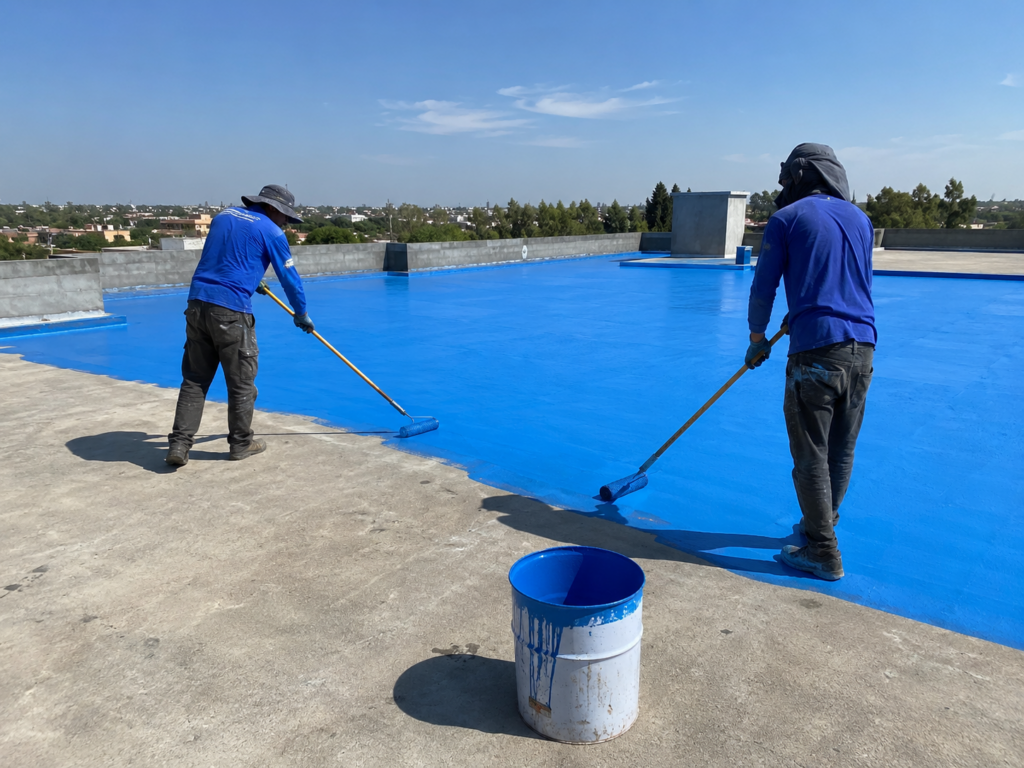
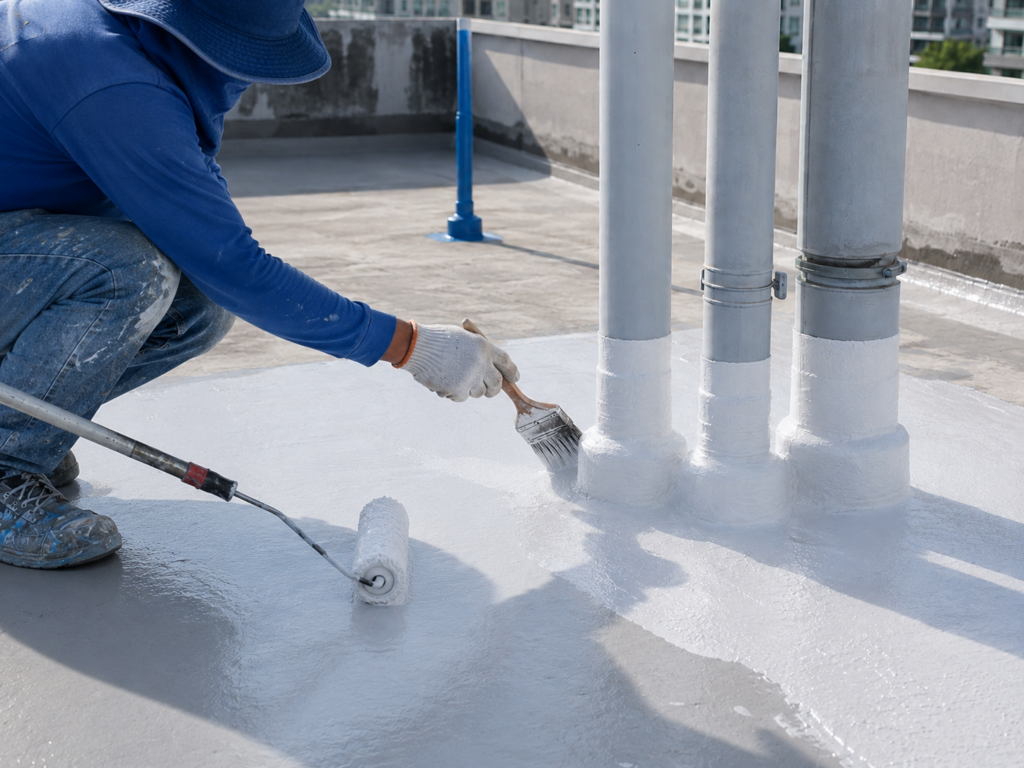
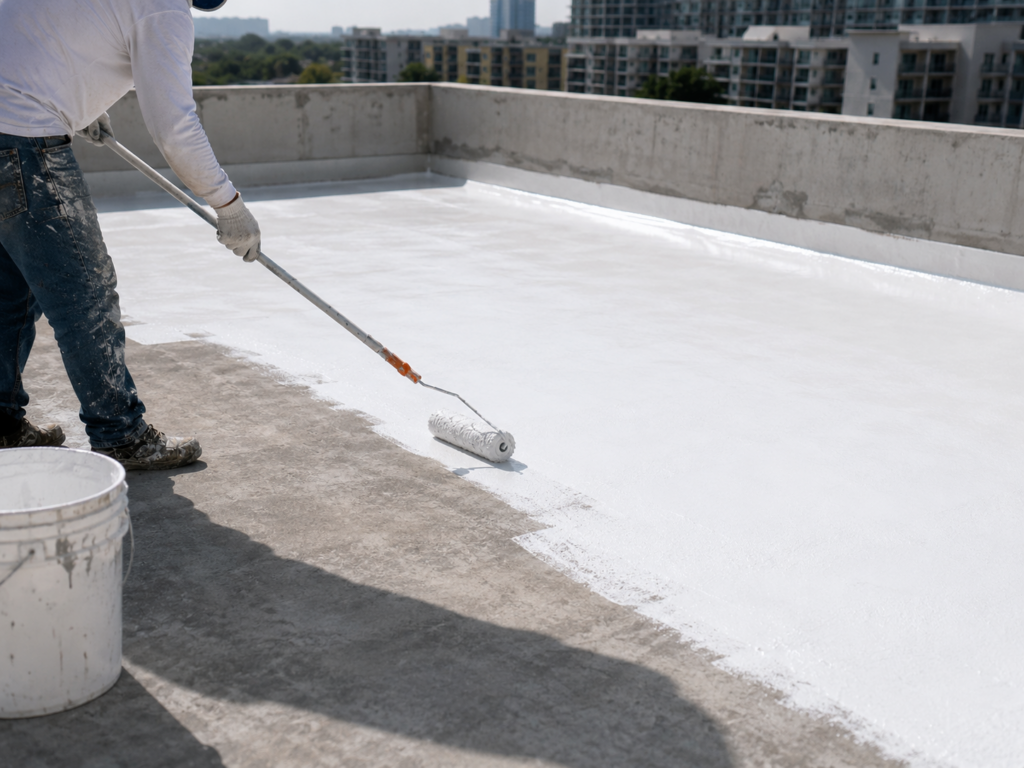
On a concrete roof, phasing can be more sensitive. Cracks, ponding areas, upturns, expansion joints and drainage outlets often work together as one waterproofing zone. If only the central slab is coated while the parapet base, pipe penetrations or outlet area is delayed, water may bypass the newly coated area and still enter the building.
For exposed roofs, the waterproofing material must also suit UV exposure and weathering. For roofs with regular maintenance traffic, the system may need protection or a suitable trafficable finish in selected areas. A coating intended for light exposure should not be assumed suitable for constant foot traffic, tool movement or sharp maintenance equipment.
Night Work and Weekend Work Help, but Curing Time Still Matters
Factories often ask whether waterproofing can be done after office hours, at night or during weekends. Sometimes it can. But the decision depends on the type of system, surface preparation and curing conditions.
Surface preparation may involve cleaning, removing loose coating, treating rust, grinding weak concrete, repairing cracks or applying sealant at joints. Some of these activities create noise, dust or odour. Even if application is done at night, preparation may still affect nearby production zones if not controlled.
Curing time is another practical issue. Some waterproofing materials need a dry surface before application. Some systems need protection from rain during early curing. Some areas should not be exposed to traffic until the coating or membrane has developed sufficient strength. If production staff need to walk across the repaired zone too soon, the waterproofing layer may be damaged before it performs properly.
A realistic factory waterproofing schedule should therefore define:
when preparation can happen,
when application can happen,
how long the area must be protected, and
what temporary controls are needed before production resumes nearby.
Trying to compress all four stages into a short shutdown window can create weak workmanship, especially around joints, corners and penetrations.
Use Temporary Leak Control When Permanent Repair Cannot Start Immediately
Some factories cannot wait for permanent waterproofing before taking action. If rain is expected and water is already reaching sensitive equipment, machinery or stored materials, temporary measures may be necessary to reduce the immediate risk of damage and disruption. Depending on the site condition, this may involve localised sealing, temporary patching, water diversion, internal protection, temporary containment or suitable fast-setting repair materials. QingLong's waterproofing range includes products such as waterproof sealants and leakage repair materials that may be suitable for specific applications, depending on the substrate and site conditions.
Temporary Leak Control ≠ Permanent Waterproofing
Temporary leak control should not be mistaken for a permanent waterproofing solution. A temporary patch may reduce immediate dripping, but it may not address underlying problems such as widespread roof corrosion, multiple failed fasteners, deteriorated roof laps, poor drainage, failed expansion joints or widespread wall cracking. For this reason, temporary measures should be treated as short-term risk control while a proper waterproofing repair is being planned, rather than as a replacement for permanent repair.
The Right System Depends on Factory Exposure, Not Just Leak Location
A factory building is exposed to more than rainwater. The waterproofing system may need to tolerate heat from roof surfaces, vibration, maintenance movement, chemical vapour, oil contamination, equipment exhaust, or washdown practices depending on the operation.
For metal roofs, a weather-resistant roof coating may be considered where the substrate is suitable and preparation can achieve proper adhesion. Fasteners, laps and penetrations usually need detailing before broad coating. For concrete roofs, cementitious slurry, coating systems or membrane approaches may be considered depending on exposure, crack movement, ponding and final use of the area.
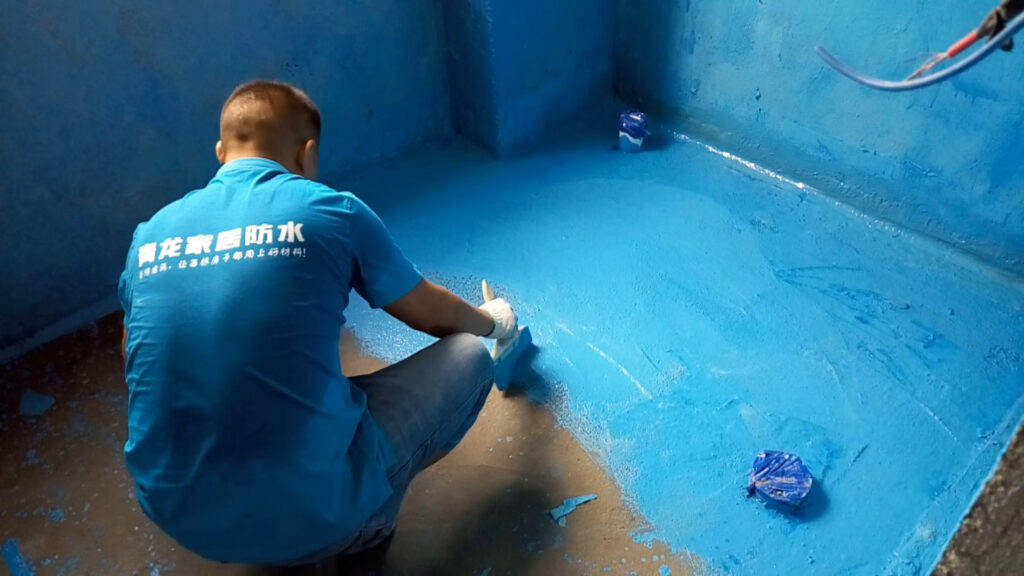
For internal wet areas such as factory toilets, pantries or process wash zones, the waterproofing must be compatible with screed, tiles, wall-floor junctions and pipe penetrations. If tiles are retained, adhesion and trapped moisture become important concerns. If tiles are removed, the programme may be longer but the substrate condition can be confirmed more clearly.
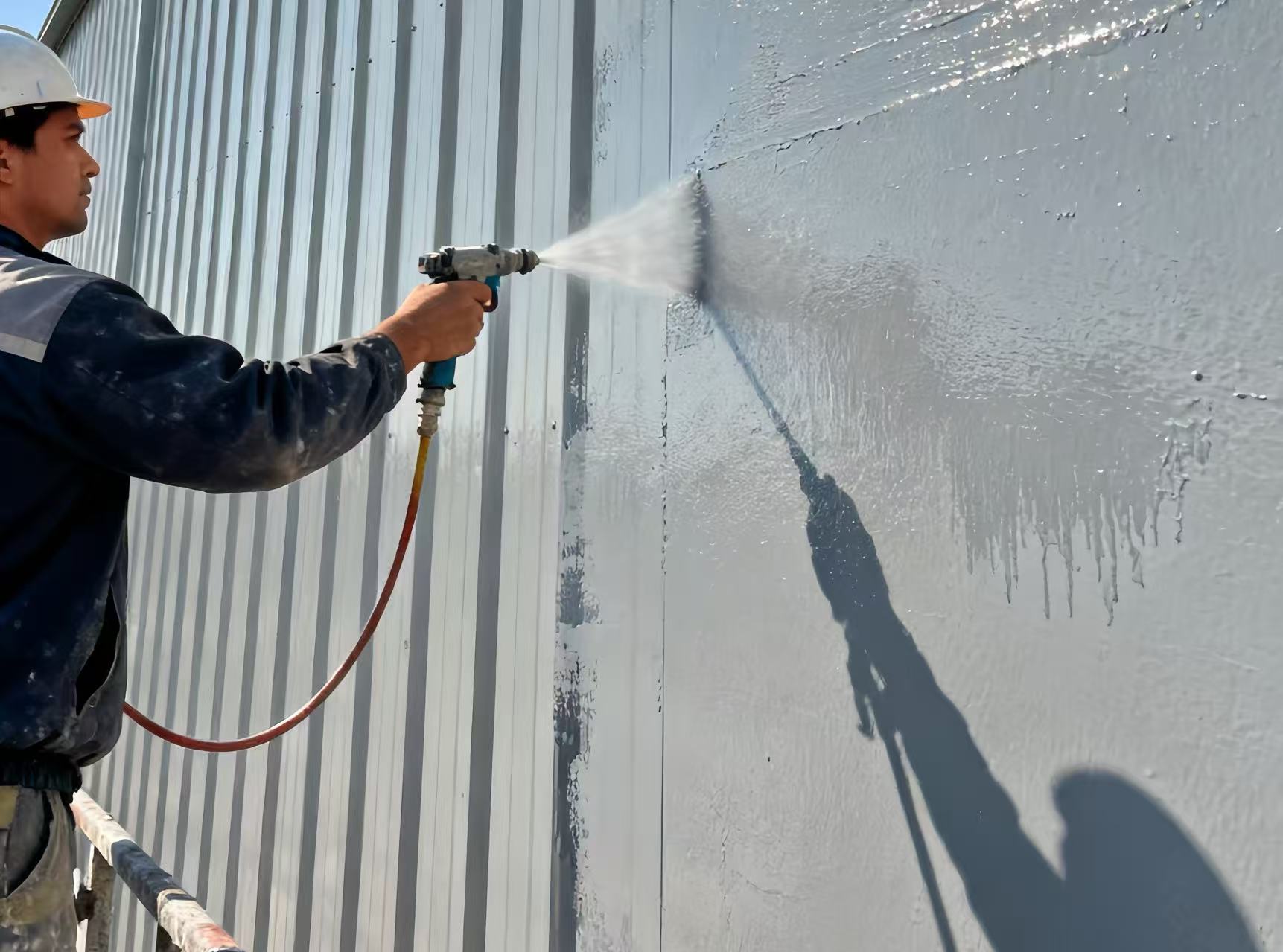
For external walls, transparent waterproof coatings may help where the existing decorative finish is stable and the problem is surface seepage through fine cracks or porous areas. They are less suitable if the wall has hollow render, peeling paint, active structural cracks or unsealed openings around frames and services.
How QingLong Approaches Factory Waterproofing Planning
For factories that need to continue operating, QingLong Waterproofing can review both the waterproofing defect and the production constraint before recommending a repair approach. As a waterproofing manufacturer, product supplier and service provider, QingLong can consider material selection together with application practicality instead of treating them as separate decisions.
A suitable proposal should normally clarify the affected areas, the likely water entry details, substrate preparation, material build-up, access method, phasing plan and protection requirements. For an occupied factory, this planning is as important as the waterproofing product itself.
The most useful discussion before work starts is not only about price per square foot. It should cover which areas must remain operational, whether work can be staged, what temporary protection is needed, and what conditions must be achieved for the selected system to perform.
If your factory in Subang is facing leakage but cannot afford a full production stop, you can contact QingLong Waterproofing for a site-specific waterproofing recommendation.
Conclusion:
Factory waterproofing without a full production shutdown is primarily a matter of correct diagnosis and planning.
The first step is to identify the actual source of water ingress. The next is to understand the operational and safety risks around the affected area. The repair can then be divided into suitable work zones, the waterproofing system selected according to the substrate and exposure, and the work scheduled around production, weather and curing requirements.
Not every factory waterproofing project can be completed without disruption. Major replacement, extensive demolition or serious safety risks may require a partial or temporary shutdown. However, many factory waterproofing projects can be phased to reduce disruption when the repair strategy is planned properly from the beginning.
If your factory in Subang or the surrounding Selangor area is experiencing roof leaks, wall seepage or recurring water ingress but cannot afford unnecessary production downtime, contact QingLong Waterproofing for a site-specific assessment and waterproofing recommendation.
Frequently Asked Questions (FAQs)
1. Can factory waterproofing be done while production continues?
Yes, in many cases it can be phased by zones or scheduled during lower-activity periods. The feasibility depends on access, safety, leak severity, surface preparation and curing requirements.
2. Is emergency patching enough for a leaking factory roof?
Emergency patching may reduce immediate water entry, but it is not always a permanent solution. The roof should still be inspected for failed fasteners, sheet laps, gutters, penetrations, cracks or ponding areas.
3. Will waterproofing work create dust or odour inside the factory?
Some preparation and application methods may create dust, noise or odour. This should be checked before work begins so that sensitive production zones, stored materials and staff movement can be protected.
4. Can waterproofing be done only at night or on weekends?
Sometimes yes, but curing time and weather conditions still matter. A repaired area may need protection before it can be exposed to rain, foot traffic or factory activity.
5. Which parts of a factory commonly cause water leaks?
Common sources include roof sheet laps, fasteners, gutters, roof penetrations, concrete cracks, expansion joints, parapets, external wall cracks, window edges and drainage outlets. The visible drip point may not always be the actual entry point.