Tile roofs are common in Kuching homes because they handle heat well and suit many older terrace, semi-detached, and bungalow designs. However, Kuching’s frequent rain, high humidity, moss growth, and strong sun exposure can slowly weaken roof details such as ridges, valleys, flashings, and tile overlaps.
When leakage appears, many homeowners rush to find a contractor—but choosing the wrong one can lead to repeated repairs and higher long-term costs. In this guide, we explain why tile roof leaks happen in Kuching, how waterproofing failures develop, the contractor red flags to watch for, and what to verify before approving any repair work.
Why Tile Roof Leaks Are Common in Kuching Homes
Kuching receives heavy rainfall throughout the year, exposing roof systems to relentless wet-dry cycles. On a tile roof, water normally drains through tile laps, valleys, gutters, and downpipes. When any part of this flow is blocked or damaged, rainwater is forced under the tiles instead of draining safely off the roof.
In many older Kuching houses, leaks are rarely caused by a single broken tile. Usually, several minor issues compound over time:
-
Loose Ridge Capping & Aged Mortar: Cracks allow wind-driven rain to penetrate top joints.
-
Clogged Valleys & Rusted Flashings: Debris blocks water channels, causing backups at wall junctions.
-
Tile Displacement: Thermal expansion and contraction shift tiles out of alignment over years of sun exposure.
-
Moss & Dirt Buildup: Algae traps moisture and slows drainage, especially on shaded roof slopes near trees.
Key Takeaway: Proper tile roof waterproofing isn't just about painting on a coating. A reliable diagnosis must identify where water enters, how it travels, and which structural details need repair before any waterproofing material is applied.
How Tile Roof Waterproofing Can Fail
Waterproofing only works when it directly targets the actual leak source. Simply coating a large roof surface might look convincing, but it won't stop rain from entering through hidden flaws like cracked valley joints or degraded wall flashings.
In climates like Kuching's, extreme afternoon heat followed by sudden downpours creates intense thermal shock—causing tiles and mortar to expand and contract rapidly. Without proper surface preparation to clear away dirt, dampness, or algae, the waterproofing layer cannot bond correctly and will quickly peel, crack, and delaminate.
5 Contractor Red Flags Before Hiring
Before agreeing to roof repair work, homeowners should watch for these critical warning signs:
Quoting Without a Close Inspection: A contractor who offers a fixed price from the ground will miss hidden issues like cracked underlay, loose valley tiles, or failed flashing behind walls.
Recommending a Full Coating Immediately: Full roof coating has its place, but it should never replace localized tile replacement, joint repairs, or drainage corrections when those are the root causes.
Inability to Explain the Water Entry Point: A competent inspector must clearly explain likely entry points, water flow directions, and why their proposed method will fix it.
Skipping Surface Preparation: Cleaning, drying, removing loose material, and treating weak joints are mandatory. Waterproofing over moss or peeling old paint guarantees premature failure.
Offering Unrealistic Guarantees: Tile roof durability depends on structural condition, proper drainage, and ongoing maintenance. A responsible contractor clearly explains warranty limitations and future upkeep.
What Homeowners Should Confirm Before Work Starts
A proper roof waterproofing proposal should always start with inspection photos—not just verbal promises. Confirm the following details with your contractor before signing off:
Source Diagnostics: Ask for photos showing whether the leak stems from tiles, ridge capping, flashing, gutter overflow, or previous repair failure.
Material Suitability: Ensure the right products are specified. Exposed roof coatings, joint sealants, and cementitious waterproofing each serve distinct purposes. As a manufacturer and supplier, QingLong Waterproofing emphasizes that material selection must adapt to the roof structure—not the other way around.
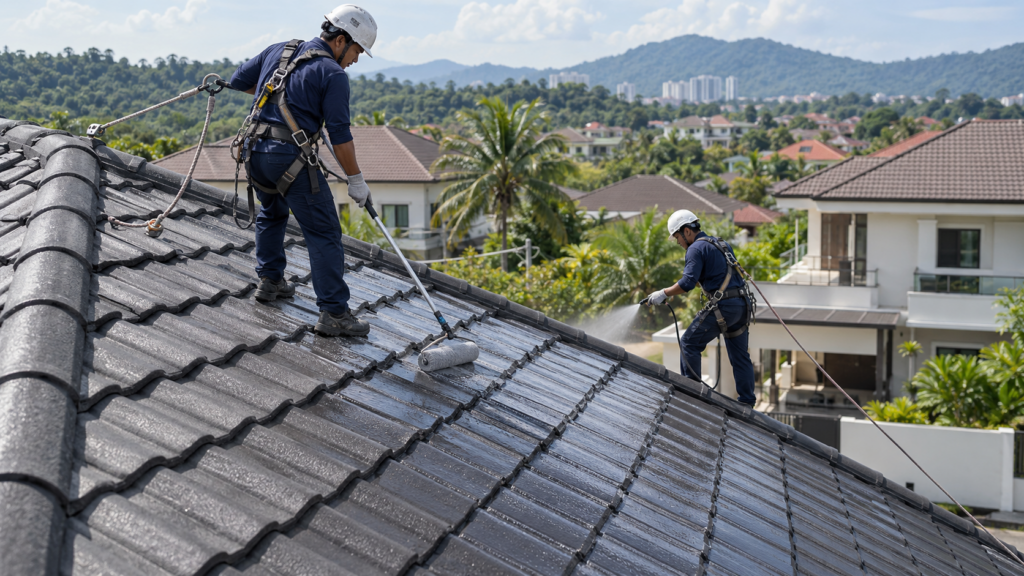
Access & Tile Protection: Walking on unsupported tile roofs can crack fragile tiles. Verify that the contractor has a safe access plan to avoid causing new damage during repairs.

Case Study: Tile Roof Leakage on a Kuching Home
A homeowner in Kuching reported ceiling stains that appeared only during prolonged heavy rain. Although cracked tiles were initially suspected, inspection found that most tiles were still intact.
The actual source was a roof valley beside an upper wall. Leaves and moss had restricted drainage, while aged sealant around the wall flashing had hardened and separated. During heavy rain, water accumulated in the valley and travelled beneath the tiles before reaching the ceiling.
This case shows why tile roof leakage should be properly inspected before repair. The visible stain is not always directly below the leak source, and simply replacing tiles or applying sealant may not solve the root cause.
Conclusion
Effective tile roof waterproofing in Kuching requires precise diagnosis. Treating every leak with a blanket roof coating overlooks common root causes like poor drainage, failed flashings, and bad surface preparation.
A dependable waterproofing solution provider should clearly explain the root cause, repair steps, material compatibility, and realistic maintenance expectations. If your roof is leaking or you need an expert opinion on a contractor's quote, contact QingLong Waterproofing to arrange a professional site inspection.
Frequently Asked Questions (FAQs)
1. Why does my tile roof leak during heavy rain but not light rain?
This occurs when water flow is restricted at valleys, gutters, flashings, or tile overlaps. Light rain drains away slowly without issue, but heavy rain backs up over blocked barriers and forces water under the tiles.
2. Is roof coating always the best solution for tile roof waterproofing?
No. While coatings protect surfaces, underlying issues—such as cracked tiles, loose ridges, failed wall flashings, or clogged valleys—must be structurally repaired first.
3. What should I ask a tile roof waterproofing contractor in Kuching?
Ask them to identify the exact entry point with photos, outline their surface preparation steps, justify their choice of waterproofing materials, and clarify warranty limits.
4. Can QingLong Waterproofing inspect tile roof leaks in Kuching?
Yes. QingLong Waterproofing provides diagnostic inspections and tailored waterproofing recommendations for residential, commercial, and industrial properties across Malaysia.