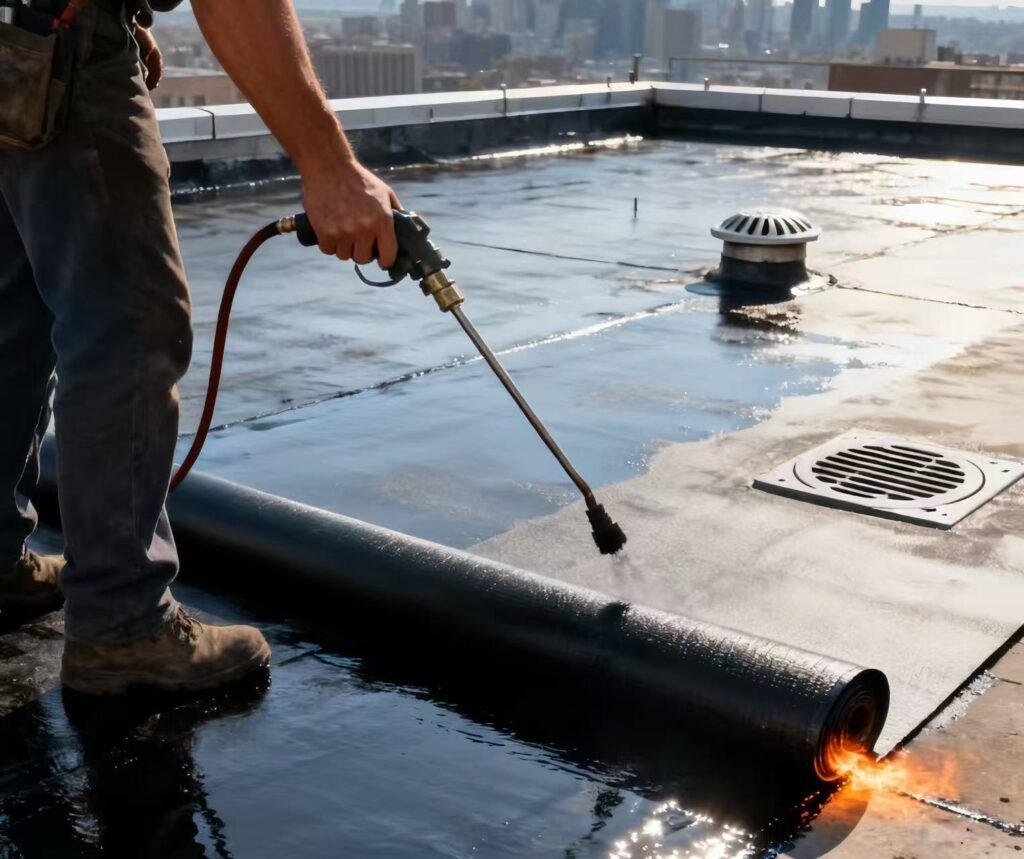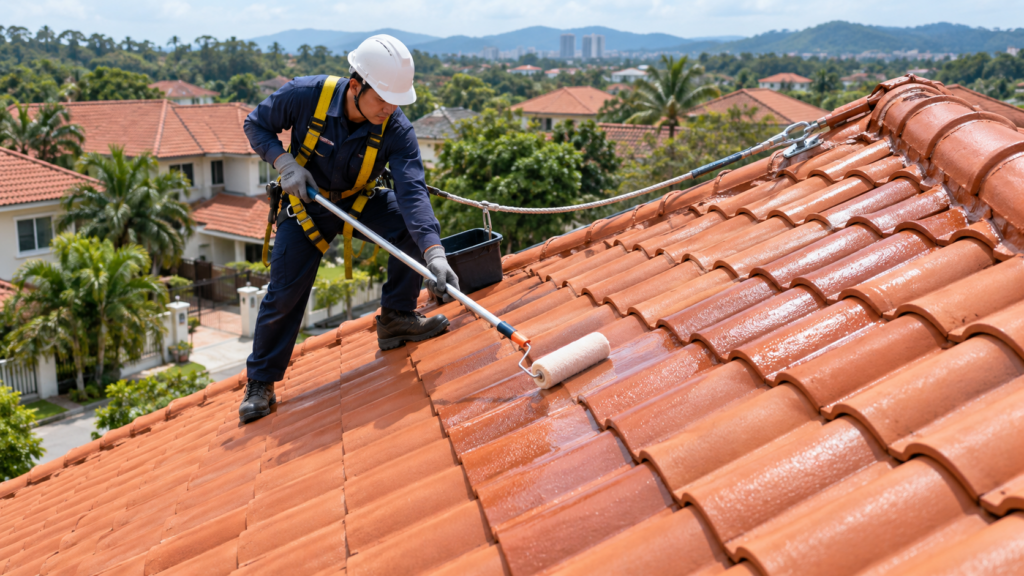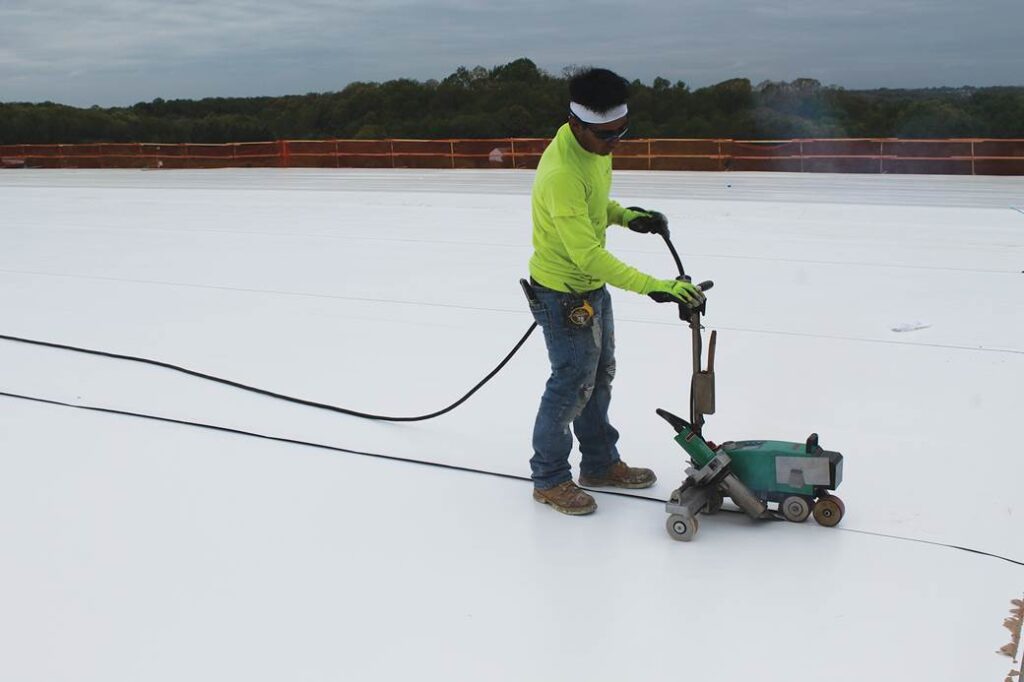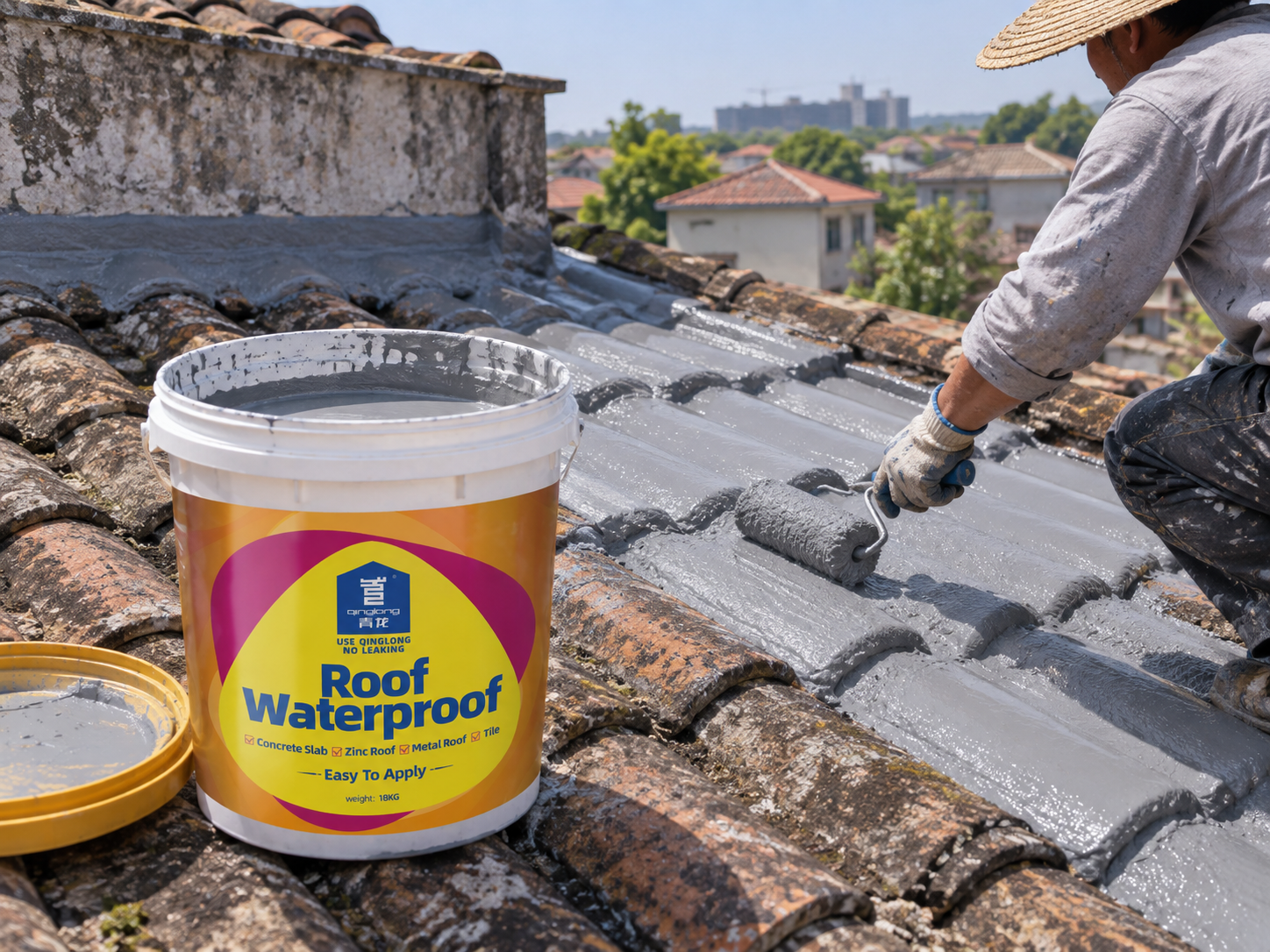
A tile roof leak is rarely as simple as “one broken tile above the stain”. In many Kuching homes, water may enter at the ridge, valley, flashing, side wall junction, tile lap or pipe penetration, then travel along timber, underlay or ceiling boards before showing up indoors. That is why Kuching tile roof waterproofing should begin with inspection reasoning, not immediate coating. The repair decision depends on whether the tiles are damaged, the roof details are failing, or the waterproofing layer beneath the tiles has already lost protection.
The Ceiling Stain Does Not Confirm the Entry Point
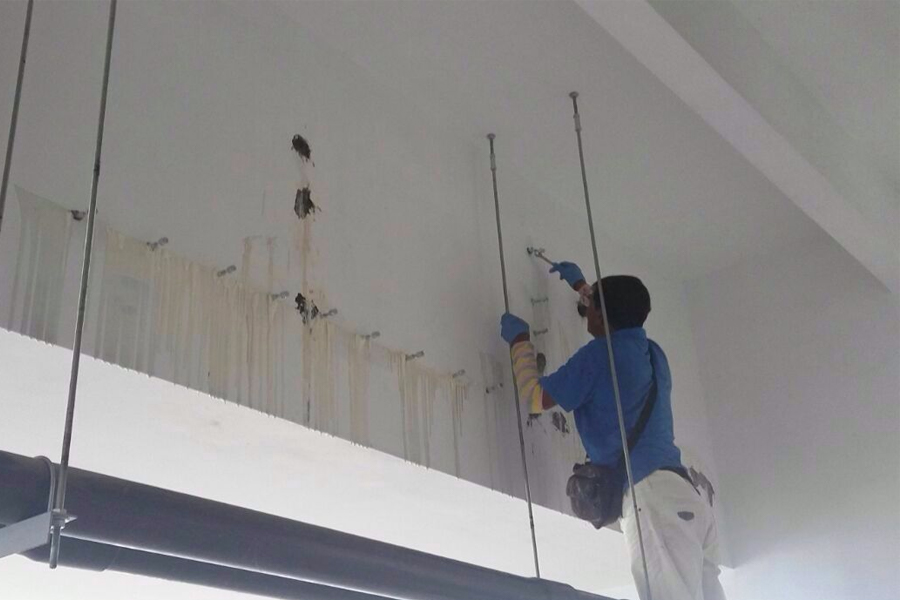
A stain on the ceiling tells you where water becomes visible, not necessarily where rainwater entered the roof. On a pitched tile roof, water can travel sideways or downslope before dripping into the ceiling area. This is especially common when rain enters near a ridge, valley, flashing or cracked mortar bedding.
For homeowners, this matters because repairing only the area directly above the stain may miss the actual defect. A contractor should first ask when the leak appears. Does it happen only during heavy rain? Only when rain comes from one direction? Does it continue dripping after the rain stops? These details help separate a simple cracked tile from a more complicated roof junction or drainage issue.
A useful first principle is this:
For tile roof leak repair in Kuching, the first inspection should focus on roof details that interrupt normal water flow: ridges, valleys, flashings, wall junctions, pipe penetrations and cracked or displaced tiles. Coating the visible surface may not solve the leak if water is entering through an opening beneath tile laps or at a failed roof detail.
What a Contractor Should Inspect Before Recommending Coating
Before choosing a coating or replacement, the roof surface must be read like a drainage system. Tiles are designed to shed water. They are not usually the only waterproofing defence. Their position, overlap, slope and surrounding details all affect performance.
A proper inspection should look at several tile-roof-specific points:
Broken, cracked, slipped or missing tiles
Gaps at ridge caps, hip lines and mortar bedding
Valleys blocked by leaves, debris or poor tile cutting
Flashing condition at walls, chimneys, skylights or roof extensions
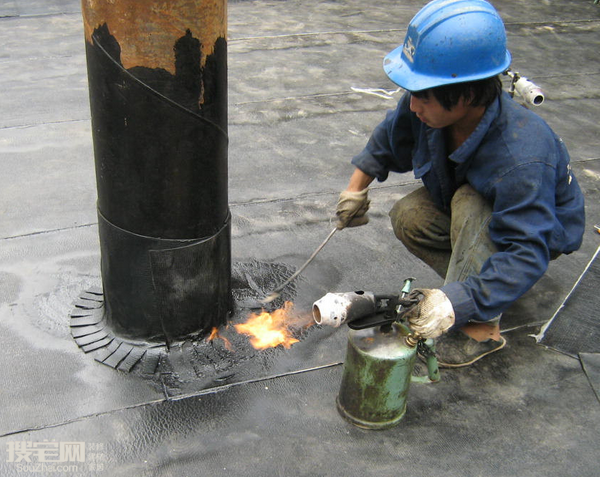
Pipe penetrations, brackets, fasteners and previous sealant patches
Signs of underlay deterioration beneath the tiles, where accessible
Areas where water ponds or overflows because drainage is restricted
This inspection is not just a checklist. The important part is connecting the observation to the leak pattern. For example, a broken tile may cause leakage during most rains. A valley problem may only appear during heavier downpours when water volume increases. A wall flashing defect may leak only when wind pushes rain against the side wall.
Coating Can Help Only When the Roof Surface Is a Suitable Substrate
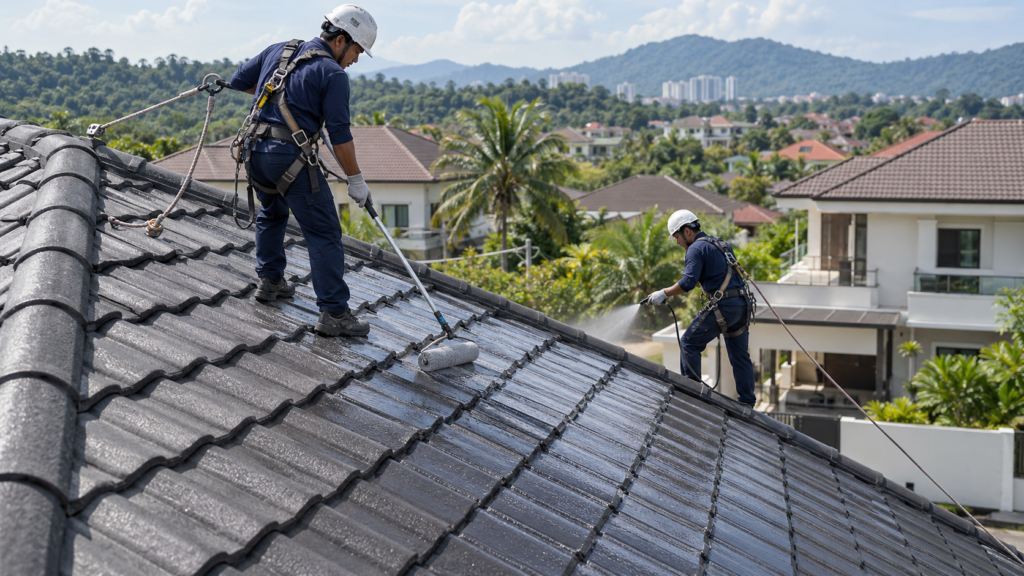
Roof waterproofing coating is sometimes suitable for tiled roofs, but it should not be treated as a magic layer that solves every roof leak. Coating depends heavily on surface preparation, adhesion and the condition of the roof details. If the tiles are loose, powdery, badly cracked or moving, coating over them may only cover a weak surface.
For an exposed tile roof, coating may be considered when the tiles are generally stable, the surface can be cleaned properly, and the main issue is surface porosity, hairline cracking or weathered tile condition. The coating must also be compatible with the tile material and intended exposure. A roof coating is exposed to sunlight, heat movement and rain, so adhesion and flexibility matter.
However, coating has limits. It may not correct poor tile alignment, undersized laps, blocked valleys or failed flashing. It also cannot reliably bridge wide moving gaps if the underlying roof detail keeps opening. If previous sealant patches have been applied randomly, those areas may need removal or proper preparation before any waterproofing layer is added.
QingLong’s roofing waterproofing coating range may be relevant for roof surface protection where the substrate and detailing are suitable, but the correct system should be selected according to the roof condition and product specification, not just the roof type.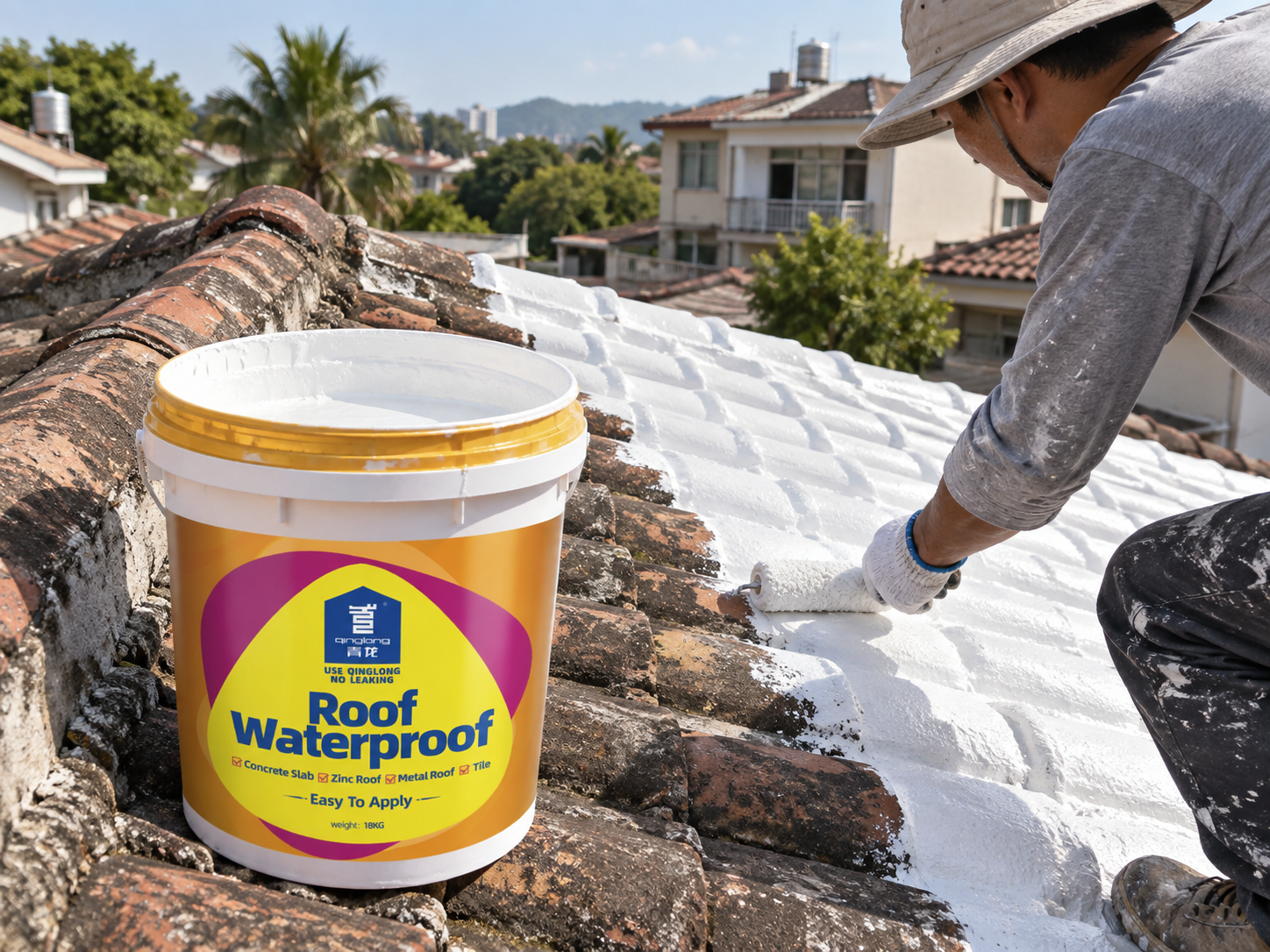
When Tile Replacement Is More Sensible Than Waterproof Coating
Tile replacement becomes more sensible when the problem is physical damage rather than surface waterproofing. If individual tiles are cracked, displaced or badly weathered, replacing those tiles may solve the immediate water entry more directly than coating a large area.
Replacement is also important where access reveals that tiles are no longer sitting correctly. A tile roof relies on overlap. If the lap is interrupted, cut poorly at a valley, lifted by movement or affected by previous work, rainwater can be driven below the tile line. In that situation, the roof geometry or tile arrangement must be corrected before waterproofing materials can perform properly.
There are also cases where both actions are needed. A contractor may replace damaged tiles, repair ridge or flashing details, then apply a suitable waterproofing coating to improve surface resistance. The sequence matters. Coating should normally come after the unstable or defective parts are corrected, not before.
A practical decision guide is: Choose tile replacement when leakage is caused by broken, slipped or badly fitted tiles. Consider waterproof coating when the tile roof is structurally stable but weathered, porous or affected by fine surface defects. If leakage comes from flashing, valleys, ridge bedding or penetrations, those details must be repaired before any coating can be expected to perform.
Why Previous Tile Roof Repairs May Fail After Heavy Rain
Many tile roof leaks return because the first repair treated the most visible defect, not the full water path. A common example is applying sealant over a suspected crack while the real entry point is a valley blockage or wall flashing gap. The repair looks reasonable during dry weather, but the leak returns when rain intensity increases.
Another issue is compatibility. Some temporary sealants become brittle, lose adhesion or lift from dusty tile surfaces. If the surface was not cleaned and prepared, the repair may fail even if the material itself is waterproof. On tiled roofs, small movement from heat and roof expansion can also stress rigid patches.
In Kuching, the timing of rain can make diagnosis more difficult. A roof may seem dry during inspection, but a defect only becomes active when rainwater volume increases or wind pushes rain under the tile overlap. This does not mean every roof needs full replacement. It means the inspection should consider the condition that causes the leak, not only the roof appearance during dry weather.
The Repair Scope Should Match the Water Entry Mechanism
The best repair scope is not always the largest scope. A whole-roof coating may be unnecessary if the leak is isolated at one flashing detail. At the same time, repeated small patches may become expensive if the roof has widespread tile movement, ageing mortar bedding and several weak junctions.
A homeowner should ask the contractor to explain the water entry mechanism in plain terms. For example: “Rainwater is entering at the cracked ridge bedding and travelling down the roof underlay,” or “The valley is blocked, causing water to overflow beneath the cut tiles.” This explanation is more useful than a general statement that the roof “needs waterproofing”.
The repair proposal should also clarify what is included. Does it cover tile replacement? Ridge repair? Valley cleaning? Flashing treatment? Surface coating? Penetration sealing? Without this clarity, two quotations may look similar but cover very different work.
For homeowners comparing tile roof waterproofing contractors in Kuching, the strongest proposal is usually the one that connects inspection findings to repair method, rather than offering coating or replacement before the roof has been properly assessed.
Conclusion
Tile roof waterproofing is a decision about water path, not just material selection. If water is entering through cracked tiles, replacement may be direct and effective. If the tile surface is weathered but stable, coating may be suitable after preparation. If the leak starts at a ridge, valley, wall flashing or penetration, that detail must be repaired first.
If your tile roof leak keeps returning or you are unsure whether coating or tile replacement is appropriate, QingLong Waterproofing can help review the roof condition and recommend a suitable repair approach. You may contact QingLong Waterproofing for a site discussion.