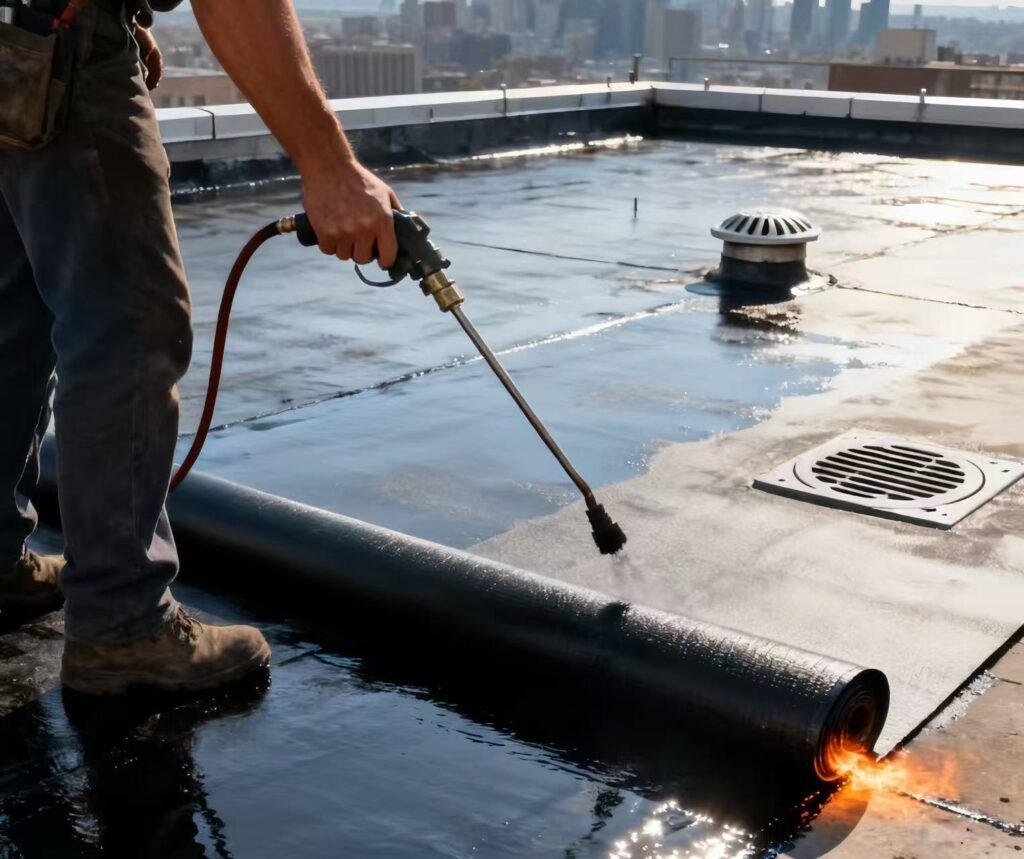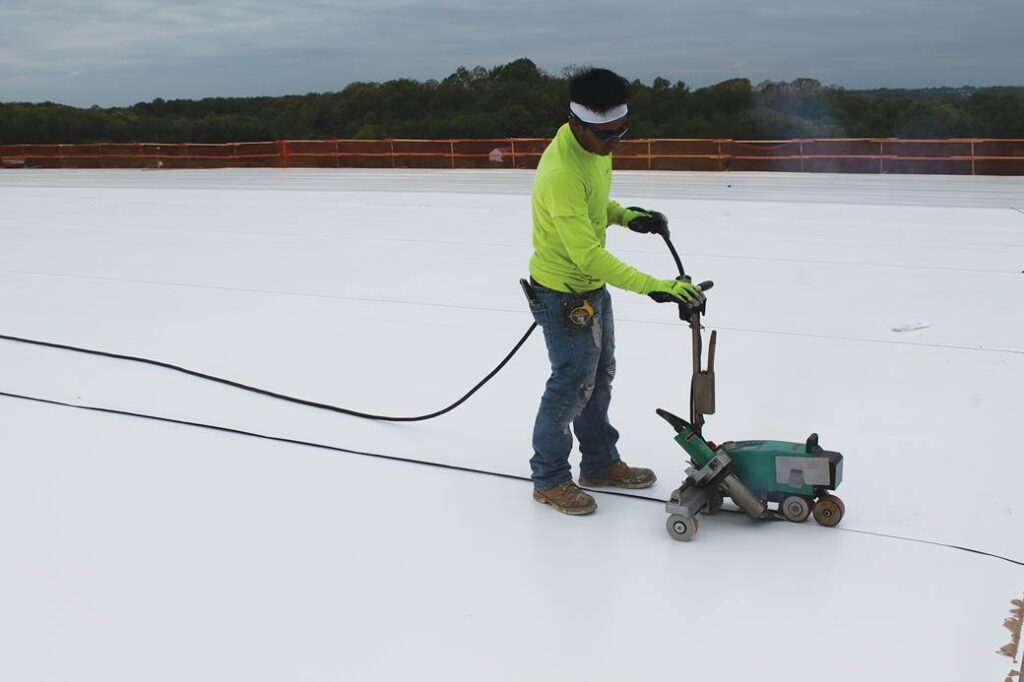
A metal roof leak in Petaling Jaya is often treated as a surface problem: apply coating over the roof and wait for the next rain to confirm the result. That approach can work only when the leak source has been correctly identified. On many shoplots, factories, terrace-house extensions and commercial buildings, water may enter through fasteners, roof laps, wall junctions, gutters, penetrations or rusted details rather than through the main metal sheet itself. Before deciding on metal roof waterproofing, the first task is to understand where the water is entering and how it travels inside the roof assembly.
The Ceiling Stain Is Not Always Below the Entry Point
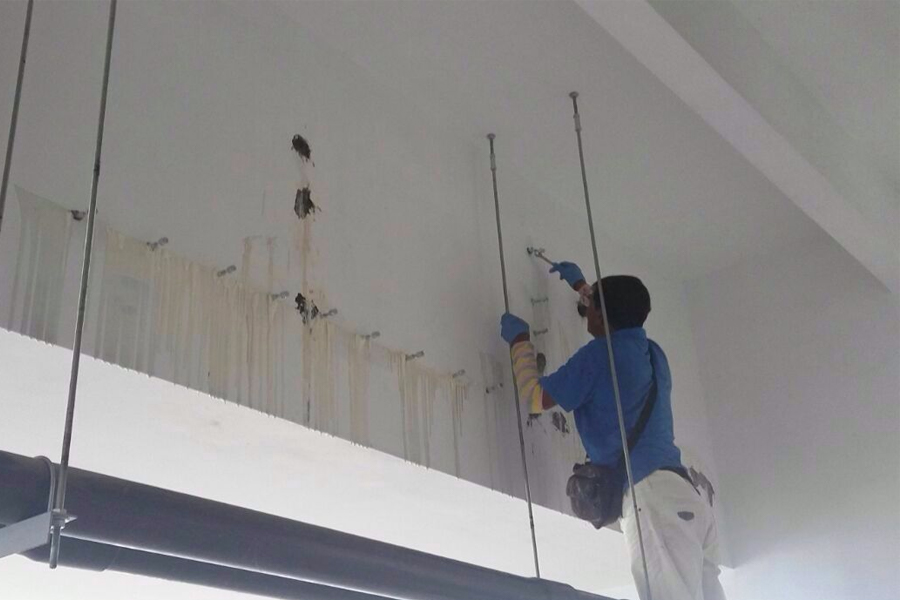
A stain on the ceiling gives useful information, but it does not prove that the leak source is directly above it. With metal roofing, water can enter at a higher point and travel along purlins, insulation, roof sheet ribs or the underside of overlapping panels before dripping into the room.
This is why a leak above an office desk, bedroom ceiling or shop ceiling panel may actually start near a ridge cap, screw line, parapet wall or gutter edge several metres away. If waterproofing is applied only above the visible stain, the repair may miss the entry point entirely.
For metal roof waterproofing, the inspection should connect three things: the visible water mark, the roof detail above that area, and the drainage path that water follows during rain. Without that connection, the repair scope becomes guesswork.
For a leaking metal roof, the first waterproofing decision is not which coating to apply. It is whether the leak comes from the roof sheet, a joint, a fastener, a penetration, a gutter, or a wall connection. Each source needs a different repair detail, so coating the whole surface may not solve a localised defect.
Fasteners, Laps and Cappings Usually Deserve the First Check
Metal roof sheets often fail at details before the flat sheet area fails. The main panel may still be serviceable, while the waterproofing weakness sits at a small but repeated point across the roof.
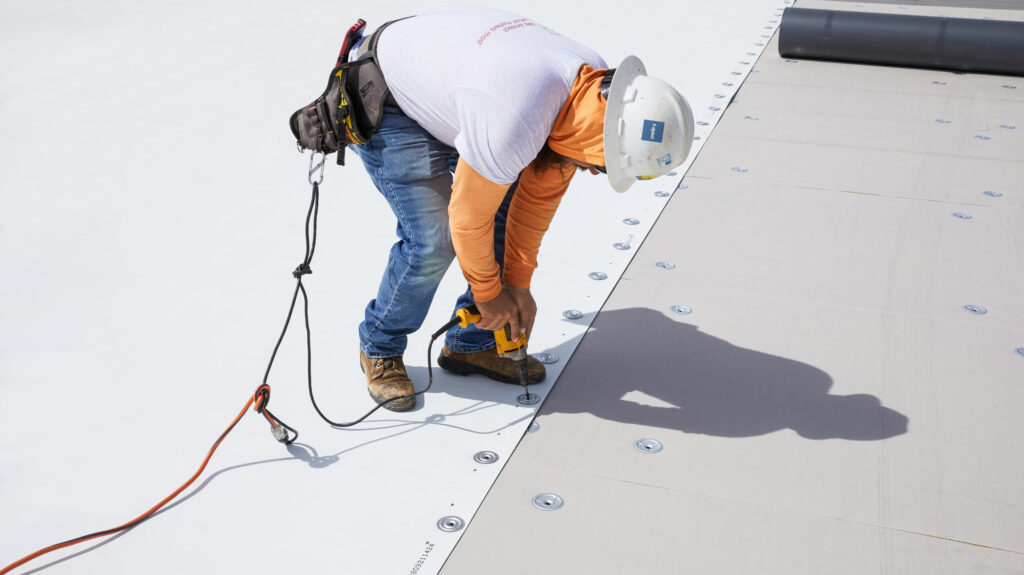
Fasteners are a common example. A screw washer can harden, deform or lose compression over time. If the screw hole enlarges slightly due to movement, water may enter during wind-driven rain. Applying a coating across the roof surface without addressing loose or failed fasteners may only cover the symptom temporarily.
Side laps and end laps also need close inspection. Where sheets overlap, water should be shed away by the roof profile and slope. If the lap is poorly sealed, contaminated, corroded or facing strong water flow, leakage may occur even when the sheet itself looks intact.
Ridge cappings, apron flashings and side flashings are another priority. These details bridge changes in direction: roof to wall, roof to ridge, roof to parapet or roof to another structure. If the flashing termination is open, cracked or poorly sealed, rainwater can enter behind the metal sheet instead of through the exposed roof surface.
In Petaling Jaya, many older commercial and residential buildings have later roof extensions connected to existing walls. These junctions should be inspected carefully because the roof may be newer than the wall it connects to, and the waterproofing detail between them may not have been designed as one system.
Gutters and Outlets Can Make a Roof Leak Look Like a Sheet Problem
A roof leak during heavy rain does not automatically mean the roof covering has failed. Sometimes the roof is shedding water correctly, but the gutter system cannot remove water fast enough or has a weak joint.
Box gutters, internal gutters and roof valleys are especially important because they concentrate water from a larger roof area into a narrow drainage path. If an outlet is undersized, blocked, corroded or poorly joined, water can back up and spill into the building. From inside, the leak may appear to come from the roof sheet, ceiling joint or wall edge.
The inspection should look for signs such as ponding marks, leaf blockage, rust lines, failed gutter joints and overflow staining at the fascia or internal ceiling edge. If the gutter is the real source, coating the roof sheets may not correct the hydraulic problem. The repair may need gutter joint sealing, outlet improvement, rust treatment, replacement of damaged sections or better overflow provision.
This distinction matters for building owners because the cost and disruption are different. A roof coating project covers a large surface area. A gutter-focused repair may be more localised but requires careful detailing because gutters hold water longer than sloped roof sheets.
Penetrations and Added Equipment Often Create New Leak Paths
Metal roofs are frequently modified after installation. Air-conditioning pipes, exhaust ducts, skylights, antenna supports, solar brackets, cable entries and access hatches may be added over time. Each penetration interrupts the original roof plane.
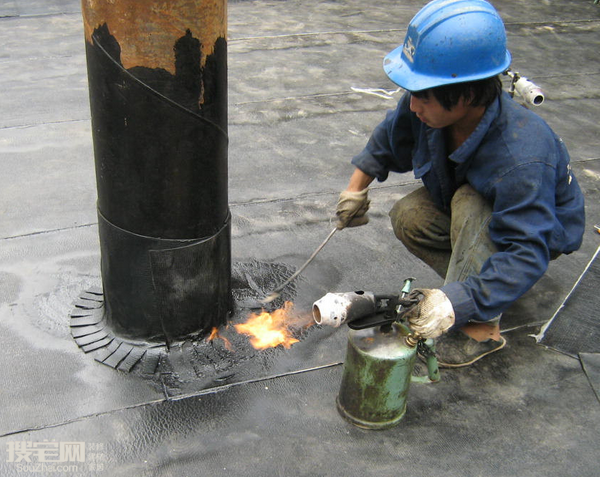
A well-installed penetration should allow water to flow around it without entering the building. Problems appear when sealant is used as the main waterproofing detail instead of being part of a proper flashing or collar arrangement. Sealant alone may crack, debond or pull away as the metal roof expands and contracts.
Equipment supports can also trap water and dirt around their fixing points. If brackets are screwed through the roof sheet without a suitable waterproofing detail, leakage may start around the fastener. The defect can be small, but repeated rain exposure makes it difficult to ignore.
For property managers in Petaling Jaya handling occupied shops, offices or light industrial premises, this is an important inspection point. The roof may have been modified by different trades over many years. The waterproofing assessment should not only look at original roof components but also every item later fixed through or onto the metal roof.
When Full Metal Roof Waterproofing Makes Sense
Checking the leak source does not mean large-area waterproofing is unnecessary. There are situations where full metal roof waterproofing is the more practical option. The key is to confirm that the roof condition justifies a system approach rather than only a local repair.
Full waterproofing may be considered when the roof has widespread ageing, multiple leak points, surface corrosion, many failed fasteners, deteriorated laps or an existing coating that has broken down across large areas. In these cases, repairing one leak at a time may lead to repeated call-backs because the roof has several vulnerable points.
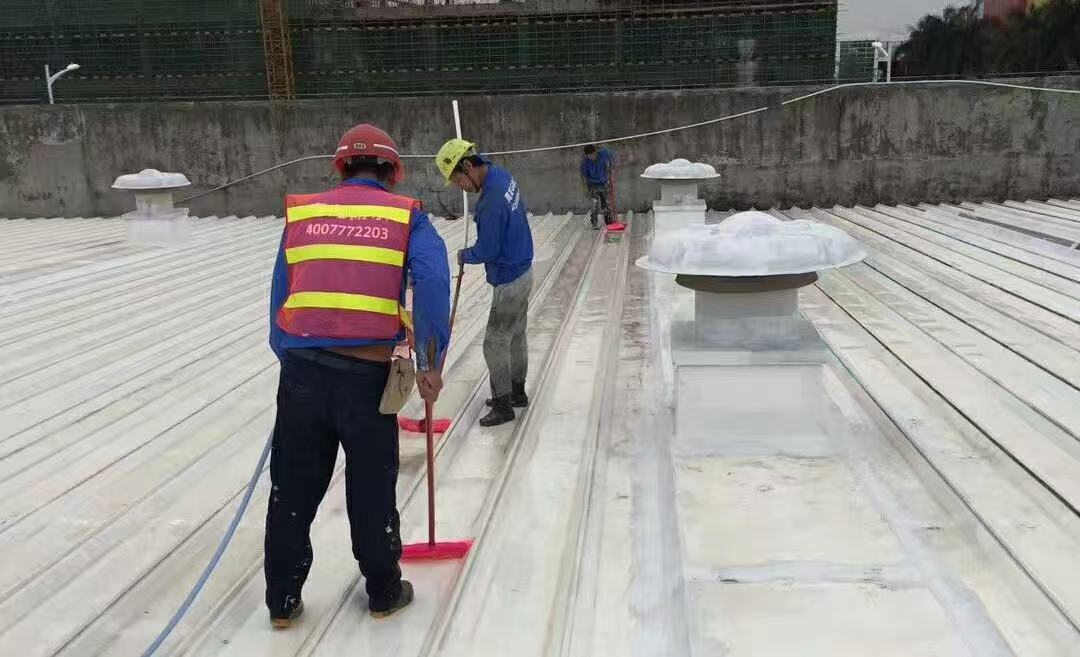
However, the substrate still matters. A waterproof coating needs a sound, clean and suitably prepared surface. Loose rust, chalky old coating, oil contamination, trapped moisture and weak adhesion can affect performance. Severely corroded sheets may need replacement rather than coating. Movement at laps, fasteners and flashings should also be addressed before or as part of the waterproofing system.
Full metal roof waterproofing is suitable when the roof has widespread but still repairable surface and detail deterioration. It is not a substitute for replacing structurally weak sheets, correcting poor drainage, or fixing open flashings. The roof must be stable enough for the waterproofing system to bond and perform.
QingLong Waterproofing offers roof waterproofing products and complete waterproofing system support for residential, commercial and industrial projects. For metal roof areas, product suitability should be matched to the roof condition, exposure, substrate preparation and repair details rather than selected by coating name alone.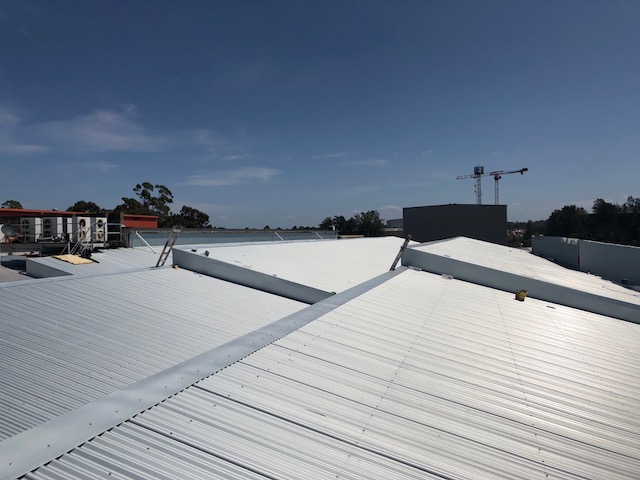
What a Practical Leak Source Check Should Confirm
A useful metal roof inspection should narrow the problem instead of producing a vague recommendation to “waterproof the roof”. Before approving repair work, the owner or manager should try to confirm several points:
whether the leak appears only during heavy rain, wind-driven rain or every rainfall;
whether the stain is below a roof sheet area, gutter, wall junction, penetration or ridge line;
whether fasteners, laps, flashings and cappings show visible gaps, rust or movement;
whether gutters and outlets are clear, correctly sloped and watertight;
whether previous sealant or coating repairs are still bonded or already peeling;
whether any roof sheets are too corroded or damaged to be coated reliably.
These checks do not replace a site assessment, but they help prevent the wrong scope of work. A localised fastener problem, a failed wall flashing and a generally aged roof should not be treated as the same waterproofing job.
For occupied buildings, the inspection also helps plan access and disruption. A small leak near a penetration may be repaired with limited work. A deteriorated roof with many defects may require staged waterproofing, safety planning and coordination with building operations.
Conclusion
Metal roof waterproofing in Petaling Jaya should begin with leak source confirmation, not an automatic decision to coat the entire roof. The visible ceiling stain is only the final point where water appears. The real entry point may be at a screw, lap, flashing, gutter, penetration or roof-wall junction. Once that path is understood, the repair can be sized correctly: local detail repair, gutter correction, sheet replacement, or full roof waterproofing.
If your metal roof leak keeps returning or the source is unclear, you can contact QingLong Waterproofing for a site-based recommendation before deciding on the repair scope.