In Kota Kinabalu, water leakage often becomes more serious during long rainy periods, especially in basements, car parks, retaining walls, lift pits, bathrooms, and concrete roofs. Many buildings are exposed to coastal humidity, heavy downpours, and ground moisture, so small cracks can quickly turn into active seepage points. Water-reactive PU injection is commonly used when water is already entering through concrete cracks, joints, or honeycombed areas.
In this article, we’ll explain how the problem starts, how PU injection works, what property owners should check before repair, and when to call a professional contractor such as QingLong Waterproofing for proper assessment.
Why Concrete Leakage Happens in Kota Kinabalu Buildings
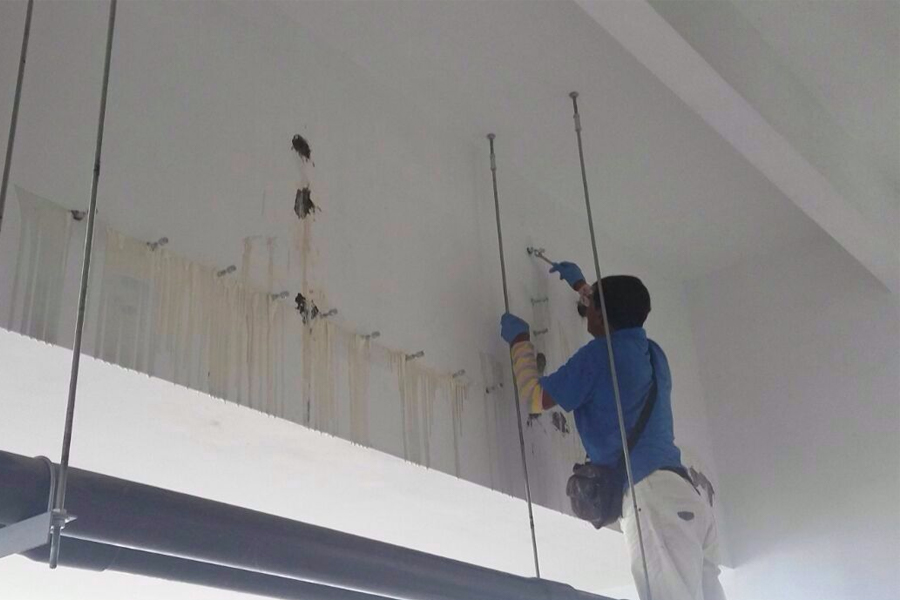
Concrete looks solid, but it is not completely waterproof by itself. Small cracks, construction joints, pipe penetrations, and porous concrete can allow water to move through the structure. In Kota Kinabalu, frequent rainfall and high humidity increase the pressure on these weak points. Buildings near slopes or lower ground areas may also experience groundwater pressure after heavy rain.
One common mistake is treating every leak as a surface problem. If water is entering from behind the wall or below the slab, painting a coating over the wet surface may only hide the symptom for a short time. The water continues travelling inside the structure until it finds another exit point. This is why a proper Malaysia waterproofing diagnosis should identify the water path, not just the visible stain.
How Water-Reactive PU Injection Works
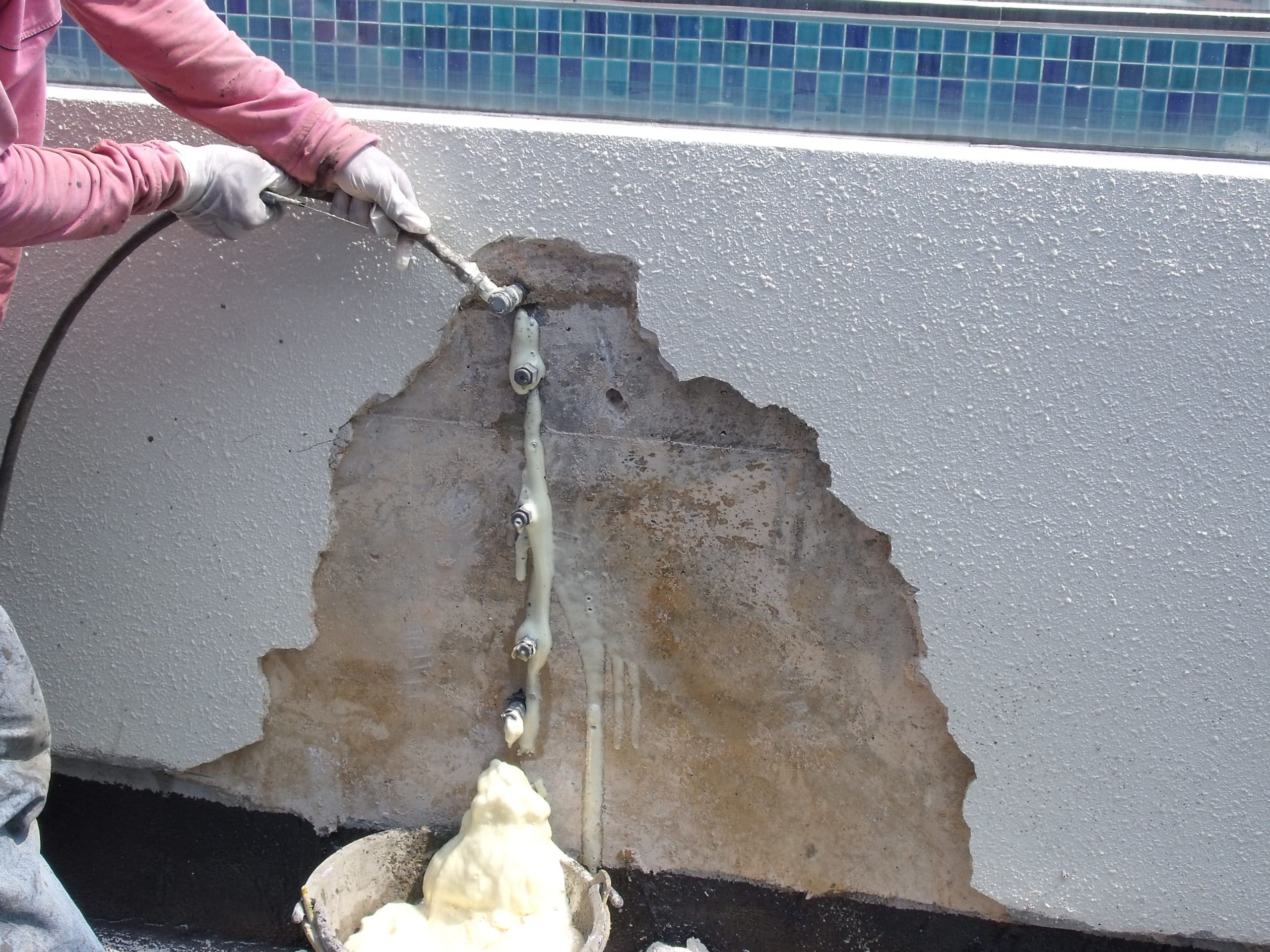
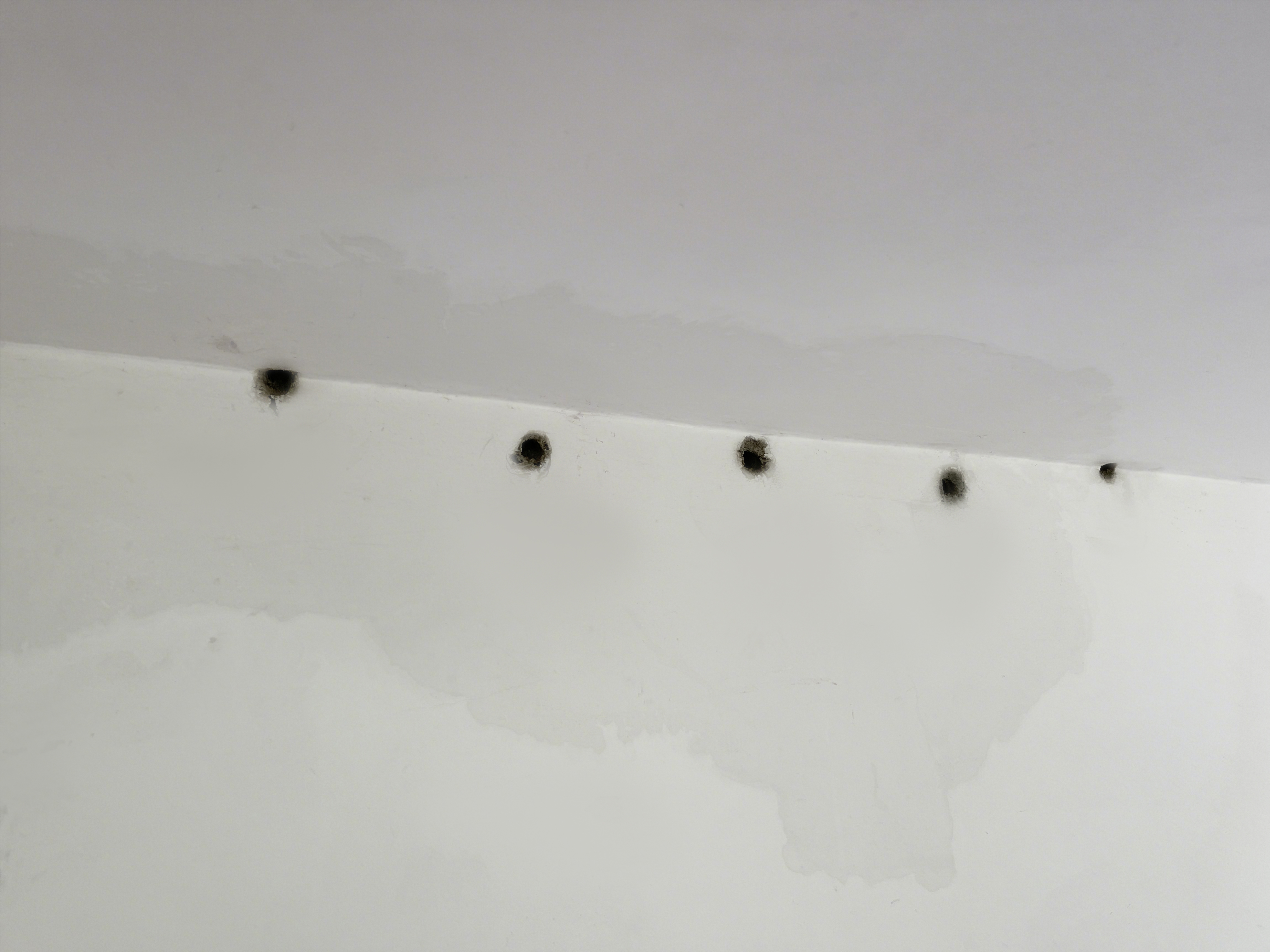
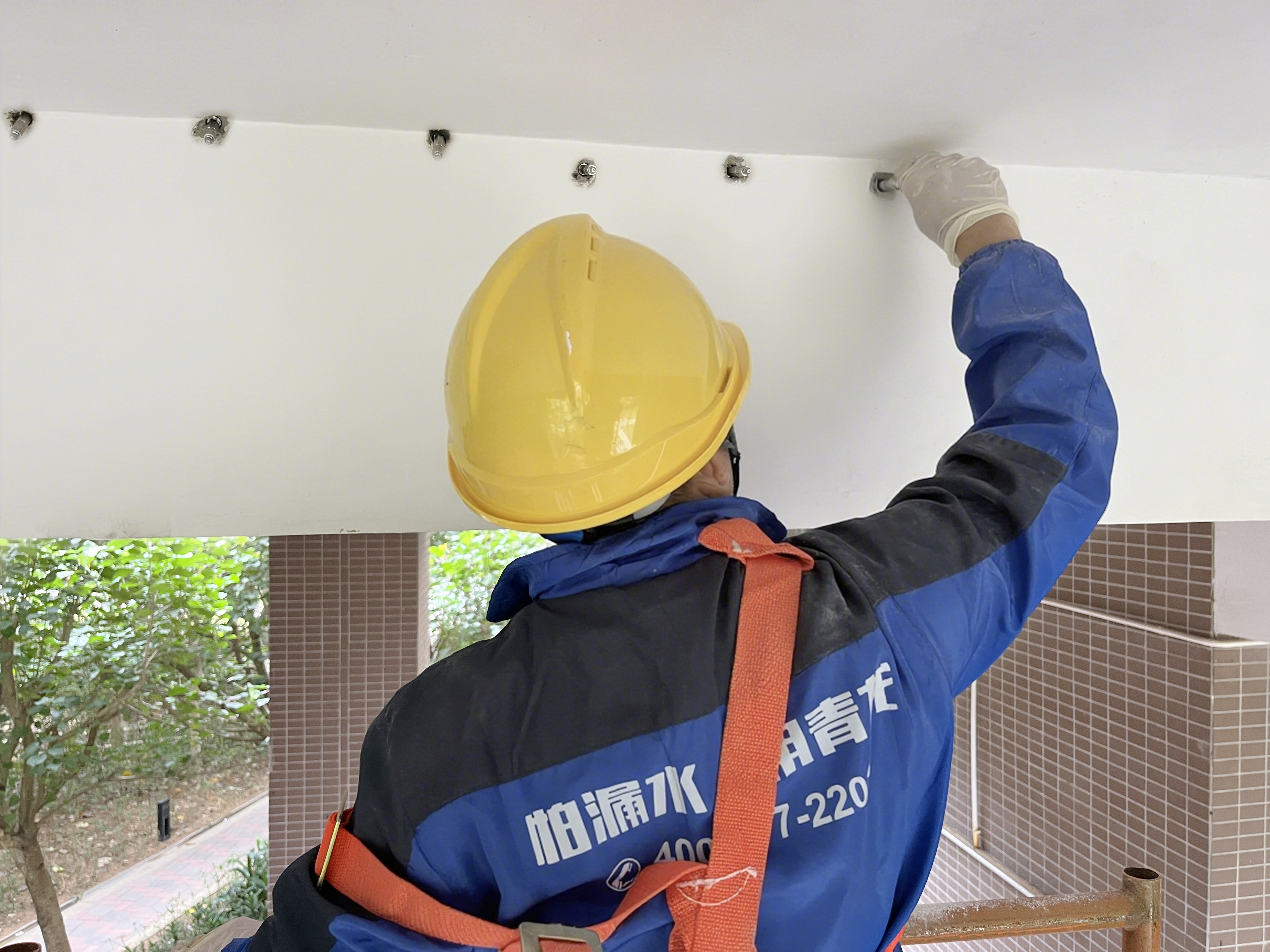
Water-reactive PU injection is a pressure injection method used to stop active leakage inside concrete. The contractor drills injection holes along the crack or leaking zone, installs packers, and injects polyurethane resin into the void. When the resin contacts water, it reacts and expands into a foam or flexible seal, depending on the material type used.
The key benefit is that the material follows the water path. Instead of only sealing the surface, the PU resin fills hidden cracks, gaps, and small cavities inside the concrete. This makes it useful for basement walls, lift pits, underground tanks, podium slabs, car park retaining walls, and wet structural joints.
However, PU injection is not a decorative finish and it is not always a complete waterproofing system by itself. If the leakage is caused by poor drainage, large structural movement, or a failed roof membrane, injection may need to be combined with surface waterproofing, joint repair, or drainage improvement. An experienced Waterproofing Solution Provider will look at the building condition before choosing the method.
What Should Contractors Check Before PU Injection?
Before starting PU injection, the contractor should inspect more than the wet area. The right repair depends on whether the leak is from rainwater, groundwater, plumbing, roof ponding, or wall seepage. In Kota Kinabalu, sudden heavy rain can make diagnosis easier because active leaks reveal their route, but the assessment still needs care.
• Identify whether the leak is active, intermittent, or only visible after rain.• Check cracks, construction joints, pipe penetrations, and honeycombed concrete.
• Confirm whether water pressure is coming from outside, below, or above the slab.
• Assess concrete strength before drilling and installing injection packers.
• Decide whether PU injection alone is enough or if a surface waterproofing system is also needed.
• Review drainage, expansion joints, and previous repair materials that may affect bonding.
Where PU Injection Is Commonly Used
For commercial and residential buildings in Kota Kinabalu, PU injection is often selected when water is actively entering through reinforced concrete. It is especially useful in underground or semi-underground areas where external excavation is difficult or costly. For example, basement car parks may have leakage along wall-slab joints, while lift pits often suffer from seepage due to constant groundwater pressure.
In landed houses and shoplots, PU injection may be used for bathroom slab cracks, roof slab cracks, or retaining wall seepage. Still, the contractor must confirm whether the leak is truly coming through concrete. If the source is a failed pipe, defective tile grout, or roof drainage issue, injection alone will not solve the root cause.
QingLong Waterproofing provides Waterproofing Service support for residential, commercial, industrial, and infrastructure projects. As a Waterproofing Manufacturer and Waterproofing Supplier, QingLong also understands how material selection affects site performance, especially when repairs involve wet concrete, moving joints, or repeated water pressure.
Case Study: Basement Wall Seepage in a Kota Kinabalu Commercial Building
On a commercial basement repair project in Kota Kinabalu, the main issue was water seepage along a wall-slab joint after several days of heavy rain. The building team had previously applied surface cement patches, but damp marks returned each time rainfall was intense. The challenge was that excavation from the outside was not practical because the affected wall was adjacent to a service area.
The repair team first marked the active seepage line and checked whether the leak followed a construction joint or random cracking. Injection holes were drilled at controlled spacing, and water-reactive PU resin was injected through mechanical packers. As the resin contacted moisture inside the joint, it expanded and sealed the internal water path. After the injection cured, the surface was cleaned and monitored during the next rainfall cycle.
The result was a dry joint line with no visible running water during follow-up inspection. The owner was also advised to maintain the drainage channel nearby, because reducing water pressure helps extend the service life of any waterproofing repair. This type of practical approach is often more reliable than treating the same visible stain repeatedly.
Choosing a PU Injection Contractor in Kota Kinabalu
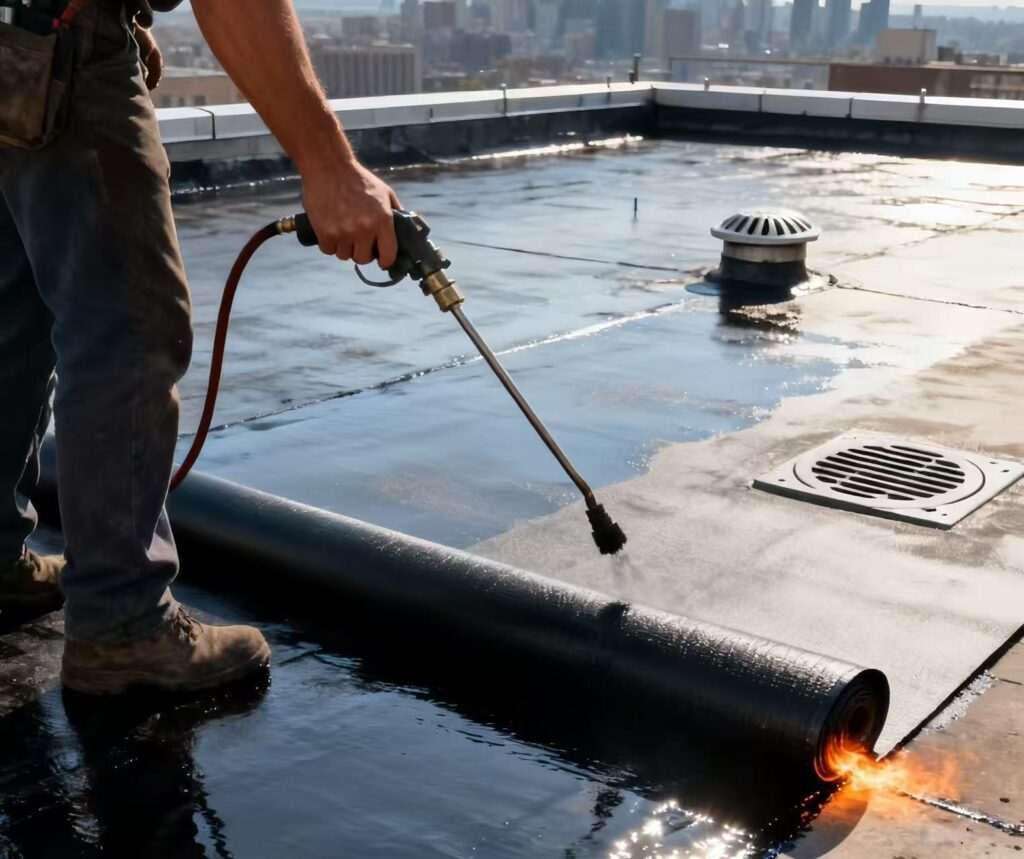
A good contractor should not promise that one injection method solves every leak. PU injection is effective when used for the right condition, but it must be applied with correct drilling angle, injection pressure, resin selection, and curing observation. Too much pressure can damage weak concrete, while too little pressure may not fill the crack properly.
When comparing contractors in Kota Kinabalu, consider whether they provide a clear site assessment, explain the proposed repair method, and recommend solutions based on the building's condition. QingLong Waterproofing supports residential, commercial, industrial, and infrastructure waterproofing projects across Malaysia with waterproofing materials, technical expertise, and practical project experience, helping property owners choose repair methods that are appropriate for the actual cause of the leakage rather than relying on temporary surface repairs.
Conclusion
Water-reactive PU injection is a practical method for stopping active concrete leaks in Kota Kinabalu, especially where water enters through cracks, joints, and underground concrete structures. The most important step is not simply injecting resin, but understanding why the water is entering and whether pressure, drainage, or structural movement is involved. With proper diagnosis, material selection, and workmanship, PU injection can provide a reliable repair for many leakage situations. If you are dealing with recurring seepage or active water leakage, contact QingLong Waterproofing to arrange a professional site inspection and receive suitable waterproofing recommendations.
Frequently Asked Questions
1. What is water-reactive PU injection used for?
Water-reactive PU injection is used to stop active water leakage through concrete cracks, joints, and voids. It reacts with moisture and expands to seal the internal water path.
2. Is PU injection suitable for basement leaks in Kota Kinabalu?
Yes, it is commonly used for basement walls, lift pits, and wall-slab joints where water enters under pressure. A site inspection is needed to confirm whether injection alone is enough.
3. Why does leakage return after surface patching?
Surface patching may only cover the visible opening while water continues moving inside the concrete. When pressure builds up again, the leak can reappear nearby.
4. How do I choose a waterproofing contractor in Kota Kinabalu?
Choose a contractor who inspects the actual leak source, concrete condition, crack pattern, drainage system, and previous repair work before recommending a solution. A proper assessment helps determine whether water-reactive PU injection is the most suitable repair method or if additional waterproofing work is needed. QingLong Waterproofing provides site inspections and waterproofing solutions for residential, commercial, industrial, and infrastructure projects throughout Malaysia.