Malaysia’s tropical climate places waterproofing systems under continuous pressure. Buildings face heavy rain, strong sunlight, high humidity and repeated temperature changes throughout the year. These conditions can affect the adhesion, flexibility and durability of waterproofing materials.
In this article, we explain which waterproofing materials are commonly used in Malaysia and what contractors, developers and property owners should consider before selecting a product.
How Malaysia’s Climate Affects Waterproofing
During heavy rain, water can collect on flat roofs and balconies when drainage falls are insufficient or outlets are blocked. Wind-driven rain may also enter through exterior wall cracks, window joints and porous surfaces.
Strong sunlight creates another challenge. Exposed concrete and metal surfaces heat up during the day and cool down after rain or at night. This repeated movement can weaken rigid materials, ageing sealants and poorly bonded coatings.
High humidity may keep building surfaces damp for longer periods. It can also affect the drying and curing of certain waterproofing products. This is why a material should never be selected based only on a general “waterproof” description.
Exposed Waterproof Coatings for Roofs
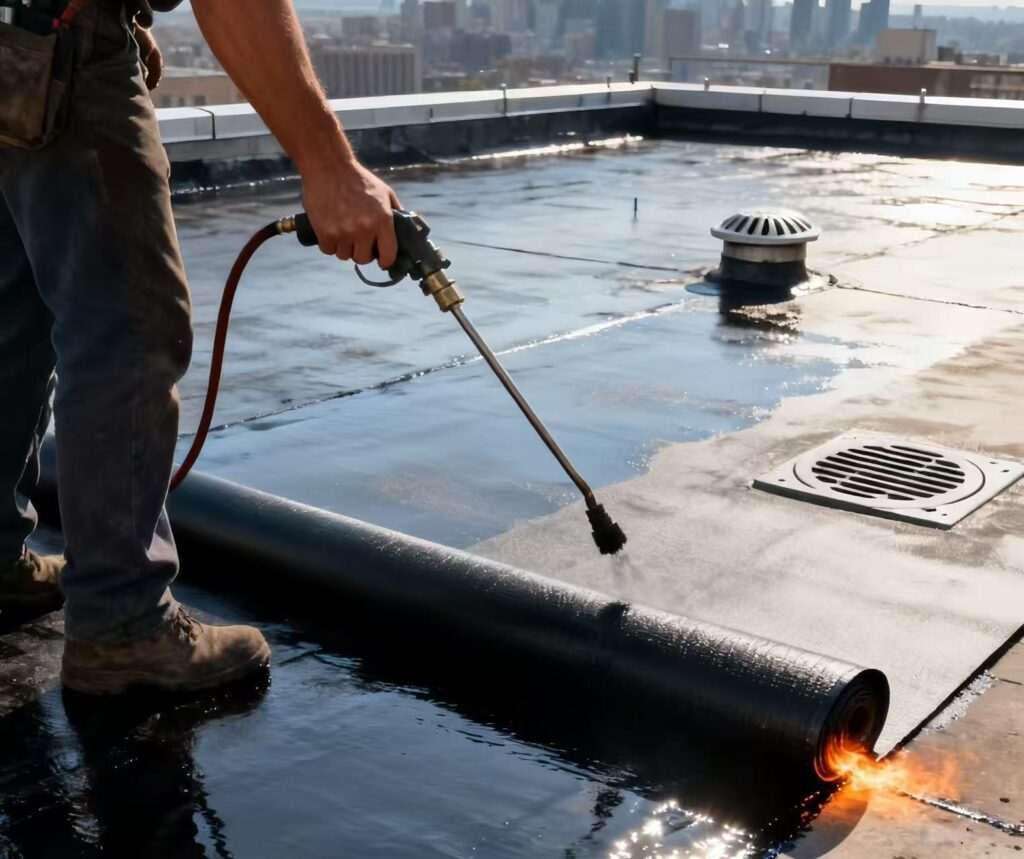
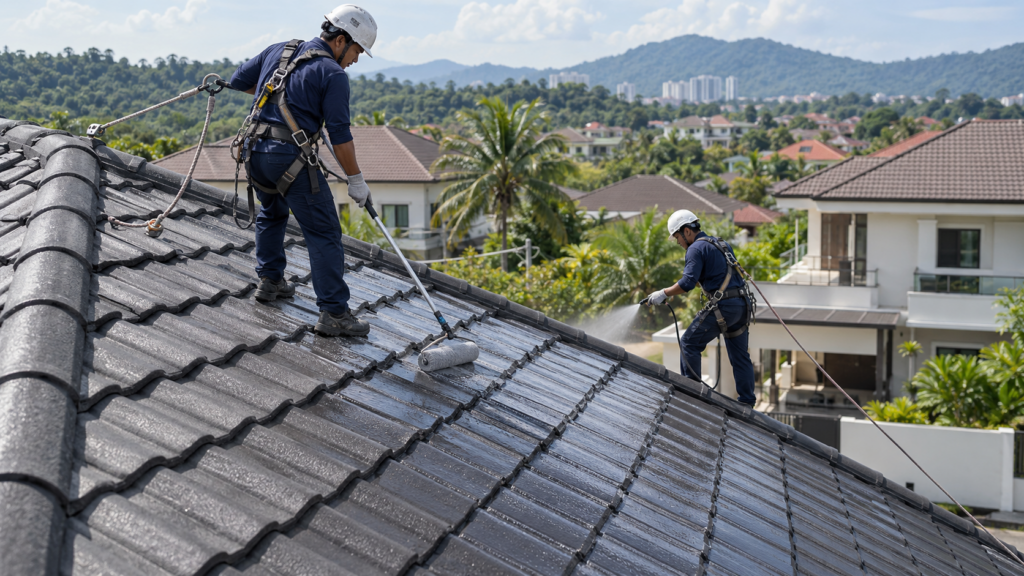
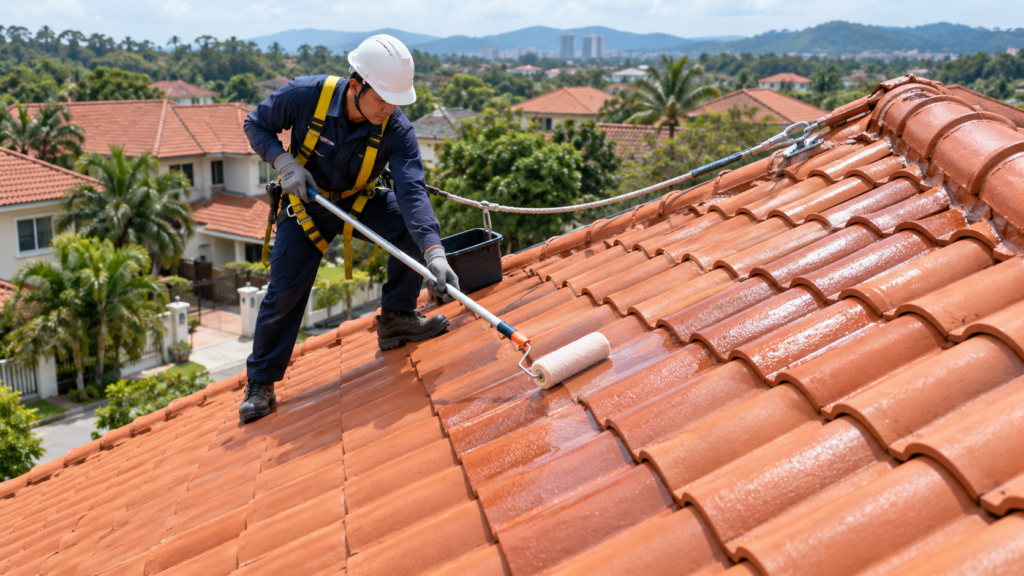
Liquid-applied waterproof coatings are commonly used on concrete and metal roofs because they form a continuous layer over the surface. They can also cover irregular areas around joints, upstands, screws and pipe penetrations.
For exposed applications, the coating should be suitable for direct sunlight, rain and expected surface movement. Its compatibility with concrete, metal or an existing coating must also be confirmed.
Before application, contractors should inspect cracks, joints, rust, loose coatings and ponding water. A roof coating cannot compensate for an unstable surface or serious drainage problem. Proper cleaning, repair and surface preparation are necessary for long-term adhesion.
Cementitious Waterproofing for Concrete Areas
Cementitious waterproofing slurry is commonly used on concrete and cement-based surfaces. Depending on the product specification, it may be suitable for bathrooms, kitchens, balconies and other areas where the waterproofing layer will be covered by tiles, screed or another finish.
Correct mixing, application thickness and curing are important. Special attention should also be given to wall-floor corners, floor traps and pipe penetrations because leakage often begins at these transition points.
Cementitious waterproofing should not automatically be used on every exposed surface. Buyers must confirm whether the chosen product can withstand UV exposure, standing water and expected movement.
Waterproofing Membranes for Larger Areas
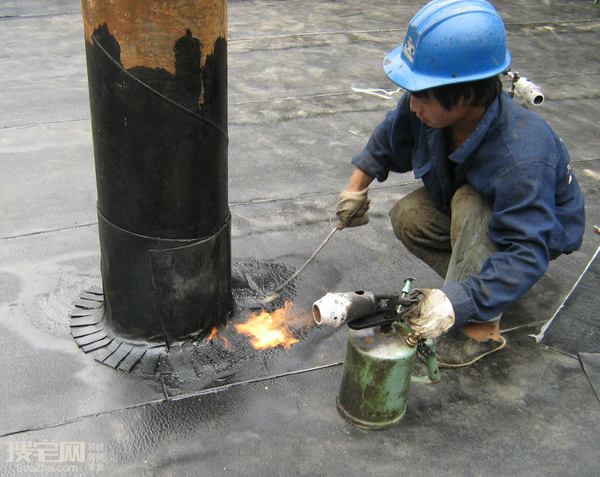
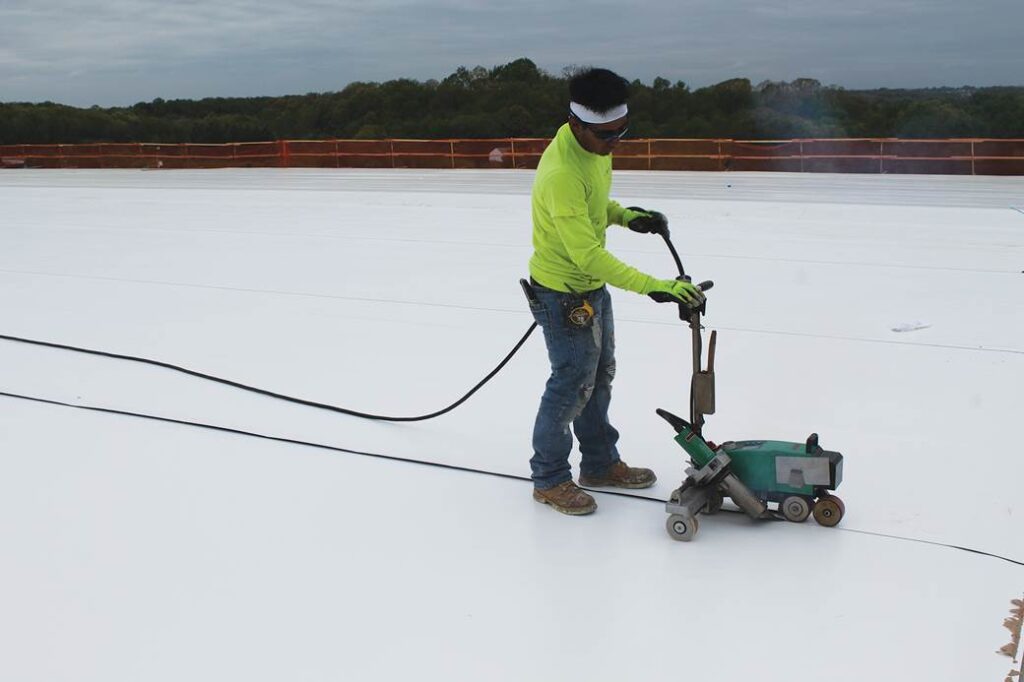
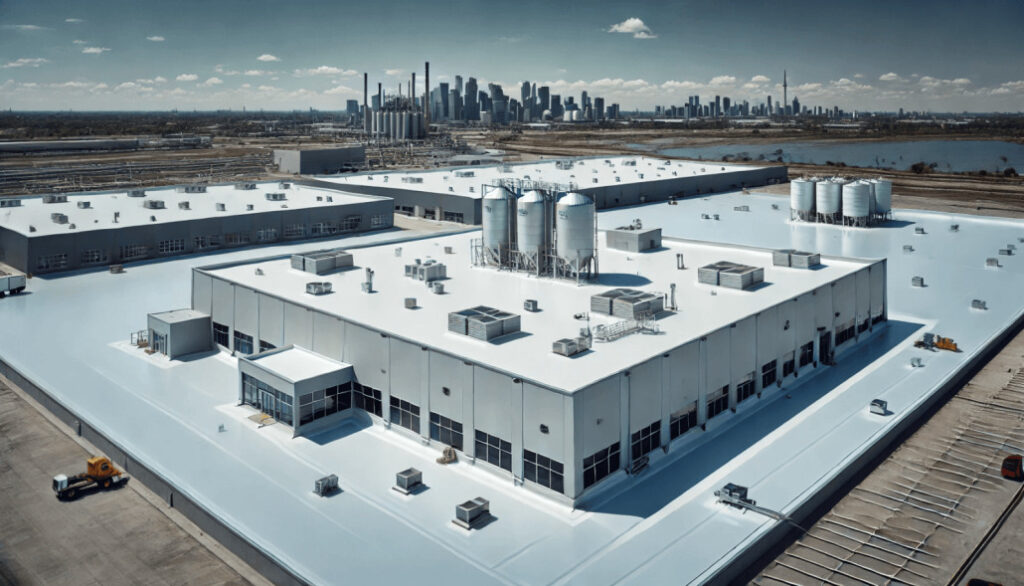
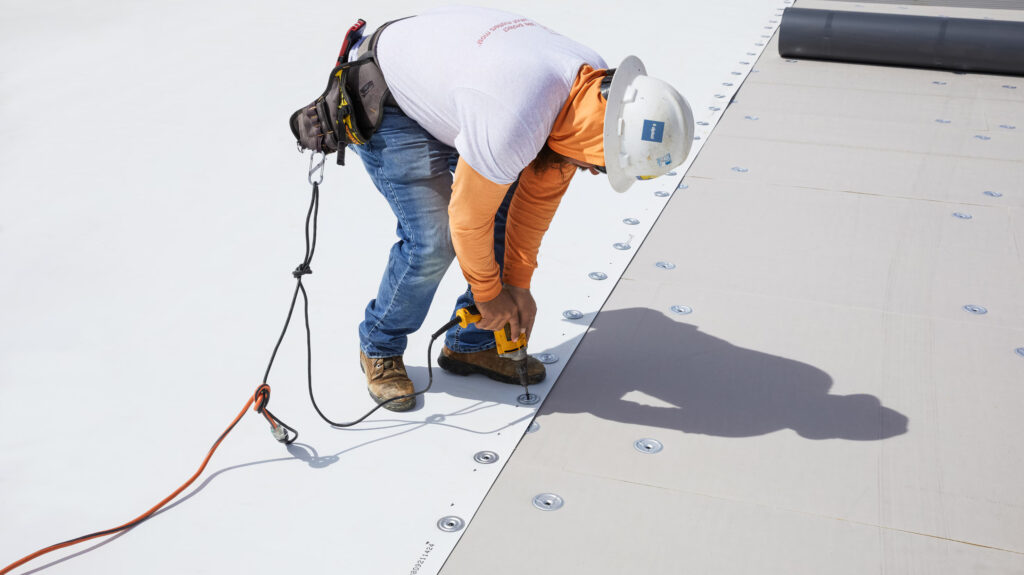
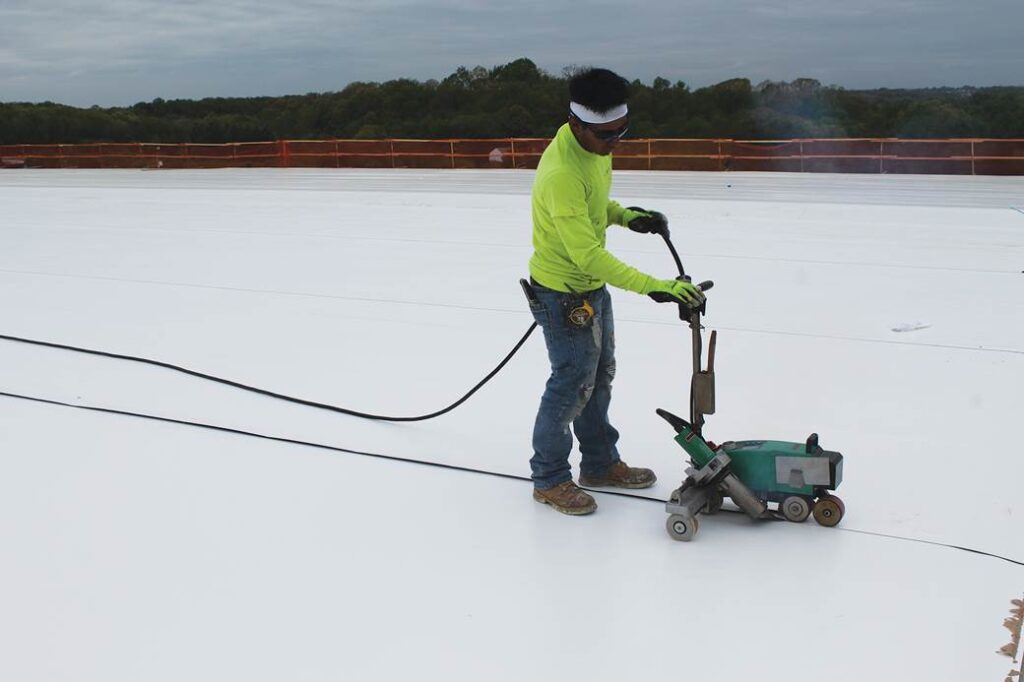
Sheet membranes, including torch-on waterproofing membranes, are commonly used on concrete roofs, podiums, basements and other large surfaces.
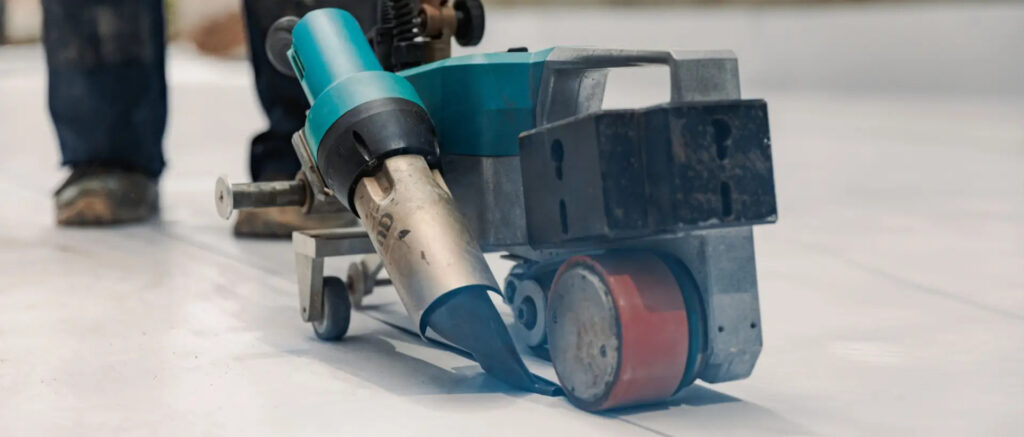
A manufactured membrane provides a controlled thickness, but installation quality remains important. The substrate must be properly prepared, while membrane overlaps, corners, outlets and penetrations must be sealed correctly.
The membrane should be selected according to the application area, expected temperature, exposure and required protective layer. Poorly treated seams or damaged membrane sections can create weak points even when the material itself is suitable.
Sealants for Joints and Gaps
Waterproof sealants are used around joints, window frames, roof screws, pipe penetrations and other small gaps. The selected sealant should be compatible with the surrounding materials and able to handle the expected joint movement.
Sealant should not be used as a substitute for full-area waterproofing when the surrounding surface is already cracked or deteriorated. Applying more sealant over an unidentified leak may provide temporary improvement without stopping the actual water-entry path.
Transparent Coatings for Exterior Walls
Transparent waterproof coatings may be considered for certain exterior walls where the owner wants to maintain the existing appearance.
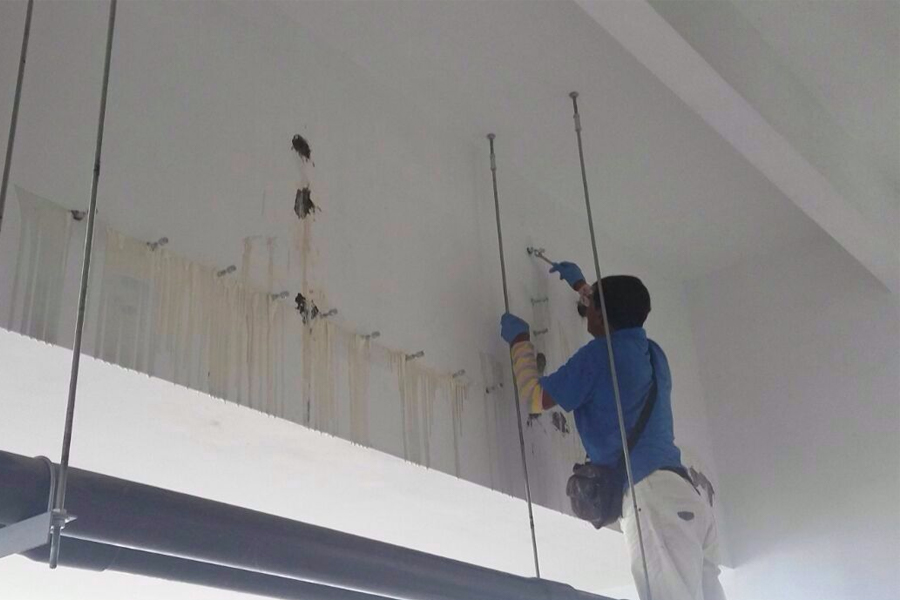
These products normally require a clean, stable and compatible surface. Large cracks, hollow finishes, failed paint and loose materials should be repaired before application. A transparent coating should not be expected to correct structural movement or serious defects beneath the surface.
Exterior wall seepage may also originate from window joints, roof edges or pipe penetrations. The complete wall area should therefore be inspected before selecting a coating.
Conclusion
Malaysia’s heavy rainfall, strong sunlight and high humidity require waterproofing materials to be selected carefully. Choosing a product based only on price or a general waterproof claim can result in poor adhesion, early ageing or repeated leakage.
The right system should match the substrate, exposure, moisture condition and intended use. Proper inspection, surface preparation and application are equally important. For waterproofing specifications, pricing or application recommendations, contact QingLong Waterproofing and share your project type, application area and site condition with our team.
Frequently Asked Questions (FAQs)
1. Can waterproofing be applied during the rainy season?
Yes, but the surface and weather must meet the product requirements. Liquid-applied materials need sufficient time to dry or cure before exposure to rain.
2. Can waterproofing coatings repair structural cracks?
No. Some flexible coatings can accommodate limited surface movement, but active or structural cracks require proper assessment and repair before waterproofing.
3. Which waterproofing material is suitable for a concrete roof?
The choice may include an exposed liquid coating or waterproofing membrane. The correct system depends on cracks, ponding water, existing layers, drainage and expected surface movement.
4. Can waterproofing materials solve a ponding-water problem?
Waterproofing can protect the surface, but it does not correct insufficient drainage falls or blocked outlets. Persistent ponding should be addressed as part of the complete repair scope.
5. How can buyers confirm whether a product is suitable for outdoor use?
Contact the QingLong Waterproofing team and send us photos or videos of the affected area, together with a description of the leakage problem. Based on the information provided, our team can recommend a suitable waterproofing product. If the condition cannot be confirmed, we will arrange a FREE site visit for further inspection.