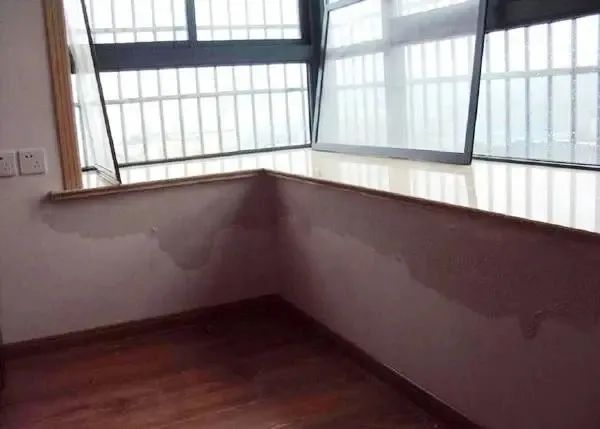
A window leak often looks simple from inside the room: water marks below the frame, damp plaster near the corner, or puddling on the sill after rain. But during a proper window leakage inspection in Johor Bahru, the visible stain is treated as a clue, not the final diagnosis. Water may enter through the window frame, the external wall, the sealant joint, the drainage track, or even a nearby façade crack before appearing at the same internal spot.
That is why effective inspection is not just “apply sealant around the window”. It is a process of narrowing down where water enters, how it travels, and which detail has failed.
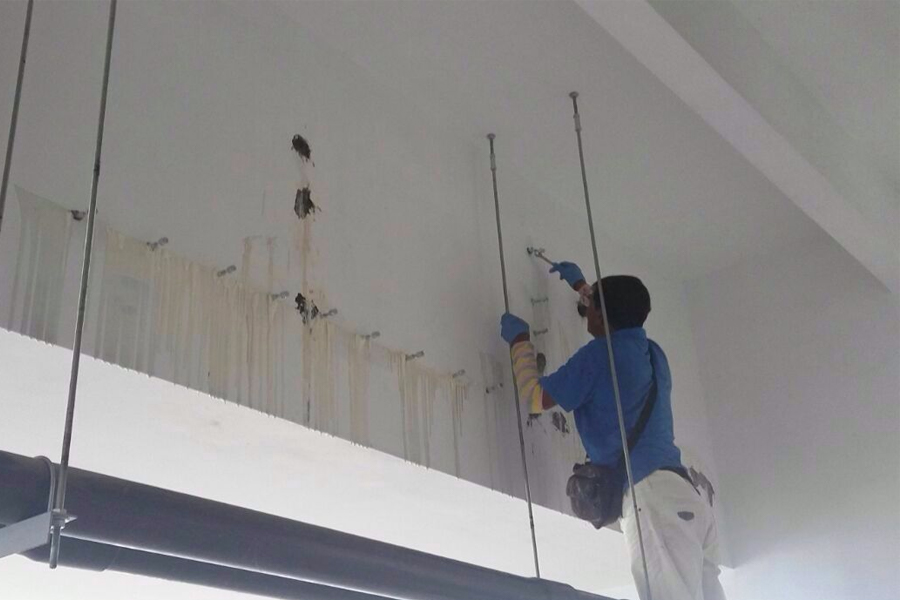
The Indoor Stain Shows the Exit Point, Not Always the Entry Point
The first mistake in window leakage repair is assuming that the leak starts exactly where water appears inside. In many Johor Bahru homes, condominiums and shop offices, water can travel behind plaster, along the aluminium frame, through the wall reveal, or beneath the internal sill before it becomes visible.
For example, a stain at the bottom left corner of a window may come from a failed sealant joint at the top of the frame. Rainwater enters above, follows the frame edge internally, then exits at the lowest weak point. In another case, the window frame may be sound, but hairline cracks in the external wall beside the window allow water to migrate into the reveal.
A useful inspection therefore starts by separating three areas:
• the window system itself, including frame joints, tracks, gaskets and weep holes;
• the frame-to-wall junction, where sealant or mortar interfaces often fail;
• the surrounding wall or façade, where cracks, porous finishes or poor detailing may direct water toward the opening.
This separation matters because each failure point requires a different repair. Re-sealing the frame may not solve seepage caused by an external wall crack. Coating the wall may not solve a blocked drainage channel inside the window track.
A window leakage inspection traces the path of water from the indoor symptom back to the likely entry point. The stain below the window is only the exit point. Inspectors need to check the frame, perimeter sealant, drainage holes, wall cracks, sill slope and surrounding façade before deciding whether the repair is a sealant repair, wall treatment or window system correction.
What Inspectors Check Before Any Water Test
Before spraying water onto the window, an inspector usually looks for physical clues that explain how rainwater could enter. This step helps avoid random testing and reduces the chance of misreading the result.
On aluminium sliding windows, the lower track is important. Dirt, paint residue, insect nests or construction debris can block weep holes, causing water to build up and overflow indoors. If the track drainage is blocked, the frame may leak during heavy rain even if the external sealant is still intact.
At the perimeter of the frame, the inspection focuses on the joint between aluminium and wall. Sealant can shrink, harden, crack or detach from one side of the joint. Sometimes the sealant looks acceptable from a distance, but close inspection shows gaps at corners, poor adhesion to dusty render, or small breaks around screws and frame fixings.
The sill detail also matters. A window ledge should direct water away from the wall and frame. If the sill has insufficient fall, cracked tile joints, porous plaster, or a raised internal edge that traps water, rain can sit long enough to find weak points. In high-rise units, wind-driven rain can make this more obvious because water is pushed against the frame instead of simply falling downward.
For painted external walls, the inspector may also look at bubbling paint, efflorescence, hairline cracks, hollow render, and previous patching. These signs do not prove the leak source by themselves, but they help decide where testing should begin.
Controlled Water Testing Must Isolate One Area at a Time
A proper water test should not begin by spraying the whole window and wall at full pressure. That may reproduce the leak, but it does not clearly identify the entry point. If water is applied to the frame, wall and top joint at the same time, several possible sources are mixed together.
A more useful method is controlled testing. The inspector starts at the lower areas and moves upward gradually. This follows a simple principle: if the lower track causes leakage, there is no need to immediately blame the top sealant or wall cracks. If no leakage occurs at the lower section, the test can proceed to side joints, top joints and surrounding wall areas.
For a window leakage inspection in Johor Bahru, controlled testing may include:
spraying the bottom track to see whether water drains through the weep holes properly;
testing side perimeter joints while keeping the wall surface above dry;
testing the top frame joint separately from the external wall;
applying water to nearby wall cracks or façade joints only after the frame has been checked;
observing whether leakage appears immediately, slowly, or only after sustained wetting.
Timing is important. Some leaks appear within minutes when water enters through an open gap. Others take longer because water must soak through porous render, travel behind the frame, or build up inside a track. A delayed leak often suggests seepage through a material or hidden path rather than a direct opening.
This is also why an inspection during or immediately after rain can be helpful, but it should still be supported by controlled testing where practical. Natural rain shows the real complaint; controlled testing helps identify which detail failed.
Window Leaks in Johor Bahru Often Involve Access and Building Rules
Johor Bahru has many property types where window leakage inspection is not only a technical task. It may also involve access limitations, management approval, safety control and coordination with occupants.
For landed houses, inspection access is usually simpler. The external side of the window may be reachable by ladder or from a balcony, although safety and ground conditions still matter. Inspectors can often check sealant joints, wall cracks and sill conditions more directly.
For condominium units, the situation is different. External façade access may be restricted. Management approval may be required before external inspection, rope access, scaffolding or work from common areas. In some cases, only the internal side can be inspected first, which means the diagnosis may need to be staged: internal observation, management coordination, then external confirmation.
Shop offices and commercial buildings can present another issue: the leak may affect business operations, but testing water on the façade may disturb signage, electrical points, ceiling boards or tenant areas below. The inspection plan should therefore consider where water might discharge during testing and whether sensitive areas need protection.
This practical context affects the repair decision. A simple internal sealant touch-up may be tempting when external access is difficult, but if the failure is outside the frame-to-wall junction, an internal repair may only divert water temporarily. The inspection should make clear whether the proposed repair is addressing the source or merely managing the symptom.
The Repair Scope Depends on the Leak Path, Not the Window Alone
Once the likely leak path is identified, the repair scope can be matched to the actual defect. This is where many failed repairs happen: the same sealant is applied to every window complaint, regardless of whether the problem is drainage, wall seepage, cracked render or poor sill design.
If the inspection finds blocked weep holes and water overflowing from the track, the priority is restoring drainage and checking whether the track profile still functions properly. Applying sealant over drainage outlets can make the problem worse because water trapped in the frame needs a path out.
If the failure is at the perimeter joint, old or poorly bonded sealant may need to be removed before resealing. New sealant should not simply be applied over dirty, loose or cracked material. The joint width, substrate cleanliness, backing condition and adhesion surfaces affect whether the new sealant can perform.
If the surrounding wall is porous or cracked, the repair may need to extend beyond the frame. Depending on the surface and finish, this may involve crack treatment, compatible exterior wall waterproofing, or a transparent waterproof coating where the existing appearance needs to be retained. QingLong’s exterior wall and sealant products may be suitable in selected situations, but the correct approach depends on the inspected substrate and the specific leak path.
If the sill is flat, cracked or sloping inward, the water management detail itself may need correction. In that case, sealing the vertical frame joint may reduce symptoms for a while, but water will continue to collect at a vulnerable location.
A Good Inspection Report Should Help You Decide, Not Just Confirm a Leak
The most useful inspection outcome is not simply “window leaking”. The property owner, building manager or contractor needs enough information to decide what to repair and how much uncertainty remains.
A practical window leakage inspection report should identify the observed symptoms, the tested areas, the likely water entry points, and any limitations. For example, if external access was not available, the report should say so. If controlled water testing indicates that leakage occurs only when the upper wall is wetted, that finding should be separated from a frame drainage issue.
The report should also distinguish between immediate repair and further verification. Some defects are clear: open sealant gaps, blocked weep holes, visible cracks at the frame perimeter. Others may require external façade access, removal of loose finishes, or additional testing during suitable weather.
This matters for budgeting. A narrow sealant repair may be reasonable when the defect is isolated. A broader wall or façade treatment may be necessary when several windows show similar seepage patterns or when cracks and coating deterioration are widespread. Without this distinction, owners may either overspend on unnecessary work or under-repair a problem that will return after the next storm.
Conclusion
Window leakage is rarely solved well by guessing from the indoor stain alone. The key is to trace how water reaches that stain: through the frame, around the frame, from the wall, across the sill, or from a drainage failure inside the track. In Johor Bahru properties where access, façade condition and building rules can affect the inspection process, a staged and evidence-based approach gives a clearer repair decision.
If you need help assessing a leaking window, external wall joint or repeated seepage problem, you can discuss a window leakage inspection with QingLong Waterproofing for a suitable recommendation based on the site condition.