Two Kuching homeowners may ask for tile roof waterproofing and receive quotations that look very different. One price may cover only visible leak points. Another may include tile replacement, ridge repair, flashing treatment, cleaning, sealant work and coating at selected areas. The difference is not always because one contractor is expensive and another is cheap. Often, the quotations are pricing different levels of risk, access, preparation and roof detail repair. For a tiled roof, the question is not simply “how many square feet?” but “what must be corrected so rainwater no longer finds a path through the roof system?”
Tile Roof Waterproofing Is Not One Single Item
For a tiled roof, waterproofing maintenance is usually a combination of small but important works. The tiles shed most of the rainwater, but the roof still depends on overlaps, ridges, hips, valleys, flashings, underlay, gutters and penetrations to perform properly. If one quotation only seals a suspected crack while another quotation includes ridge repointing and valley treatment, the prices cannot be compared as the same job.
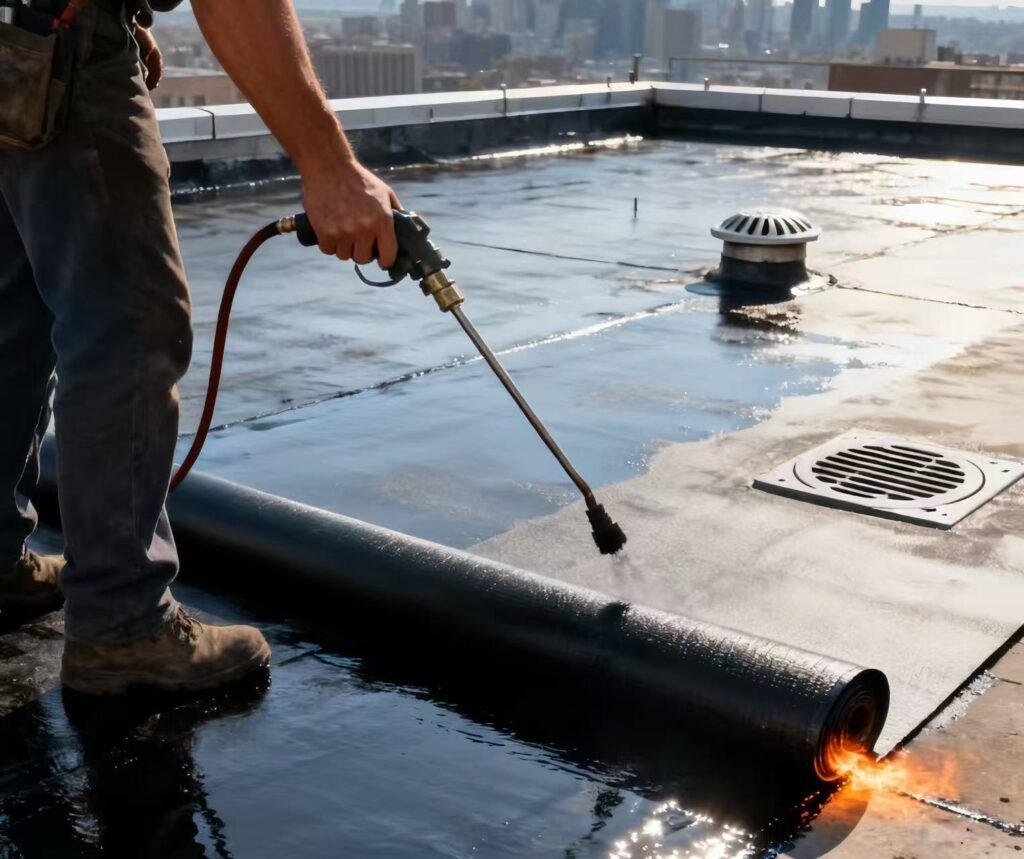
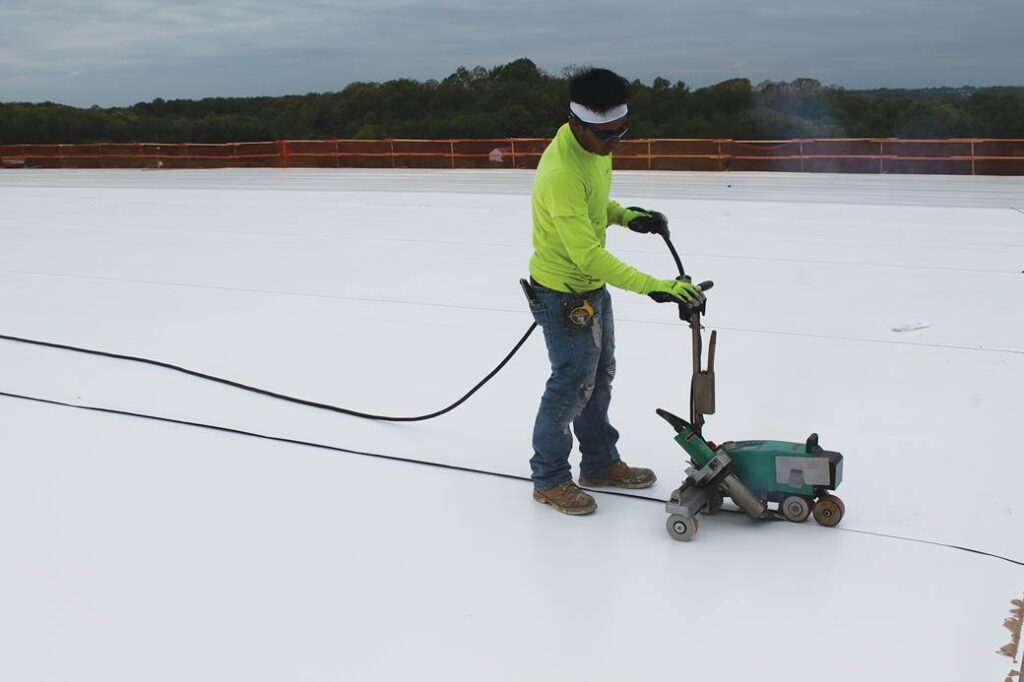
Tile roof waterproofing prices vary because the work scope can range from minor leak sealing to full roof maintenance. The cost depends on tile condition, ridge and flashing details, roof access, cleaning needs, and whether the contractor is repairing only the leak point or improving the roof system around it.
This is why a lower price may be reasonable for a small, isolated issue, but risky if the roof has multiple ageing details. A higher price may also be justified if it includes work that prevents repeated call-backs, especially when the leak source is not immediately visible from inside the house.
The Existing Tile Condition Can Change the Whole Scope
The first major cost factor is the condition of the tiles themselves. A roof with a few cracked tiles is different from a roof where many tiles have shifted, become brittle, or are covered with algae and dirt. On older roofs, tiles may no longer sit tightly because of movement, previous repairs, or deterioration of supporting battens.
If the tiles are dirty or affected by biological growth, waterproofing products and sealants may not bond properly without cleaning. If tiles are loose, applying sealant around them may only create a short-term patch because the movement remains. If cracked tiles are widespread, pricing should include replacement or a clear allowance for tile repair.
This is also where quotations can differ sharply. One contractor may assume the existing tiles are generally serviceable. Another may include more preparation because the roof surface is not ready for sealing or coating. The second price may look higher, but it may also reflect a more realistic view of what the roof needs before any waterproofing material is applied.
Roof Details Often Cost More Than the Open Tile Area
Many tile roof leaks do not come from the middle of a clean, intact tile surface. They often occur at details where water flow is concentrated or interrupted. These areas take more time to inspect, prepare and repair.
Important tile roof details include:
• Ridge and hip lines where mortar, bedding or sealant has cracked
• Valleys where rainwater flow is concentrated
• Wall abutments and flashing junctions
• Roof-to-gutter edges where water backs up or overshoots
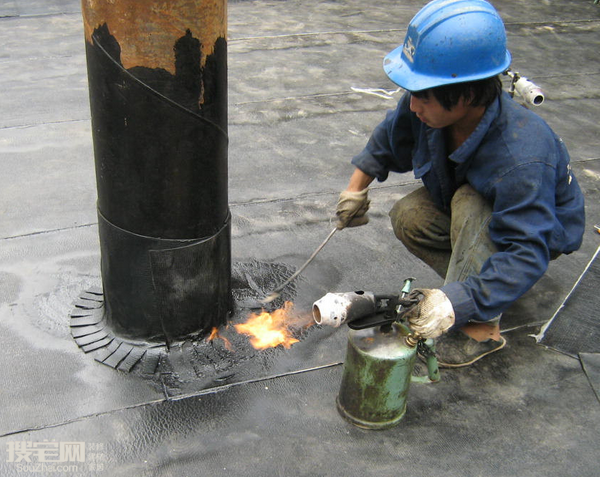
• Pipe penetrations, vents, skylights or antenna points
• Areas where previous patching has trapped water or created uneven flow
A quotation based mainly on roof area may miss this reality. A small valley repair can take more time than coating a large simple surface because the contractor must clean the joint, remove failed material, restore water flow and seal the detail without blocking drainage. Likewise, a ridge line may look narrow, but repairing it properly can involve careful removal of loose material, rebedding, sealing and checking tile alignment.
This is why “price per square foot” is not always a fair comparison for tiled roofs. The number and condition of roof details may affect the maintenance price more than the total roof size.
Kuching Conditions Affect Timing, Safety and Preparation
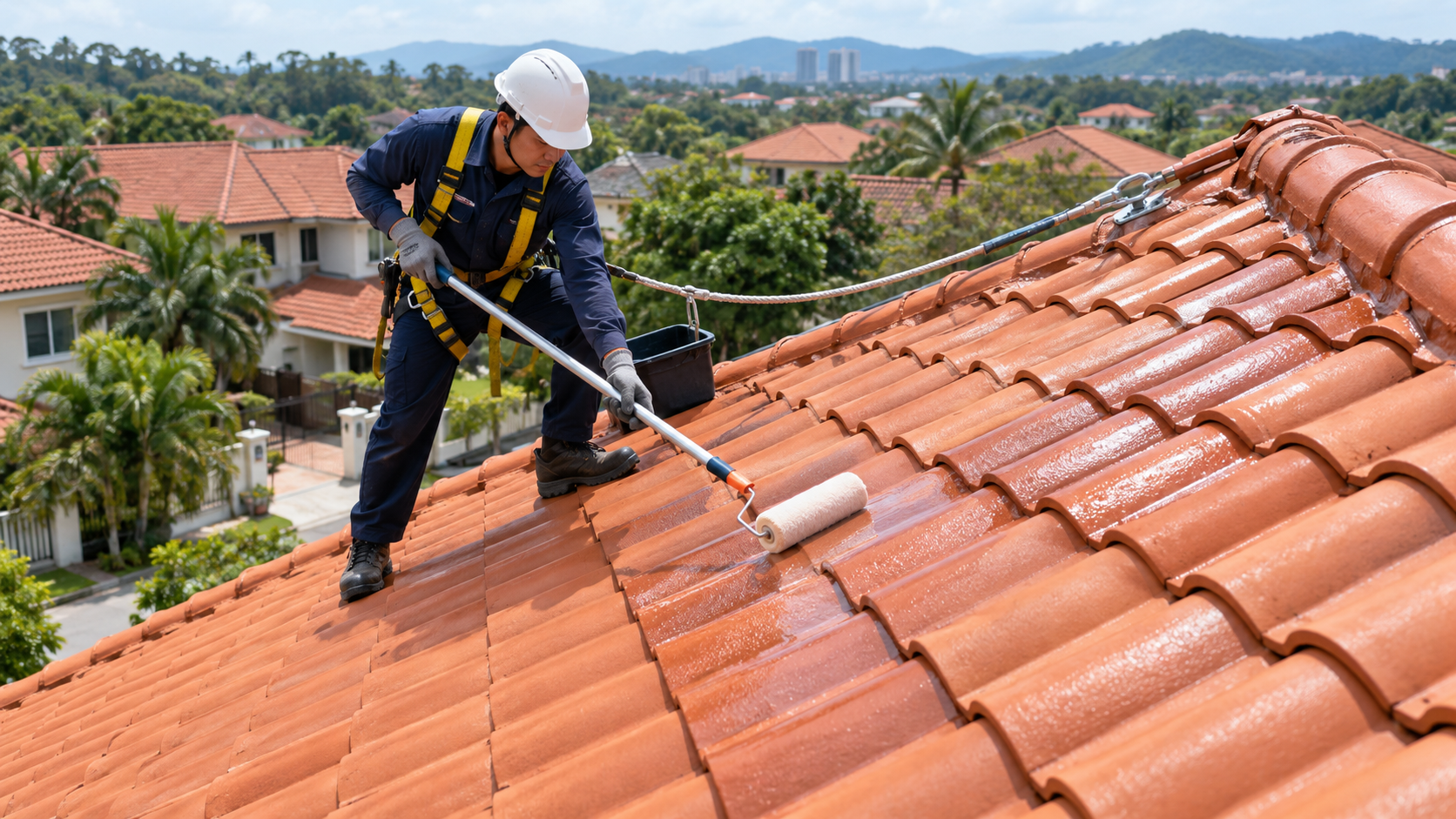
Kuching tile roof maintenance has practical constraints that can influence price. Frequent wet periods can reduce the number of suitable working hours, especially where cleaning, drying, sealant curing or coating is required. A contractor may need to plan the work around weather windows rather than simply arriving and applying material on a damp roof.
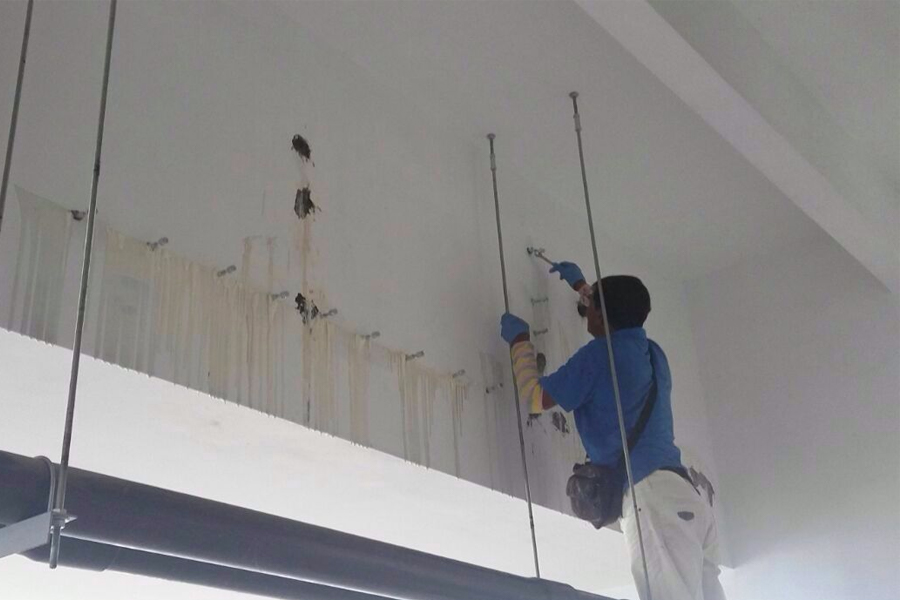
Moisture also affects diagnosis. A leak mark on the ceiling may appear after rain, but the entry point could be higher up the roof, at a ridge, valley or wall flashing. Water can travel along timber members, under tile laps or across underlay before showing indoors. In this situation, pricing may include more inspection time because the visible stain does not prove the exact entry point.
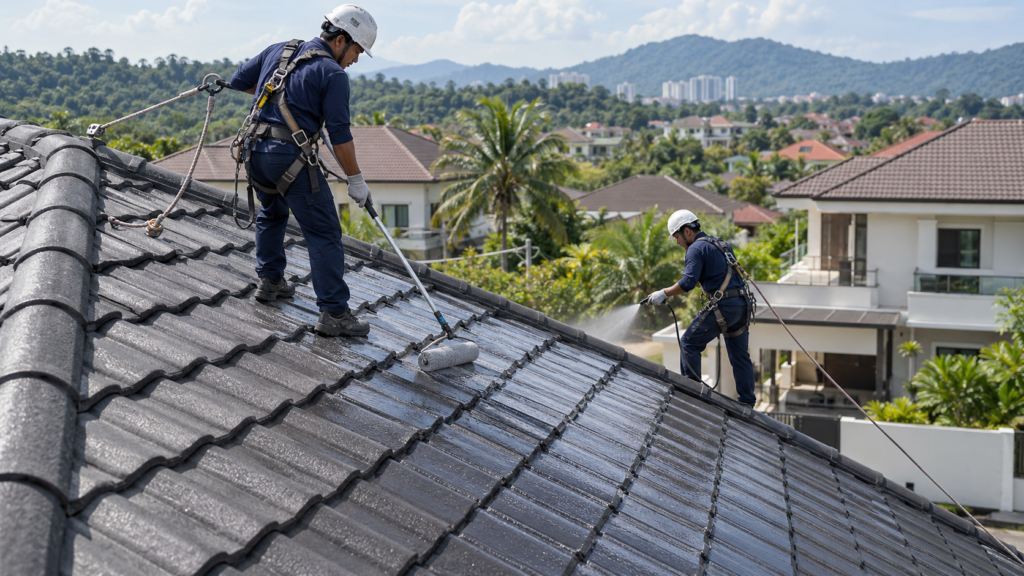
Access is another cost factor. Some Kuching homes have steep roof slopes, limited side access, narrow back lanes, extensions, metal awnings or neighbouring structures that make safe movement more difficult. A single-storey house with easy access is not priced the same way as a taller property where ladders, safety measures or additional manpower are needed.
Preparation may also be heavier where roofs have long-term moss, algae or dirt build-up. Cleaning is not cosmetic only. If sealant or coating is applied over unstable dirt, the waterproofing work may fail at the bond line rather than because the product itself is unsuitable.
Different Quotations May Reflect Different Repair Strategies
When maintenance prices vary, the quotations may actually be based on different strategies.
A small repair quotation may focus on the most obvious leak point, such as replacing several broken tiles or sealing a visible crack near a ridge. This can be suitable when the roof is generally healthy and the defect is clear.
A preventive maintenance quotation may include cleaning, selected tile replacement, ridge and hip repairs, sealing of minor gaps, flashing touch-up and gutter-related checks. This is usually more expensive because it deals with several risk areas before they become active leaks.
A more extensive refurbishment quotation may involve wider coating or waterproofing treatment, more tile replacement, larger flashing repair, or correction of repeated failed patching. This is normally relevant when previous small repairs have not lasted or when the roof has multiple ageing points.
None of these approaches is automatically right or wrong. The important issue is whether the scope matches the roof condition. Paying for a small patch on a roof with many weak details may lead to repeated repairs. Paying for a broad scope on a roof with one isolated defect may be unnecessary. A useful quotation should explain why that level of work is being recommended.

What to Check Before Comparing Tile Roof Waterproofing Prices
Before accepting a price, ask what the quotation actually includes. A clear scope is more useful than a cheap single-line description such as “waterproof roof” or “repair leaking roof”.
For Kuching tile roof waterproofing maintenance, check whether the quotation states:
• Which areas will be repaired: tiles, ridges, valleys, flashings, gutters or penetrations
• Whether broken or loose tiles are included, excluded or charged separately
• What surface preparation is required before sealant or coating
• Which waterproofing materials will be used and where they will be applied
• Whether previous failed patching will be removed or simply covered
• What access, safety or weather-related limitations apply
• What the warranty covers and what conditions may void it
This does not mean the longest quotation is always the best. It means the quotation should make the risk visible. If one price excludes tile replacement and another includes it, the difference should not be treated as a simple price gap. It is a scope difference.
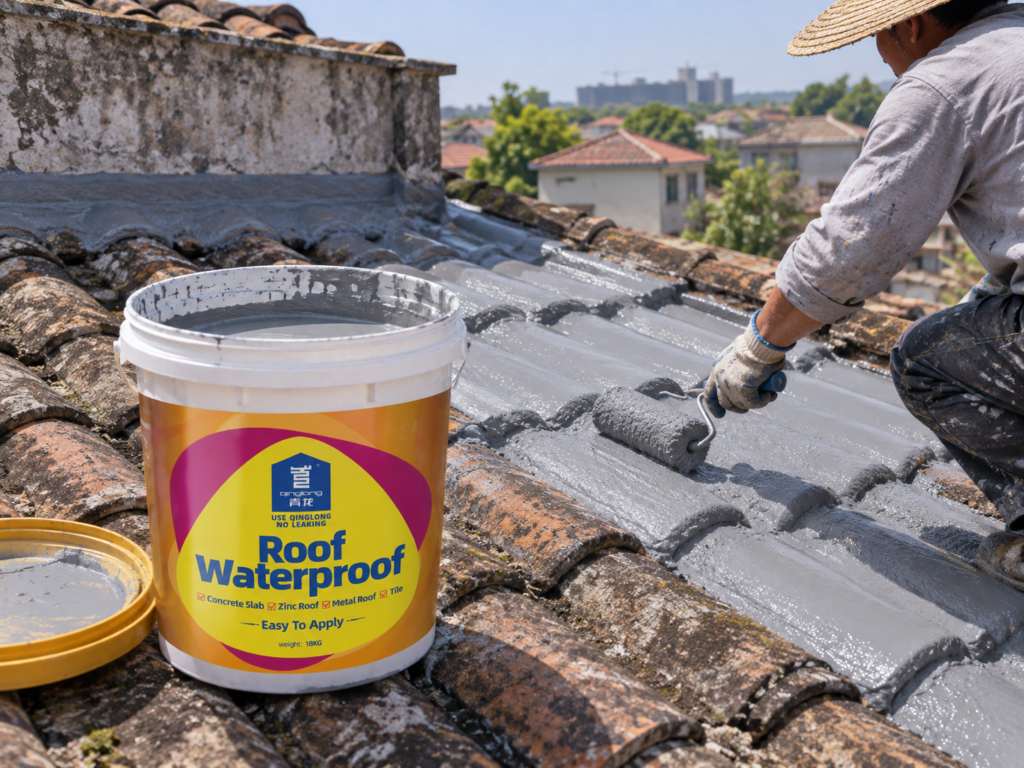
QingLong Waterproofing manufactures and supplies waterproofing materials and provides waterproofing service support for residential, commercial and industrial projects. For roof maintenance, product selection should still follow the roof condition. A roof coating, waterproof sealant or joint treatment must be matched to the tile surface, detail movement, exposure and preparation standard.
The Real Cost Issue Is Repeat Leakage, Not Only First Price
The lowest maintenance price can be attractive, especially when the leak appears minor. But for a tiled roof, repeat leakage often happens when the work treats the visible symptom without addressing nearby roof details. For example, sealing one cracked ridge section may not solve the problem if adjacent ridge bedding is loose or if water is entering through a valley above the stain.
A fair comparison should look at what each contractor is responsible for after the work is completed. If the scope is limited to one leak point, the price should be low and the limitation should be clear. If the scope is broader, the quotation should identify the additional details being maintained.
The better decision is not always the cheapest or the most expensive quotation. It is the quotation that explains the roof condition, identifies the actual weak points, and proposes a maintenance scope that fits the level of risk.
Conclusion
Kuching tile roof waterproofing prices vary because tiled roofs fail through details, not only through open surface area. Tile condition, ridge lines, valleys, flashing, roof access, cleaning and curing time can all change the amount of work needed. Before comparing prices, compare the repair scope. A quotation that clearly separates minor patching from preventive maintenance gives you a better basis for deciding what your roof actually needs.
If you need help assessing a leaking or ageing tiled roof, you can contact QingLong Waterproofing to discuss the site condition and suitable maintenance approach.