A concrete leak does not automatically mean the whole slab or wall needs to be hacked open. In some situations, PU injection in Malaysia is used because the water path is inside the concrete, behind a wall, or difficult to access from the positive side. But PU injection is not a universal waterproofing method. It works best when the leak path can be intercepted and sealed from within the concrete element. The important question is not simply “Can we inject it?” but “Is this leak actually travelling through a crack, joint or void that PU grout can fill?”
PU Injection Repairs Water Paths, Not Every Waterproofing Failure
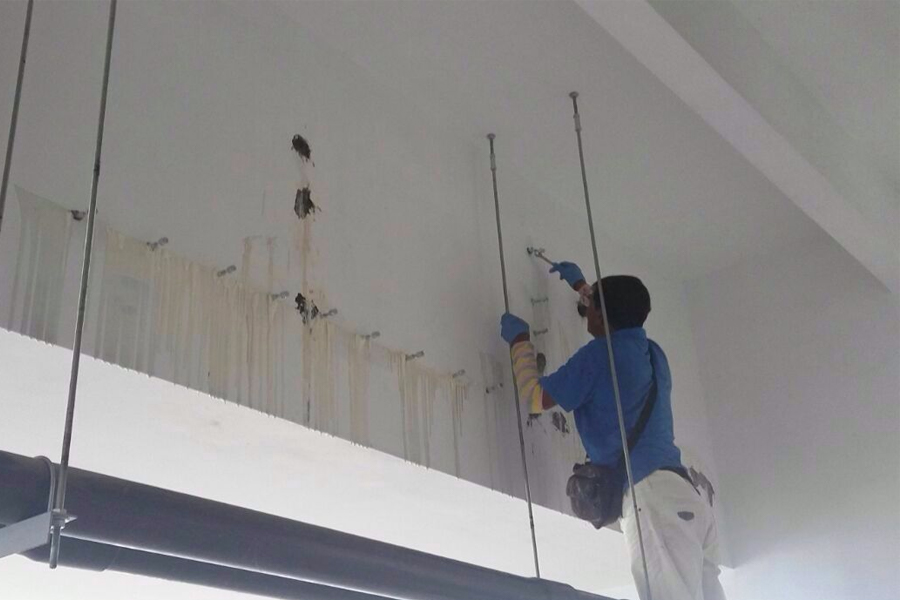
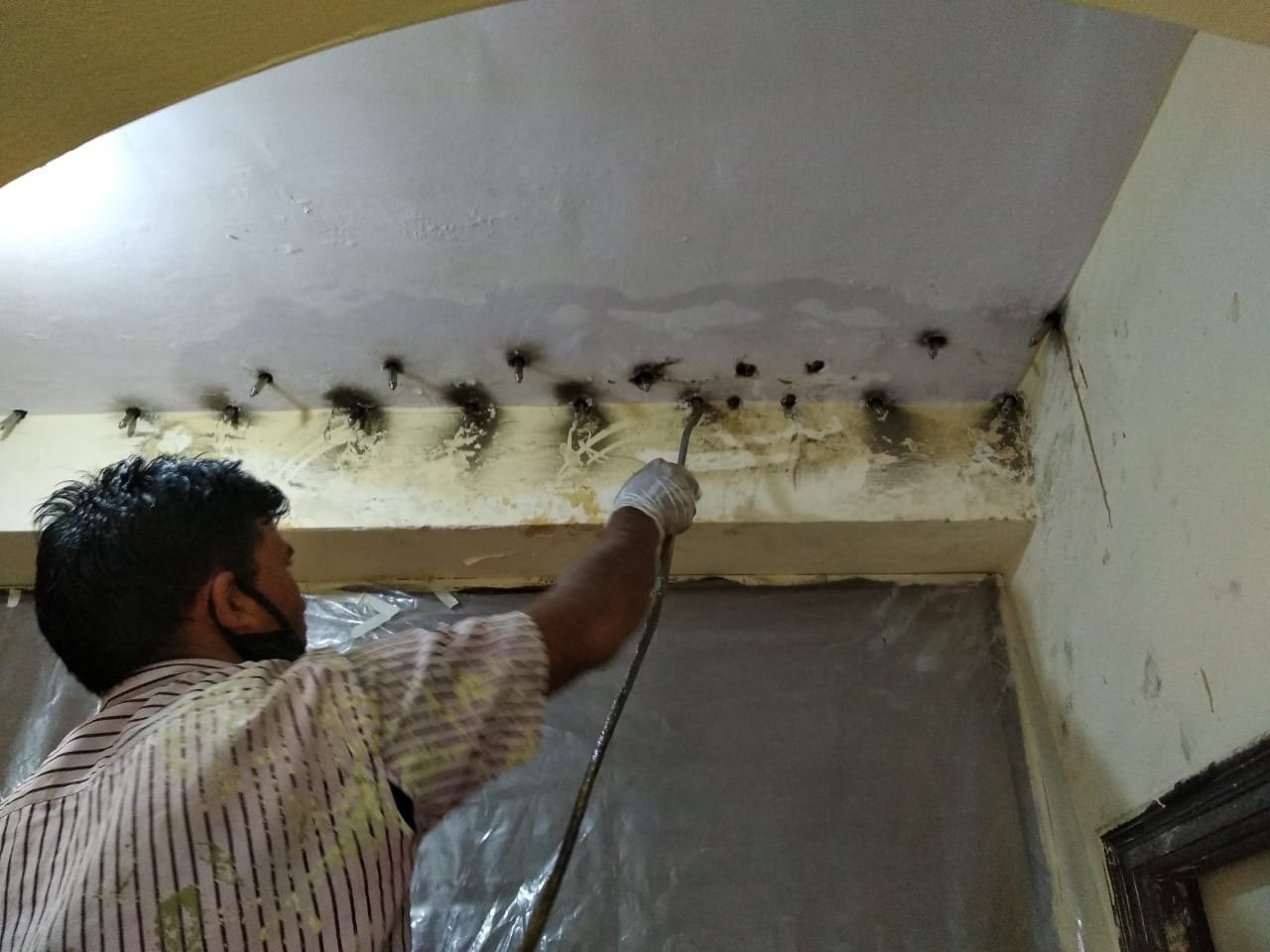
PU injection, or polyurethane injection, is a pressure-injection method used to seal leaking cracks, joints and voids in concrete. The grout is injected through drilled ports or packers. Depending on the product type, it reacts with moisture and expands or forms a flexible seal inside the leakage path.
PU injection is suitable when water is entering through a defined concrete path such as a crack, construction joint, honeycomb area or pipe penetration gap. It is less suitable when the real failure is a surface waterproofing system, loose tiles, poor drainage or widespread porous substrate that cannot be isolated into an injectable path.
This distinction matters because injection is usually a localised repair. It can stop water at the point where the grout reaches and seals the path. It does not replace the waterproofing function of an exposed roof membrane, balcony system, bathroom waterproofing layer or external tanking system.
For example, if water is leaking through a basement wall construction joint, PU injection may be a practical internal repair. If a tiled balcony is leaking into the ceiling below because the waterproofing under the tiles has failed, injecting the underside may stop one visible leak point, but it does not remove trapped water in the screed or restore the original waterproofing layer.
Concrete Cracks That PU Injection Can Usually Address
The most common use of PU injection is for leaking concrete cracks. These may appear in basement walls, retaining walls, lift pits, water-retaining structures, car park slabs, tunnels, service rooms or concrete roofs.
PU injection may be considered when the crack is allowing active seepage, dripping or pressurised water entry. The injected grout follows the crack path and seals the void from inside. In some cases, flexible PU grout is selected because minor movement may still occur in the concrete.
However, the crack type must be understood. A hairline shrinkage crack with occasional dampness is different from a structural crack that is widening, offset, or associated with settlement. PU injection can seal water ingress through a crack, but it does not strengthen a structurally unsafe member unless a separate structural repair system is specified.
Before approving injection, the site team should check whether the crack is:
active or dry at the time of inspection;
continuous or broken into several branching cracks;
leaking under pressure or only damp;
moving, widening or connected to structural distress;
accessible for drilling and packer installation.
If the crack is only the visible exit point, and water is entering elsewhere before travelling along the slab or wall interface, injection at the stain alone may fail. The repair area must intercept the actual water path, not only the wettest visible mark.
Construction Joints and Wall-Floor Junctions Are Common Injection Targets
Construction joints are one of the more suitable areas for PU injection because they are natural discontinuities in concrete. In basements, car parks, water tanks and retaining structures, water may enter through the joint between two concrete pours. A wall-floor junction can also leak if the joint treatment, waterstop or external waterproofing is incomplete or damaged.
In these cases, PU injection can be used to form a seal along the leaking joint. The injection pattern, hole spacing and pressure need to suit the joint condition. If the joint is wide, contaminated with debris or connected to a large void, one round of injection may not fully seal the path. The work may require staged injection and confirmation after water flow reduces.
A practical point is that joint leakage often looks like a straight damp line, but the actual water pressure may vary along the joint. One section may drip heavily while another only sweats. A proper injection approach follows the joint behaviour instead of treating only the most obvious point.
For building owners and facility managers, this is where PU injection can be valuable: it may allow repair from the internal side when external excavation or access is not practical. But if the joint continues to move significantly, a joint-specific sealing system may also be needed.
Pipe Penetrations, Honeycombs and Localised Voids Need Careful Diagnosis
Not all concrete leaks are neat cracks. Water can enter around pipe sleeves, conduits, tie-rod holes, honeycombed concrete or poorly compacted zones. These defects are common in plant rooms, basements, retaining walls, lift pits and service areas where penetrations pass through the structure.
PU injection can help when the leakage path is behind or around the defect and can be filled by grout. Around pipe penetrations, injection may seal the annular gap or surrounding void. In honeycombed concrete, PU grout may reduce active leakage by filling connected voids.
But these repairs are more sensitive to site condition than simple crack injection. If the concrete around a pipe is loose, badly broken or contaminated, injection alone may not create a reliable repair. The weak concrete may need to be removed and reinstated with a suitable repair mortar before sealing details are completed.
For penetrations, the final seal must also consider movement. Pipes, sleeves and concrete do not always move in the same way. If the penetration is subject to vibration, thermal movement or maintenance disturbance, a flexible sealant or detailing system may be required in addition to injection.
When PU Injection Is the Wrong Main Repair
PU injection is often requested because it appears less disruptive than hacking, excavation or full waterproofing renewal. That can be true, but using injection in the wrong situation may only shift the leak.
Injection is usually not the best main repair when water is entering from a broad exposed surface and the waterproofing layer itself has failed. Examples include an old roof slab membrane, a balcony waterproofing system under tiles, a bathroom floor with failed waterproofing, or an external wall with widespread coating failure. In these cases, water may have many entry points before finding one visible exit point below.
PU injection may also be unsuitable as the only treatment for expansion joints. Expansion joints are designed to move. Filling a leaking joint with rigid or unsuitable material can fail when the joint opens and closes. A proper expansion joint waterproofing detail must accommodate movement.
A simple way to judge PU injection suitability is this: if the leak can be traced to a confined path inside concrete, injection may be considered. If the leak is caused by failure of a surface system, drainage design, tile finish, or moving joint detail, injection may only be a partial or temporary measure.
What Should Be Checked Before PU Injection Work Starts
A good injection repair starts before drilling. The inspection should identify whether the water source, path and exit point make sense. This may involve observing the leak during rain, checking water levels behind retaining walls, reviewing the area above the leak, and confirming whether previous sealant, patching or coating has hidden the real defect.
The contractor should also consider the injection material type. Hydrophobic and hydrophilic PU grouts behave differently. Some are used mainly for active water stopping, while others are chosen for flexibility or contact with moisture. The current product technical data sheet should be checked for application conditions, expansion behaviour, curing requirements and compatibility with the site exposure.
Workmanship also affects the outcome. Drilling angle, packer spacing, injection pressure, injection sequence and refusal point determine whether grout reaches the correct path. Excessive pressure can create unwanted pathways or damage weak concrete. Too little pressure may leave part of the crack unfilled.
After injection, the repaired area should be monitored under the same condition that caused the leak where possible. If leakage stops at one point but appears nearby, that may mean the original water path has branches or the injection did not cover the full defect.
How QingLong Waterproofing Approaches PU Injection Suitability
For a concrete leak, the first decision is whether PU injection should be the main repair, a supporting repair, or not used at all. QingLong Waterproofing looks at the leaking element, the access condition, the water path and the surrounding waterproofing system before recommending an approach.
In some concrete structures, PU injection can be a practical way to stop active leakage through cracks, joints, penetrations or localised voids. In other cases, the better solution may involve surface waterproofing renewal, joint detailing, substrate repair, drainage improvement or a combination of methods.
If you are dealing with a concrete leak and need to know whether injection is suitable, you can contact QingLong Waterproofing for a site-based recommendation.
Conclusion
PU injection is most useful when the problem is a defined leakage path within concrete. Cracks, construction joints, wall-floor junctions, pipe penetrations and localised voids are realistic candidates. It becomes less reliable when the leak is only a symptom of a wider waterproofing failure above or behind the concrete. Before choosing PU injection in Malaysia, the key is to confirm what the water is travelling through. The repair method should follow the leak path, not just the stain.
Frequenlty Asked Questions (FAQs)
1. Can PU injection stop an active water leak?
Yes, PU injection is commonly used for active leakage through concrete cracks, joints and voids. Suitability depends on whether the grout can reach and seal the actual water path.
2. Is PU injection suitable for bathroom or balcony leakage?
Only in limited cases. If the leak comes from failed waterproofing under tiles, PU injection from below may stop a visible leak point but does not restore the original waterproofing layer.
3. Can PU injection repair structural cracks?
PU injection can seal water ingress through a crack, but it is not automatically a structural repair. Cracks showing movement, displacement or structural concern should be assessed separately.
4. Will the leak come back after PU injection?
It may return if the injection did not cover the full water path, if new cracks develop, or if the real problem is a failed surface waterproofing system. Proper diagnosis reduces this risk.
5. Is PU injection always cheaper than hacking and re-waterproofing?
Not always. PU injection can reduce disruption when the leak path is localised, but repeated injection on the wrong defect may cost more than addressing the failed waterproofing system directly.