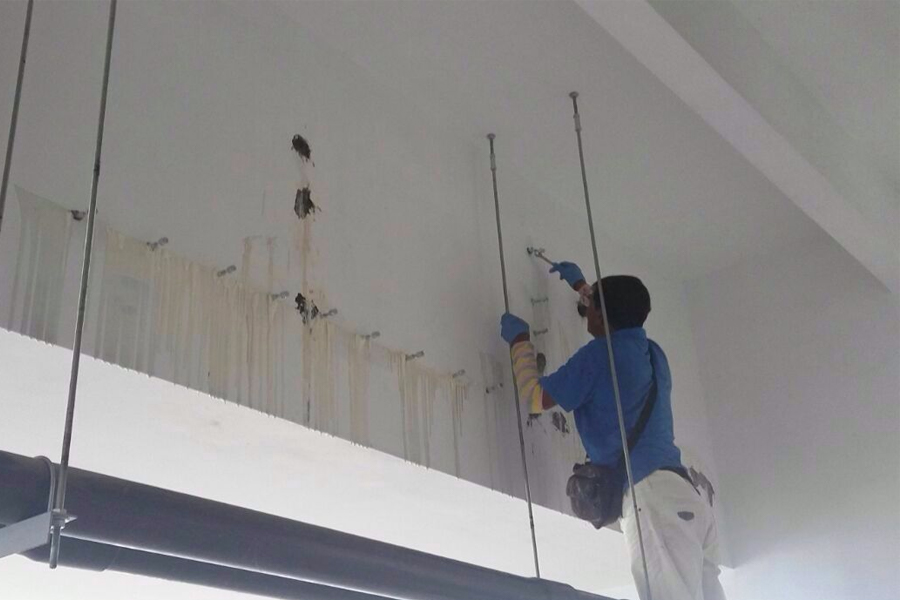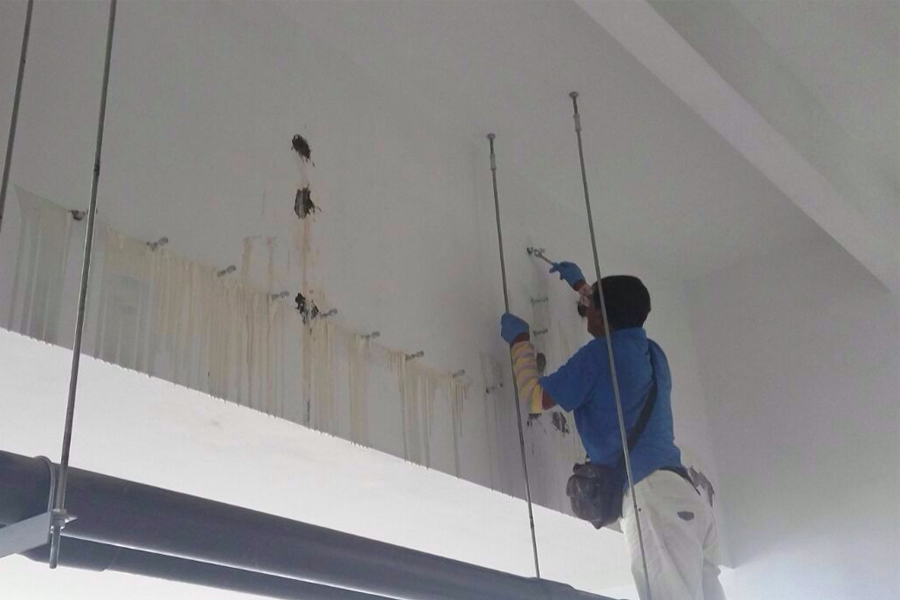
A ceiling stain in a shoplot, seepage at a basement wall, or water dripping through a concrete crack can all look like “leak problems”, but they are not always the same kind of repair problem. PU injection is often considered because it can be done from the leaking side, without hacking large areas. That is useful in Central Melaka properties where access, tenants, shared walls or finished surfaces may restrict repair work. But PU injection is not a universal waterproofing method. It works best when the leak has a defined path through concrete that can be reached and sealed.
PU Injection Stops Water Paths Inside Concrete, Not Every Wet Surface
PU injection, or polyurethane injection, is used to seal water movement through cracks, joints, voids or gaps in concrete. The material is injected under pressure into the leaking path. Depending on the type of PU grout, it reacts with moisture, expands and blocks the route that water is using to pass through the structure.
PU injection is suitable when water is entering through a reachable crack, joint or defect inside concrete. It is not a surface coating and it does not rebuild a failed roof, balcony or bathroom waterproofing system. Its main value is stopping active seepage at a specific water path, especially where access from the water-entry side is limited.
This distinction matters because many leaks become visible at the underside of a slab or wall, while the actual waterproofing failure is on the exposed side. PU injection may stop the immediate dripping, but if the top-side waterproofing remains defective, water pressure may later find another weak point.
Leaks Where PU Injection Is Usually a Practical Option
PU injection is most useful when the leak is localised and the water path can be identified clearly enough for drilling and injection. In Central Melaka, this may apply to certain basements, car parks, lift pits, retaining walls, concrete tanks, podium slabs, and internal concrete walls where external excavation or top-side repair is difficult.
Common leak situations where PU injection may be considered include:
Active seepage through concrete cracks
Water leakage along construction joints
Leaks around pipe penetrations through concrete walls or slabs
Damp or dripping points in basement walls caused by external groundwater pressure
Localised slab leakage where the path is concentrated rather than widespread
Water ingress through honeycombed or porous concrete areas, subject to condition
The key phrase is “may be considered”. A visible wet line does not automatically confirm that injection alone is enough. The crack width, movement, water pressure, substrate strength and access for drilling all affect the repair decision.
For example, if water is leaking through a basement wall construction joint, PU injection may be able to seal the joint from the inside. If the same basement wall is suffering from broad moisture migration across a large area, injection at one or two points may not deal with the wider water pressure issue.
Leaks PU Injection Should Not Be Expected to Solve Alone
PU injection is sometimes requested after several surface repairs have failed. The method may still be useful, but only if the problem matches what injection can actually do. It should not be treated as a shortcut for every waterproofing defect.
For a leaking roof slab, tiled balcony or bathroom, the waterproofing layer is normally expected to protect the structure from above. If the membrane, coating, tile joints, floor trap detail or wall-floor junction has failed, PU injection from below may stop one visible leak path but leave water trapped in the screed or slab. That trapped water can move sideways and appear elsewhere later.
PU injection is also not the right main solution for peeling paint, damp plaster, mouldy walls or efflorescence unless the inspection confirms a defined crack or joint leak behind the symptom. These signs may come from condensation, rising damp, plumbing leakage, façade seepage, or moisture trapped behind finishes.
It is also limited where the crack is moving significantly. If structural movement continues, the injected material may not provide a permanent answer by itself. In such cases, the crack movement and waterproofing detail need to be addressed together.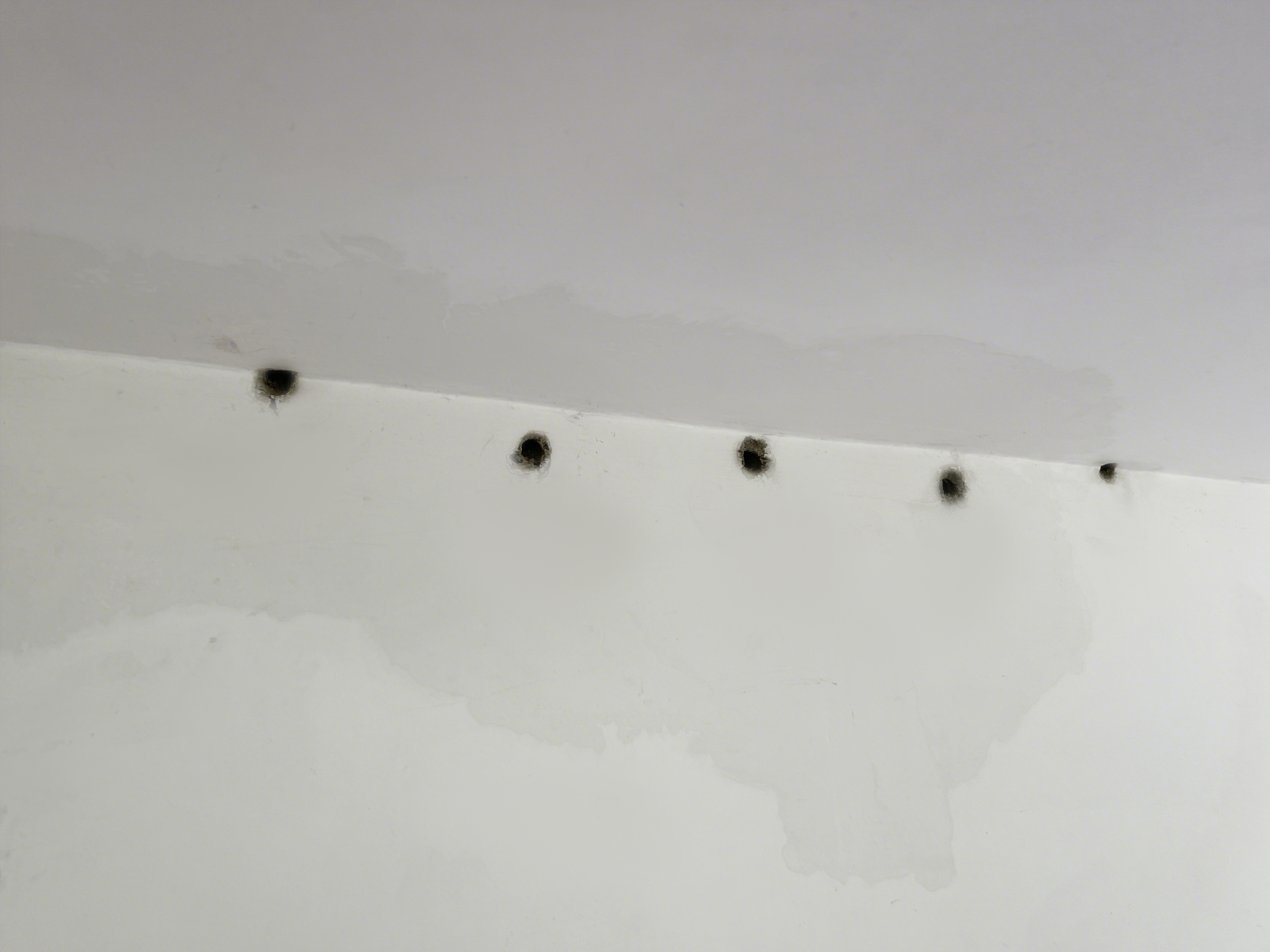
Why Central Melaka Properties Often Need an Access-Based Decision
In Central Melaka, many waterproofing decisions are affected by access rather than material preference alone. A property may be occupied, attached to neighbouring units, located in a busy commercial row, or finished with tiles, plaster ceilings and built-in fittings that the owner does not want to remove. These constraints can make PU injection attractive because it is a negative-side repair method: work is often carried out from the side where the leak is visible.
This is useful when external excavation is not practical, when the upper floor is under different ownership, or when a tenant cannot tolerate long disruption. However, the convenience of working from the inside does not change the technical question: is the leak path suitable for injection?
For example, a shoplot ceiling leak below a bathroom may appear suitable for injection because the underside is accessible. But if the bathroom waterproofing has failed across the floor area, injecting the ceiling crack may only block the current escape point. The better decision may involve testing the bathroom floor, checking the floor trap and wall junctions, and deciding whether top-side waterproofing repair is necessary.
What Should Be Checked Before Approving PU Injection
Before choosing PU injection, the inspection should establish whether the leak is concentrated, accessible and compatible with the injection method. The aim is not simply to locate the wettest point, but to understand how water is travelling.
Important checks include the condition of the concrete, whether the crack is dry, damp or actively leaking, whether the leak follows a straight crack or a construction joint, and whether water pressure is constant or appears only after rain or usage. Pipe penetrations should be inspected separately because a plumbing leak and a waterproofing leak can look similar at the surface.
A practical pre-injection review should normally ask:
Is the leak coming through concrete, or through finishes such as tiles, plaster or paint?
Is there a visible crack, joint, penetration or honeycombed area?
Is the leak active enough for moisture-reactive grout to perform as intended?
Is the concrete strong enough to hold injection pressure?
Could water be entering from a failed waterproofing layer above or outside?
Is the affected area moving, expanding or repeatedly cracking?
These checks help avoid using PU injection as a blind response. Injection points, drilling angle, grout selection, injection pressure and post-injection observation all depend on the actual site condition.
When PU Injection Needs to Be Combined With Waterproofing Repair
PU injection can stop water movement at a specific path, but the wider waterproofing system may still need attention. This is especially true for roofs, balconies, bathrooms, planter boxes and exposed concrete decks, where the correct long-term defence is usually on the water-entry side.
If water has already entered the screed, tile bed or slab, injection may reduce visible leakage while moisture remains inside the build-up. The owner may then notice delayed dampness, salt deposits, hollow tiles or new seepage nearby. That does not always mean the injection was poorly done; it may mean the original waterproofing defect was broader than the injected path.
A sound repair scope may involve PU injection for immediate leak control, followed by surface waterproofing renewal, joint sealing, drainage correction or tile-system repair where the inspection shows these are necessary. The sequence depends on urgency, access and whether the property can tolerate hacking or shutdown.
For occupied commercial units in Central Melaka, this staged approach can sometimes reduce immediate water damage while allowing a more planned waterproofing repair later.
Conclusion
PU injection is most effective when the leak has a defined route through concrete, such as a crack, construction joint, pipe penetration or localised void. It is less suitable as a standalone answer when the real problem is a failed waterproofing system above, widespread moisture behind finishes, or ongoing movement. Before approving PU injection in Central Melaka, the most important question is not “Can we inject this wet area?” but “Has the actual water path been identified clearly enough for injection to work?”
If you need help assessing whether PU injection is suitable for your property, you can contact QingLong Waterproofing for site-specific advice.
Frequently Asked Questions (FAQs)
1. Can PU injection stop an active leak immediately?
PU injection can often reduce or stop active seepage once the grout reaches the leaking path. The result depends on the crack, water pressure, concrete condition and whether the leak source is suitable for injection.
2. Is PU injection suitable for bathroom leakage?
It may stop water dripping through a slab crack below a bathroom, but it does not replace a failed bathroom waterproofing layer. The floor trap, wall-floor junctions, tile condition and waterproofing system should still be checked.
3. Can PU injection be done without hacking tiles?
In some cases, yes, especially when the leak can be treated from the underside or internal wall face. However, if the top-side waterproofing has failed across a wide area, tile removal or surface repair may still be needed.
4. Will PU injection work for basement wall seepage?
PU injection can be suitable for basement cracks, construction joints and localised leakage points. Broad dampness or continuous groundwater pressure may require a wider waterproofing or drainage assessment.
5. How do I know if my leak is suitable for PU injection?
A suitable leak usually has a clear path through concrete, such as a crack, joint or penetration. If the symptom is only peeling paint, mould or general dampness, further inspection is needed before deciding on injection.