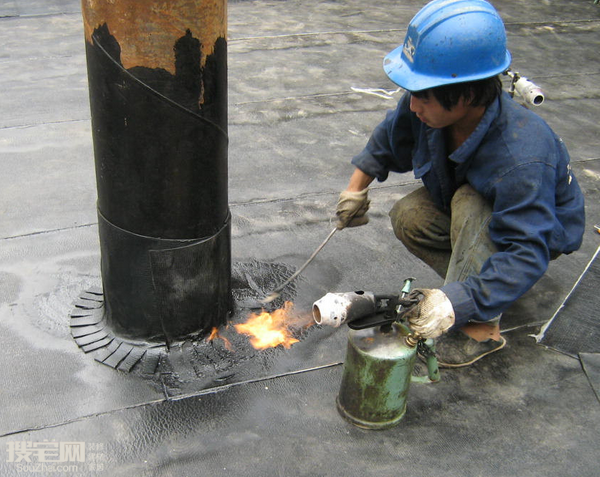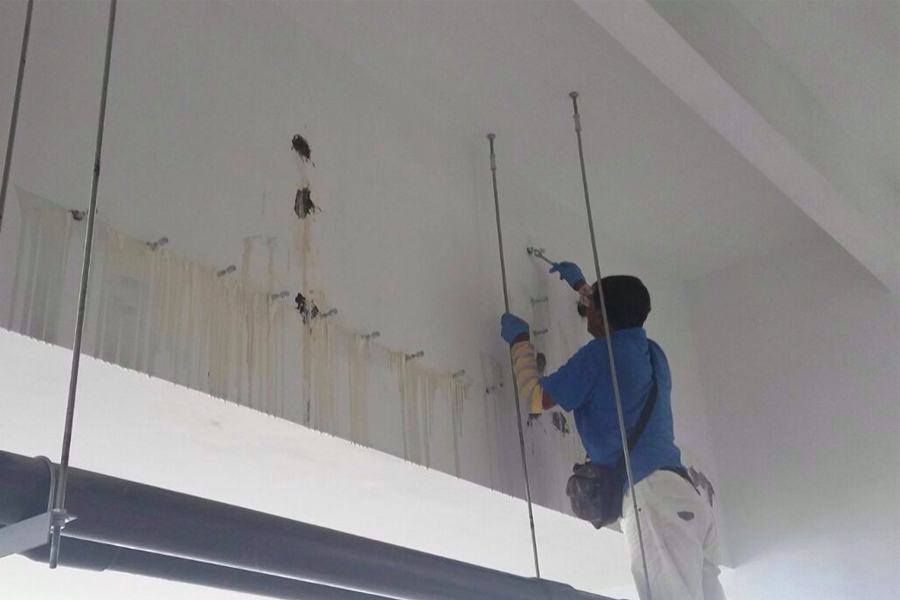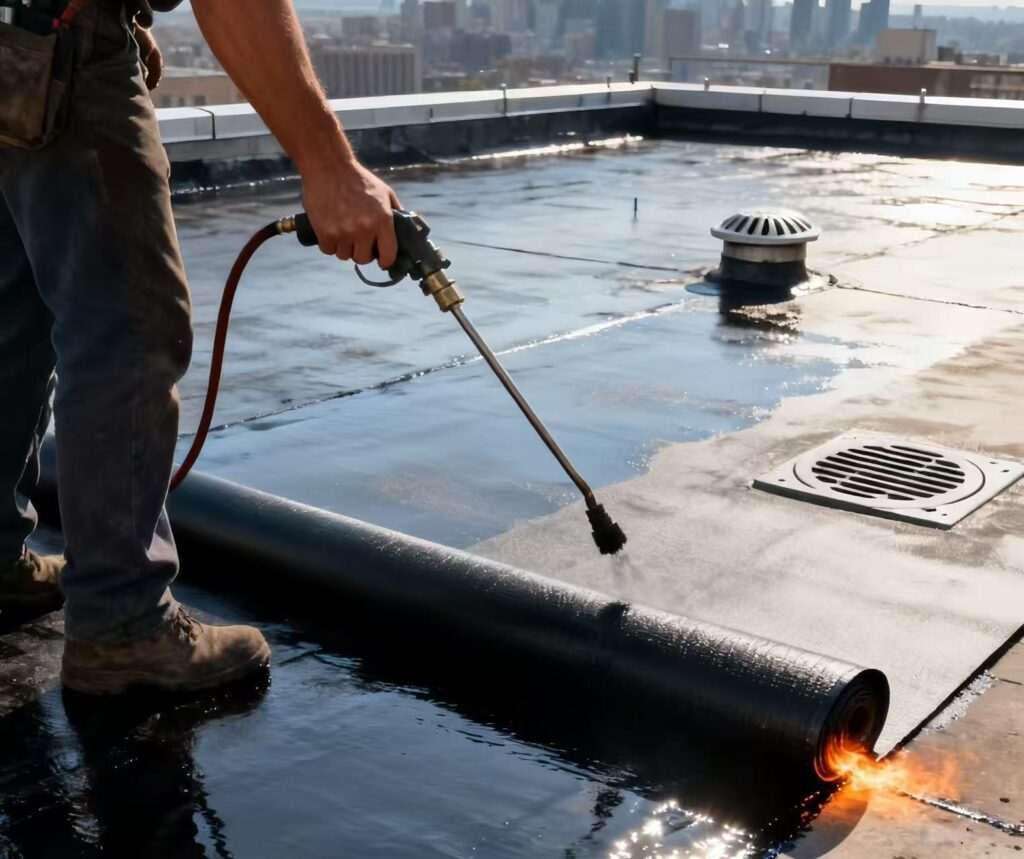
A concrete roof may appear ready for recoating, but the situation changes when water remains on the slab long after the rain has stopped. Persistent ponding indicates that the issue may involve more than surface cracks or an ageing waterproofing layer. The roof’s drainage performance, the possibility of moisture trapped within the screed, and the suitability of the proposed waterproofing system for prolonged water exposure all need to be considered.
For building owners planning concrete roof waterproofing in Johor Bahru, this is important because a coating that performs well on a properly drained roof may deteriorate much faster when it is repeatedly exposed to standing water.
Ponding Water Is a Roof Design and Drainage Issue, Not Just a Waterproofing Defect
Ponding water occurs when rainwater cannot flow efficiently towards the roof outlet, scupper, gutter or drain. On a flat concrete roof, this often indicates underlying issues such as insufficient slope, uneven screed, blocked outlets, settlement, poorly formed drainage channels, or previous repair layers that have altered the roof level.
This is important because a waterproofing system is intended to prevent water ingress, not to compensate for a roof that continuously retains water. Even when the waterproofing layer is initially intact, prolonged standing water increases the level of exposure. Minor weaknesses around cracks, laps, corners, pipe penetrations or coating pinholes are therefore more likely to become entry points for moisture over time.
For a concrete roof affected by ponding water, the waterproofing system should be evaluated together with the roof falls and drainage outlet performance. Recoating the surface alone may help reduce water penetration, but it will not correct poor drainage, low spots or areas where water repeatedly remains after rainfall.
In Johor Bahru, roof leakage often becomes more noticeable after heavy rain, but rainfall intensity is only one factor. A properly sloped roof should allow water to drain away efficiently. If puddles continue to form in the same areas after every rain, the roof level, drainage layout and outlet condition should be included in the repair assessment.
Why Standing Water Changes Material Selection
Not every concrete roof waterproofing material performs the same way under prolonged ponding. Some coatings are suitable for exposed roof surfaces where water drains away. Others may require protection, correct thickness, proper curing, or a compatible build-up to handle more demanding conditions.
When water remains on a roof, the selected waterproofing system should be evaluated for:
• Suitability for continuous or repeated wet exposure
• Adhesion to the existing concrete, screed or old coating
• Crack-bridging ability where the slab or screed moves
• Resistance to blistering when moisture is trapped below
• Performance around outlets, parapet corners and pipe penetrations
• Compatibility with any protective screed, tile finish or exposed coating layer
The main concern is that ponding water leaves less tolerance for poor surface preparation. Dusty concrete, damp screed, hollow areas, algae, peeling coatings and oil contamination from rooftop equipment can all weaken adhesion. Under normal drainage conditions, these defects may take longer to become visible. When the surface is repeatedly exposed to standing water, weaknesses in preparation are more likely to develop into premature waterproofing failure.
This is why a roof waterproofing recommendation should not be based on product type alone. Cementitious slurry, acrylic roof coating, polyurethane membrane and other waterproofing systems can each be suitable in the right application, but the final selection should depend on the actual roof condition, level of water exposure and required finish.
The Low Point of the Roof Often Decides the Repair Scope
On a concrete roof, the lowest point where water collects can reveal more than the most visible crack. Ponding near an outlet may indicate blockage, poor outlet level or weak detailing, while water in the middle of the slab may point to uneven screed or insufficient fall.
A proper inspection should look at how water moves across the roof, because the visible leak below may not match the actual entry point above.
Before proceeding with concrete roof waterproofing in Johor Bahru, the repair scope should be clearly identified. The work may involve local repairs, recoating, waterproofing renewal, drainage correction, or a combination of these methods.
Treating every case as the same waterproofing job can lead to repeated leakage and unnecessary repair costs.
Recoating Over a Wet or Unstable Roof Can Trap the Problem
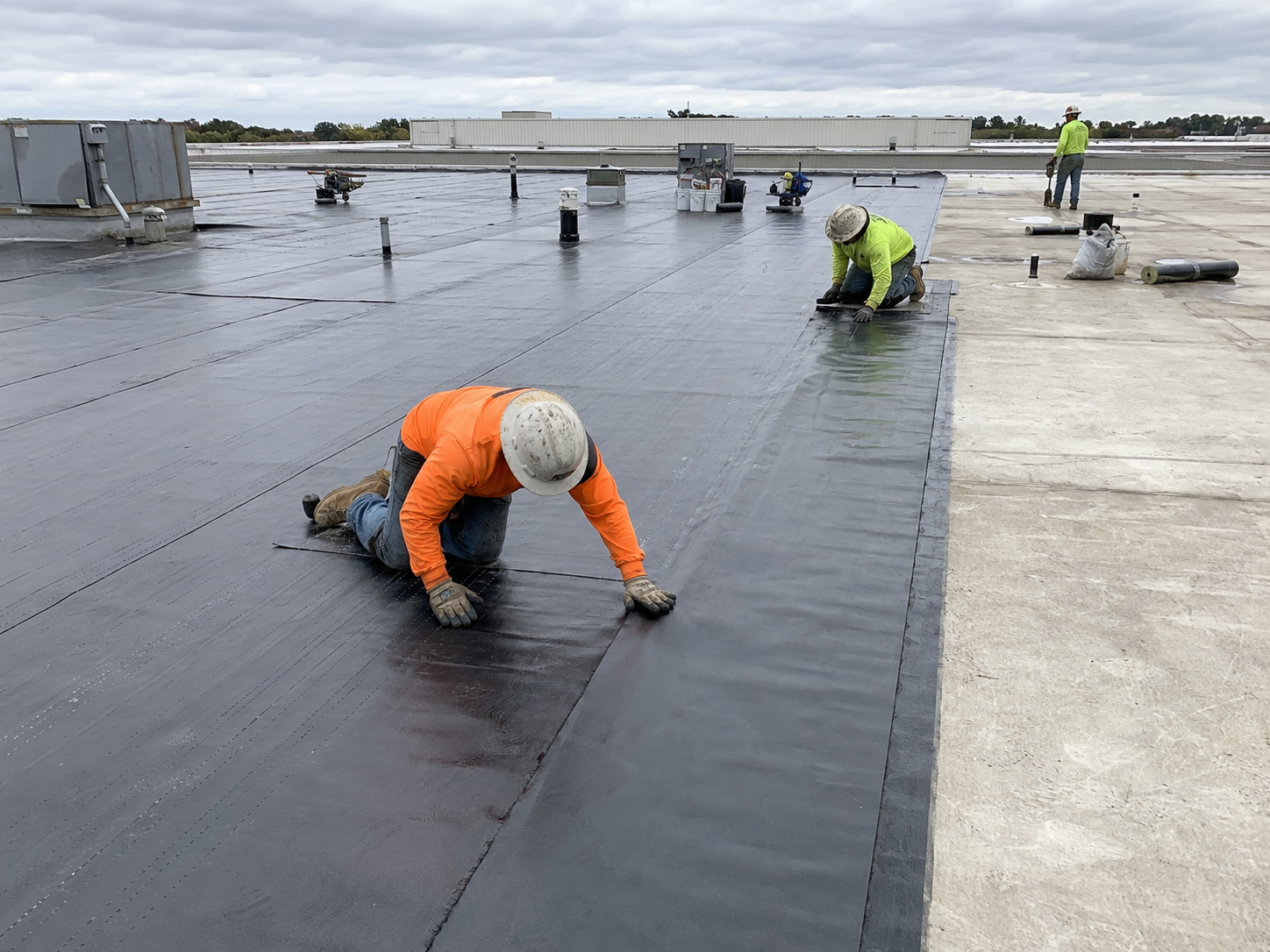
Adding a new waterproofing layer may seem like a simple solution, but it will only perform well if the existing surface is suitable. Ponding areas can trap moisture inside the screed or beneath old coatings, and applying a new layer over this moisture may lead to blistering, debonding or soft patches.
This does not mean the entire roof must be removed. The existing surface should first be checked for hollow screed, loose coatings, weak concrete, moving cracks, failed sealant and persistent dampness.
If the roof remains damp after several dry days, additional drying, removal of failed layers or a different waterproofing build-up may be required. Temporary sealing can help control an active leak, but it should not be treated as a complete waterproofing solution.
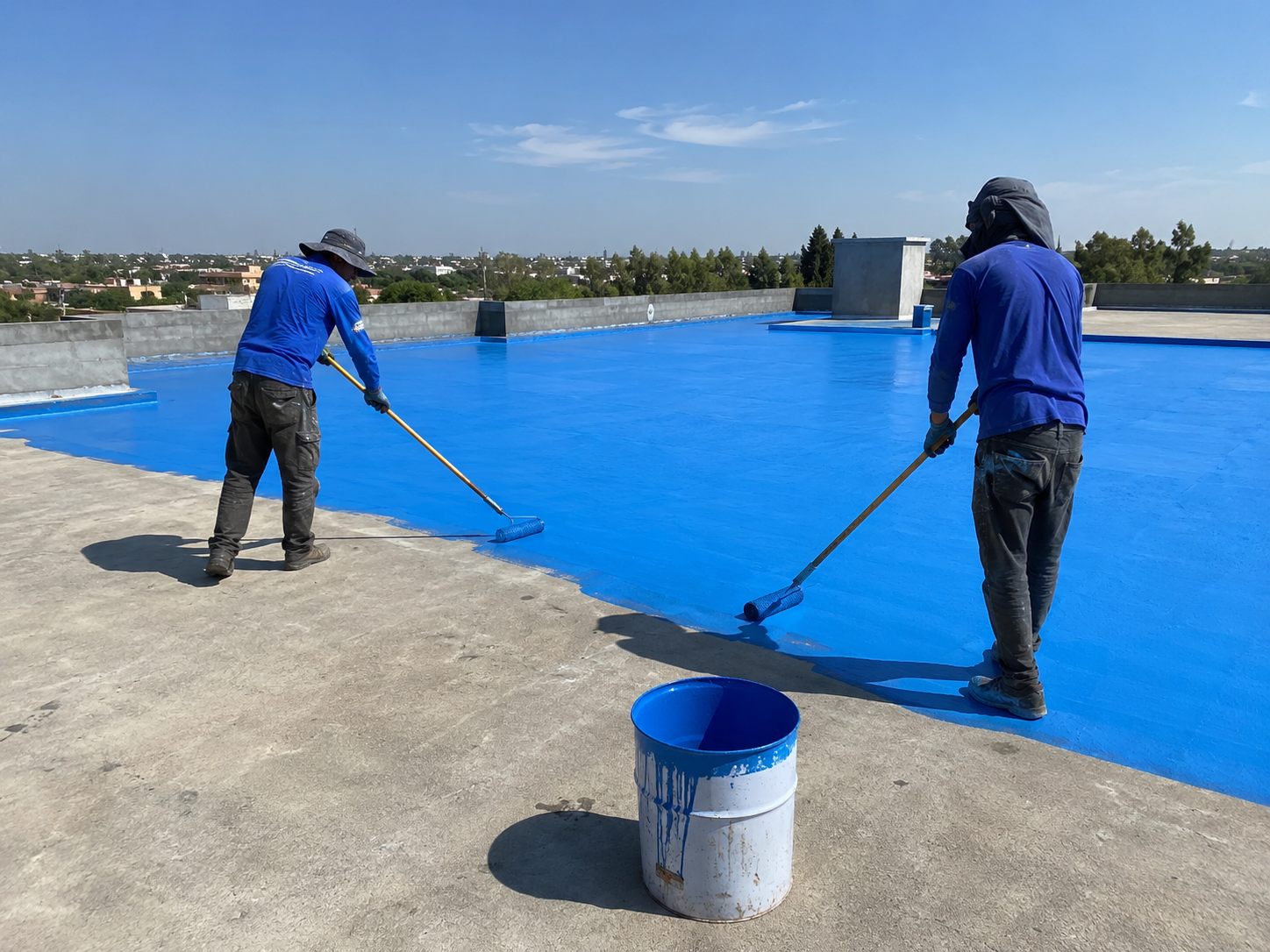
QingLong Waterproofing selects roof waterproofing systems according to the actual site condition. Exposed roof areas may require a suitable weather-resistant coating, while joints, corners and penetrations may need compatible reinforcement or sealant treatment.
Drainage Correction May Be More Important Than a Thicker Coating
When ponding is severe, applying a thicker waterproofing coating may not solve the problem. If the roof has insufficient fall, raised outlets or loose existing layers, water can still remain and the new coating may eventually fail.
The better approach is to determine how much ponding will remain after repair. Minor short-term water retention may be acceptable for some systems, but persistent ponding may require screed correction, improved drainage paths, lower outlet levels or reshaping of low areas before waterproofing is applied.
This is especially important on commercial and industrial roofs, where air-conditioning plinths, pipes and equipment supports can interrupt water flow and create local ponding.
What a Building Owner Should Verify Before Approving the Work
Before proceeding with concrete roof waterproofing, the proposed repair should be based on the actual roof condition rather than only the quotation description. The contractor should be able to explain where ponding occurs, why it happens, and how the proposed waterproofing and drainage work will address the problem.
Important points to verify include:
Where does water remain after rain?
Marking ponding areas helps distinguish drainage defects from isolated waterproofing defects.
Is the existing surface sound enough for adhesion?
Loose coating, weak screed, dust, algae and damp substrate can affect bonding.
Are roof outlets and scuppers lower than the surrounding surface?
A drain that sits too high can create permanent ponding even after waterproofing.
How will corners, cracks and penetrations be treated?
These details often fail before the open roof surface.
Is the selected waterproofing system suitable for the expected exposure?
The product specification should be checked for substrate, curing, coverage, reinforcement and ponding limitations.
Will drainage improvement be included if needed?
If water flow is the main weakness, waterproofing alone may not solve the roof problem.
These checks do not make the project complicated. They prevent the wrong scope from being approved.
Conclusion
Ponding water changes the waterproofing requirement because the roof is exposed to retained water, slower drying and greater stress at weak areas. Before choosing a coating or membrane system, the first step is to understand why water remains on the roof and whether drainage improvement is required.
If your concrete roof in Johor Bahru has recurring ponding, ceiling stains or repeated failed repairs, QingLong Waterproofing can help review the roof condition and recommend a suitable waterproofing approach based on the actual site. You may contact QingLong Waterproofing for an assessment or recommendation.
Frequently Asked Questions (FAQs)
1. What causes ponding water on a concrete roof?
Ponding water is usually caused by insufficient roof fall, uneven screed, blocked outlets, raised drainage points, settlement or poorly formed drainage channels. These conditions prevent rainwater from draining away efficiently.
2. Will a thicker waterproofing coating solve ponding water?
Not necessarily. A thicker coating cannot correct poor roof fall, raised outlets or low areas where water collects. In some cases, screed correction or drainage improvement is more important than adding more coating.
3. Why does waterproofing blister after application?
Blistering can occur when moisture is trapped inside the screed or beneath an existing coating. Heat and vapour pressure may push against the new waterproofing layer, causing bubbles, soft areas or debonding.
4. How do I know if my concrete roof needs drainage correction?
If water continues to collect in the same areas long after rainfall, the roof fall, outlet level and drainage path should be checked. Persistent ponding usually indicates that waterproofing alone may not fully solve the problem.
5. How can QingLong Waterproofing help with concrete roof leakage in Johor Bahru?
QingLong Waterproofing can assess the roof condition, ponding areas, existing waterproofing and drainage performance before recommending a suitable repair approach. The solution may include waterproofing treatment, local repairs, drainage improvement or a combination of these methods.