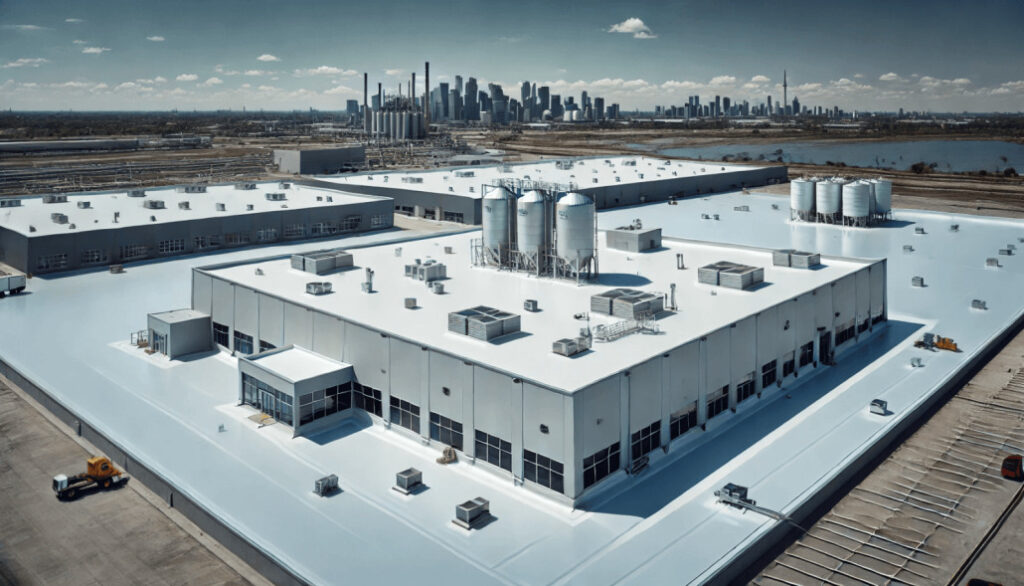
A concrete roof may appear flat, but it should still direct rainwater toward its drainage outlets. When water remains in low areas for hours after rain, the waterproofing problem is no longer only about finding a crack and applying another coating.
For concrete roof waterproofing in Johor Bahru, ponding water can indicate poor roof falls, uneven screed, raised drainage outlets, blocked discharge points or deterioration beneath an existing waterproofing layer. Before deciding on a repair system, the first question should therefore be:
Why is water remaining on the roof?
The answer determines whether the roof needs local waterproofing repair, drainage improvement, re-screeding or a more complete waterproofing system.
Ponding Water is a Drainage Warning
Ponding occurs when rainwater cannot reach the roof outlets efficiently. Small wet areas immediately after rain are not necessarily a problem, but water that repeatedly remains in the same low spots deserves investigation. Common causes include insufficient roof fall toward drainage outlets, settled or uneven cement screed, outlets positioned higher than the surrounding surface, blocked or undersized drainage points, raised edges created by previous repair work, and depressions around pipes, equipment bases or parapet areas.
This matters because waterproofing and drainage perform different functions. A waterproofing membrane is designed to prevent water from entering the building, while the roof fall and drainage system are responsible for directing rainwater away from the roof surface. If the drainage problem remains unresolved, applying another waterproof coating may cover the surface without correcting the reason water continues to collect in the same areas.
Why Recoating a Ponding Roof May Not Solve the Leak
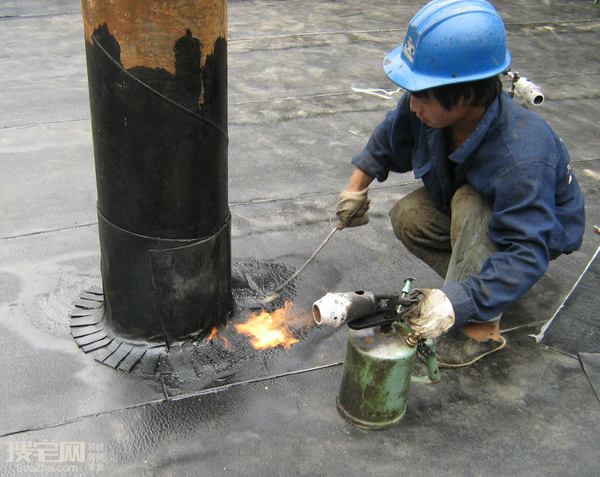
When a leaking concrete roof already has an old waterproof coating, recoating may seem like the easiest solution. However, the condition of the existing surface is more important than simply adding more layers. A roof affected by ponding may already have blistered or peeling coatings, weak or powdery screed, trapped moisture beneath previous waterproofing layers, algae or surface contamination, cracks around joints and penetrations, or failed sealant around pipes and wall junctions. If a new coating is applied over an unstable surface, the new waterproofing system may eventually detach together with the old layer underneath.
Adding more waterproofing material also does not correct poor roof falls. If the same depression continues to hold water after the repair, the waterproofing system remains exposed to prolonged moisture in the same area. For this reason, the substrate condition, drainage pattern and existing waterproofing should be assessed first before deciding whether recoating is a suitable repair method.
Check the Roof Fall Before Choosing the Waterproofing System
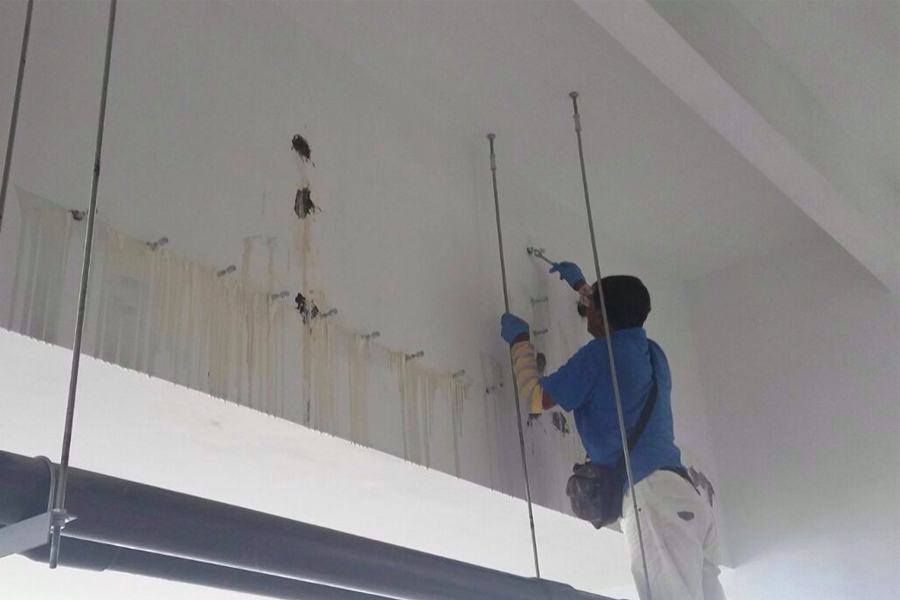
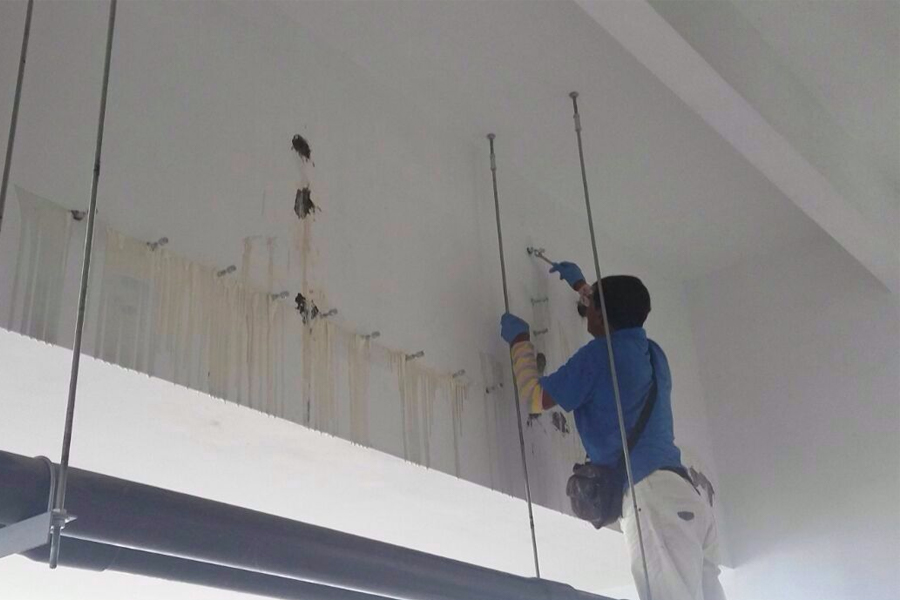
A useful roof inspection should look beyond the visible ceiling stain. Water entering a concrete roof does not always appear directly below the entry point. It can travel through cracks, screed interfaces, construction joints or penetrations before becoming visible inside the building.
For a roof with ponding, the drainage pattern often provides better clues. Check where water collects after rain and whether it reaches the outlets naturally. Particular attention should be given to:
Roof Outlets
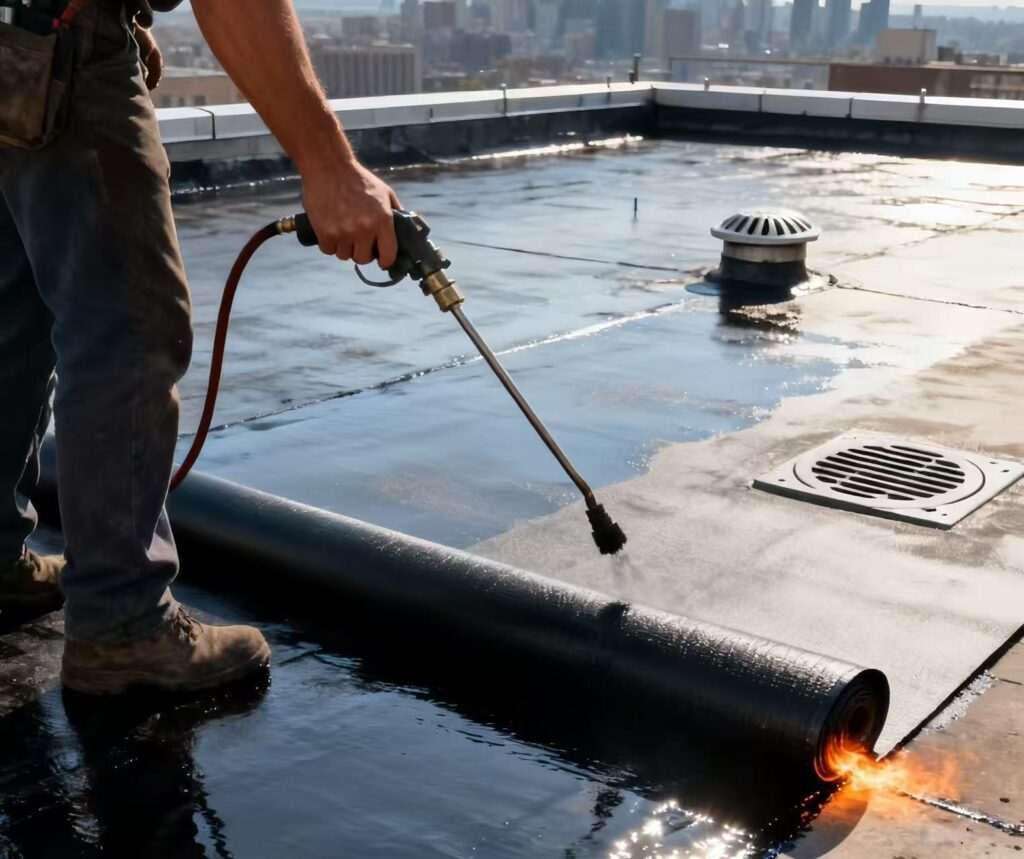
The outlet should allow water to discharge from the surrounding roof surface. If it is higher than a nearby low spot, water can remain even when the drain itself is clear.
Parapet junctions
Internal corners and wall-to-roof junctions require careful waterproofing detailing because movement and water accumulation can place stress on these areas.
Pipe penetrations
Pipes, supports and equipment bases interrupt the waterproofing surface and can become leakage points if the surrounding sealant or membrane detailing has failed.
Existing screed
Hollow, cracked or detached screed may not provide a reliable base for a new waterproofing system.
Understanding these conditions helps determine whether the repair should focus on the waterproofing layer, the roof drainage or both.
When Local Waterproofing Repair May Be Enough
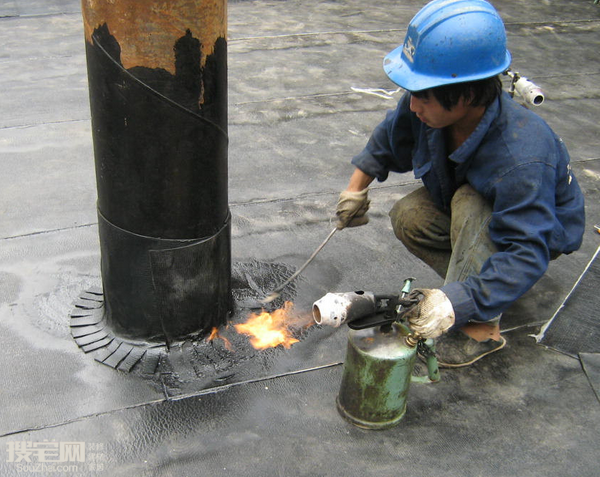
Not every ponding roof requires complete reconstruction. If ponding is shallow, localised and caused by a blocked outlet or minor surface unevenness, the repair may involve clearing drainage, preparing the surface properly and treating the vulnerable detail with a suitable waterproofing system.
Local repair is generally more practical when the screed remains structurally sound, the existing waterproofing has good adhesion outside the damaged section, drainage can be restored without major slope correction, and the leakage is concentrated around a specific joint, outlet, penetration or localised low point. Even in these cases, the roof condition should be inspected carefully to confirm that the ponding is not part of a wider drainage or substrate problem before proceeding with a local repair.
When the Roof May Need Re-Falling or Re-Screeding
Widespread ponding usually requires more than another waterproofing layer. If several areas of the concrete roof hold water because the surface does not fall correctly toward the drainage outlets, recoating may leave the underlying drainage problem unchanged. In this situation, re-falling or re-screeding may need to be considered to reshape the roof surface and direct rainwater toward the intended discharge points before the waterproofing system is completed.
Slope correction becomes more relevant when large areas remain underwater after rain, the existing screed has settled or become uneven, drainage outlets cannot receive water from surrounding areas, previous patch repairs have created additional low points, or repeated waterproofing repairs have failed in the same ponding sections. Re-falling requires more preparation than simple recoating, but it addresses the way water moves across the roof instead of repeatedly covering the same symptom.
Choosing Waterproofing for a Roof With Ponding Risk
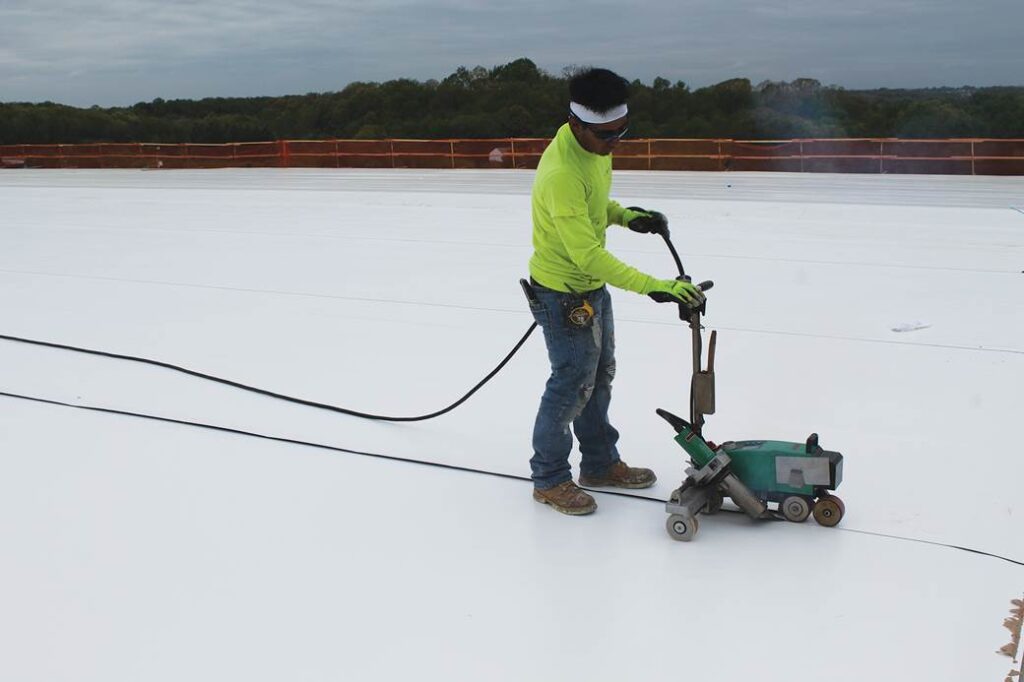
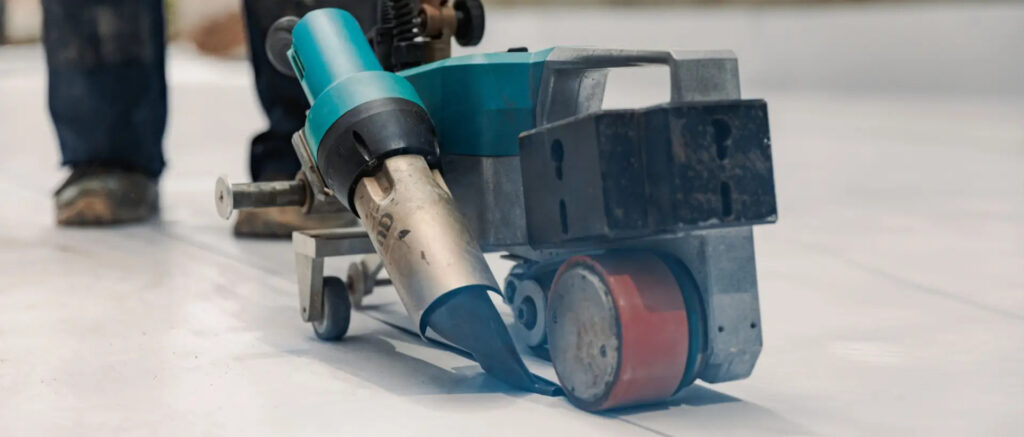
Waterproofing materials should be selected according to the actual roof condition rather than only by product type or number of coats. Different systems have different requirements for substrate condition, curing, movement, exposure and resistance to standing water. Depending on the project, a concrete roof waterproofing system may include surface preparation, crack treatment, joint sealant, waterproof coating, cementitious waterproofing and reinforcement at vulnerable details. For an exposed roof, particular attention should also be given to drainage outlets, parapets, pipe penetrations and equipment bases, as these areas are often more vulnerable to water entry.
The main question should therefore not simply be which waterproof coating to use, but which waterproofing build-up is suitable after the cause of ponding has been identified. The selected system should match the roof condition, drainage performance and level of water exposure rather than relying on additional coating layers alone.
Conclusion
Ponding water changes the repair decision because it can reveal a problem with the roof surface, drainage system, existing waterproofing or a combination of all three.
A roof with good drainage and one isolated defect may only require targeted waterproofing repair. A roof with widespread low areas, weak screed and repeated ponding may require slope correction before a new waterproofing system can perform properly.
The goal should not be simply to cover the concrete roof again. The repair should first establish why water is collecting, how it should drain and what condition the waterproofing substrate is in.
If your concrete roof in Johor Bahru has ponding water, recurring ceiling leaks or previous waterproofing repairs that did not last, QingLong Waterproofing can inspect the roof condition and recommend a suitable repair approach. Contact us to arrange an assessment before deciding between local repair, recoating, re-screeding or drainage correction.
Frequently Asked Questions (FAQs)
1. Can waterproofing be applied over ponding areas?
It depends on the condition of the roof, substrate and waterproofing system. If ponding is caused by poor falls or large depressions, slope correction may need to be carried out before the final waterproofing system is applied.
2. Does ponding water always mean the roof needs re-screeding?
No. Small localised areas may sometimes be corrected without re-screeding the entire roof. Widespread ponding or multiple low points may require more extensive fall correction.
3. Why does my concrete roof still leak after recoating?
Possible causes include poor surface preparation, weak existing coatings, cracks, failed details around outlets or penetrations, trapped moisture or unresolved ponding. The complete roof condition should be inspected rather than assuming another coating layer will solve the problem.
4. Should drainage be checked before waterproofing?
Yes. Understanding how water reaches the drainage outlets is an important part of determining the appropriate concrete roof waterproofing repair.