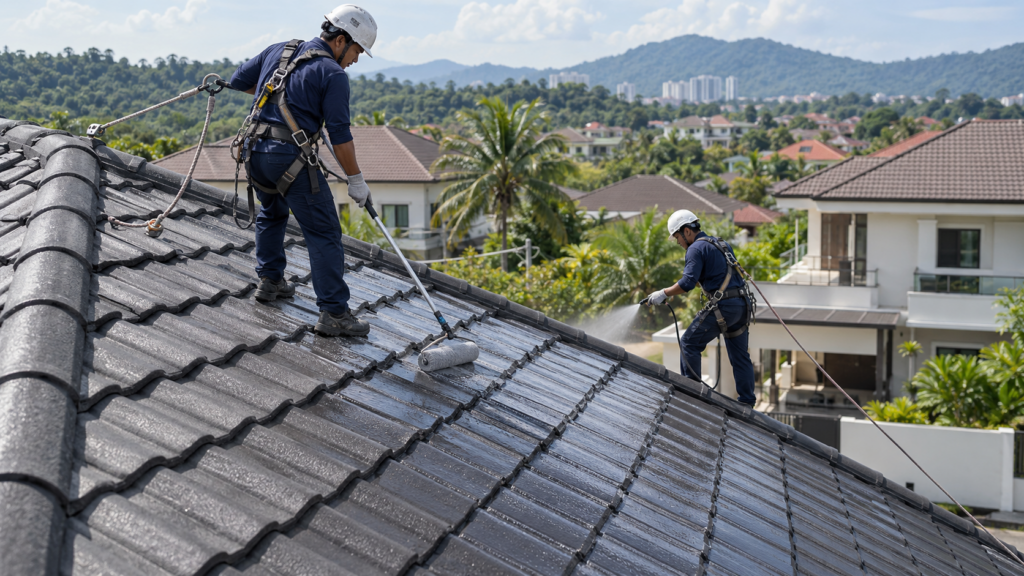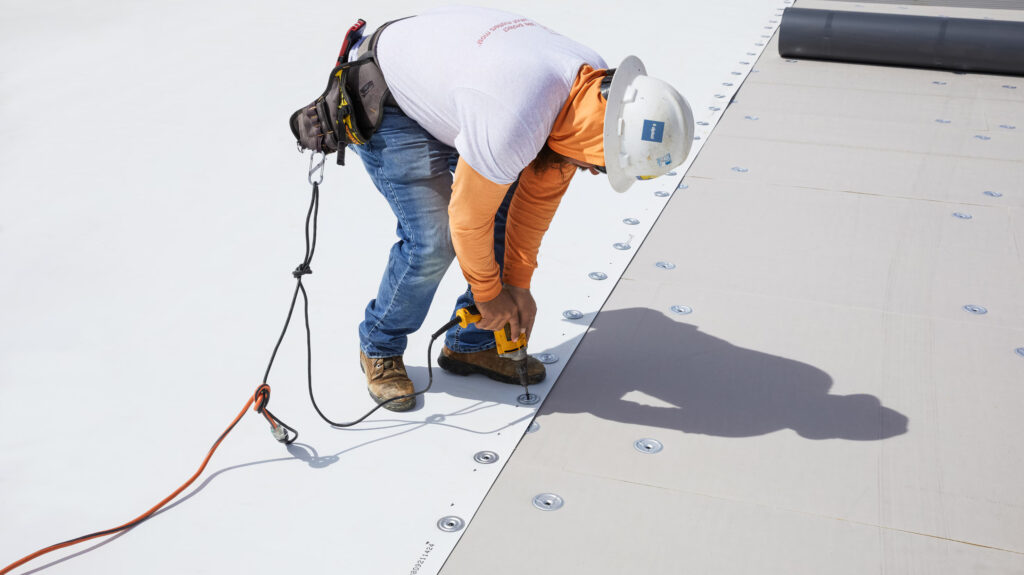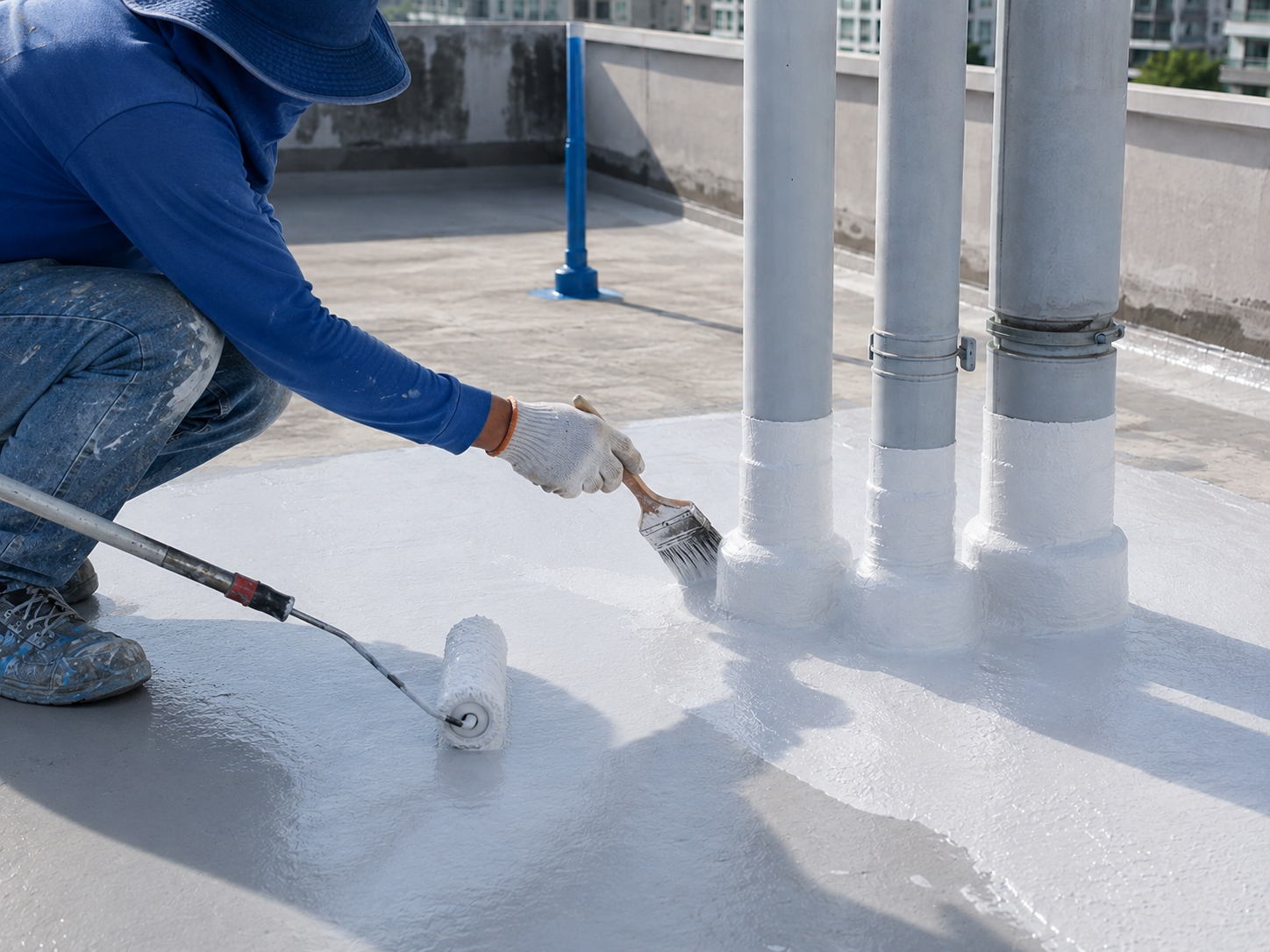
A flat concrete roof can look “waterproofed” after a new coating, yet still collect shallow pools after rain. For many Johor Bahru homes, shoplots and building extensions, the real question is not only which waterproofing product to apply. It is whether the roof is asking the membrane to do a job that poor falls, blocked outlets or uneven screed should have handled first.
When water keeps ponding, the waterproofing decision changes. The system must resist water, but the roof also needs a practical way to discharge rainwater before standing water becomes a long-term stress on cracks, joints and coating adhesion.
Ponding Water Is a Drainage Problem Before It Is a Coating Problem
Concrete roof waterproofing in Johor Bahru should not be selected only by asking which coating can stop leakage. If water repeatedly remains on the roof after rain, the roof surface, screed falls, outlets and drainage paths must be checked before deciding the waterproofing system.
For a concrete roof with ponding water, waterproofing alone is usually not the full solution. The roof first needs an assessment of drainage falls, outlet position, screed condition and low spots. A waterproofing membrane can resist water ingress, but it cannot correct an uneven roof surface or make trapped water flow to an outlet.
This matters because ponding changes the exposure condition. A roof coating that performs well on a sloped or fast-draining surface may face different stress when water sits over the same area repeatedly. Dirt accumulates in the ponded area, heat cycles affect the wet-dry boundary, and small defects remain submerged for longer.
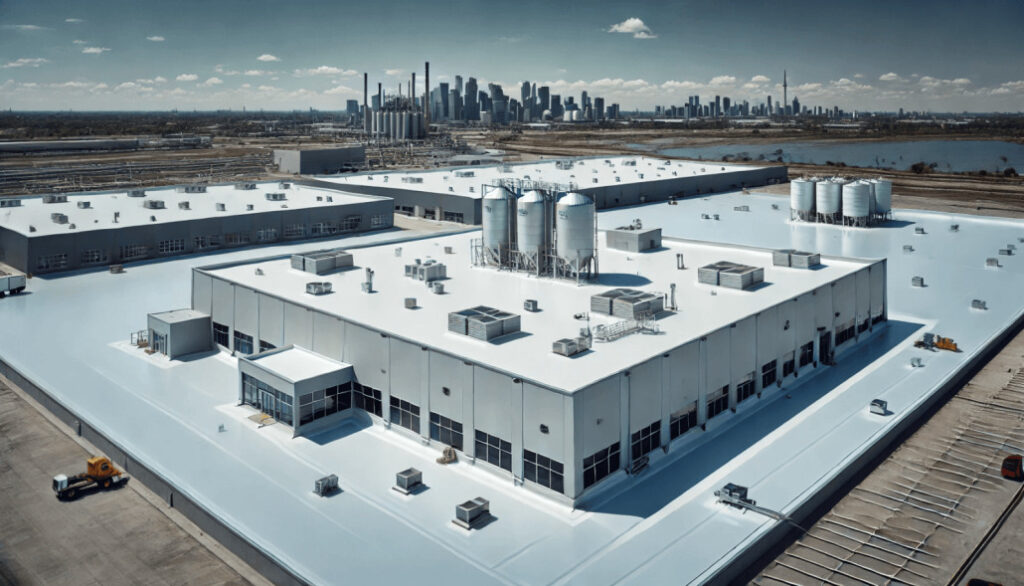
The problem is often more noticeable on flat concrete roofs with parapet walls because water has fewer escape routes. If the outlet is slightly higher than the surrounding roof surface, or if the screed has settled near the middle, rainwater may remain even when the outlet is not blocked.
What the Ponding Pattern Tells You About the Roof
Before choosing a repair method, the ponding pattern should be observed. A single puddle near an outlet suggests a different issue from widespread water across the entire roof. Water ponding along a parapet wall may point to weak falls or a raised termination detail. Water trapped around pipe penetrations may indicate local settlement, poor patching or previous repair build-up.
A useful inspection does not only ask, “Where is the leak?” It asks how water moves across the roof.
Important observations include:
whether the ponded area is isolated or spread across the roof;
whether water remains after other roof areas have dried;
whether the outlet is blocked, undersized, too high or poorly positioned;
whether the screed sounds hollow, cracked or powdery;
whether previous waterproofing has blistered, peeled or softened;
whether cracks cross the ponding area or run into wall-floor junctions;
whether pipe penetrations, upstands and parapet details are properly sealed.
These details help separate a surface drainage problem from a waterproofing membrane failure. For example, if the roof leaks only during heavy rain and water is seen backing up near a blocked outlet, improving the outlet may be as important as renewing the membrane. If the outlet works but water still stays in the same low area, the screed fall may need correction.
Why Recoating Over Ponding Areas Can Fail Early
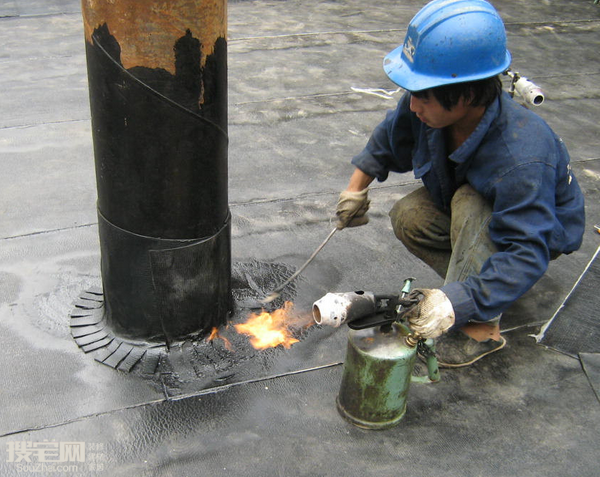
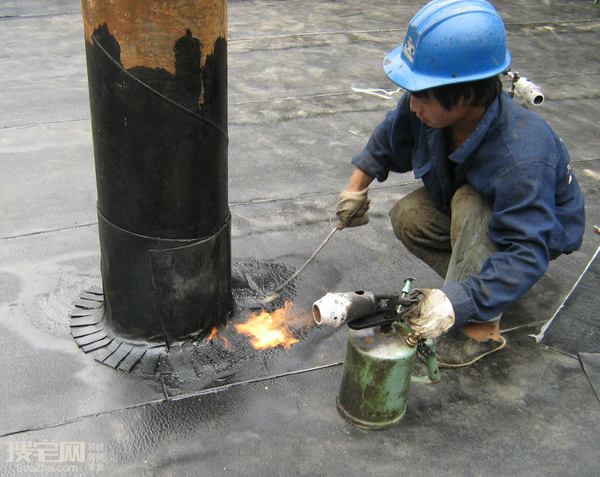
Recoating a concrete roof may appear reasonable when the surface already has an old waterproofing layer. It is faster than hacking and re-screeding, and it can reduce disruption. However, if ponding water is not addressed, the new layer may be placed over the same weakness that caused the earlier problem.
The first concern is adhesion. If the existing coating has lost bond because of trapped moisture, dusting screed or old contamination, applying another layer over it can transfer the weakness upward. The new coating may look continuous, but its performance still depends on what it is bonded to.
The second concern is moisture trapped below the coating. Concrete and screed can hold moisture, especially where water has been standing repeatedly. If the surface is sealed before moisture condition is suitable, blistering or debonding may occur depending on the material and site condition.
The third concern is detailing. Ponding water often exposes weak junctions more severely than sloped areas. Internal corners, parapet upturns, pipe penetrations and drainage outlets need proper treatment because water remains near these details longer. A simple flat-surface coating may not be enough if the vulnerable points are not reinforced or terminated properly.
This does not mean recoating is always wrong. It means recoating should be treated as one option, not the automatic answer.
When the Roof Fall Must Be Corrected Before Waterproofing
If ponding is shallow and limited, a suitable waterproofing system may still perform if the substrate is sound and the material is approved for that exposure. But when water repeatedly collects because the roof surface has no effective fall, correcting the falls becomes part of the waterproofing scope.
A practical repair may involve forming local falls to an outlet, improving outlet details, replacing failed screed, or creating a smoother drainage path before applying the waterproofing membrane. On some roofs, adding or modifying outlets may be considered, subject to structural and plumbing feasibility.
The decision depends on how much water is ponding and why it is ponding. If the low point is small, local screed correction may be enough. If the entire roof slopes away from the outlet, a larger drainage correction may be needed. If the roof is occupied, difficult to access or connected to business operations below, the repair plan must also consider noise, curing time, weather window and protection of the premises.
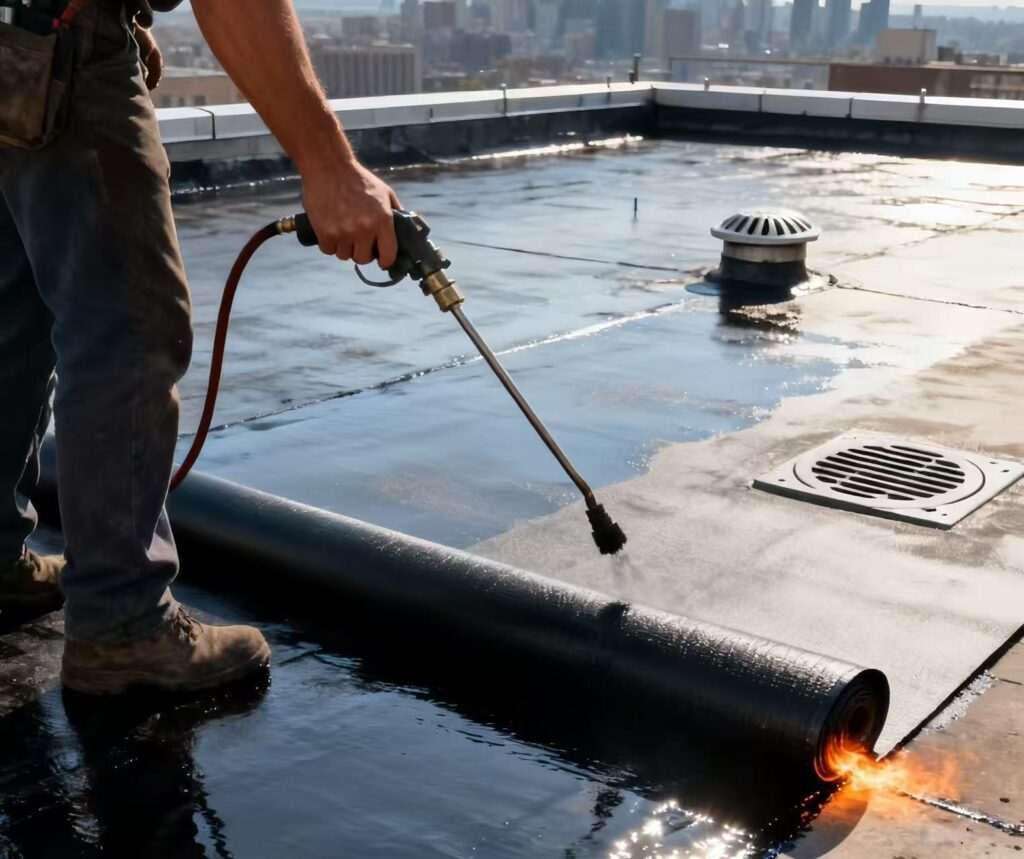
The best concrete roof waterproofing approach for ponding water is usually a combined approach: correct the drainage weakness where practical, prepare the concrete or screed properly, then apply a waterproofing system suitable for exposed roof conditions and the expected water exposure. The membrane should be selected after the roof’s ponding cause is understood.
Choosing a Waterproofing System for a Ponding Concrete Roof
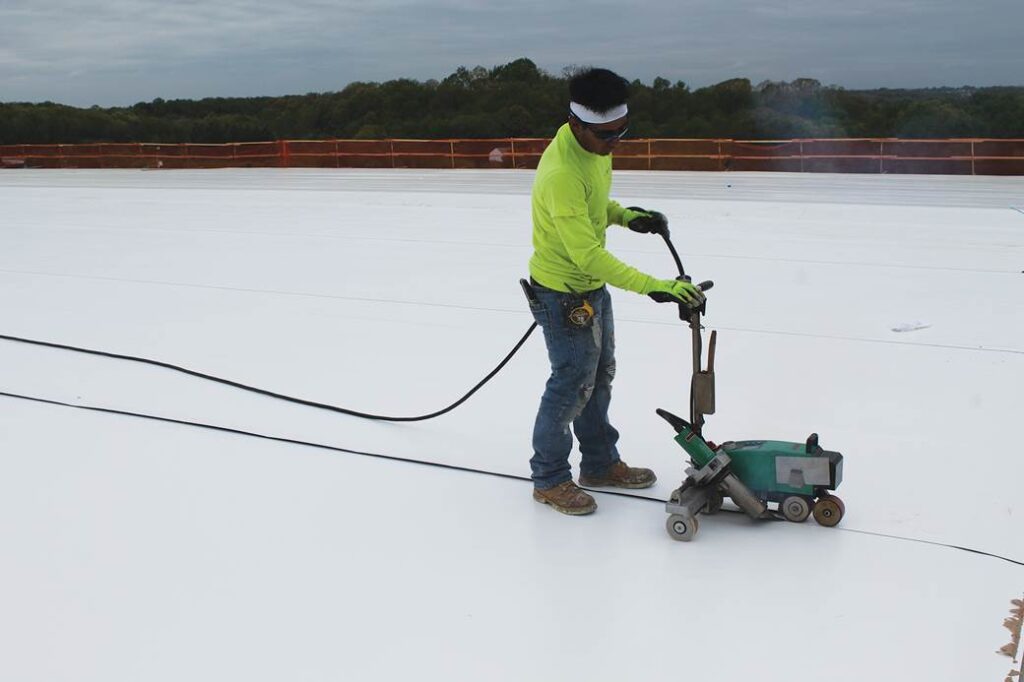
Once drainage and substrate condition are understood, the waterproofing system can be selected more realistically. For an exposed concrete roof, the system may need to handle UV exposure, surface movement, cracks, rainwater, maintenance access and detailing around roof penetrations.
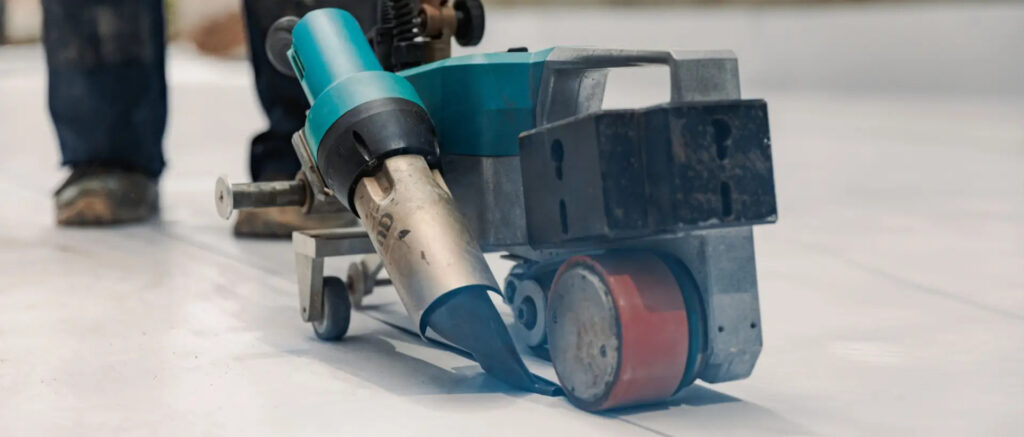
Not every waterproofing material is intended for the same use. A cementitious slurry, flexible coating, liquid-applied membrane or reinforced system may each have a place, but suitability depends on the roof condition and final exposure. If the roof remains exposed, the selected system should be checked against the current product specification for outdoor use, coating thickness, curing requirements, crack-bridging ability, compatibility with the substrate and tolerance to intermittent standing water.
For roofs with visible cracks, the crack pattern matters. Hairline shrinkage cracks are different from active cracks caused by movement. If cracks continue through the screed or appear at structural joints, simply covering them may not be enough. Movement joints, construction joints and wall-floor junctions may require detailing that is different from the main roof field.
QingLong Waterproofing manufactures and supplies waterproofing materials, including roof waterproofing coatings, cement-based waterproofing products, sealants and supporting accessories for joint and detail treatment. For a ponding concrete roof, the useful step is not choosing a product name first. It is matching the roof condition to the correct system build-up and confirming the application requirements before work begins.
What Should Be Checked Before Approving the Repair
A building owner or property manager does not need to become a waterproofing applicator, but should ask for enough information to know whether the contractor has addressed the actual roof condition.
Before approving concrete roof waterproofing work, clarify these points:
What is causing the ponding: blocked outlet, poor falls, failed screed or raised details?
Will the repair include drainage correction, or only waterproofing application?
Is the existing coating being removed, tested for adhesion, or coated over?
How will cracks, internal corners, parapets, outlets and pipe penetrations be treated?
Is the selected waterproofing material suitable for exposed concrete roof use?
What surface preparation and curing conditions are required?
How will rain risk be managed during application?
These questions help avoid a common mismatch: paying for a new coating when the roof actually needed fall correction and detail repair. They also make the scope clearer, especially when comparing quotations that may look similar but include very different levels of preparation.
 Conclusion
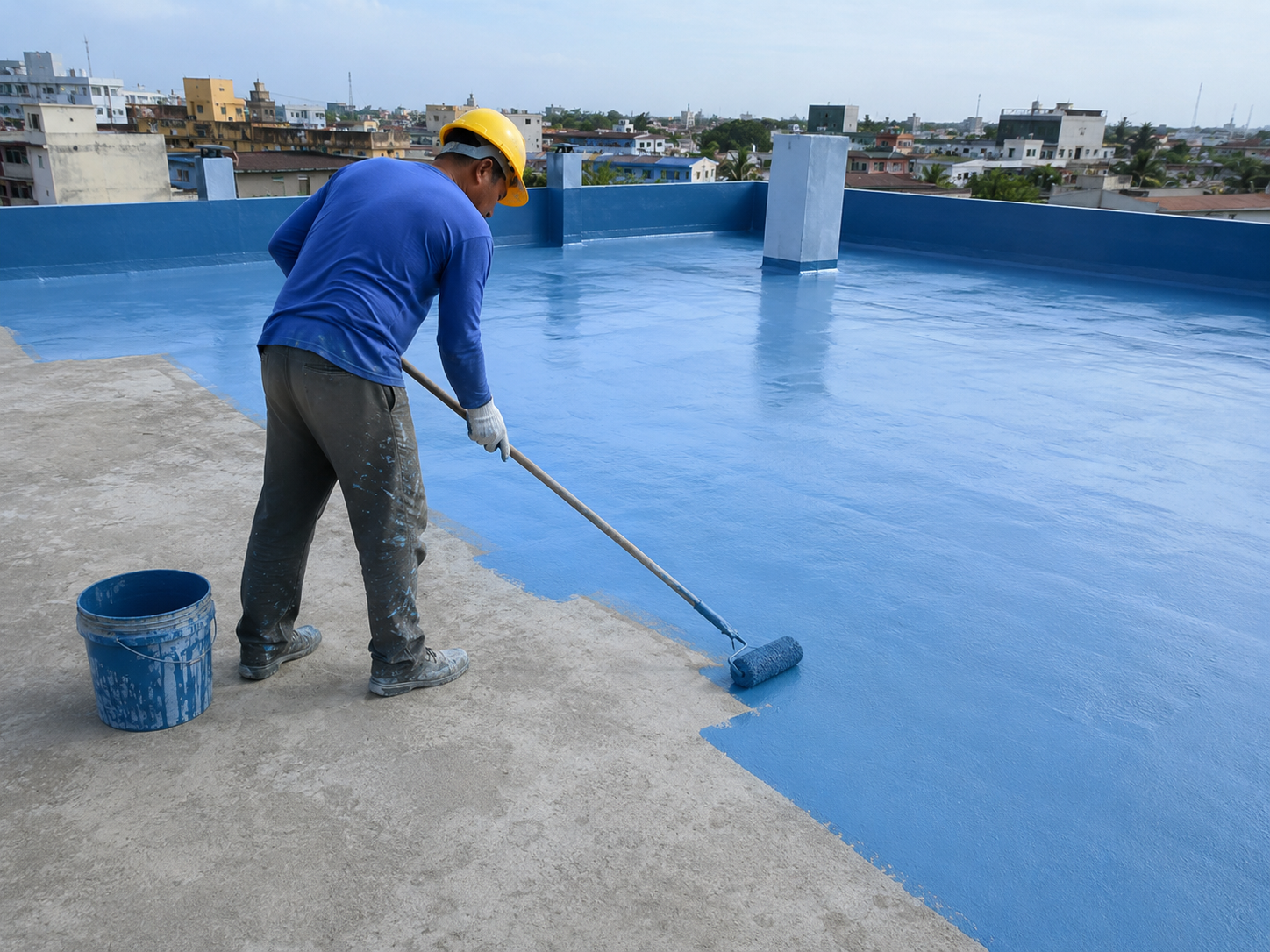
When water keeps ponding on a concrete roof, the roof is giving important information before any waterproofing product is opened. The low spots, outlets, screed condition and junction details determine whether a coating-only repair is reasonable or whether drainage correction must be included. A suitable waterproofing membrane can protect the roof, but it should not be used to hide a drainage defect that will continue stressing the system.
If your concrete roof in Johor Bahru keeps holding water after rain, you can contact QingLong Waterproofing to discuss the roof condition and identify a suitable waterproofing approach.