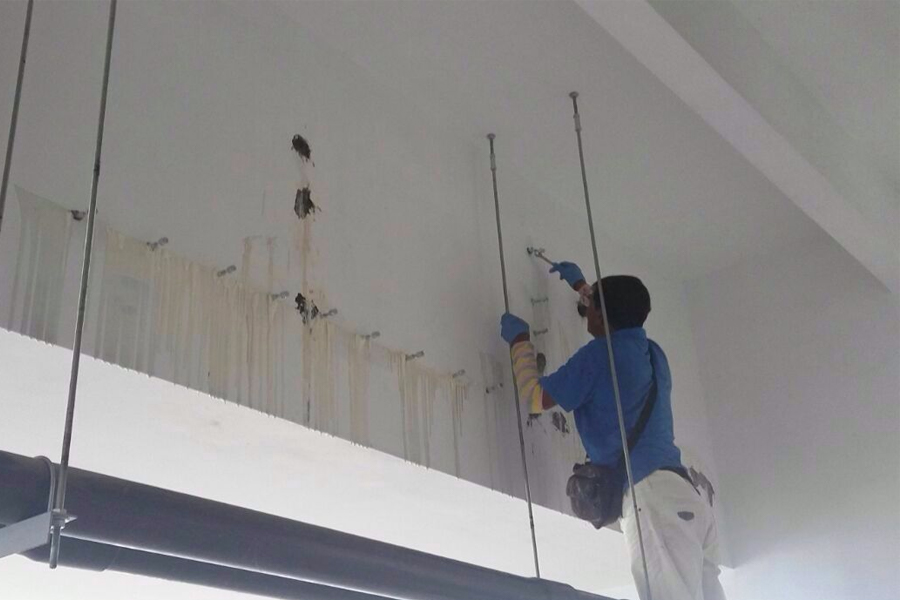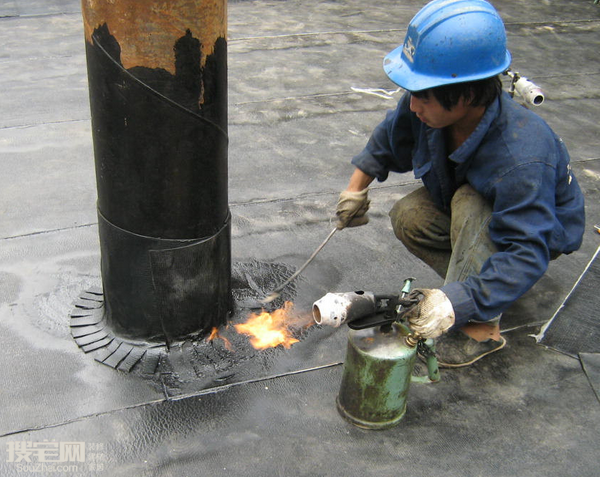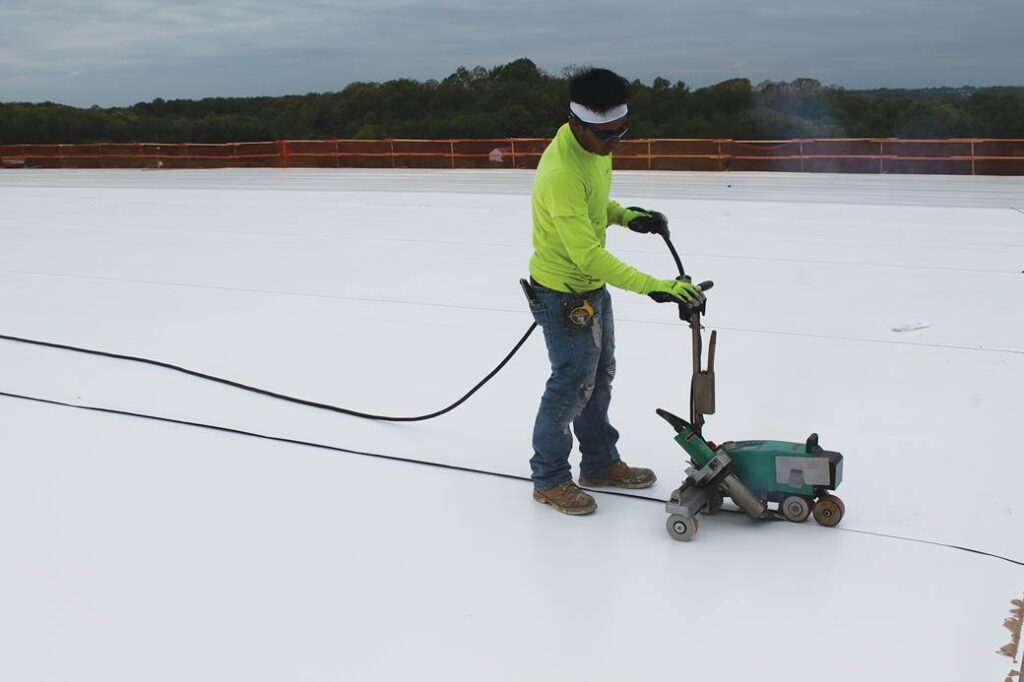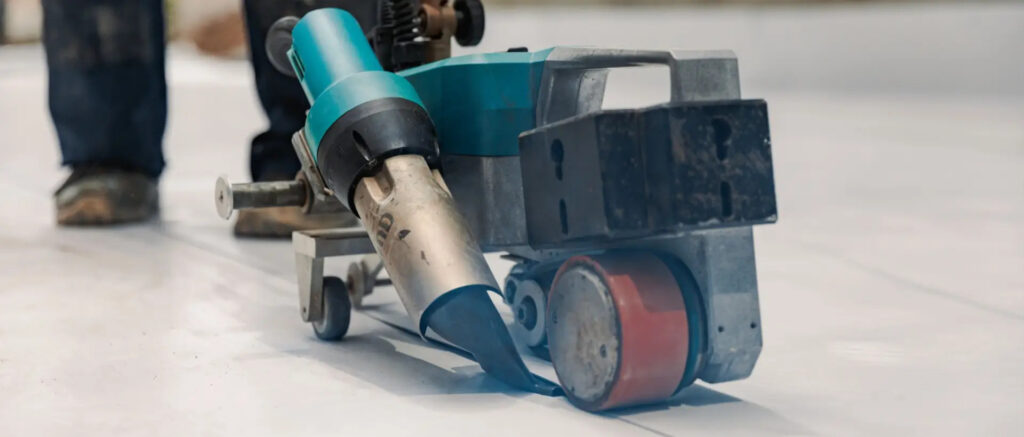
A concrete wall can look solid, yet water may still appear from one hairline crack, a wall-floor joint or the edge of a pipe sleeve during rain. For many property owners and building managers in Kuching, the attraction of flexible PU injection is clear: it can often be carried out from the inside without hacking the whole external side. But PU injection is not a universal waterproofing method. It works best when the leak path is narrow, identifiable and inside concrete or a joint that can be drilled and injected.
Flexible PU Injection Stops Water Paths, Not Every Waterproofing Failure
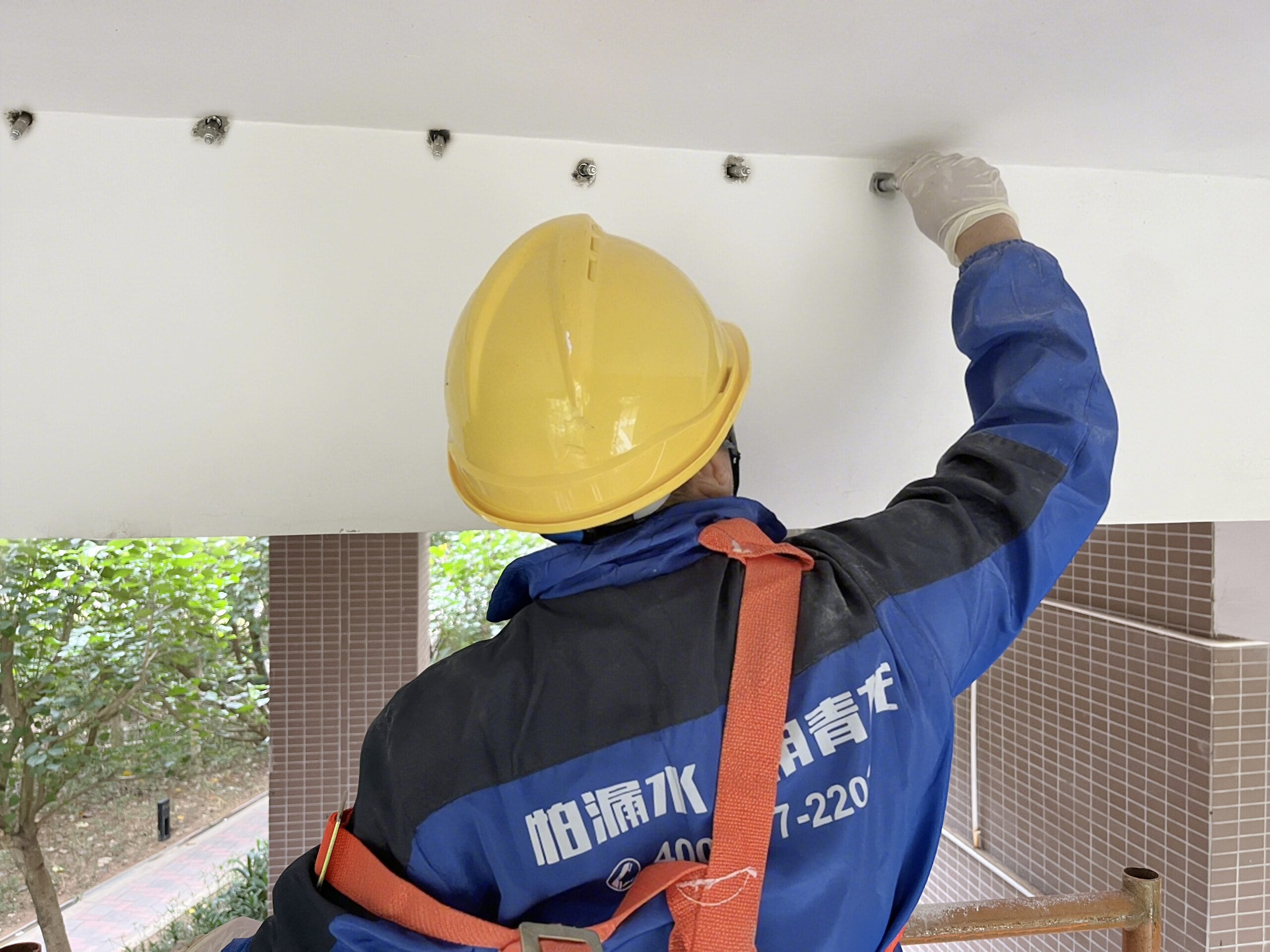
Flexible PU injection is mainly used to stop active water leakage through cracks, joints and voids in concrete. The polyurethane resin reacts with water, expands into the leak path and forms a flexible seal that can reduce or stop water flow where the water is entering through a confined route.
That sentence is important because it defines both the strength and the limitation of the method. PU injection is effective when water has a track that can be filled. It is less effective when water is spreading widely behind tiles, moving through a failed membrane, or entering through many uncontrolled surface defects.
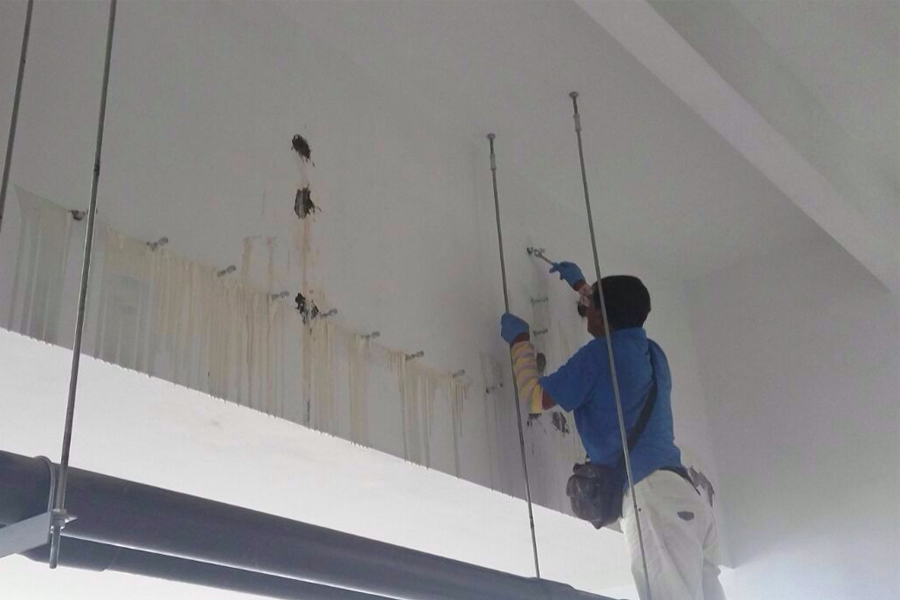
For Kuching buildings, this distinction matters because many leaks are first noticed indoors: damp basement walls, car park seepage, lift pit water, stains below a balcony, or water appearing at a pipe penetration. The visible water point is not always the original entry point. Before approving injection, the site should be checked to confirm whether the leak has a defined path suitable for injection.
Leaks That Flexible PU Injection Is Commonly Used to Treat
Flexible PU injection is most suitable for water ingress through concrete where the crack, joint or penetration can be reached from the dry or leaking side. It is often chosen when external excavation, hacking or full membrane replacement is difficult, disruptive or not immediately practical.
Typical suitable leak situations include:
Concrete wall cracks with active seepage
These may appear in basement walls, retaining walls, car parks, water tanks or plant rooms. If the crack is continuous and water is entering through the crack line, PU resin can be injected along the crack to seal the water path.
Wall-floor construction joints
Water often appears where a vertical wall meets a floor slab, especially in basements, lift pits and underground areas. This joint can be difficult to waterproof from outside after construction. Injection may help when the leakage is coming through the joint itself.
Pipe penetrations through concrete
Water can enter around sleeves, service pipes, conduits or poorly sealed openings. PU injection may be used around the annular gap or surrounding voids if the leakage path is accessible and the pipe detail is stable.
Honeycombed or porous areas in concrete
Poorly compacted concrete can create small channels for water movement. Injection may help in selected cases, but the extent of honeycombing should be assessed because widespread defective concrete may require more than injection.
Localised seepage in underground structures
Basement walls, retaining walls, inspection chambers and lift pits may have small but persistent water entry points. PU injection can be useful where the water entry is localised rather than spread across a large surface.
Flexible PU injection is usually a leak-stopping method, not a full external waterproofing system. It can seal a crack or joint from the inside, but it does not automatically improve drainage, repair a failed external membrane or correct structural movement that keeps reopening the leak path.
When PU Injection Is the Wrong First Choice
PU injection should not be selected just because water is visible. Some leaks need surface waterproofing, drainage correction, tile removal, sealant replacement or membrane renewal instead.
For example, a balcony leak into the ceiling below may come from failed waterproofing under the tiles, cracks in the screed, poor outlet detailing or gaps at the door threshold. Injecting PU into the underside of the slab may stop one visible drip temporarily, but it does not protect the balcony floor from continued water entry above. If water remains trapped in the screed, moisture may later appear at another point.
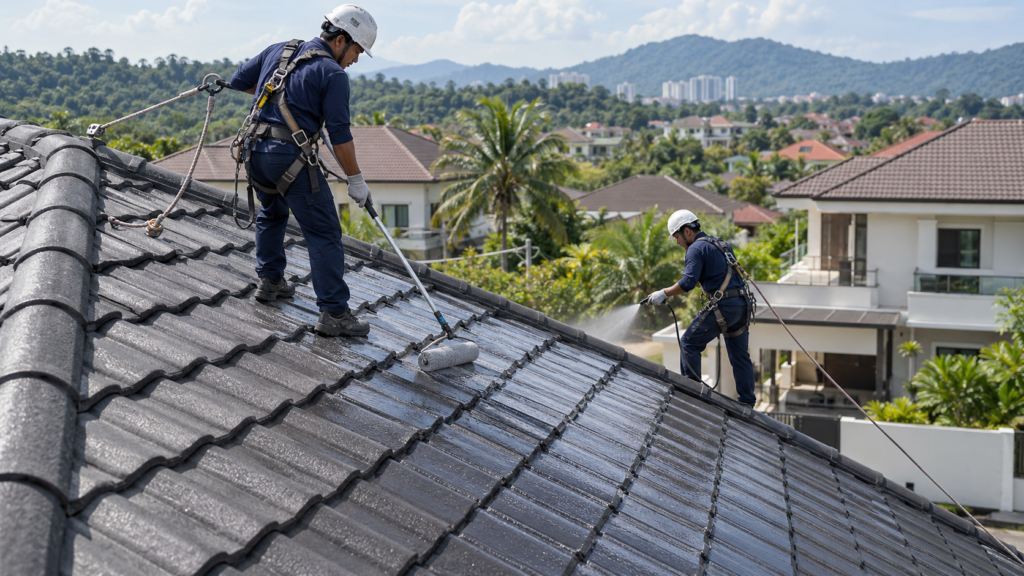
Exterior wall seepage is another common example. If rainwater is passing through hairline cracks, porous render or failed paint on an external wall, PU injection from inside the room is usually not the main repair method. The wall surface, cracks, window perimeters and coating condition should be assessed first. A transparent waterproof coating or exterior wall coating may be more relevant if the existing finish is suitable and adhesion can be achieved.
PU injection is also not a substitute for proper movement-joint detailing. Expansion joints, large structural joints and joints designed to move may require suitable joint sealants, waterstops or engineered joint systems. Filling such joints blindly with foam can restrict movement or fail when the joint opens again.
The Leak Must Be Confirmed Before Drilling Begins
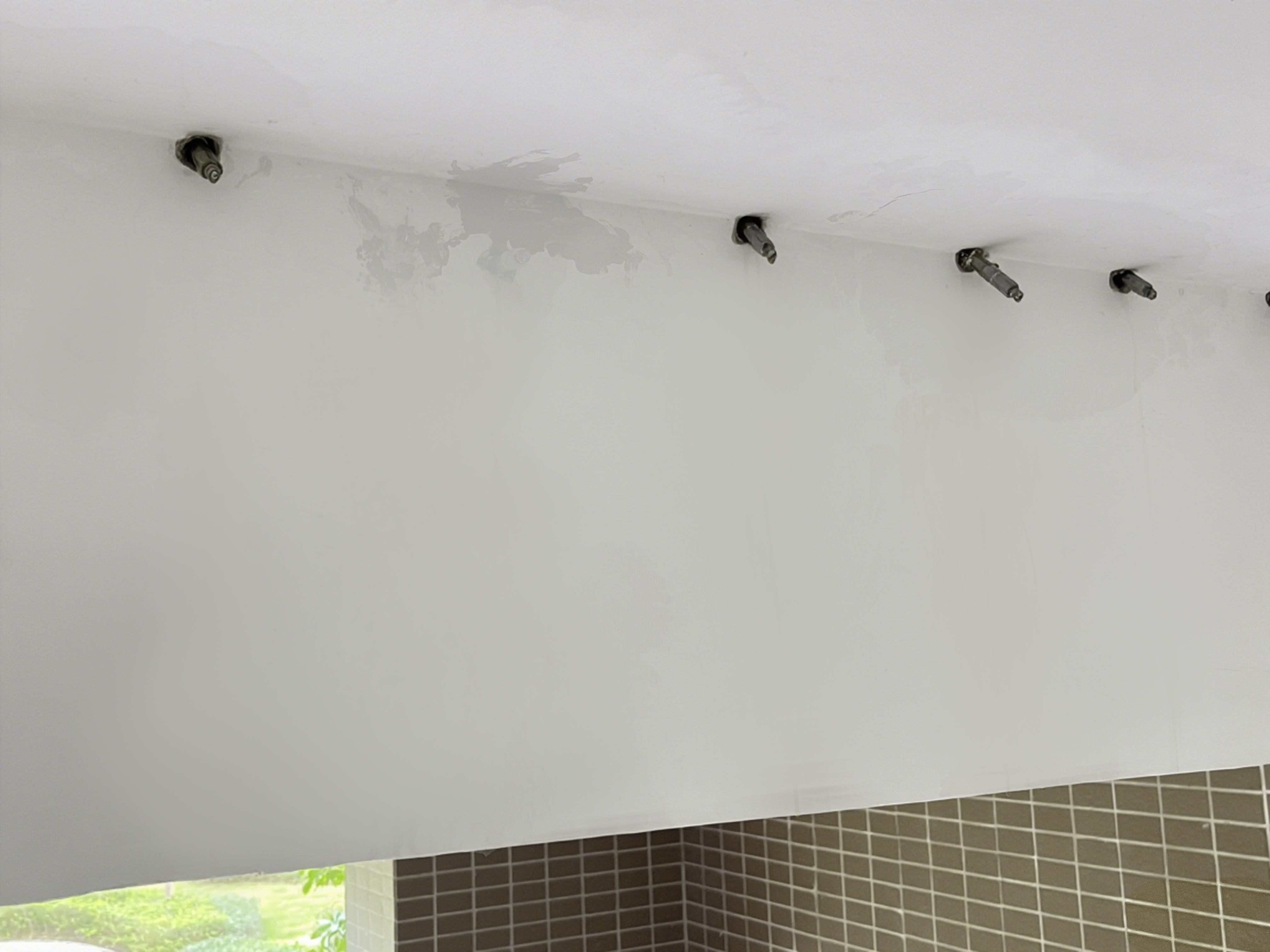
A good injection job depends heavily on diagnosis. Drilling too few ports may leave part of the leak path untreated. Drilling without understanding the concrete thickness, crack direction or water source may waste material and create unnecessary damage.
Before flexible PU injection is carried out, the inspection should usually establish several points:
whether the water is entering through a crack, joint, penetration or porous concrete;
whether the leakage is active, intermittent or only rain-related;
whether water pressure is low seepage or stronger flow;
whether the concrete around the leak is sound enough to hold injection pressure;
whether nearby finishes, services or embedded pipes may be affected by drilling;
whether the area needs follow-up waterproofing after the leak is stopped.
In Kuching, some leaks may only appear during prolonged rain or when external ground is saturated. If the leak is dry during inspection, staining, efflorescence, damp marks and previous water trails can still help identify the probable water route. However, the repair scope should reflect this uncertainty. Sometimes a water test or further opening-up is needed before injection is approved.
Flexible PU Injection Can Be Temporary or Part of a Larger Repair
Many people think PU injection either “works” or “does not work”. In practice, the result depends on what the injection is expected to achieve.
If the objective is to stop active water entering through a basement crack, flexible PU injection may be the right immediate repair. If the objective is to restore the complete waterproofing protection of a roof, balcony or planter box, injection alone is usually incomplete. It may stop the symptom at one location while the original waterproofing defect remains.
This is especially important for occupied commercial spaces, car parks, basements and plant rooms. PU injection can reduce disruption because work is often carried out from the inside. But if the building element is still exposed to constant external water pressure, poor drainage or recurring movement, the injected area should be monitored and, where necessary, combined with surface repair, joint treatment or drainage improvement.
Flexible PU injection should therefore be viewed as a targeted waterproofing method. It is highly useful when the problem is a defined leaking path in concrete. It is less reliable when used as a general answer for unexplained dampness.
Choosing Flexible PU Injection in Kuching: The Practical Decision
The practical question is not simply, “Can PU stop water?” It often can. The better question is, “Is this leak entering through a path that PU injection can reach and seal?”
For property owners, facility managers and contractors in Kuching, the decision should be based on the building element involved. A leaking basement crack, lift pit joint or pipe penetration is a different problem from a roof membrane failure, tiled balcony defect or exterior wall seepage. The same visible water stain may require very different repair methods.
QingLong Waterproofing provides waterproofing products, technical support and waterproofing services for residential, commercial, industrial and infrastructure projects. Where flexible PU injection is being considered, the site condition should be reviewed first so the repair is matched to the actual leak path rather than the most convenient assumption.
If you are dealing with an active concrete leak in Kuching and need to confirm whether flexible PU injection is suitable, you can contact QingLong Waterproofing for a site-specific recommendation.
Conclusion
Flexible PU injection is most useful when water is travelling through a crack, joint, pipe penetration or localised void in concrete. It is not a replacement for roof waterproofing, balcony membrane repair, exterior wall coating or proper movement-joint detailing. Before drilling starts, the key task is to confirm the leak path. Once the water route is understood, PU injection can be used correctly either as a targeted repair or as one part of a wider waterproofing plan.