A concrete leak in a Subang condominium car park, shoplot ceiling or basement wall often creates one immediate question: can it be stopped from the inside without hacking the whole area? PU injection is commonly considered because it can seal certain active water paths through concrete from the accessible side. But it is not a universal waterproofing method. The important decision is not whether PU injection can stop water, but whether the leak is actually travelling through a crack, joint or void that injection grout can reach and seal.
PU Injection Repairs Water Paths Inside Concrete, Not Every Damp Surface
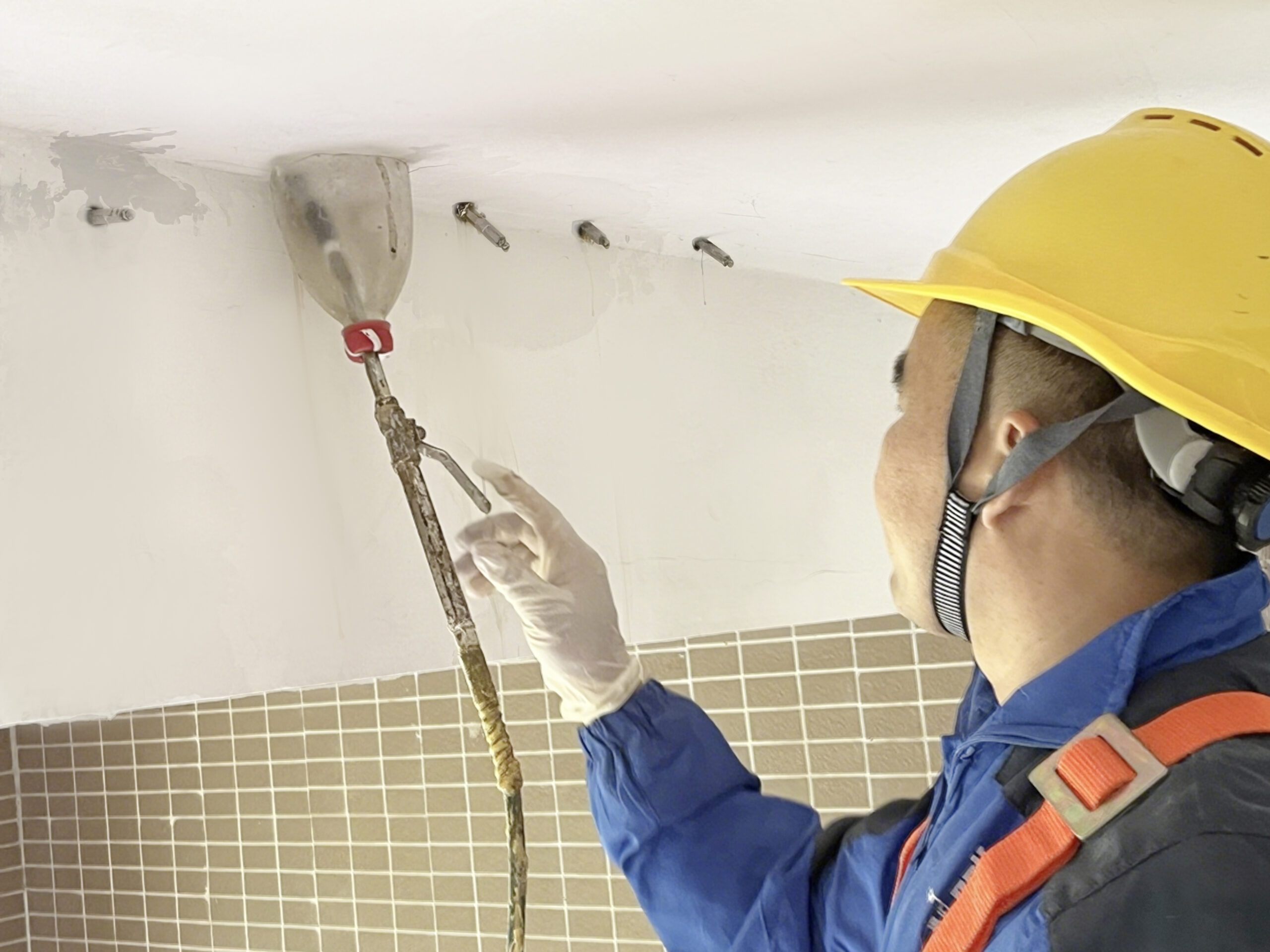
PU injection, or polyurethane injection, is used to inject grout into cracks, joints, honeycombed concrete or voids where water is actively passing through. The grout reacts with moisture and expands or gels, depending on the product type, to block the water path within the concrete.
PU injection is suitable when the leak has a defined path through concrete, such as a crack, construction joint, pipe penetration gap or localised honeycomb area. It is less suitable when water is entering over a wide exposed surface, through failed roof waterproofing, behind tiles, or through an unknown concealed route that cannot be isolated.
This distinction matters because many visible leaks are only the exit point. A ceiling drip in a car park may come from a slab crack, but it may also come from a failed floor trap, a pipe sleeve, a planter box detail or water travelling along the slab before appearing elsewhere. PU injection works best when the entry route and water path can be reasonably identified.
For occupied buildings in Subang, such as apartments, offices, retail units and factories, PU injection is often considered because access from the external side may be difficult. It can sometimes reduce hacking and disruption, but it still requires proper diagnosis before drilling and injecting.
Concrete Leaks That Are Usually Good Candidates for PU Injection
PU injection is most useful for localised concrete leakage where water is moving through a narrow or traceable defect. These are the situations where the method is often considered.
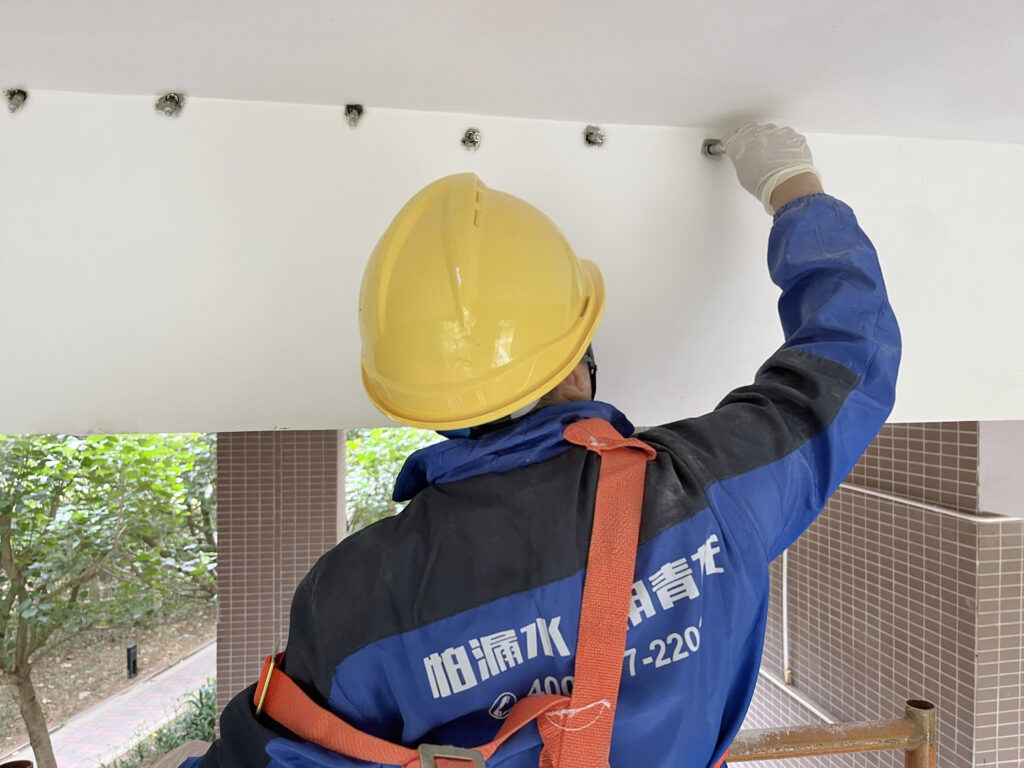
A leaking reinforced concrete wall in a basement, lift pit, water tank external wall or retaining structure may be repairable by PU injection if the water is coming through cracks or construction joints. Injection ports can be drilled along the defect so the grout can travel into the water path rather than simply covering the surface.
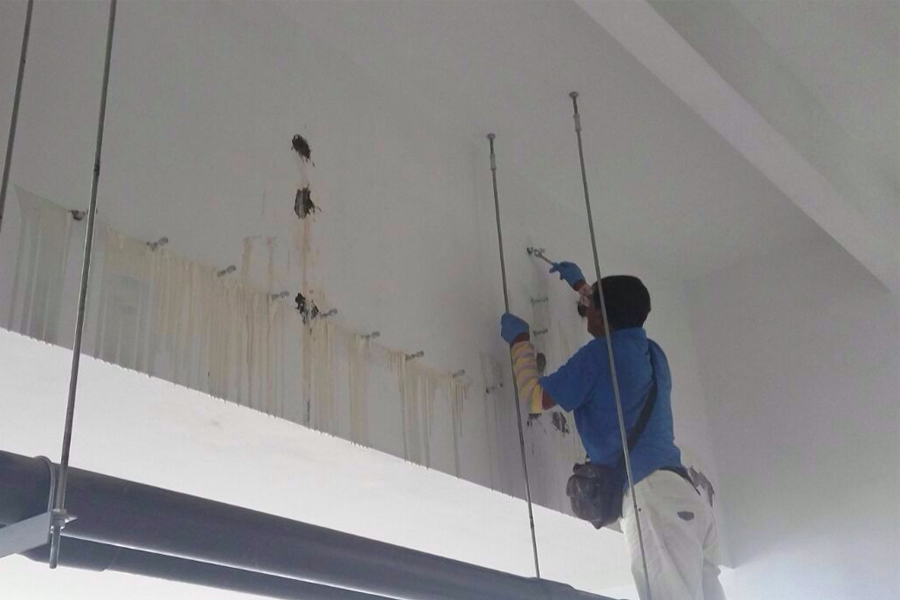
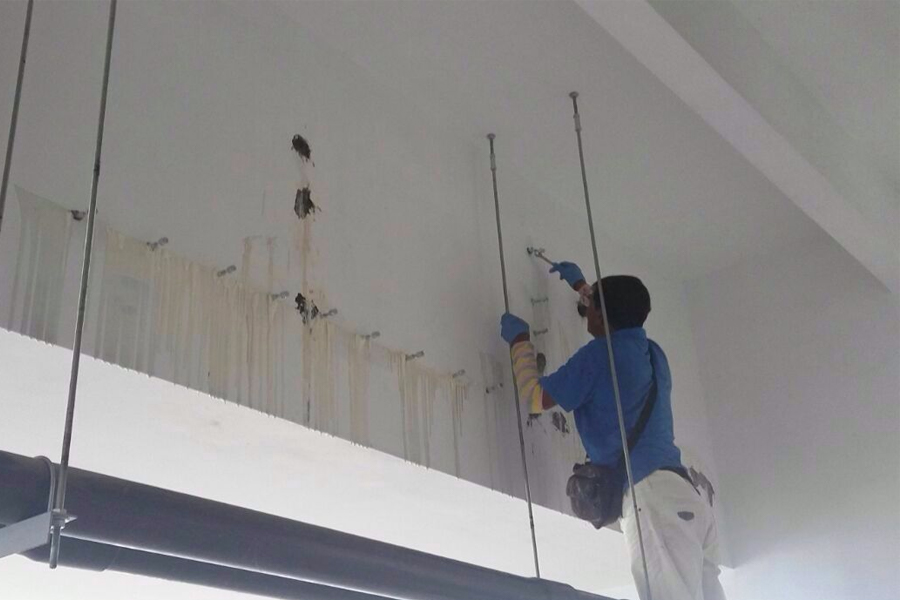
A slab crack with active dripping from below can also be a candidate, especially where the upper side is not accessible or cannot be opened immediately. For example, a car park ceiling below a wet area, driveway slab or podium area may be treated from the underside if the crack line is visible and the water path is confirmed.
Pipe penetrations through concrete are another common application. Water can pass along the gap between the pipe sleeve and concrete, especially if the original sealing detail has failed. PU injection may help seal the annular gap, but the pipe condition and movement should also be checked. If the pipe itself is leaking, injection will not solve the plumbing defect.
Honeycombed concrete or local voids may also be repairable when water is passing through poorly compacted concrete zones. In these cases, the challenge is not only sealing the immediate leak but understanding whether the surrounding concrete remains sound enough for injection to be effective.
Leaks Where PU Injection May Be the Wrong Main Repair
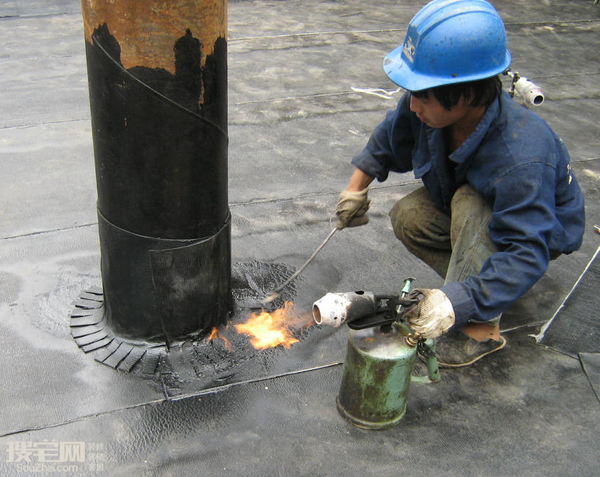
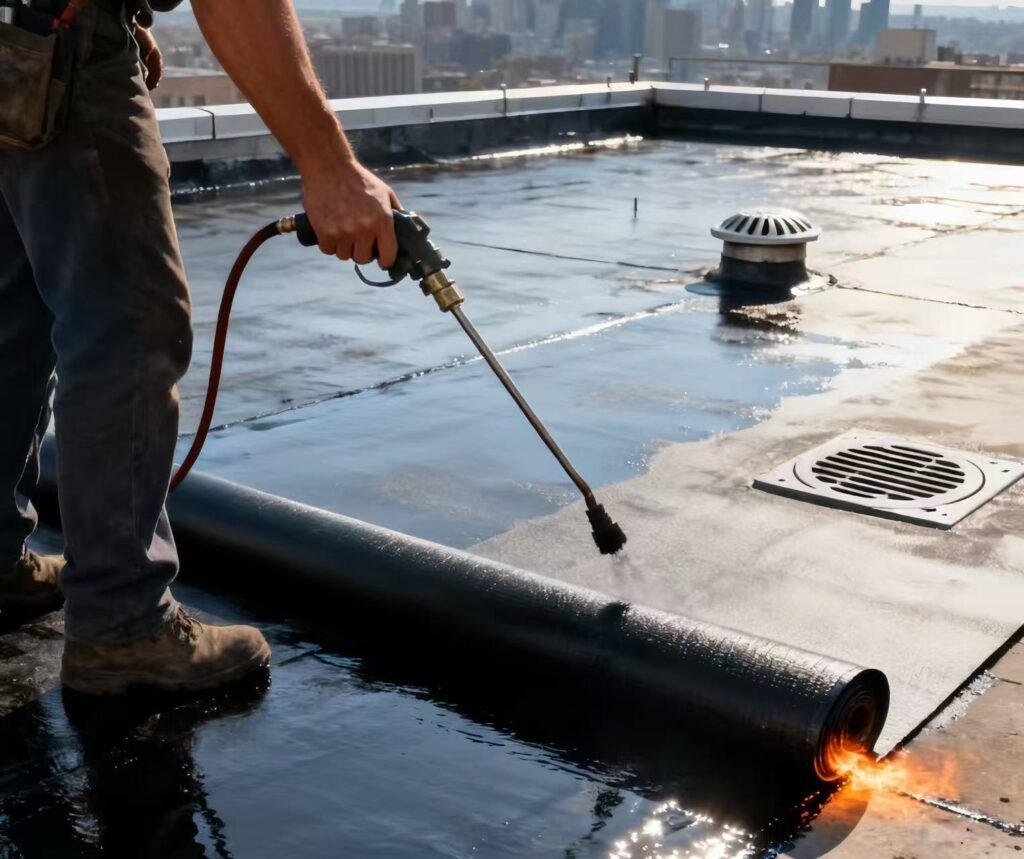
PU injection becomes less reliable when the problem is not a defined concrete water path. One common example is leakage from a failed roof, balcony or podium waterproofing membrane. If the top waterproofing layer has broken down over a wide area, injection from below may stop one drip but leave water trapped in the screed or travelling to another weak point.
This is why PU injection should not automatically replace proper waterproofing renewal. If water is entering through a tiled balcony floor, cracked screed, failed drainage outlet or wall-floor junction, the more durable repair may require treating the exposed surface, the outlet detail or the waterproofing build-up above the slab.
PU injection is also not the correct answer for condensation, rising damp, façade seepage through porous render, or plumbing leakage. These conditions can create damp patches that resemble concrete leakage, but the mechanism is different. Injecting concrete will not stop moisture that is coming from air humidity, defective pipework or rain entering through an external wall system.
Moving joints need special caution. Expansion joints and movement joints are designed to move. If the joint is active, simply filling it with rigid or unsuitable injection material may not last. The repair may need a proper joint waterproofing system, sealant replacement, waterstop repair or other detail that accommodates movement.
What Should Be Checked Before Approving PU Injection in Subang
Before carrying out PU injection in Subang, the inspection should establish whether the leak is localised, traceable and injectable. This does not always require destructive hacking, but it does require more than looking at the wet patch.
Useful checks include:
whether the leak follows a visible crack, joint line, pipe sleeve or honeycomb zone
whether the water is active only during rain, during water usage, or continuously
whether there is an accessible injection side with enough concrete thickness
whether the surrounding surface is sound enough for drilling and packer installation
whether there are signs of structural movement, corrosion or repeated crack widening
whether the source may be from plumbing, drainage, roof waterproofing or façade seepage instead of the concrete itself
The timing of the leak is especially useful. A leak that appears only after rain may suggest roof, balcony, podium, façade or external wall water entry. A leak that appears when an upper-floor bathroom is used may point to plumbing, floor trap or wet-area waterproofing. A constant seepage from a basement retaining wall may indicate groundwater pressure or a construction joint issue.
PU injection should be approved when inspection shows that water is travelling through an injectable concrete defect. If the visible leak is only the exit point of a wider waterproofing failure, injection may become a spot repair rather than a complete solution. The repair scope should match the water-entry mechanism, not just the wet mark.
Why Some PU Injection Repairs Fail After Initially Stopping the Leak
A PU injection repair may appear successful at first because the active drip stops. Failure usually occurs when the original diagnosis was incomplete or the treated path was only one of several routes.
For example, sealing one crack in a slab does not repair a failed waterproofing layer above the slab. Water may remain trapped in the screed and later emerge through another crack, pipe opening or joint. The injection did not necessarily “fail”; it may have sealed the treated path while the main water-entry problem remained unresolved.
Another issue is crack movement. If the concrete crack continues to open and close due to structural movement, thermal movement or loading, the injected seal may be stressed beyond its intended function. In these cases, the crack should be assessed to determine whether it is only a waterproofing defect or also a structural concern.
Poor drilling layout can also reduce effectiveness. Injection holes must be positioned so the grout intersects the crack or void, not merely the surface near the leak. The grout must also be injected at suitable pressure and sequence, subject to site conditions, so it fills the path rather than escaping through the easiest opening.
How PU Injection Fits Into a Wider Waterproofing Decision
For many concrete leaks, PU injection is best understood as a targeted leak-sealing method. It can be valuable when access is limited, when water is active, or when opening the positive side is impractical. But it should not be treated as a complete waterproofing system for roofs, balconies, podium decks or wet areas if those areas need surface waterproofing renewal.
A practical approach is to decide whether the building needs a localised injection repair, a combined repair, or a full waterproofing system renewal. A basement wall crack may need injection only. A leaking podium slab may need injection to stop active water first, followed by surface waterproofing repair above. A bathroom leak may need tile removal and wet-area waterproofing rather than injection from the ceiling below.
QingLong Waterproofing provides waterproofing materials, leak repair solutions and site-based waterproofing services for residential, commercial and industrial properties. Where PU injection is being considered, the key is to confirm whether the concrete defect is suitable for injection or whether another waterproofing method is more appropriate.
Conclusion
PU injection is useful for certain concrete leaks in Subang, especially cracks, construction joints, pipe penetration gaps and localised voids where water has a defined path. It is less suitable when the leak comes from a failed waterproofing layer, plumbing defect, façade seepage or moving joint that needs a different repair detail. Before approving the work, the inspection should answer one question clearly: is this a concrete water path that injection can reach and seal?
If you need help assessing whether PU injection is suitable for your concrete leak, you can contact QingLong Waterproofing for a site-based recommendation.
Frequently Asked Questions (FAQs)
1. Can PU injection stop an active concrete leak immediately?
PU injection can often reduce or stop active water leakage when the water is passing through an injectable crack, joint or void. The result depends on the defect, water pressure, access and correct injection method.
2. Is PU injection suitable for balcony or bathroom leaks?
Sometimes, but not always. If the leak is caused by failed waterproofing above the slab, PU injection from below may only seal the exit point. The balcony or bathroom waterproofing layer may still need repair.
3. Can PU injection repair structural cracks?
PU injection is mainly for sealing water paths. If the crack suggests structural movement, widening or concrete distress, the structural condition should be assessed separately before deciding the repair method.
4. Does PU injection require hacking?
PU injection usually requires drilling injection points, but it may avoid large-scale hacking when the leak path is accessible from one side. However, some leaks still require opening the affected area to repair the actual source.