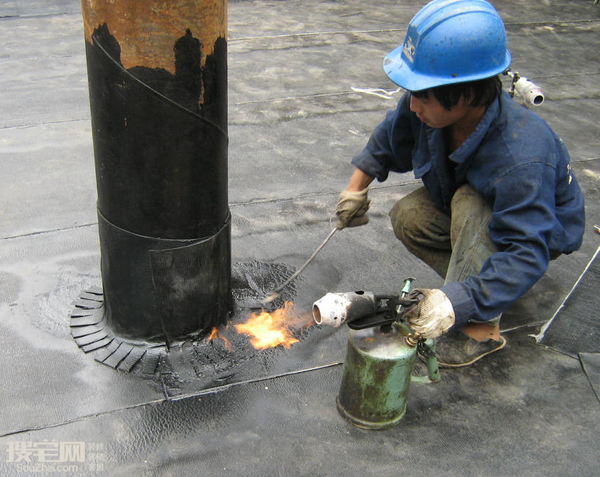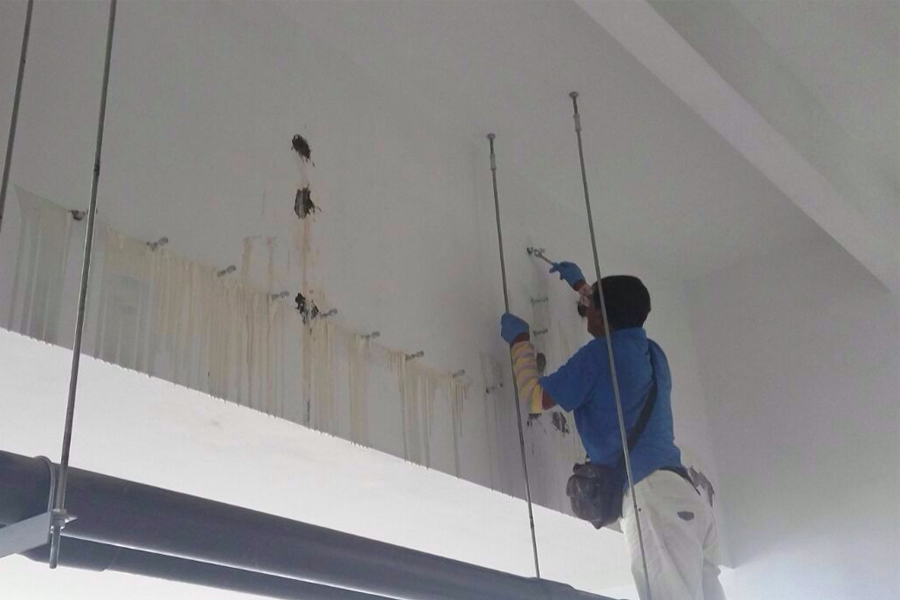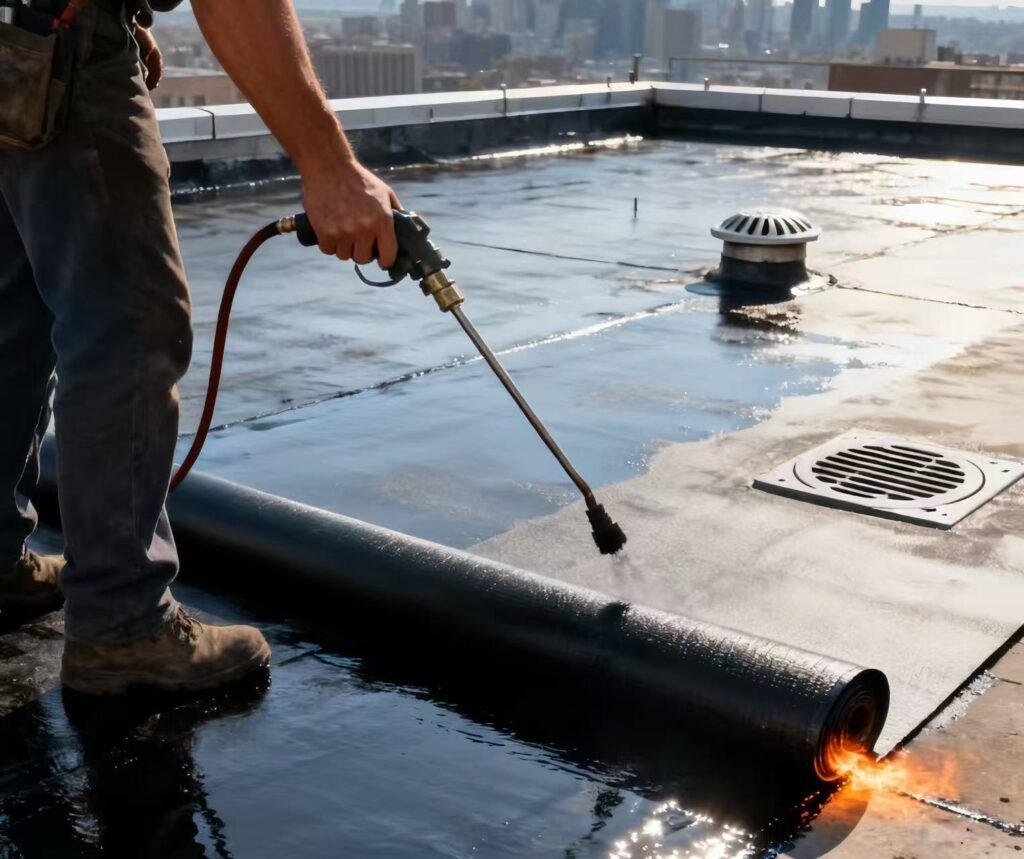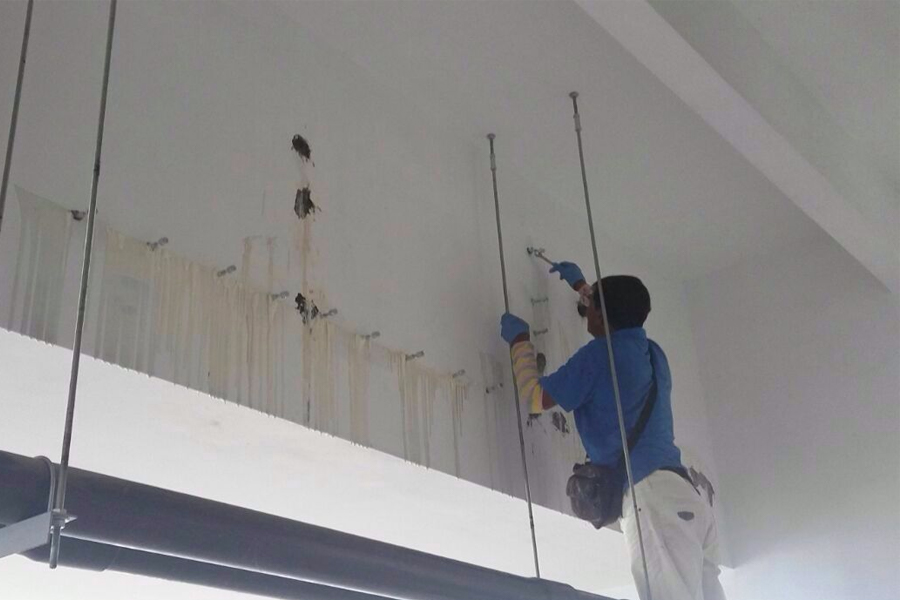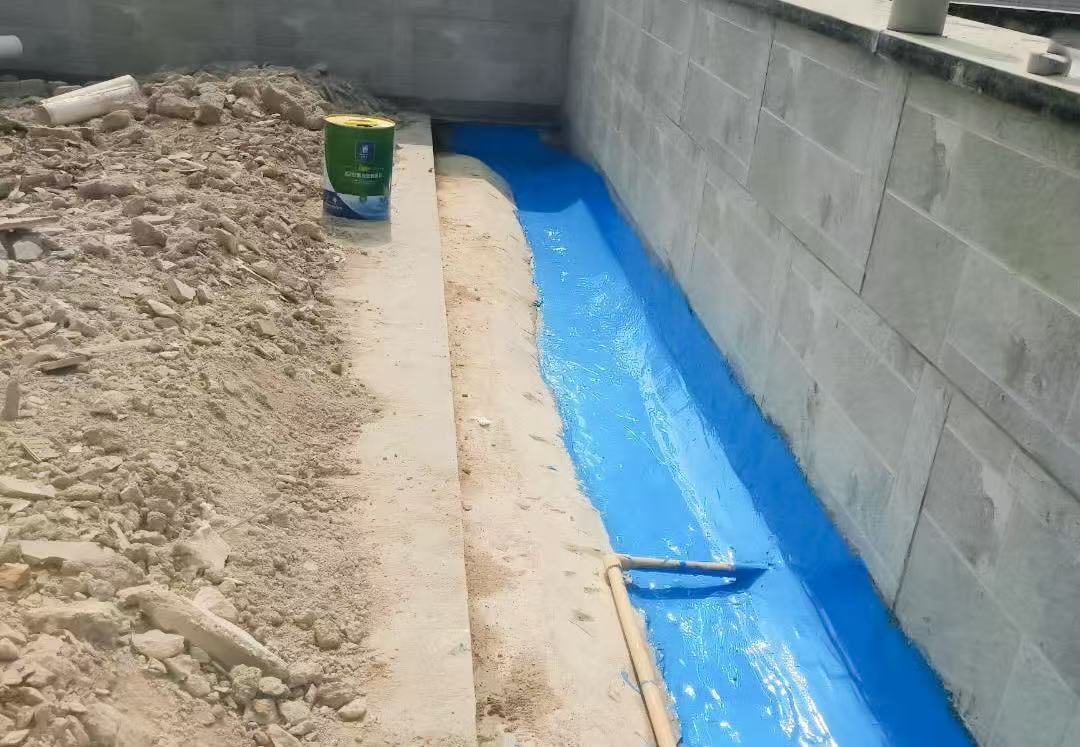
A roof, balcony, car porch or flat external area may look “properly drained” because it already has an outlet, gutter or floor trap. Yet after rain, water still sits in shallow ponds for hours. For many Subang properties, the first mistake is treating ponding water as only a drainage accessory problem. Sometimes the outlet is blocked. Sometimes the outlet is in the wrong position. Sometimes the surface itself has no effective fall, so water never reaches the drain in the first place.
Ponding Water Usually Means the Drainage Path Is Not Working as a Complete System
Good drainage is not just about having a drain. Water needs a continuous path from the surface to the outlet, then from the outlet to a discharge point that can actually take the flow away.
For flat roofs, balconies, car porches and service areas, ponding often happens when one part of this path fails. The surface may be uneven. The screed may have settled. The outlet may be slightly higher than the surrounding floor. A gutter may be too shallow or partially blocked. A pipe may discharge too slowly during heavier rain.
Water still pools after rain when the surface fall, outlet level, drainage capacity or discharge route does not work together. Adding another drain may not solve the problem if the surface still slopes away from it, or if the existing waterproofing layer traps water in low spots. The drainage path must be checked from the highest point to the final discharge.
This is why proper Subang drainage solutions should start with observation, not immediate hacking or recoating. The important question is not only “Where is the drain?” but “Can water naturally reach it without being trapped?”
The Lowest Point May Not Be Where the Drain Is Located
One common site finding is simple but important: the drain is not at the true lowest point.
This can happen after renovation, roof extension, tile replacement, screed repair or repeated patching. A floor trap may have been installed correctly years ago, but later works changed the surface level around it. On a balcony, new tiles may create a slight hump before the outlet. On a flat roof, patch repairs around cracks or penetrations may leave ridges that hold water. On a car porch, settlement near tyre paths may form shallow depressions away from the drain.
When the outlet sits higher than the ponding area, water cannot drain by itself. It will remain until it evaporates or is manually swept away. In this situation, replacing the drain cover or applying a waterproof coating over the same surface does not correct the basic drainage geometry.
The practical inspection method is to look at ponding after rain, not only during dry conditions. Water marks, dirt rings and algae staining often show where water repeatedly sits. These marks help identify whether the problem is a local low spot, a wider fall issue or a blocked discharge route.
Blocked Outlets Are Easy to Blame, but Not Always the Main Cause
Blocked drains do cause ponding, especially where leaves, silt, roof debris, construction dust or broken sealant pieces collect at the outlet. In some properties, air-conditioning discharge, planter soil or nearby trees increase the amount of debris entering the drainage system.
However, a clear outlet does not prove that the drainage design is working. If water pools even when the outlet is clean, the issue may be surface fall, insufficient outlet capacity or poor detailing around the drain.
A useful check is to observe how water behaves during and after rainfall. If water rises around the drain during rain but eventually clears, the outlet or pipe may be undersized or partially restricted. If water remains in isolated patches away from the drain, the surface profile is more likely the problem. If water drains slowly only during very heavy rain, the issue may involve capacity rather than blockage alone.
For building owners, this distinction matters because the repair scope changes. Cleaning, flushing or replacing grating may solve a blockage problem. Rebuilding falls, lowering outlets or modifying drainage details is a different type of work.
Waterproofing Can Be Affected Even If the Drainage Problem Looks Minor
Some owners tolerate ponding because the water is shallow. The risk is that waterproofing systems are often designed to resist water exposure, but not all systems are intended for continuous standing water in the same way.
Ponding can increase stress on joints, cracks, tile grout lines, coating defects, pipe penetrations and wall-floor junctions. On an exposed roof, standing water can also collect dirt and organic growth, which may affect the surface condition over time. On tiled balconies or car porches, water may enter through grout cracks or failed sealant joints and become trapped under tiles.
A waterproofing coating should not be treated as a substitute for proper falls. If water remains in the same location after every rain, the waterproofing material must be selected with that exposure condition in mind, and the product specification should be checked. Some systems may require protection, proper curing, compatible substrates or a minimum surface preparation standard before application.
For this reason, QingLong Waterproofing usually looks at drainage and waterproofing together. A roof or balcony repair that only seals visible cracks may fail again if water continues to sit on the same weak area.
Previous Repairs Can Accidentally Make Ponding Worse
Ponding sometimes appears after a repair that was meant to solve leakage. This does not always mean the repair was careless. It may mean the repair addressed water entry but changed the water path.
For example, adding mortar around a pipe penetration can create a raised ring that blocks surface flow. Applying multiple coating layers without correcting low spots may follow the existing uneven profile. Replacing tiles can slightly alter floor levels near the outlet. Installing a new threshold, kerb or edge detail may stop water from escaping naturally.
The repair may have looked reasonable because the visible leak, crack or failed joint needed attention. The unresolved issue is whether the repaired surface still drains properly.
Before approving another repair, it is useful to check:
whether the ponding area existed before the previous repair
whether new ridges, raised patches or tile level changes were introduced
whether the outlet is lower than the surrounding finished surface
whether water is trapped near wall-floor junctions, corners or penetrations
whether the waterproofing layer is exposed, tiled over or hidden under screed
This helps avoid repeating the same cycle: patch, wait for rain, see ponding again, then patch another area.
The Right Drainage Solution Depends on What the Inspection Proves
There is no single best drainage solution for every Subang property because ponding can come from different failures. The correct approach depends on what the water behaviour shows.
If the outlet is blocked, cleaning and maintenance may be enough, provided the surface fall is still correct. If the outlet is too high, the drain detail may need modification. If the surface has widespread poor fall, local patching may not be enough; the screed or finishing level may need to be corrected. If waterproofing has already deteriorated, drainage correction and waterproofing renewal may need to be planned together.
For tiled areas, retaining the tiles may limit what can be corrected. Surface-applied transparent waterproofing may reduce water entry through minor surface defects, but it cannot rebuild the slope below the tiles. For exposed roof areas, a compatible roof waterproofing system may be considered after confirming that water will not remain trapped beyond the system’s intended conditions.
This is also where product selection matters. QingLong offers waterproofing materials such as roof waterproofing coatings, transparent exterior wall coatings, waterproof sealants, K11 waterproof slurry and related waterproofing products for different applications. The suitable system depends on the substrate, exposure, drainage condition, movement and finishing requirement. It should not be selected based on the product name alone.
 When Ponding Should Be Treated as Urgent
Not every shallow water mark is an emergency. But ponding deserves earlier attention when it appears near cracks, outlets, pipe penetrations, parapet walls, door thresholds or internal ceiling stains. These are details where water has more opportunity to enter the building fabric.
For commercial or industrial buildings, repeated ponding can also affect maintenance planning. A small low spot on a roof may become more costly if it sits near equipment supports, cable penetrations or expansion joints. For homes, ponding above a bedroom, kitchen or extended living area should not be ignored simply because the ceiling has not stained yet.
The key is to separate appearance from risk. A dry ceiling does not always mean the waterproofing layer is safe. It may only mean water has not yet found a path through the slab, joint or penetration.
Conclusion
Water pooling after rain is not solved by guessing. The site must show whether the problem is blockage, poor fall, outlet level, drainage capacity, previous repair build-up or waterproofing deterioration. Once that is clear, the repair can be planned properly instead of adding another layer over the same trapped water path.
If ponding water is affecting your roof, balcony, car porch or external area, QingLong Waterproofing can help assess the drainage and waterproofing condition and recommend a suitable next step. You can contact QingLong Waterproofing for a site discussion.