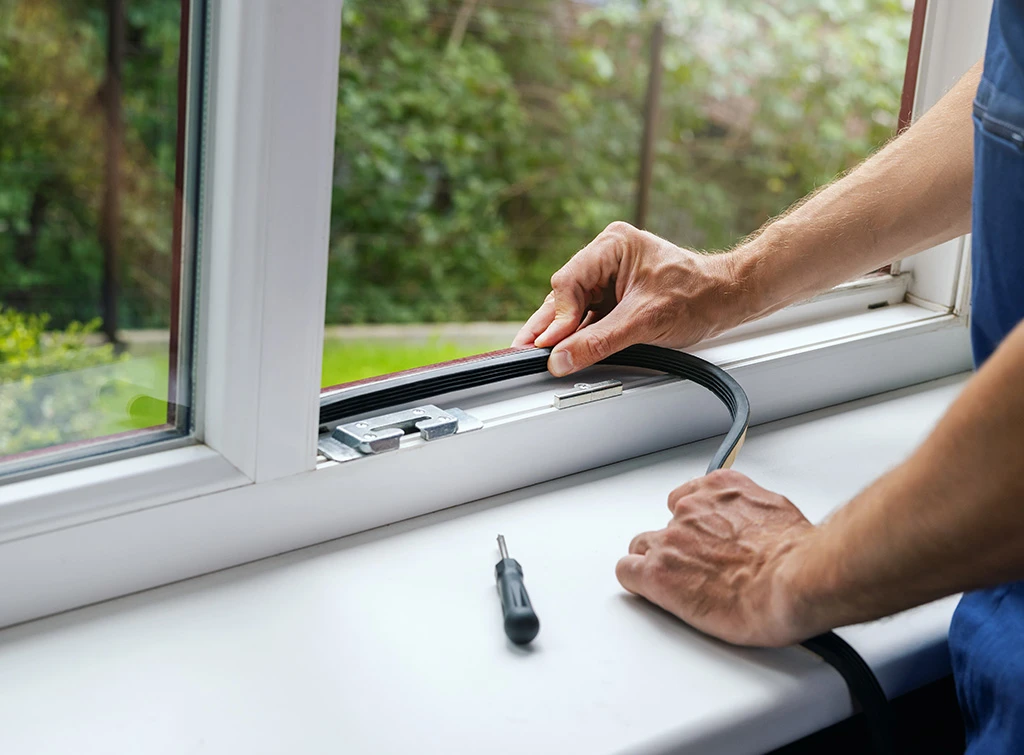
A commercial roof leak in Johor Bahru is rarely just a “roof problem”. It can affect tenants, stock, equipment, ceilings, electrical services and operating hours. The difficult part is choosing a waterproofing system that fits the actual roof condition, not simply applying the most familiar coating. A flat concrete roof with ponding water, a metal deck roof with ageing fasteners and a roof crowded with air-conditioning plinths all need different thinking before any material is selected.
The Right System Starts With the Roof’s Job, Not the Product Name
For commercial roof waterproofing in Johor Bahru, the suitable system depends on the roof structure, exposure, drainage, traffic and interruption allowed during repair. A coating may suit a sound exposed concrete roof, while a reinforced membrane or detailed joint treatment may be needed where cracks, penetrations, ponding or movement are present.
This is the first decision facility managers often need to make: are you protecting a roof surface that is generally sound, or are you trying to compensate for deeper defects in the roof build-up?
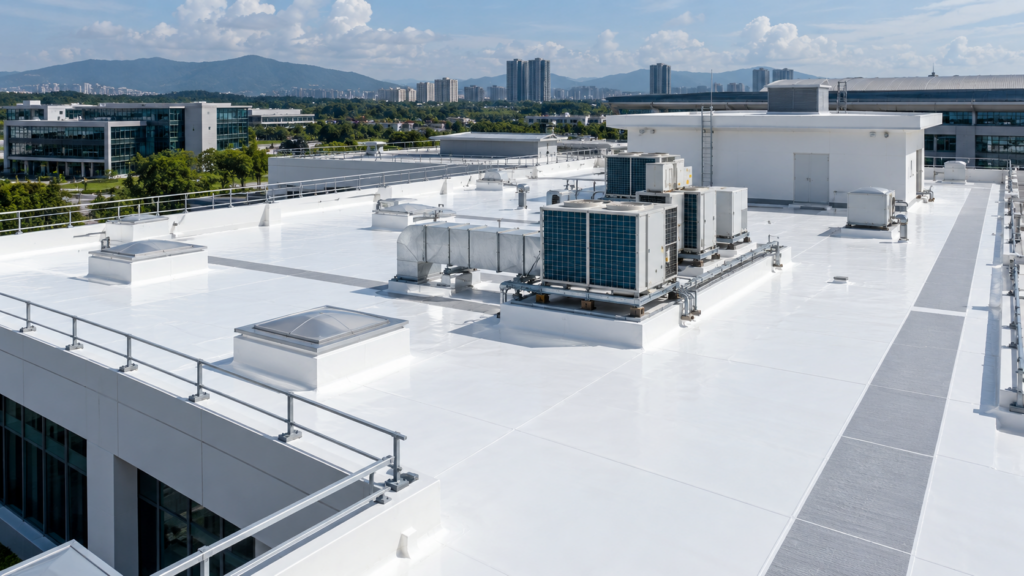
A commercial roof usually has more demands than a residential roof. It may carry air-conditioning units, cable trays, exhaust ducts, water tanks, maintenance walkways or solar equipment. Each support, pipe penetration and plinth can become a leakage point if the waterproofing system is not detailed properly.
In Johor Bahru, sudden heavy rain can also expose poor falls and blocked outlets quickly. The issue is not only rain exposure; it is whether water drains away before it stresses seams, coating laps, cracks and terminations. A waterproofing product can perform well on the right substrate, yet still fail early if the roof holds water around weak details.
Flat Concrete Roofs Need a Drainage and Substrate Check First
Many commercial buildings use reinforced concrete flat roofs, either exposed or finished with screed, tiles or protective topping. For these roofs, the waterproofing decision should begin with three checks: whether water drains correctly, whether the existing surface is bonded and whether cracks are active or stable.
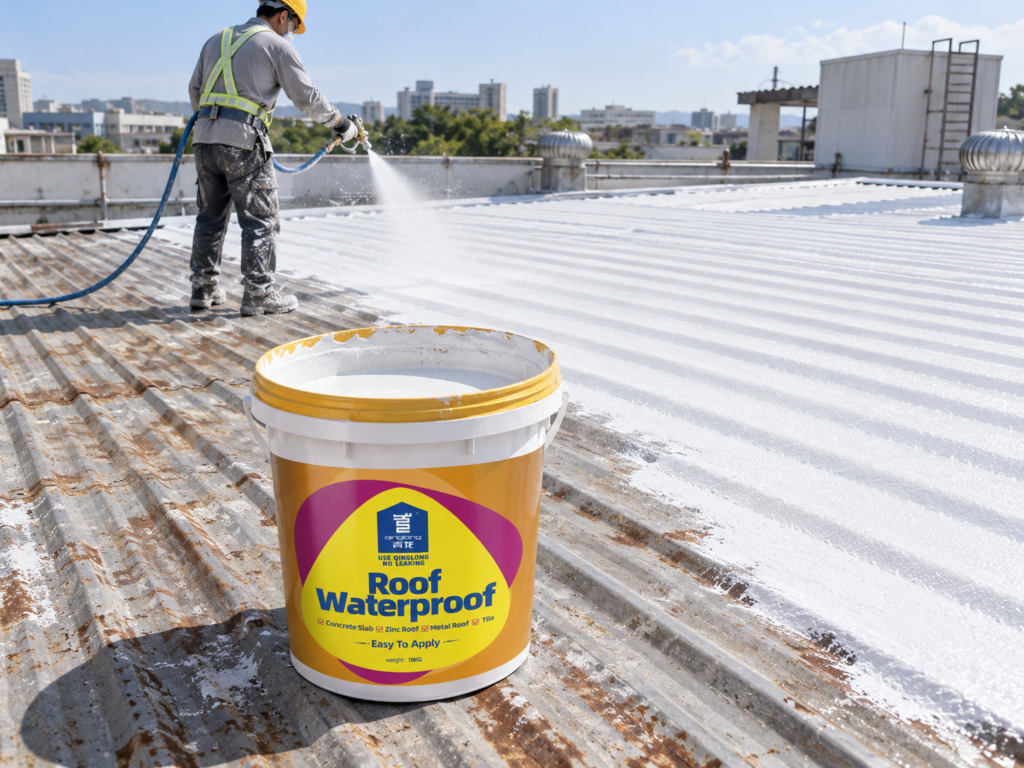
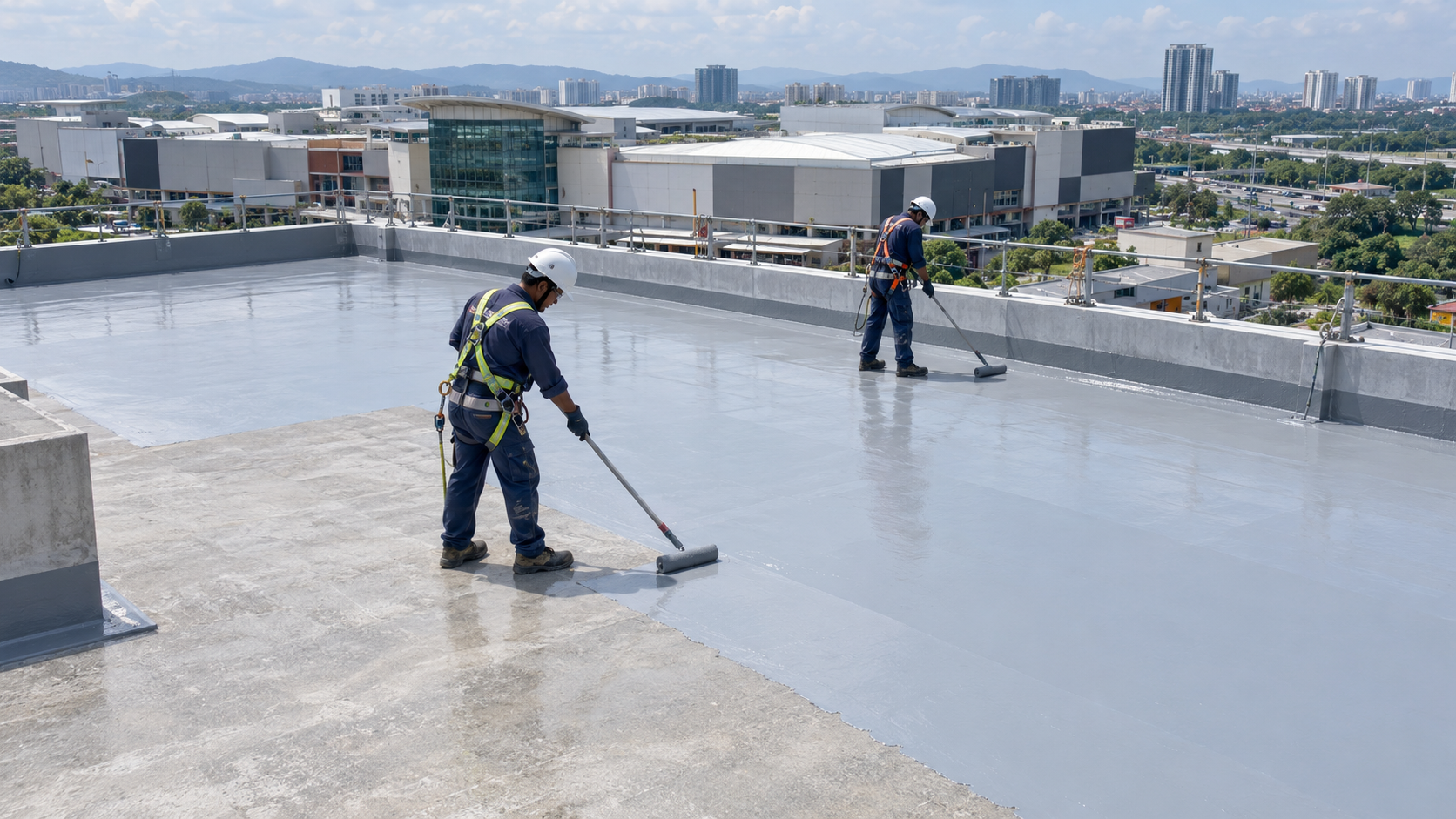
If the concrete or screed is sound, clean and properly sloped, a liquid-applied roof waterproofing coating may be considered. Products such as QL-Roofing Waterproof Coating may be relevant where a weather-resistant exposed roof coating is suitable, subject to the actual roof condition and product specification.
However, a coating should not be treated as a way to hide unstable screed, hollow areas or serious ponding. If the screed is debonded, water may already be trapped below the surface. Applying a new layer on top can seal in moisture and leave the original weakness unresolved.
The most important inspection areas on a flat concrete commercial roof usually include:
• roof outlets and scupper drains
• internal corners and wall-floor junctions
• parapet upstands and membrane terminations
• pipe penetrations and equipment plinths
• construction joints or expansion joints
• cracks, hollow screed and previous patch repairs
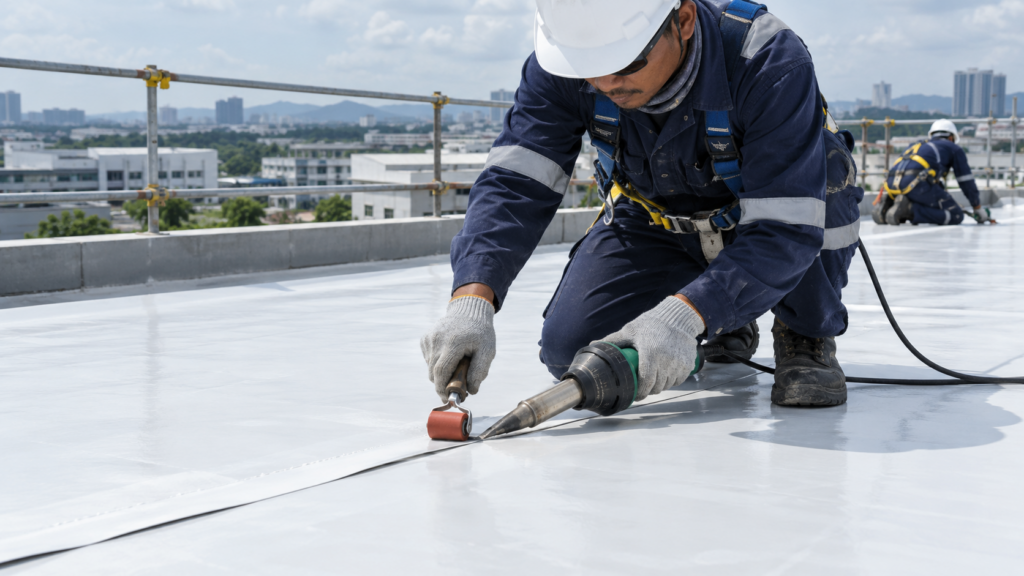
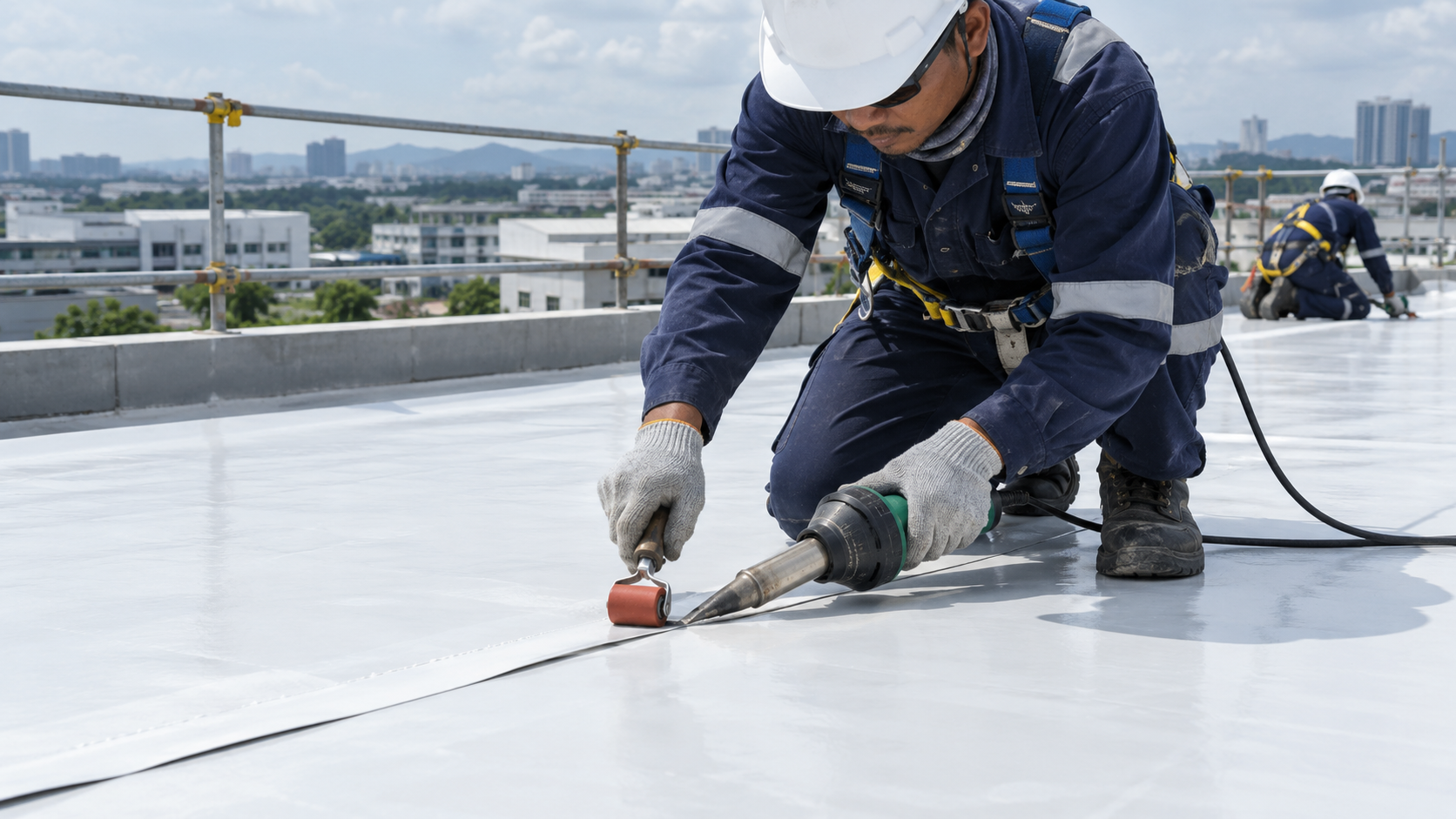
Where cracks are minor and stable, detailing with suitable sealant, tape or reinforced coating may be enough. Where movement is expected, the waterproofing system must allow for that movement instead of relying on a rigid surface layer. For example, QingLong’s Easy Tape and QL-Waterproof Sealant may form part of a joint or seam detailing approach, but their suitability should be matched to the joint condition and surrounding waterproofing system.
Metal Roofs Fail Differently From Concrete Roofs
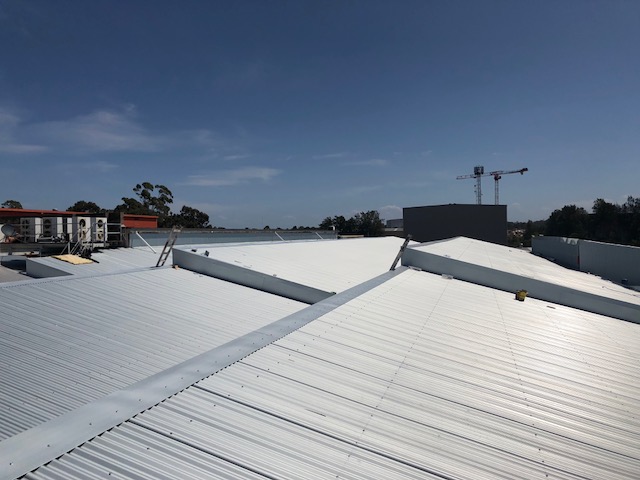
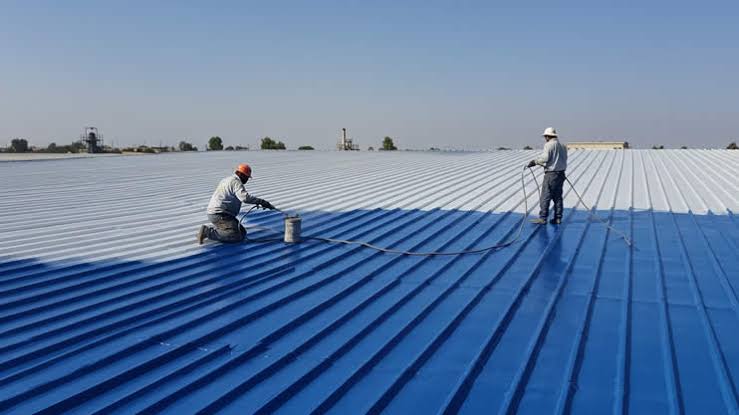
A metal roof is not assessed the same way as a concrete roof. The leak may come from fasteners, laps, ridge capping, gutters, roof penetrations, corrosion points or movement at sheet joints. A general roof coating may improve surface protection, but it will not automatically solve loose screws, failed washers or poor lap detailing.
On large commercial or industrial roofs, thermal movement matters. Metal sheets expand and contract as the roof heats and cools. This movement is concentrated at joints, fasteners and overlaps. If the waterproofing material cannot accommodate this movement, cracks or separation can reappear at the same weak points.
Before choosing a system for a metal commercial roof, the roof should be checked for rust level, sheet condition, screw tightness, lap direction, gutter capacity and ponding at low points. If corrosion has already weakened the sheet, waterproofing alone may not be enough; damaged sheets or accessories may need replacement.
A liquid-applied roof coating can be suitable when the metal substrate is still structurally sound and properly prepared. Preparation may include cleaning, rust treatment, primer where required, fastener tightening and detail sealing before the main coating is applied. Skipping these steps can make the coating look complete from a distance while leaving the original leak paths active.
Existing Repairs Tell You What the Roof Has Already Tried to Say
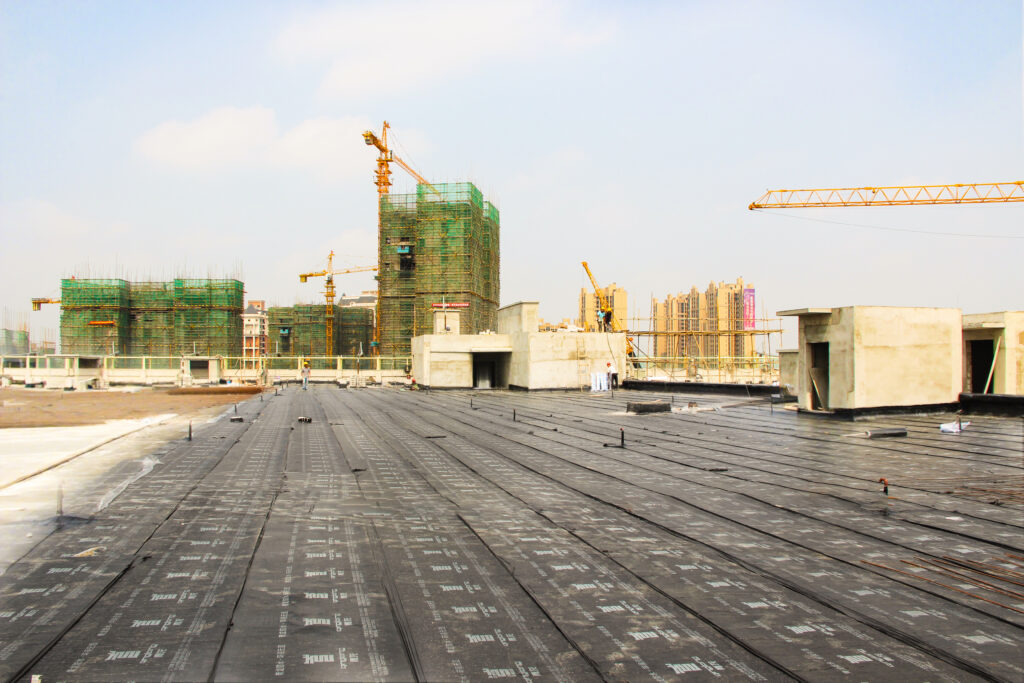
Commercial roofs often show a history of previous patching. You may see silicone around pipe penetrations, bitumen patches near cracks, cement repairs at outlets or multiple coating layers over old failures. These repairs are useful clues, but they should not be copied blindly.
A previous patch may have failed because the material was wrong, but it may also have failed because the leak source was misunderstood. Water can enter at a parapet, travel under a screed or along a slab interface, then appear far from the entry point. This is why ceiling stains inside an office or retail unit do not always identify the exact roof defect above.
If repeated repairs are concentrated in one area, the question should be: what condition keeps causing the repair to fail? It may be ponding, movement, trapped moisture, poor adhesion, an untreated joint or water entering from a higher vertical surface. A new waterproofing system should address that condition, not simply cover the last repair.
This is especially important for commercial buildings because access is usually limited. If the same roof area has to be repaired again during business hours, the indirect cost can be higher than the material cost.
 Occupied Buildings May Need a Phased Waterproofing Approach
For many commercial properties, the technically ideal repair is not always the most practical one. A shopping lot, office, warehouse or operating facility may not be able to close large areas for several days. In Johor Bahru, repair planning also has to consider weather windows because roof preparation, drying and curing can be interrupted by afternoon rain.
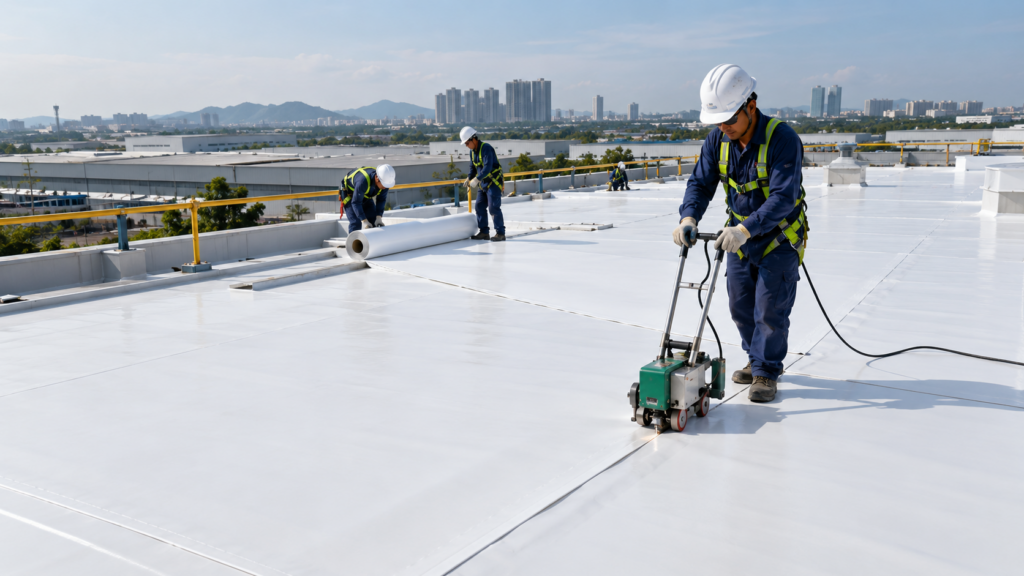
This does not mean the cheapest or fastest system should be selected. It means the waterproofing scope may need to be planned in phases. Critical leak areas, drainage defects and penetrations may be handled first, while broader recoating or system renewal is scheduled around tenant access, safety barriers and weather conditions.
A phased approach can work when the roof condition is understood clearly. It is risky when used as a substitute for diagnosis. If the roof membrane has widespread failure, isolated patching may only move the problem to the next weak area. If the defects are localised and the surrounding surface is sound, targeted repair can be a reasonable first step.
For buildings with sensitive operations, such as data centres, equipment rooms or facilities with limited tolerance for water ingress, waterproofing details deserve extra attention. QingLong Waterproofing’s project portfolio includes waterproofing works for a data centre project in Johor Bahru involving roofs, external walls, base slabs, pipe penetrations, corners and expansion joints. That type of project shows why system thinking matters: the roof surface is only one part of the water-entry risk.
Matching the System to the Decision You Actually Need to Make
A facility manager does not need to memorise every waterproofing chemistry. The more useful approach is to match the roof condition to a system category.
If the roof is exposed concrete, generally sound and mainly needs surface protection, a compatible liquid-applied waterproof coating may fit. If the roof has joints, cracks or penetrations that need extra strength, a reinforced system with proper detailing may be more suitable. If the roof has unstable screed, trapped moisture or poor falls, surface coating alone may be premature until the substrate and drainage are corrected.
For metal roofs, the system must be selected around fasteners, laps, corrosion, gutters and movement. For tiled or protected roofs, the key question becomes whether the existing finish can be retained or whether removal is necessary to access the failed waterproofing layer.
The practical selection criteria are:
What is the roof substrate: concrete, screed, metal sheet or tiled finish?
Is water ponding, and if yes, why?
Are cracks stable or movement-related?
Are penetrations, plinths and joints properly detailed?
Can the building tolerate full-area works, or is phasing required?
Will the waterproofing layer be exposed, protected or trafficked for maintenance?
Once these points are clear, product selection becomes more accurate. QingLong Waterproofing supplies and applies a range of waterproofing materials, including roof coatings, sealants, tapes, cementitious waterproofing and multi-purpose coating systems. The suitable system should be confirmed against the roof condition, required build-up and current product specifications.
Conclusion
Commercial roof waterproofing is not only about stopping today’s leak. It is about understanding how water enters, how the roof moves, how drainage behaves and how the building operates. A coating, membrane or reinforced detail can all be correct in the right situation and inadequate in the wrong one. Before approving commercial roof waterproofing in Johor Bahru, make sure the roof type, weak details and operational constraints have been assessed together.
If you need help reviewing a commercial roof condition and selecting a suitable waterproofing approach, you can contact QingLong Waterproofing for project-specific advice.