A commercial roof leak is rarely just a wet ceiling problem. It can interrupt tenants, damage stock, affect electrical rooms, disturb production, or create safety complaints that management must answer quickly. When the roof is large, occupied, difficult to access, or filled with M&E services, the waterproofing team’s technical discipline matters as much as the product selected. This is where CIDB certification becomes relevant: not as a marketing label, but as one part of verifying whether the team is prepared to work responsibly on a Malaysian commercial building.
CIDB Certification Matters Because Commercial Roof Work Is a Controlled Site Activity
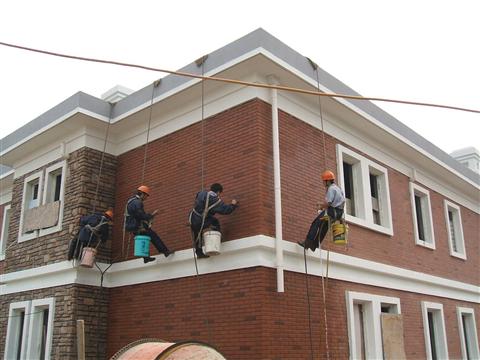
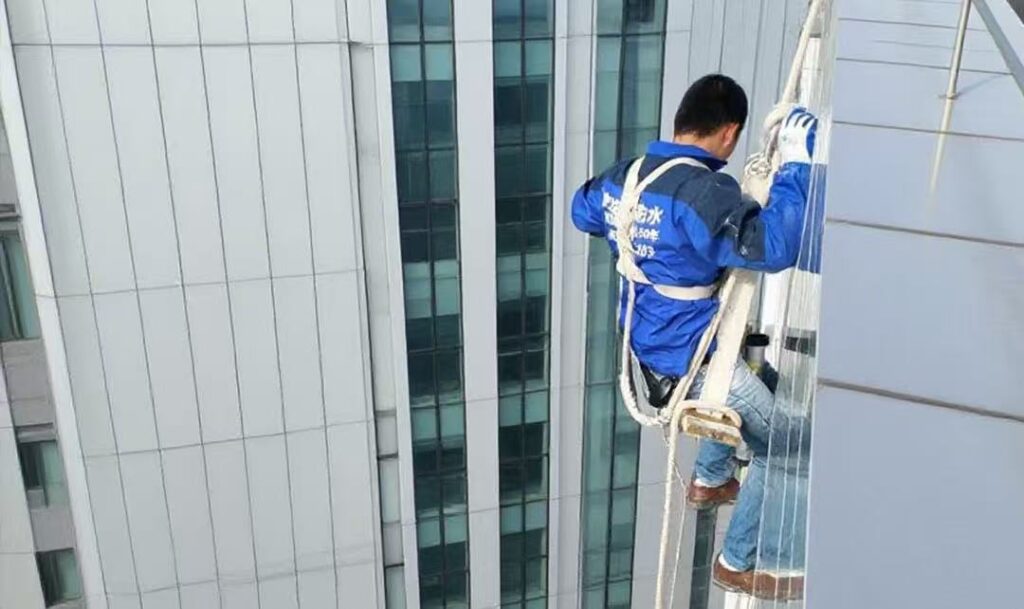
Commercial roof waterproofing involves more than applying a coating over a slab or metal deck. The team may need to work at height, coordinate with building operations, manage access routes, protect existing services, and follow site safety requirements. A CIDB-certified or properly registered team is more likely to understand that waterproofing work sits inside a construction environment, not outside it.
For a building owner or facility manager, CIDB certification helps confirm that the contractor or applicator has gone through a recognised industry registration or competency pathway relevant to construction work in Malaysia. The exact meaning depends on the company registration, personnel certification, trade category and project scope, so it should still be verified before appointment.
For commercial roof waterproofing, CIDB certification is important because it helps confirm that the team is recognised within Malaysia’s construction framework and understands site requirements such as safety, access control, workmanship responsibility and project coordination. It does not replace technical assessment, but it gives the decision-maker a stronger starting point when shortlisting waterproofing teams.
This distinction is important. Certification does not automatically guarantee that a particular roof leak will be solved. It does, however, reduce the risk of appointing a team that treats a commercial roof like a small residential patching job.
A Commercial Roof Has Risks That a Simple Product Choice Cannot Solve
Many commercial roof failures are not caused by the waterproofing material alone. They often involve roof details that demand proper inspection and sequencing before any system is applied.
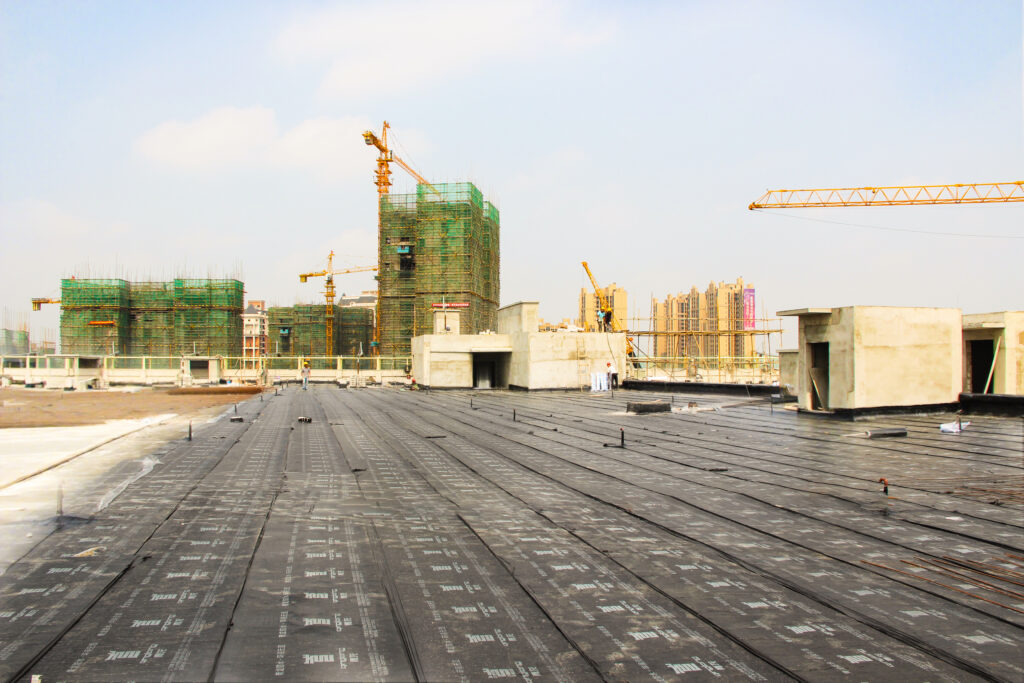
On a reinforced concrete roof, ponding water may indicate poor falls, blocked outlets, depressed screed areas or previous patching that changed the drainage path. If a coating is applied without addressing these conditions, water may continue to sit on the surface and stress the waterproofing system.
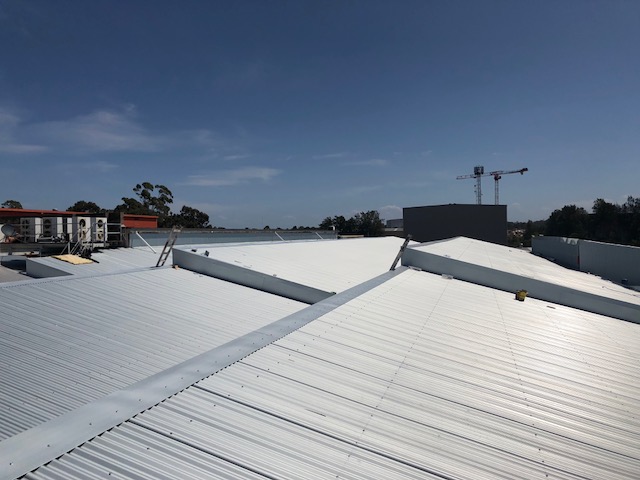
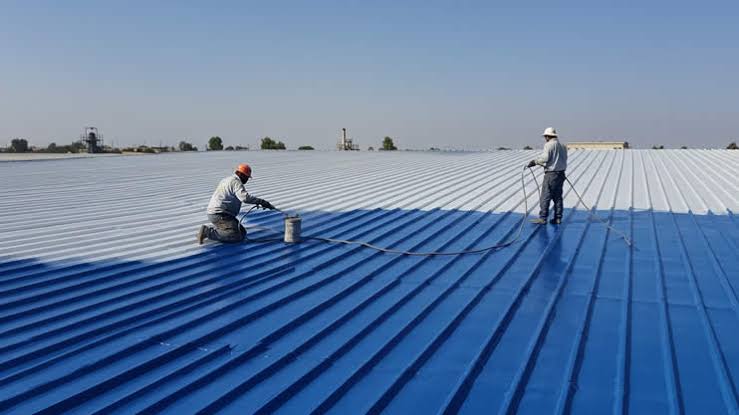
On a metal roof, the vulnerable points are often lap joints, screw fasteners, penetrations, gutters, ridge caps and areas where sealants have hardened or detached. A coating that performs well on a clean, stable surface may fail early if rust, movement or loose fasteners remain untreated.
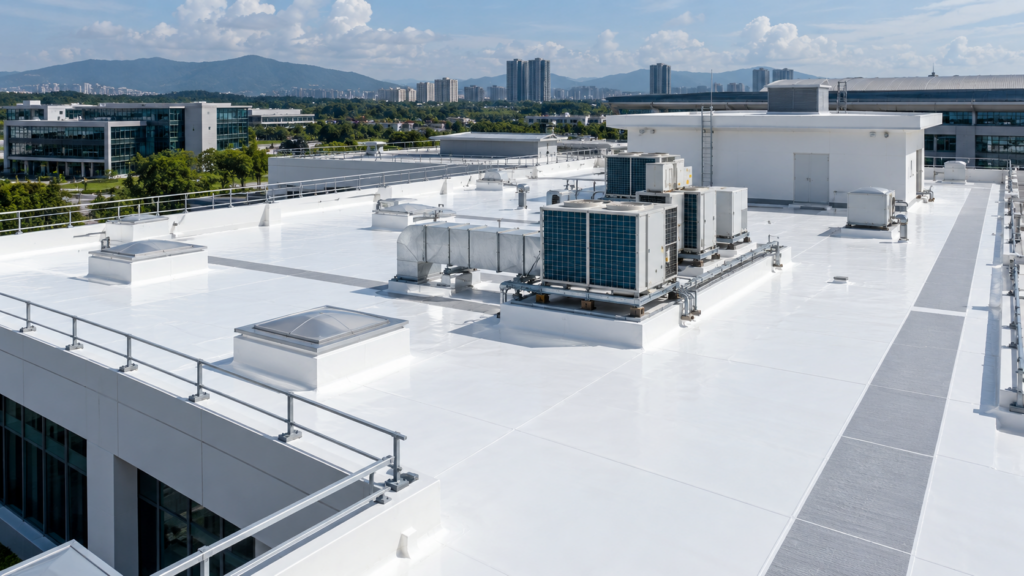
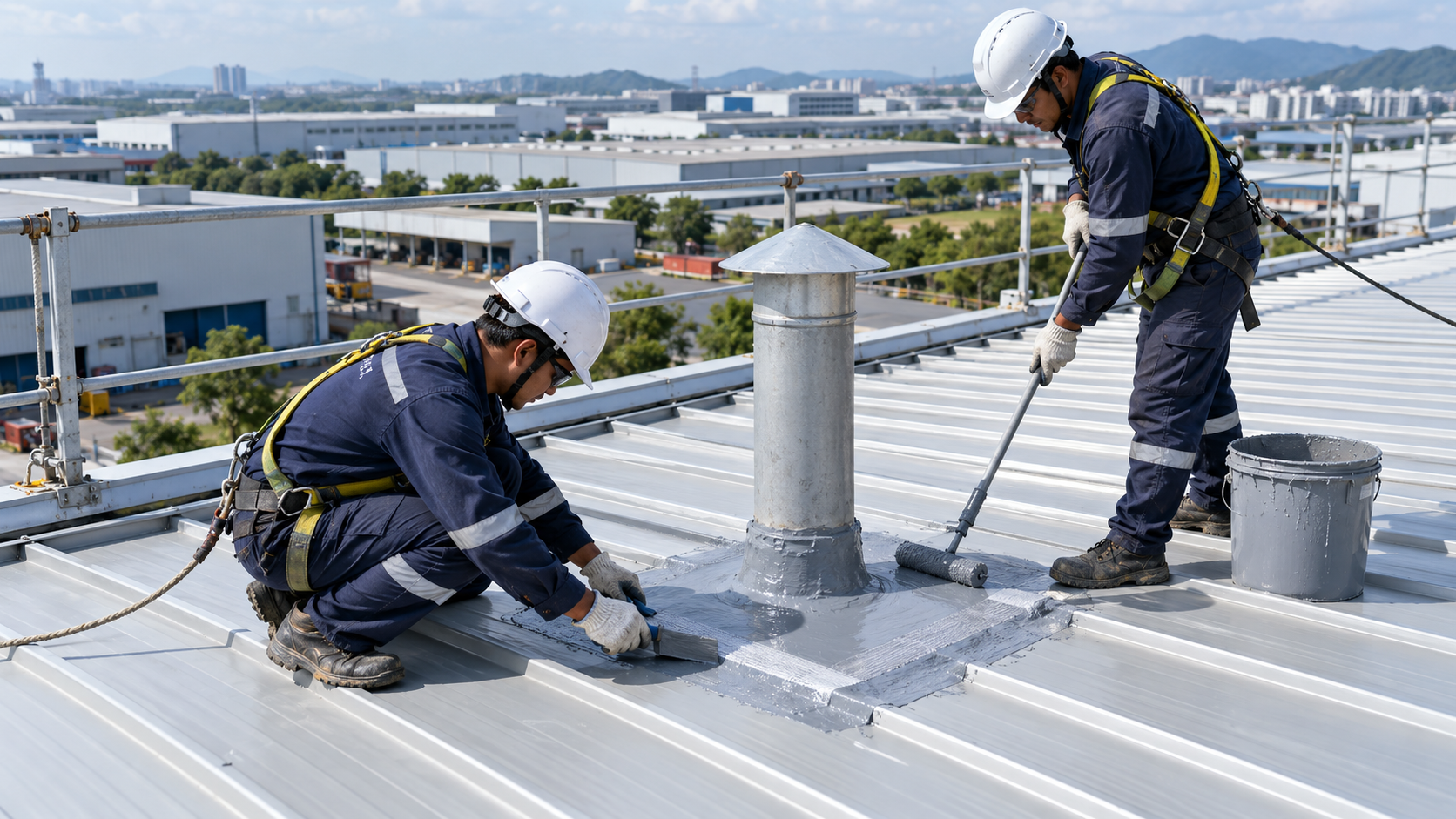
On a roof with plant rooms, air-conditioning supports, cable trays, skylights or pipe penetrations, the detailing is usually more important than the open roof area. Water often enters through terminations, corners and penetrations before appearing far away inside the building.
A CIDB-certified team is not valuable merely because it holds a credential. It matters because commercial waterproofing requires methodical work: inspection, surface preparation, detail treatment, safe access, correct application and site coordination. These steps must happen in the right order.
The Certification Should Match the Actual Waterproofing Scope
One common mistake is to ask, “Are you CIDB certified?” and stop there. For commercial roof waterproofing, the better question is: “Does your certification, experience and proposed method match this roof condition?”
A team may be registered for construction-related work, but the building owner should still check whether the proposed applicators understand the waterproofing system being used. For example, a liquid-applied roof coating, cementitious waterproofing system, torch-on membrane, sealant repair, metal roof restoration and expansion joint treatment each require different preparation and detailing.
Before approving a commercial roof waterproofing team, ask for evidence that connects to the actual project:
• Current CIDB-related registration or personnel documentation, where applicable
• Company profile and relevant commercial or industrial roof experience
• Proposed waterproofing system and method statement
• Product data sheet and application requirements
• Surface preparation and detail treatment plan
• Safety, access and work sequencing arrangements
• Warranty terms and what conditions may void the warranty
This list is not about collecting documents for formality. It helps the decision-maker see whether the team has thought through the roof as a working commercial asset.
Workmanship Control Is Where Certified Teams Often Show Their Value
A waterproofing product can only perform within the limits of how it is installed. On commercial roofs, workmanship errors are often hidden until the next major rainfall or until ponding water remains long enough to expose weak areas.
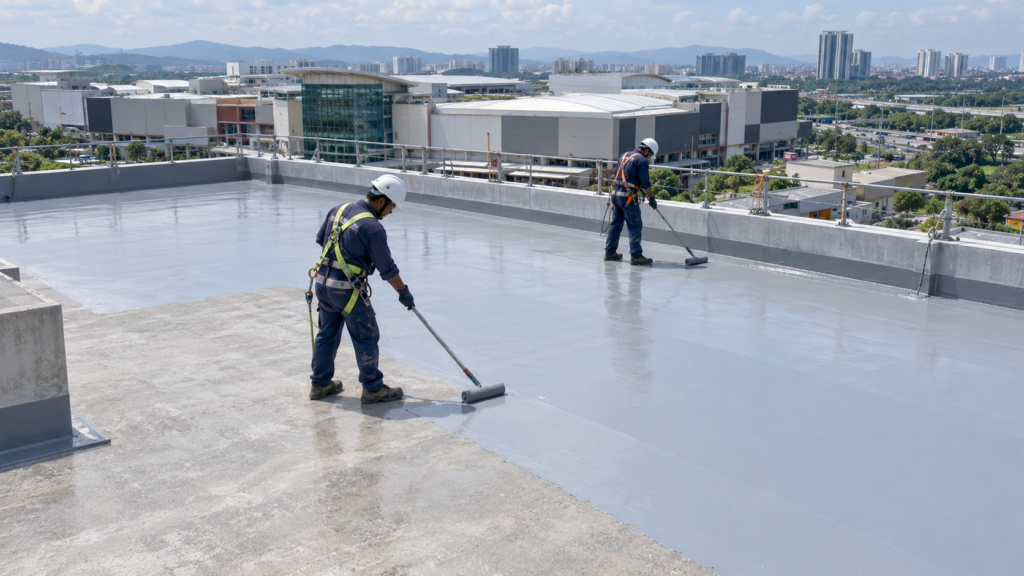
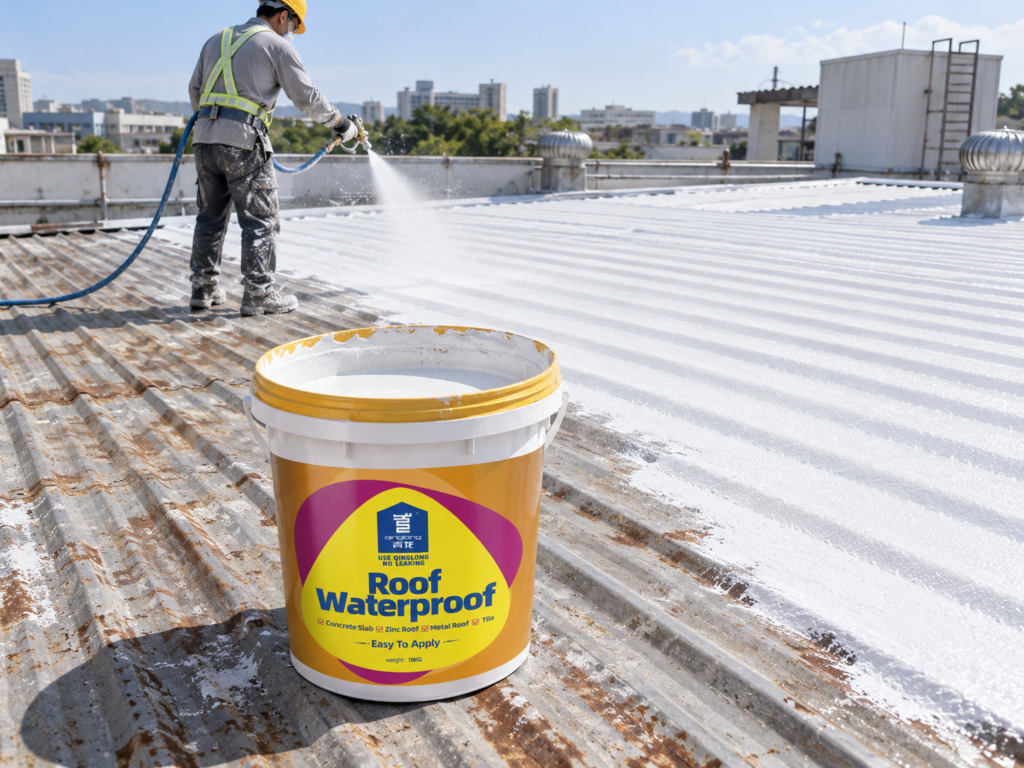
For liquid-applied systems, common workmanship-sensitive points include coating thickness, curing time, reinforcement at corners, treatment of cracks, compatibility with the substrate, and whether the surface was clean and dry enough before application. Applying over dust, moisture, oil contamination or weak existing coatings can affect adhesion.
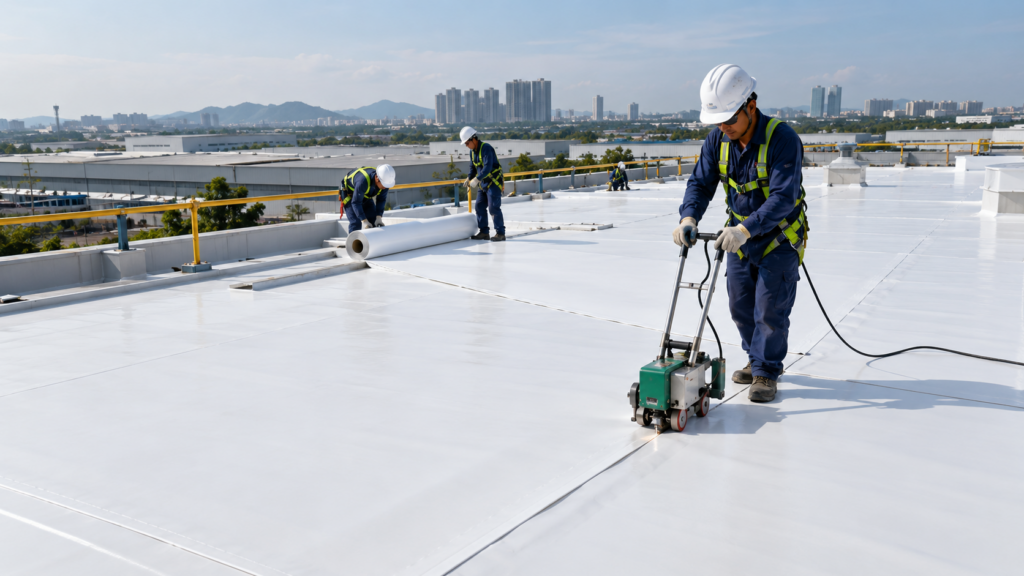
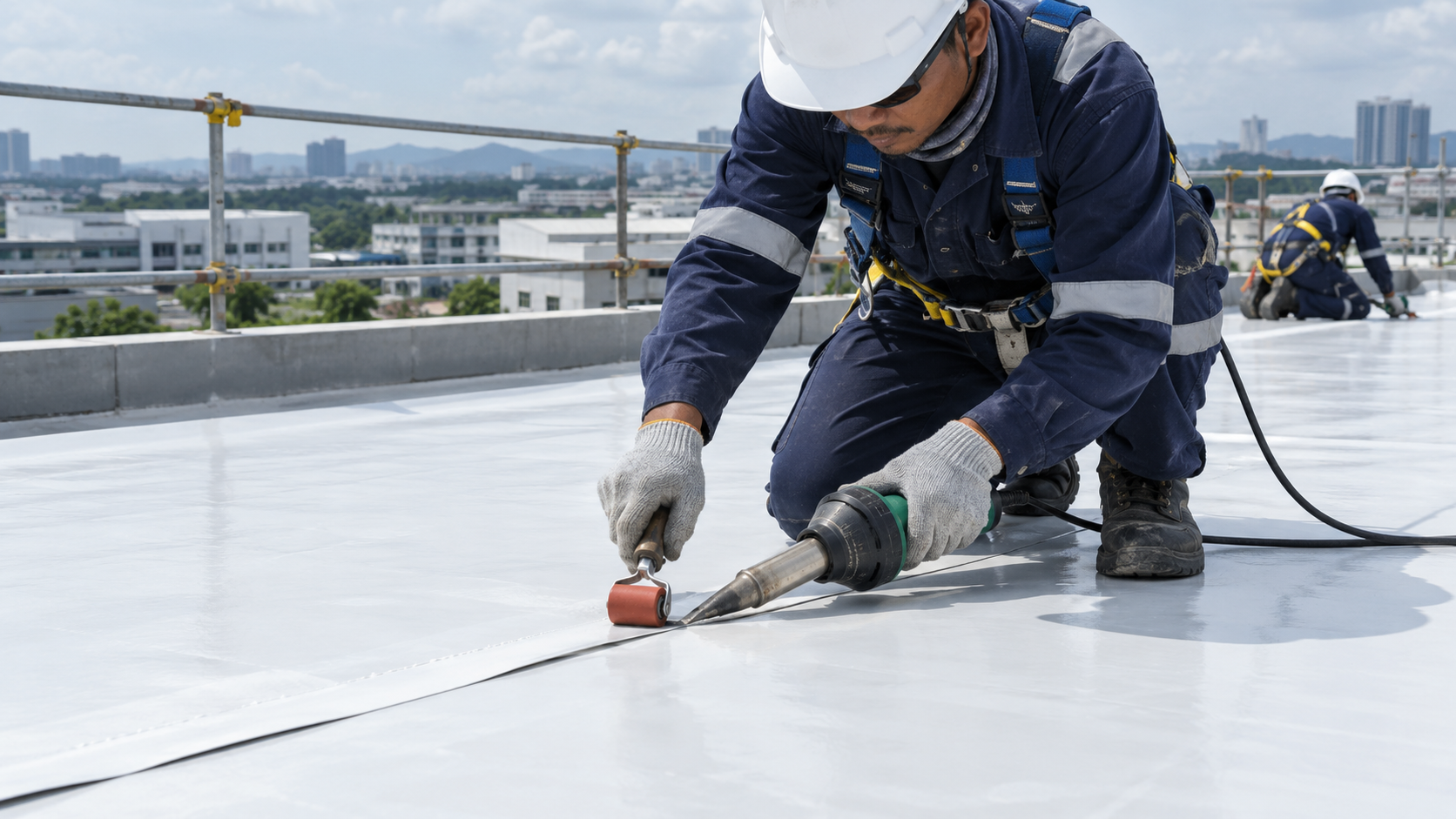
For membrane systems, attention shifts to laps, terminations, upturns, penetrations, torching or bonding quality, and protection from damage during subsequent work. A strong membrane can still fail at a poorly finished outlet or pipe penetration.
For metal roof waterproofing, preparation is especially important. Rust treatment, fastener replacement, lap joint sealing and movement accommodation must be considered before the coating is treated as the final solution.
A properly certified and experienced team is more likely to document these steps, assign responsibility and follow a controlled method. This does not mean every certified team is equal, but it gives the building owner a more practical basis for supervision.
 Commercial Buildings Need Coordination, Not Just Leak Repair
Commercial roof waterproofing often happens while the building is still operating. That changes the repair decision.
A shopping centre may need work planned around tenant access and customer hours. A factory may need to protect machinery, production areas and roof-mounted equipment. A warehouse may have stock directly below the affected roof. An office building may need to avoid noise, odour or disruption during working hours.
This is why the waterproofing team must understand more than the leak location. They need to coordinate access, safety barriers, material storage, weather windows, waste handling, protection of drainage outlets and communication with building management.
CIDB certification helps because it places the team within a more formal construction environment. However, the property manager should still evaluate whether the contractor can explain the project sequence clearly. If the team cannot explain how they will handle access, protection and daily handover, the risk remains.
For commercial roof waterproofing, the best contractor is not simply the one who offers the fastest patch or lowest lump sum. The suitable team is the one that can connect roof diagnosis, waterproofing system selection, site safety and building operation into one workable plan.
How QingLong Waterproofing Fits Into the Selection Decision
QingLong Waterproofing supports commercial roof waterproofing through waterproofing products, system recommendations and project application experience across residential, commercial, industrial and infrastructure settings. For decision-makers, the value is not only in choosing a coating or membrane, but in matching the system to roof condition, exposure, substrate and operational constraint.
For example, a commercial roof may require a weather-resistant roof coating, joint sealing products, detail reinforcement, or a more complete waterproofing build-up depending on whether the issue involves open slab areas, metal roof laps, cracks, outlets or penetrations. The final recommendation should always be based on site condition rather than product name alone.
If CIDB documentation is part of your project requirement, it should be requested and verified together with the proposed waterproofing method, product specification and application plan. This keeps the discussion practical: the team must be suitable for both compliance and performance.
Questions to Ask Before Appointing a Commercial Roof Waterproofing Team
A building owner does not need to become a waterproofing specialist, but the approval process should be specific enough to filter out weak proposals.
Ask the shortlisted team:
1. What is the likely water entry path, and what evidence supports that conclusion?
2. Are the roof outlets, ponding areas, penetrations and movement joints included in the inspection?
3. What substrate preparation is required before waterproofing starts?
4. Is the proposed system suitable for UV exposure, standing water, traffic or metal roof movement?
5. What CIDB-related registration, personnel certification or project documentation can be provided?
6. How will the work be sequenced to reduce disruption to building operations?
7. What maintenance or inspection is required after completion?
The answers should be clear enough for management to compare proposals. If every answer is reduced to “we will apply waterproofing,” the scope is probably not developed enough for a commercial roof.
Conclusion
CIDB certification should not be treated as a rubber stamp, but it should not be ignored either. For commercial roof waterproofing, the decision-maker is approving work on a live building asset, often with tenants, equipment and business operations below. The right team must show compliance awareness, technical reasoning and a practical repair plan. If your commercial roof condition, access constraints or documentation requirements need review, you can speak with QingLong Waterproofing for a suitable assessment and recommendation.
Frequently Asked Questions (FAQs)
1. Does CIDB certification guarantee that a roof leak will be solved?
No. CIDB certification helps verify construction-industry registration or competency, but the leak still needs proper diagnosis, suitable material selection and correct application.
2. Should a commercial building only hire a CIDB-certified waterproofing team?
For commercial projects in Malaysia, CIDB-related compliance is often an important requirement. Building owners should verify certification together with technical experience, method statement and product suitability.
3. What is more important: the waterproofing product or the applicator?
Both matter. A good product can fail if the substrate is poorly prepared, details are missed, or the system is applied outside its intended conditions.
4. Can commercial roof waterproofing be done while the building is occupied?
Often yes, but it depends on access, safety, weather, roof condition and the waterproofing system. The team must plan sequencing to reduce disruption and protect building users.