A commercial roof leak rarely starts with the question, “Which waterproofing product should we apply?” For a facility manager in Subang, the more useful first question is: “What is the roof condition telling us?” A stain above a retail unit, dripping near an office ceiling, or water entering a warehouse during rain may all point to different roof details. Before approving commercial roof waterproofing in Subang, the inspection should identify where water can enter, where it travels, and which roof details are actually failing.
Start by Identifying the Roof Type and Leak Pattern
Commercial roofs in Subang may be reinforced concrete flat roofs, metal deck roofs, tiled service areas, or mixed roof systems added during renovation or tenant changes. The first inspection step is to understand the roof build-up because each roof type fails differently.
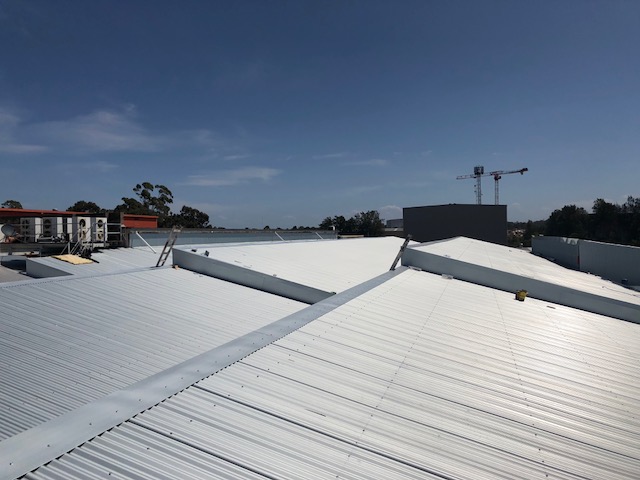
On a concrete flat roof, leakage may relate to cracks, ponding water, failed coating, screed defects, or weak upturns at parapet walls. On a metal roof, the more likely concerns are screw fasteners, lap joints, ridge capping, flashings, rusted sheets, or sealant failure. If the building has both concrete roof areas and metal extensions, treating the whole roof as one surface can lead to the wrong repair scope.
The leak pattern inside the building also matters. A ceiling stain does not prove that the entry point is directly above it. Water can travel along roof slabs, ceiling voids, M&E supports, insulation layers, or metal roof purlins before becoming visible indoors. This is especially important in commercial buildings where air-conditioning ducts, cable trays, sprinkler pipes, and ceiling panels can redirect water.
For commercial roof waterproofing in Subang, the first inspection should confirm the roof type, drainage path, vulnerable details, and relationship between indoor leak locations and outdoor roof defects. Product selection should come after this inspection, not before it, because a coating, membrane, sealant, or local repair only works when it matches the actual failure point.
Check Drainage Before Blaming the Waterproofing Layer
Drainage is often the most practical place to inspect early because it affects the entire roof system. A waterproofing membrane may still fail prematurely if water remains on the surface longer than the system was intended to tolerate.
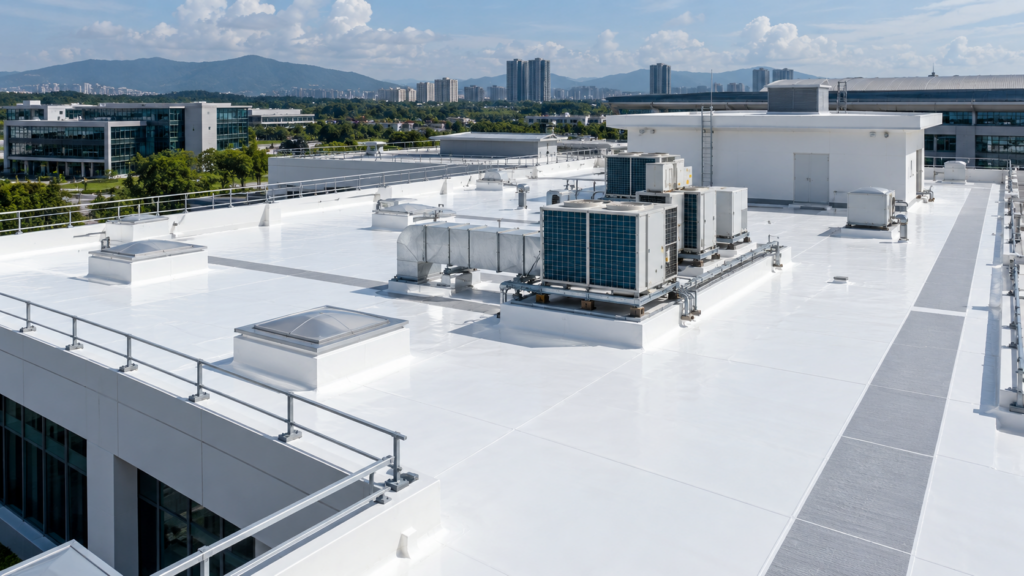
On a commercial flat roof, inspect whether water is moving properly toward outlets, scuppers, gutters, or downpipes. Ponding near roof outlets may indicate blocked grates, undersized drainage, poor falls, settled screed, or debris from nearby trees and maintenance works. Around service platforms, air-conditioning units, and pipe supports, water may be trapped by plinths or poorly formed channels.
For metal roofs, drainage issues often appear at gutters, valley gutters, overlaps, and roof-to-wall junctions. A gutter may overflow during heavy rain not because the roof sheet has failed, but because the outlet capacity is restricted or the gutter is blocked. If the gutter is concealed or difficult to access, the leak may show up inside the building before anyone notices standing water outside.
This matters because recoating a roof surface does not solve a drainage defect. If water repeatedly ponds at the same location, the repair plan may need to include screed correction, outlet clearing, additional drainage details, or gutter repair before waterproofing is applied.
 Inspect Penetrations, Upturns and Terminations Closely
Many commercial roof leaks occur at details rather than in the middle of an open roof area. This is why an inspection should move from general surface condition to specific vulnerable points.
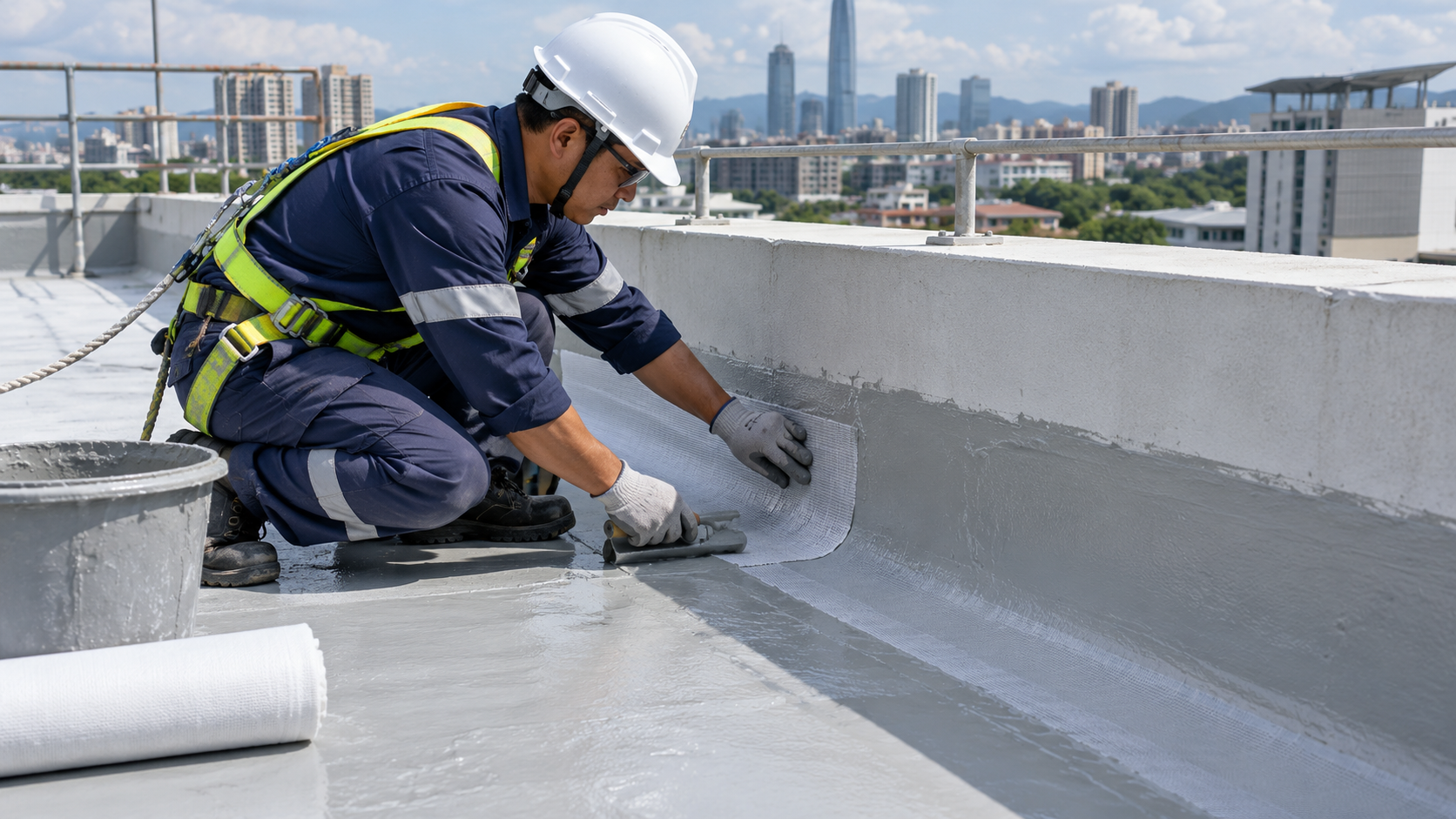
Common details to inspect include pipe penetrations, cable entry points, air-conditioning supports, exhaust fan bases, skylight edges, parapet wall junctions, expansion joints, and membrane terminations. These areas experience movement, vibration, or changes in material. A concrete roof slab, PVC pipe, metal support, and sealant joint do not expand or age in the same way.
The upturn height at parapet walls is also important. If a waterproofing layer stops too low, or if the termination is not protected, water can enter behind the system. Cracks at the wall-floor junction may also indicate movement between the horizontal slab and vertical wall. Simply coating the flat roof area while ignoring the upturn can leave the original weakness exposed.
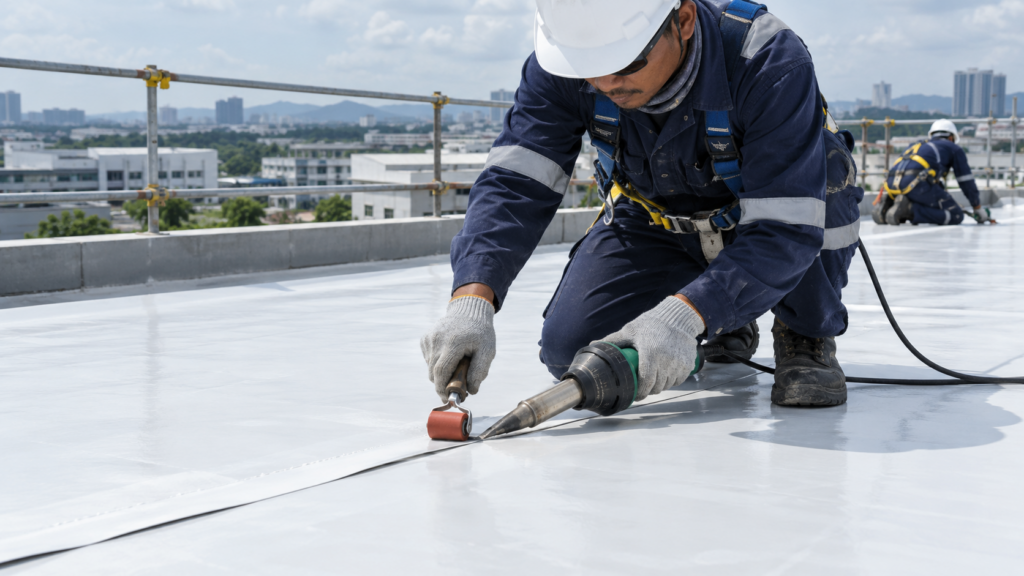
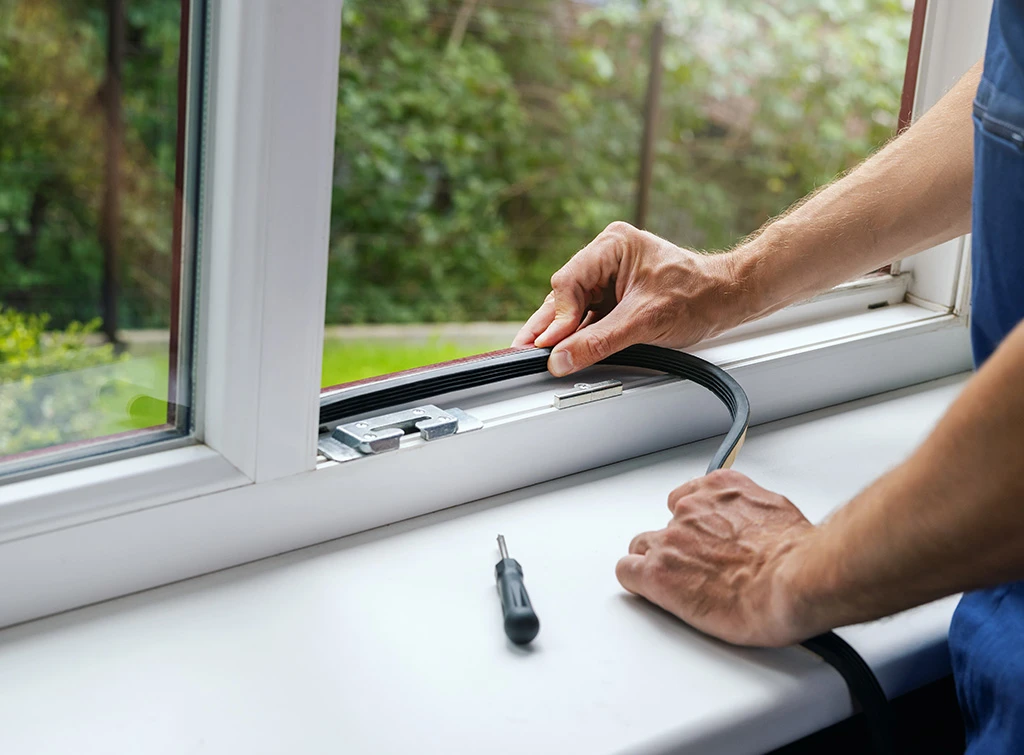
For metal roofs, fasteners and lap joints deserve close inspection. Loose screws, deteriorated washers, rust around fixing points, and aged sealant at laps may allow wind-driven rain to enter. Applying a broad coating over the roof may help only if the fastener and joint details are properly treated as part of the system.
Assess the Existing Surface Before Deciding on Recoating
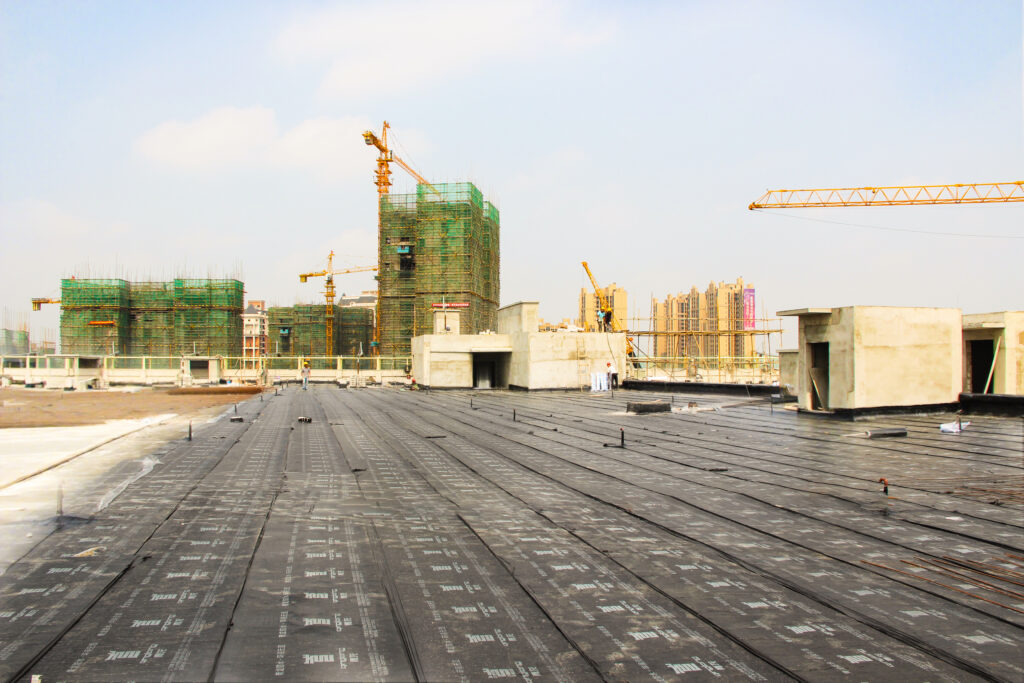
Many commercial roof waterproofing proposals involve recoating, but recoating only makes sense if the existing surface can accept and support the new system. A clean-looking roof is not always a sound substrate.
For concrete roofs, inspect the existing coating adhesion, cracks, hollow screed, blistering, chalking, trapped moisture, and contamination. If an old waterproofing layer is peeling or debonded, applying a new coating over it may only bond to a weak layer. The new coating may look acceptable at first but fail when the old layer lifts.
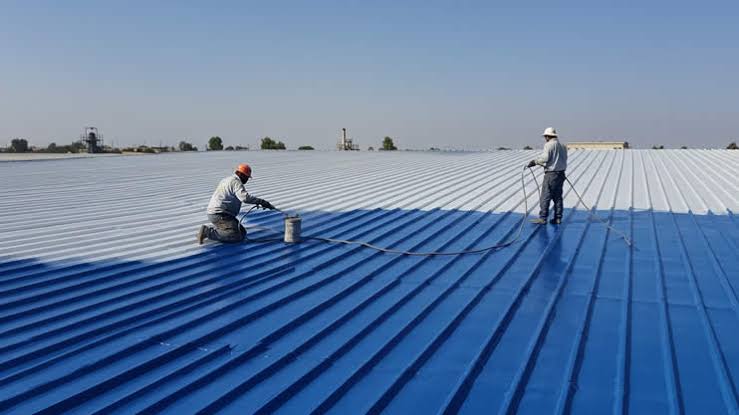
For metal roofs, surface preparation becomes even more important. Rust, oil contamination, dust, previous patching materials, and loose paint can reduce adhesion. Around fasteners and overlaps, preparation must be detailed enough for the waterproofing system to form a continuous barrier.
A useful roof inspection should identify:
• whether the existing waterproofing layer is bonded or failing;
• whether cracks are static or likely to move;
• whether moisture is trapped beneath coatings or screed;
• whether contamination may affect adhesion;
• whether the roof finish will remain exposed or receive another protective layer.
This step prevents a common mistake: treating waterproofing as a “new layer” problem when the real issue is that the existing surface is not fit to receive that layer.
Match the Repair Scope to Building Operations
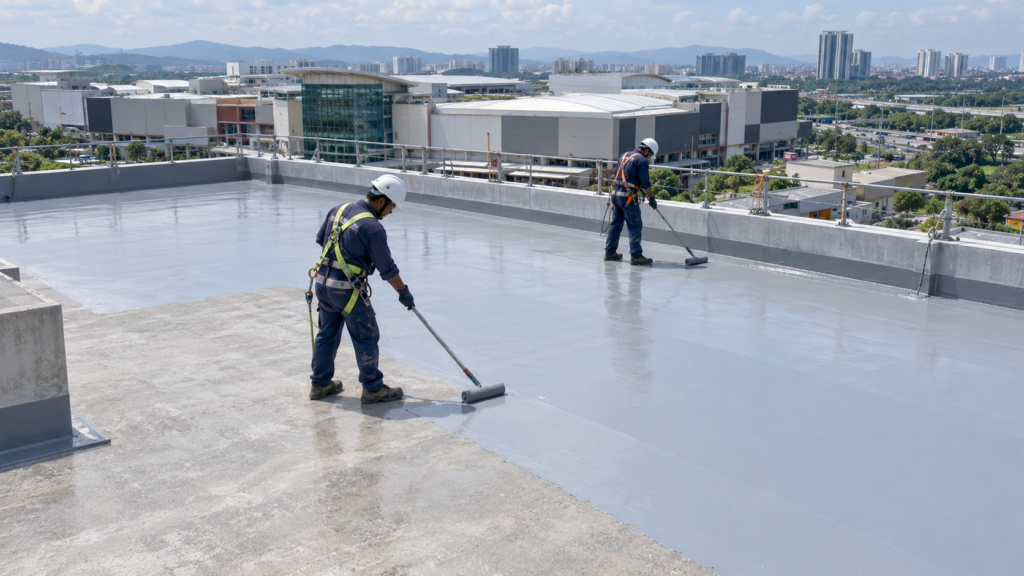
Commercial roof waterproofing in Subang often has to be planned around business operations. A leaking roof above a warehouse, retail outlet, office, restaurant, clinic, or production area may not allow unrestricted access or long shutdown periods.
Inspection should therefore record not only technical defects, but also practical constraints. Can the roof be accessed safely? Are there tenants below? Are there air-conditioning units that cannot be shut down? Can noisy preparation work be done during business hours? Is there enough dry weather window for application and curing? Are temporary protection measures needed for stock, equipment, or ceiling works?
These constraints may influence the repair method. A full roof renewal may be technically ideal, but staged repair may be more practical if the building must remain occupied. Localised treatment may be suitable where the defects are clearly confined, but risky if the roof surface is generally aged and multiple failure points are present.
The inspection should help the owner decide whether the project is a targeted repair, phased maintenance, or full waterproofing renewal. Without that distinction, the quotation may appear cheaper or faster but fail to address the actual risk.
When the Inspection Points to a System, Not a Patch
After the first inspection, the next decision is whether the roof needs a local repair or a complete waterproofing system. A single cracked pipe collar, loose fastener line, or isolated failed sealant joint may justify targeted treatment. But widespread coating failure, repeated ponding, multiple cracks, deteriorated upturns, and leaks in different areas usually indicate a broader system issue.
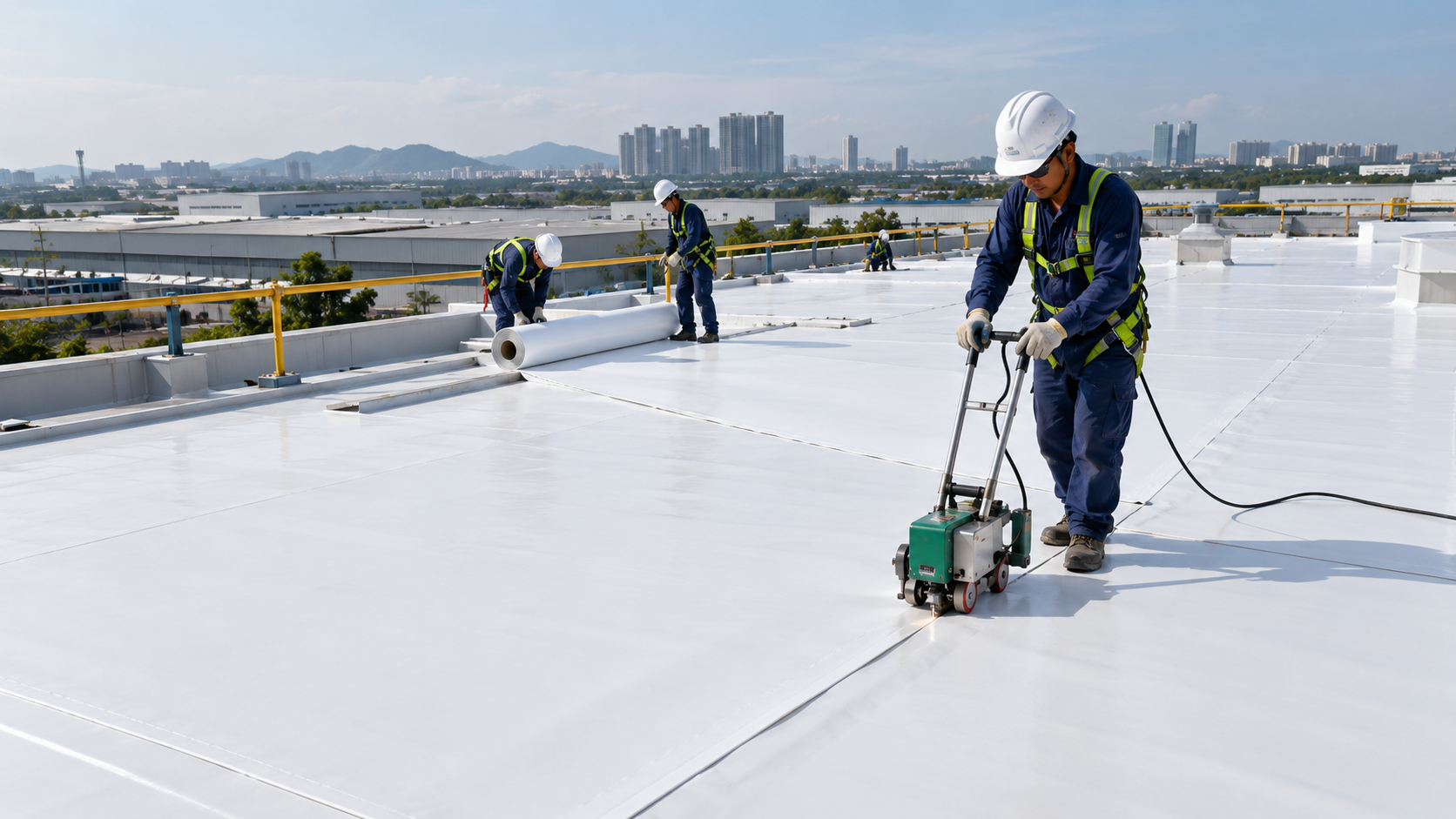
This is where product choice becomes relevant. A roof coating, cementitious waterproofing system, sealant, joint tape, or other waterproofing material should be selected according to the substrate, exposure, movement, drainage condition, and final use of the roof. For example, a system suitable for a concrete service roof may not be the same as a detail treatment for metal roof fasteners or joints.
QingLong Waterproofing manufactures and supplies waterproofing products and provides waterproofing services for commercial and industrial projects in Malaysia. For commercial roof areas, the practical value is not only choosing a material, but matching the waterproofing system to the inspected roof condition, including cracks, joints, penetrations, drainage and existing substrate.
Conclusion
The most useful first step in commercial roof waterproofing is not asking for the thickest coating or the fastest repair. It is identifying the roof type, water path, drainage condition, weak details, and substrate readiness. In many commercial buildings, the failure begins at outlets, penetrations, upturns, fasteners, or old coating layers rather than in the open roof field. Once those points are clear, the repair scope becomes easier to define and the waterproofing system can be selected with less guesswork.
If you need to review a leaking or ageing commercial roof, QingLong Waterproofing can help assess the site condition and recommend a suitable repair approach. You may contact QingLong Waterproofing for a commercial roof waterproofing assessment.