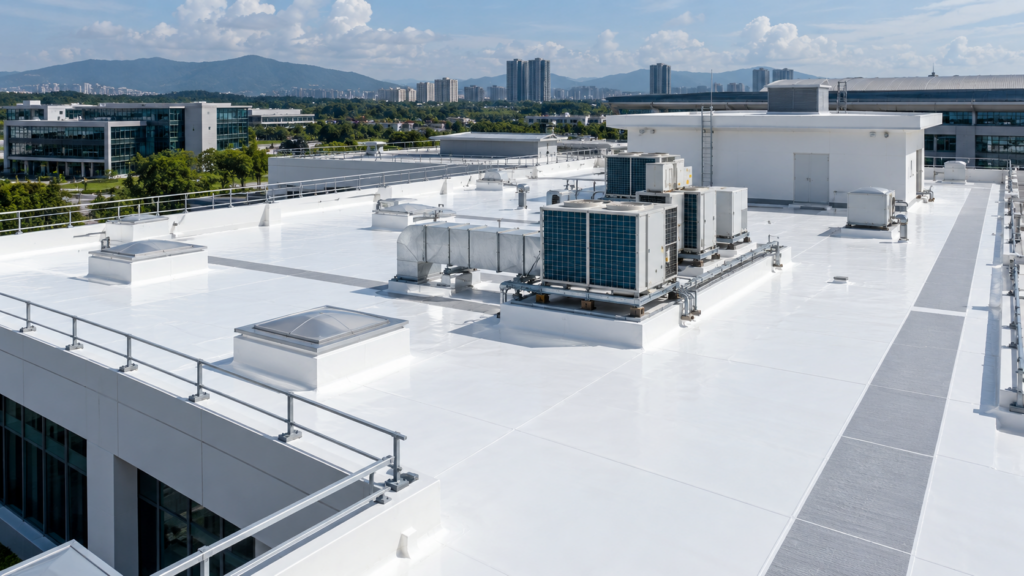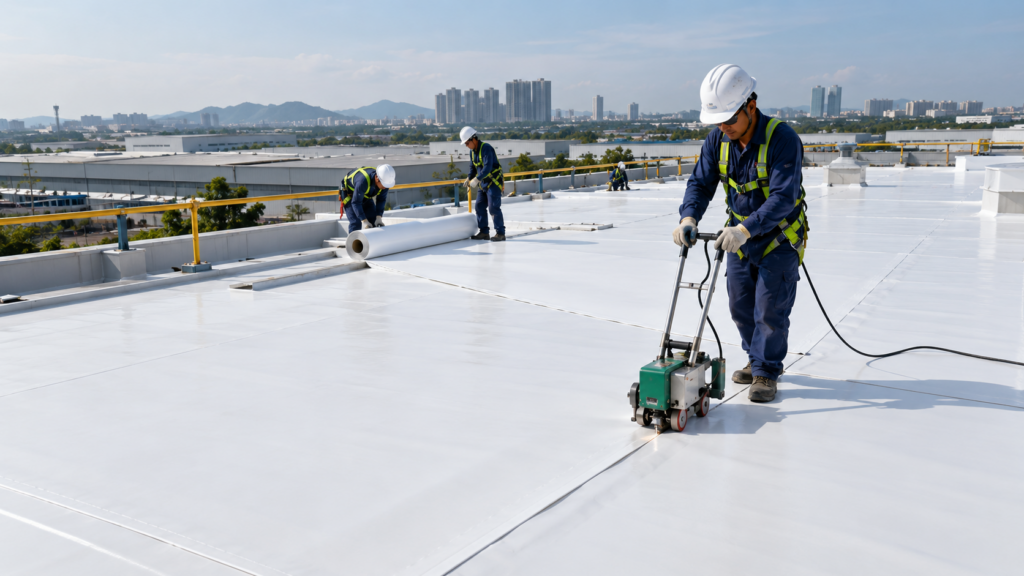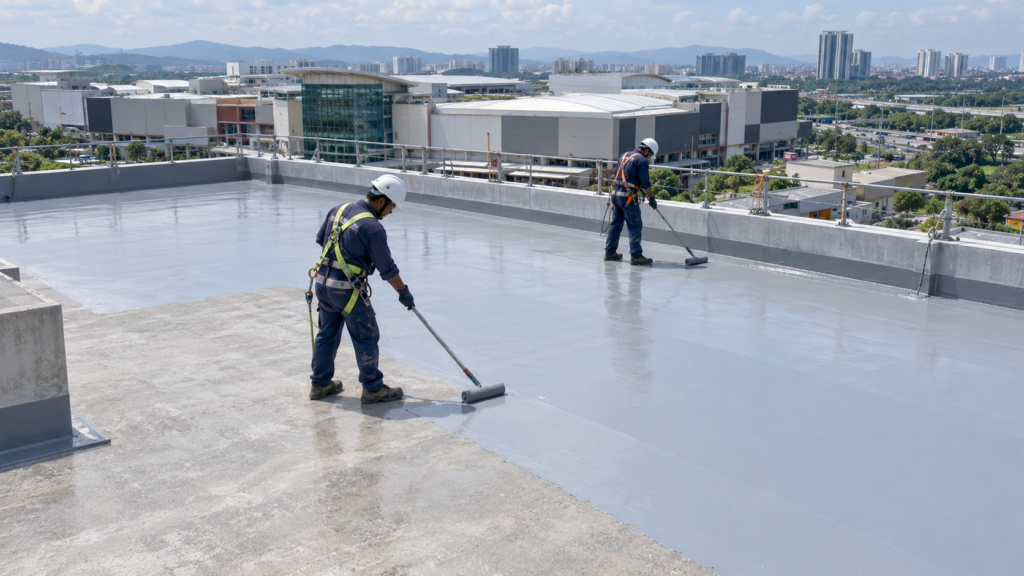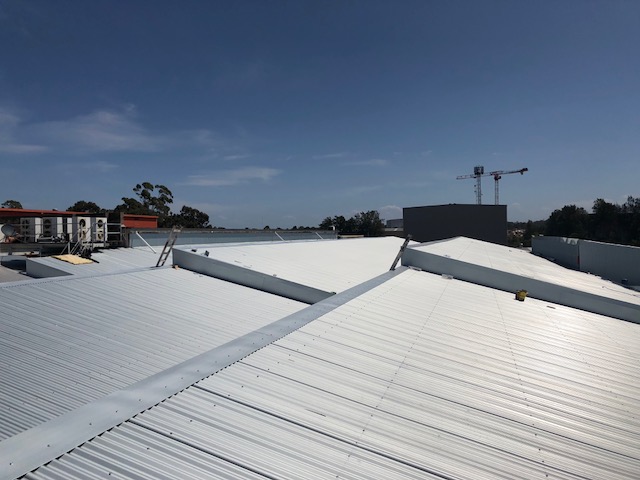
A metal roof leak is not always where the water stain appears below. In many Subang shops, factories, extensions and landed homes, rainwater may enter through one small roof screw, travel along the underside of a sheet, then drip several metres away. In other cases, the roof screw looks suspicious, but the real weakness is a sheet lap, ridge cap, wall flashing or gutter edge. Before applying coating across the whole roof, the first decision is more basic: is the water entering through fasteners, seams, or another roof detail?
Why Metal Roof Leaks Are Often Misread from Below
A ceiling stain, wet purlin or dripping point only shows where water finally exits. It does not confirm the roof entry point. Metal roof sheets have ribs, laps and underside paths that can carry water sideways or downslope before it becomes visible.
This is why Subang metal roof waterproofing should begin with roof-level inspection, not only indoor observation. From below, a row of screws may appear to line up with the stain, but the roof above may have a ridge lap, pipe penetration or side flashing that is actually allowing water in.
The direction of rain also matters. A roof may remain dry during vertical rain but leak during wind-driven rain because water is pushed under laps, ridge caps or poorly sealed flashings. If the leak only happens during certain storms, that pattern is useful diagnostic information, not just a nuisance.
A good inspection asks: where can water enter under pressure, where can it sit, and where can it travel after entry?
When Roof Screws Are the Likely Leak Point
Roof screws are common leak points because they penetrate the metal sheet. Most metal roofing screws rely on a washer, usually rubber or neoprene, to seal around the hole. Over time, several things can reduce that seal.
A screw may be over-tightened, crushing the washer until it splits. It may be under-tightened, leaving a slight gap below the washer. The washer may harden under sunlight and heat exposure. The screw hole may also enlarge slightly if the sheet moves with thermal expansion and contraction.
Fastener leaks are more likely when leakage appears near regular screw rows, especially on exposed roof areas rather than at roof edges or wall junctions. Rust staining around screw heads, lifted washers, missing screws and uneven screw alignment are also useful signs.
Direct answer: If water is entering through metal roof screws, the repair usually needs more than coating over the visible screw head. The screw condition, washer seal, hole size and surrounding metal surface must be checked. A failed washer or enlarged hole may require screw replacement, sealing and local reinforcement before any roof coating is applied.
One mistake is to apply a thick patch of sealant over every screw without checking whether the screw is still mechanically sound. If a fastener is loose, corroded or installed into a weak support, sealant alone may hide the problem temporarily while movement continues underneath.
When Seams, Laps and Ridge Details Deserve More Attention
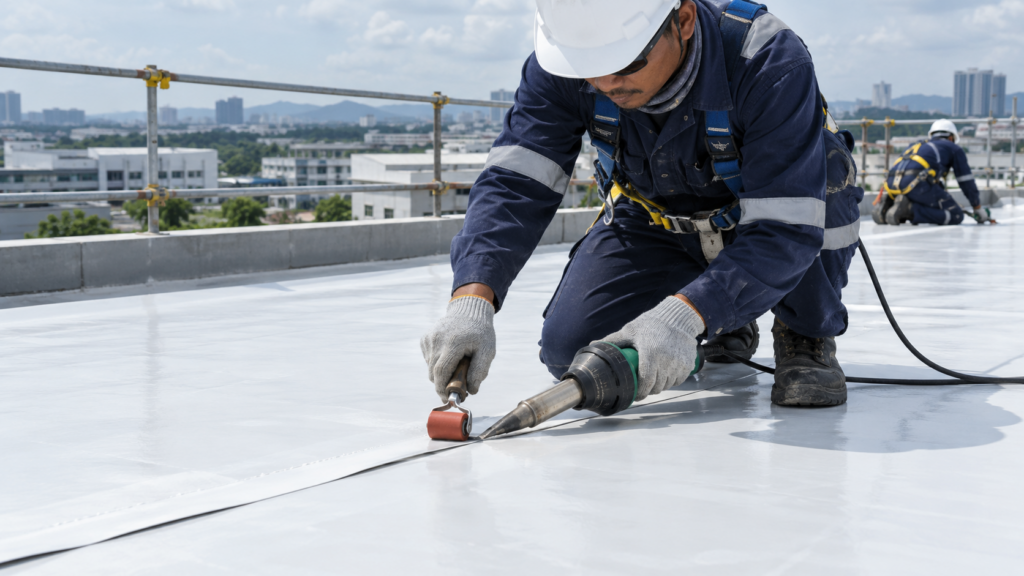
Seams and laps behave differently from screw points. A screw is a small penetration. A seam is a long joint where water can be pushed, held or drawn through by capillary action if the overlap, sealant or fastening is weak.
On metal roofs, the important seam-related details often include side laps between sheets, end laps, ridge capping, apron flashing, wall flashing and roof-to-gutter transitions. These areas can fail even when the sheet surface still looks acceptable.
A lap or seam becomes more suspicious when the leak occurs along a line rather than under one isolated point. Staining that follows a purlin, dampness near the upper side of a ceiling area, or repeated leakage near a wall may indicate that water is entering at a junction and travelling before dripping.
Seam leaks are also common where roof sheets meet vertical walls, parapets or extensions. In Subang properties with rear extensions or modified roof sections, the connection between old and new roof areas may be more vulnerable than the main roof sheet itself. A small height difference, short overlap, aged sealant or poor flashing termination can allow rainwater to enter during heavy storms.
For seams, the question is not simply “Can this be sealed?” The better question is whether the joint still has proper overlap, support and drainage. Waterproofing material performs better when it supports a sound detail, not when it is expected to replace poor roof geometry.
Clues That Help Separate Screw Leaks from Seam Leaks
A practical inspection does not rely on one sign. It compares the leak pattern, roof condition and vulnerable details together. The following clues can help narrow the diagnosis:
Leak appears at isolated points: roof screws, damaged washers or local penetrations become more likely.
Leak follows a straight line: sheet laps, ridge caps, flashings or gutter edges should be checked.
Leak occurs only during wind-driven rain: laps, side flashings and ridge details may be allowing water to be pushed in.
Leak appears after long rain, not immediately: water may be ponding, backing up at gutters or entering through a slow seam defect.
Rust marks around fasteners: screw holes and washer seals deserve close inspection.
Dampness near a wall or extension joint: flashing and roof-to-wall termination may be more important than the roof field.
These signs do not replace roof inspection, but they help avoid random patching. A contractor who only seals the nearest visible screw may miss the actual entry point. A building owner who assumes every leak requires full roof recoating may spend more than necessary if the defect is limited to a small but critical detail.
Why Whole-Roof Coating May Not Solve a Detail Problem
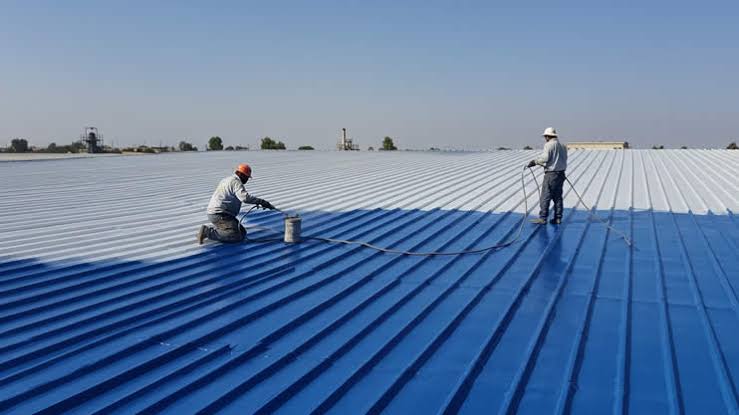
Roof coating can be useful when the metal roof surface needs additional waterproofing protection, weather resistance or system renewal. However, coating is not automatically the answer to every metal roof leak.
If the actual problem is loose screws, failed washers, rusted fastener holes or open laps, those defects should be treated before coating. Otherwise, movement may continue under the new layer. If the problem is a poorly designed flashing, coating over the surface may not correct the water path.
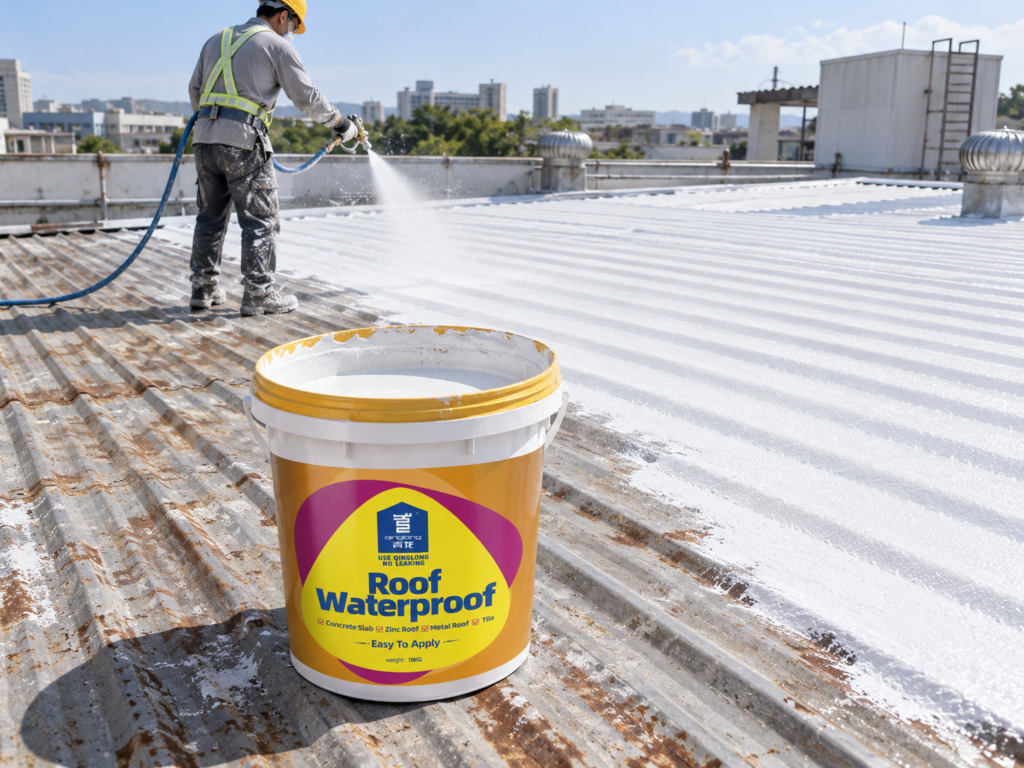
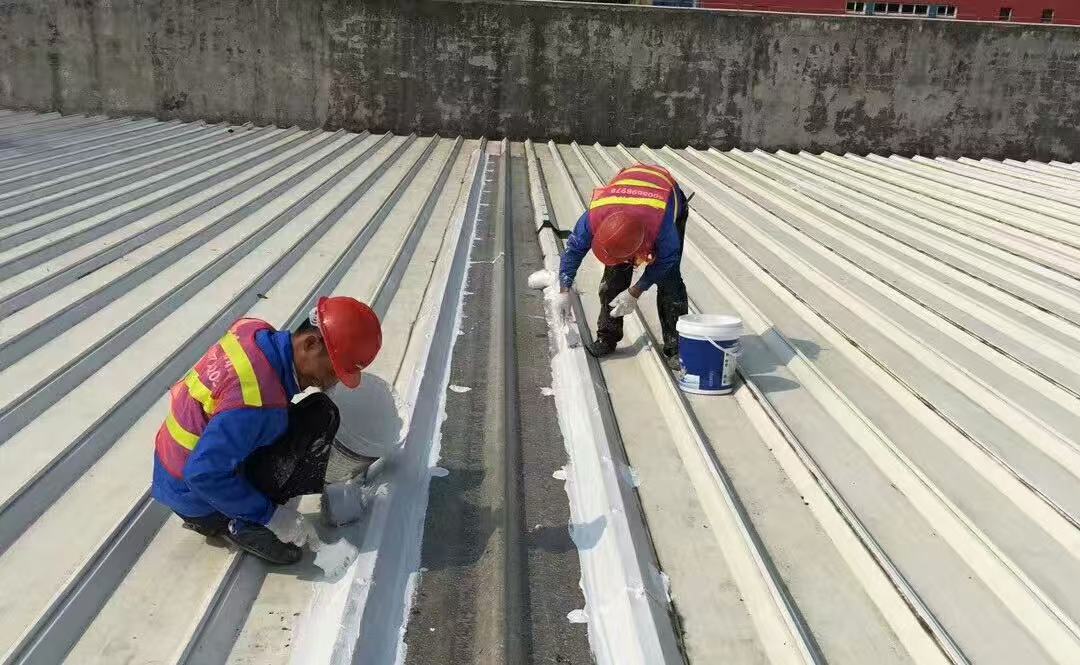
For metal roof waterproofing, surface preparation is especially important. Dust, chalking paint, rust, oil residue, ponding areas and loose previous coating can affect adhesion. Joints and penetrations may need sealing or reinforcement before applying a roof coating system.
QingLong Waterproofing supplies and applies roof waterproofing materials such as roofing waterproof coating and sealants for suitable roof conditions. The correct build-up depends on the metal roof condition, existing coating adhesion, screw details, seam condition and whether the area is exposed to standing water or regular maintenance traffic.
A roof coating system should be selected as part of a repair scope, not used as a blanket substitute for diagnosis.
 What a Sensible Metal Roof Waterproofing Scope Should Check
Before approving repair work, a property owner or facility manager should ask for the roof inspection to separate surface ageing from actual water-entry details. This is especially important for commercial premises where repeated leakage can disturb tenants, stock, equipment or daily operations.
A useful inspection should check:
• fastener condition, washer condition and screw tightness;
• side laps, end laps and ridge cap sealing;
• flashing at walls, parapets, pipes and roof extensions;
• rusted sheet edges or enlarged screw holes;
• gutter capacity, blockage and water backflow points;
• adhesion of any existing coating or previous patching material;
• safe access and suitable weather window for repair.
Direct answer: To decide whether screws or seams are leaking on a metal roof, inspect the roof from above and match the leak pattern with fasteners, laps, ridges, flashings and drainage points. Screw leaks are usually localised around penetrations, while seam or flashing leaks often follow lines, junctions or wind-driven rain paths.
This approach helps define the repair scope. Some roofs only need targeted screw replacement, sealing and reinforced treatment at selected details. Others need seam reinforcement and a compatible roof coating system over a wider area. Severely corroded or structurally weak metal sheets may require replacement before waterproofing can perform properly.
Conclusion
For a leaking metal roof, the important decision is not “seal or coat?” but “where is water actually entering, and what movement or defect must the repair handle?” Screws, seams, flashings and gutters fail in different ways, so they should not receive the same treatment by default. If you are planning metal roof waterproofing in Subang, start with the roof details that control water entry before deciding on local repair or a broader coating system.
If you need help assessing a leaking metal roof, you can contact QingLong Waterproofing to discuss the site condition and suitable waterproofing approach.