A window leak in Kuching often appears only during a certain type of rain. The glass may look dry, the frame may seem intact, yet water still collects at the inner sill or stains the wall below. Many owners respond by applying silicone along the inside edge, only to see the leak return during the next strong side rain. For Kuching window leakage repair, the first question is not simply “where is the gap?” It is “where did the water enter before it appeared here?” That difference changes the repair method, the area to inspect and whether the work should focus on the window, the wall or both.
The Wet Sill Is Often the Exit Point, Not the Entry Point
Water at the bottom of a window can mislead the inspection. It is easy to assume the leak starts exactly where the water is visible, but window systems are made of several connected parts: glass panels, aluminium profiles, gaskets, sealant joints, wall plaster, sill finishes and hidden cavities around the frame.
A useful way to look at a leaking window is this: the visible wet area shows where water escaped into the room, not necessarily where it entered the building envelope. Water may enter from an upper frame joint, travel inside the aluminium section, pass through a failed perimeter seal, or come from a hairline crack in the wall above the window before appearing at the sill.
This is why repeated internal sealing does not always solve the problem. If the entry point remains exposed outside, rainwater continues to enter behind the repair. The indoor surface may look temporarily dry, but moisture can remain trapped inside the wall or frame channel.
Rain Direction in Kuching Can Change the Diagnosis
Kuching receives frequent heavy rain, but for window leakage, the most important detail is often the rain direction rather than the rainfall amount. A window may stay dry during vertical rainfall but leak when wind pushes rain against the façade. This is especially relevant for upper-floor units, corner rooms, exposed landed houses and buildings with limited roof overhang.
During wind-driven rain, water does not only fall downward. It can be forced into small frame joints, under poorly bonded sealant, through gaps at the window head, or across a sill that does not discharge water properly. On some façades, the wall above the window becomes saturated first, then water travels down into the frame-wall junction.
For property owners, one practical clue is timing. If the leak appears only when rain hits one side of the house, the window frame may not be the only suspect. The inspection should include the surrounding wall, the top edge of the frame, the external sill and any cracks or penetrations above the opening.
Entry Paths That Must Be Separated Before Repair
A proper window leakage assessment should separate several possible water entry paths instead of treating the whole window as one problem. The repair scope becomes clearer once these paths are checked individually.
Common entry paths include:
Frame-to-wall perimeter gaps
The joint between the window frame and plastered wall may have old, hardened or detached sealant. Even a narrow separation can admit water during side rain.
Window frame drainage problems
Aluminium frames usually need drainage routes or weep holes. If these are blocked, poorly positioned or overwhelmed, water can back up and overflow indoors.
Glass gasket or frame joint leakage
Rubber gaskets, mitred frame corners and screw penetrations can allow water into the frame section, especially where materials have aged or moved.
Wall cracks and sill defects around the window
Hairline cracks, hollow plaster, poorly sloped sills or cracked tile edges near the window can bring water behind the frame even when the frame itself is still serviceable.
The key point is simple: Kuching window leakage repair should match the confirmed entry path. A frame leak, a wall crack and a failed external sealant joint may produce the same indoor stain, but they require different repair methods.
Why Internal Silicone Can Hide the Real Problem
Many window leaks have already been “repaired” once before a waterproofing specialist is called. The most common attempt is applying silicone along the inside perimeter of the window. It feels logical because the water appears there. However, internal sealing often changes the symptom without stopping water entry.
If water is entering from outside and draining inward, sealing the inner joint may block the exit point. This can push moisture sideways into plaster, skirting, timber finishes or concealed areas. In some cases, the room appears dry for a while, but paint starts bubbling nearby because trapped moisture is finding another path.
There is also a surface preparation issue. Sealant applied over dusty paint, damp plaster, old silicone or mouldy surfaces may not bond properly. The bead may look neat on day one but separate after heat movement and repeated wetting. For exterior work, the sealant must be compatible with the substrate and able to tolerate movement between aluminium, concrete, plaster or tile finishes.
This does not mean sealant is useless. A suitable waterproof sealant can be effective when the joint is clean, dry, correctly shaped and actually part of the water entry path. The mistake is using it as a blanket answer before identifying the route of water entry.
Matching the Repair to What the Inspection Finds
Different findings call for different levels of repair. A minor external perimeter separation may only need removal of failed sealant, proper cleaning, priming where required and resealing with a suitable waterproof sealant. If the wall surface beside the window is porous or cracked, the repair may need patching, crack treatment or a compatible exterior wall waterproofing approach.
Where the surrounding wall is the issue, a transparent exterior waterproof coating may be considered if the surface condition is suitable and the owner wants to retain the existing appearance. For example, QingLong’s exterior wall transparent waterproof coating is designed for situations where water resistance is needed without changing the wall colour. However, such coatings are not a shortcut for unstable plaster, active structural cracks, dirty substrates or joints that require flexible sealant detailing.
If the sill has the wrong fall, ponding at the base of the window can continue even after resealing. In that case, attention must go to reshaping the sill, improving discharge or treating cracks at the sill-wall junction. If the aluminium frame is badly distorted, corroded or poorly installed, waterproofing alone may not be enough. Replacement or reinstallation may need to be discussed.
Good repair work is not always the biggest repair work. It is the repair that addresses the route of water entry without covering over defects that will continue to move, crack or hold moisture.
 What to Confirm Before Approving Window Leakage Repair in Kuching
Before agreeing to a repair method, ask what the inspection has actually confirmed. The contractor should be able to explain whether the leak is mainly from the frame, the wall, the sill, an upper façade defect or a combination of areas. If the answer is still uncertain, the proposed repair should be described as a controlled first stage rather than a guaranteed cure for every possible hidden defect.
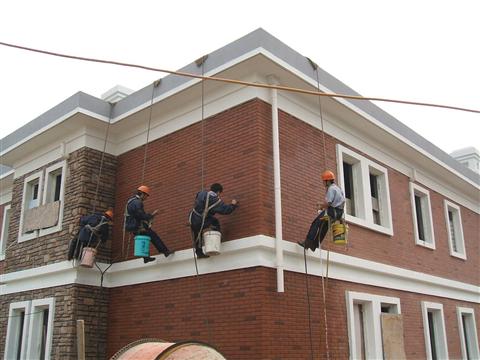
For condominiums and commercial buildings, access may also affect the method. External repair may require management approval, gondola access, scaffolding or coordination with neighbouring units. For landed houses, roof overhangs, awnings, grilles and security fixtures may limit access around the window head and side joints.
It also helps to confirm the condition of previous coatings or sealants. New waterproofing material depends on adhesion. If the surface is chalky, damp, contaminated or loose, applying another layer may only create a short-lived skin over a weak base.
The best repair decision comes from connecting the symptom to the water path. Once that path is understood, the owner can choose a focused repair, a staged approach or a wider façade treatment with clearer expectations.
Conclusion
Window leakage is frustrating because the visible water mark often tells only part of the story. In Kuching, side rain and exposed façades can push water through joints that look harmless during normal weather. Before spending on repeated sealing, the important step is to establish whether the entry point is at the frame, the wall, the sill or a hidden junction around the opening.
If you are dealing with recurring window seepage or stains after heavy rain, you can discuss the site condition with QingLong Waterproofing and request a suitable assessment through our window leakage repair enquiry page.