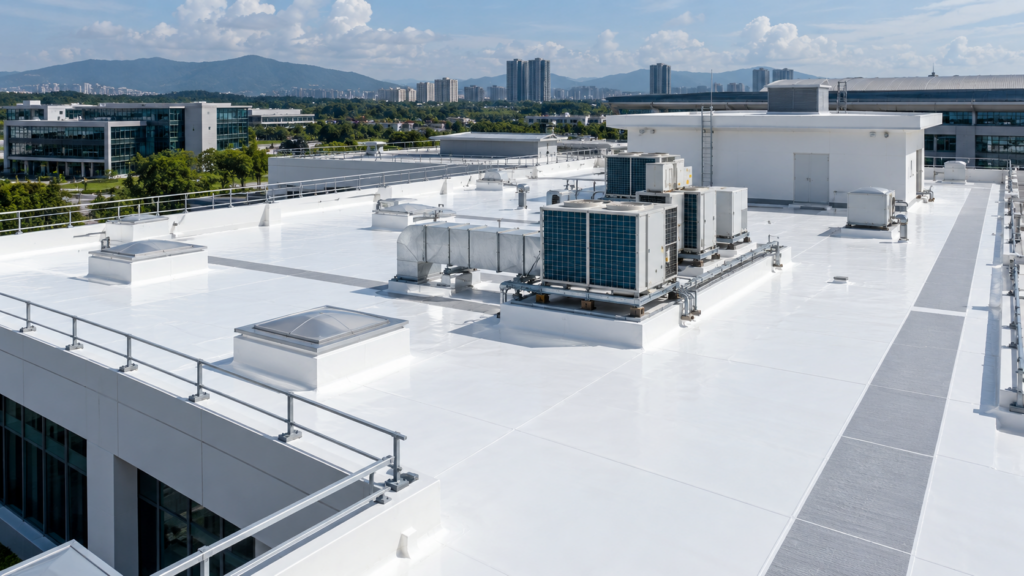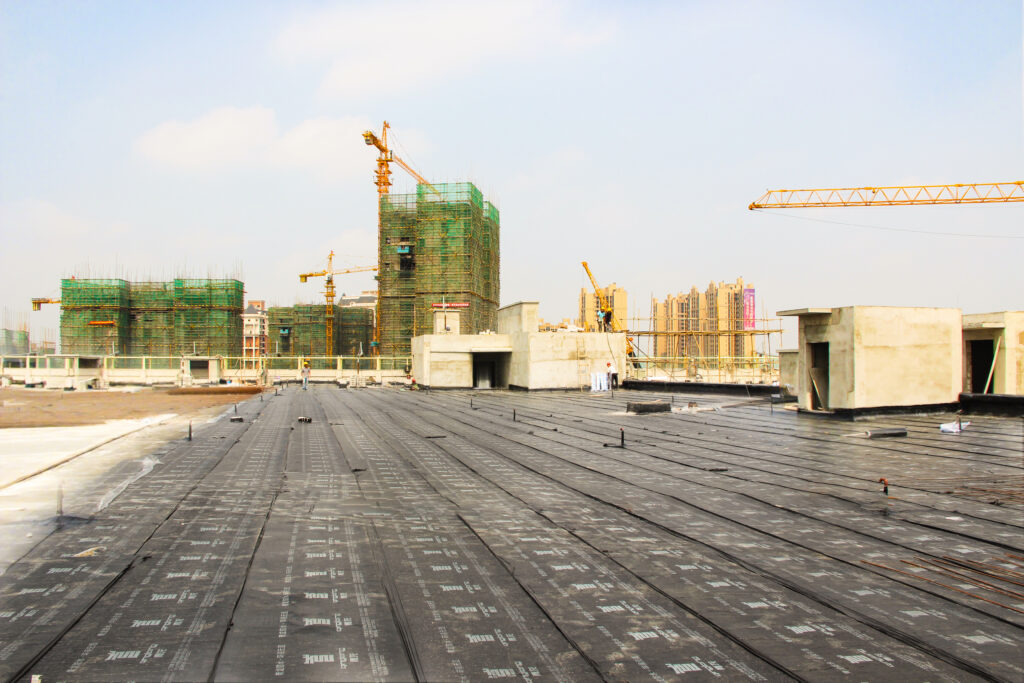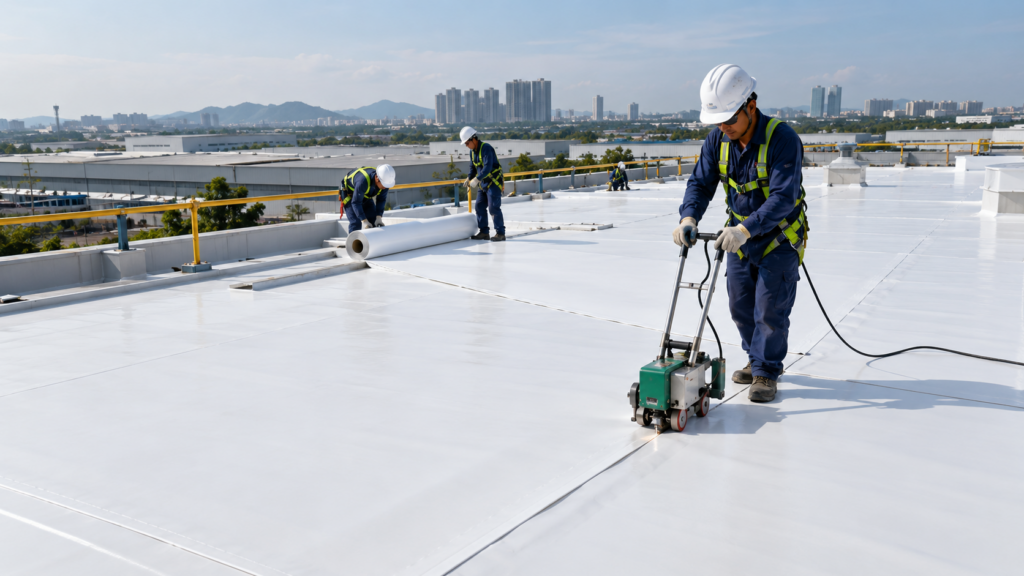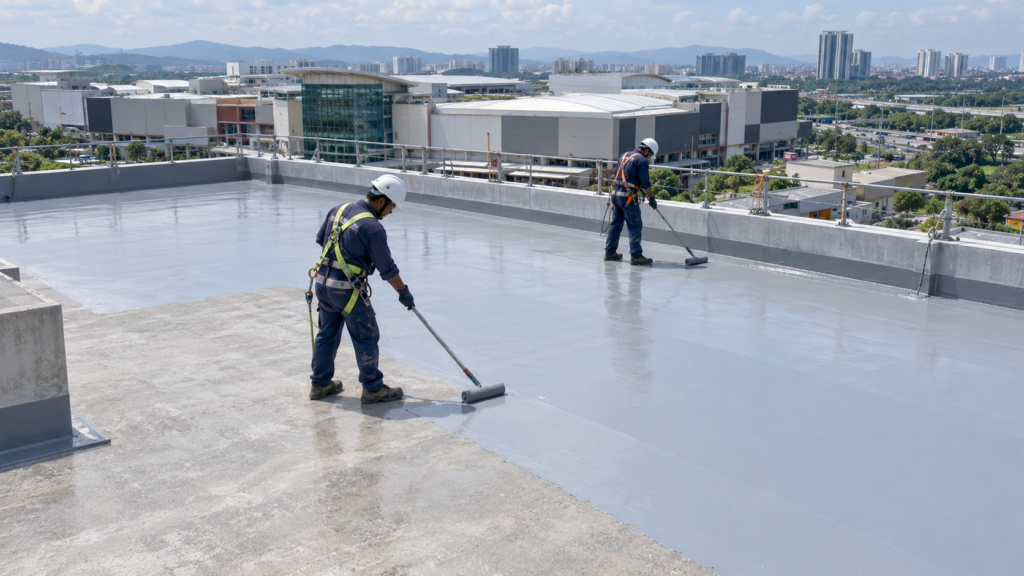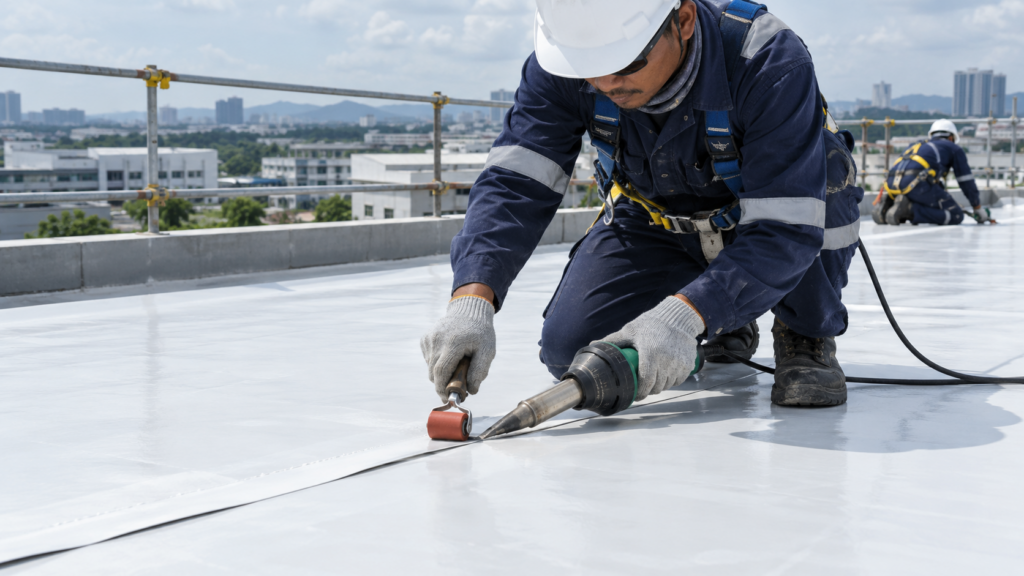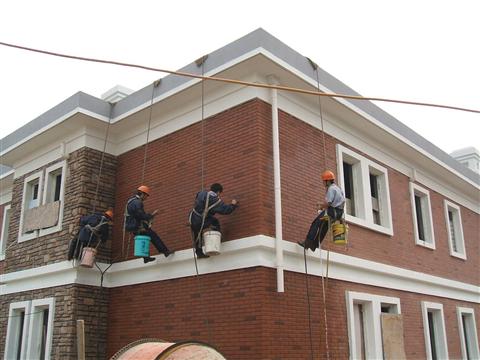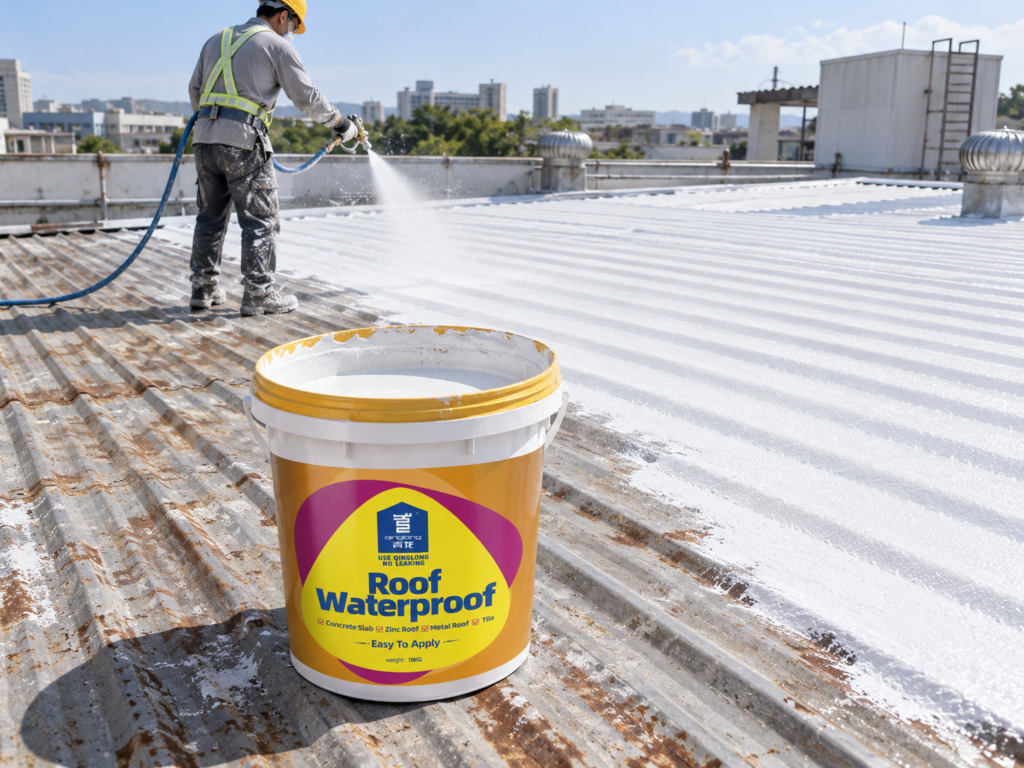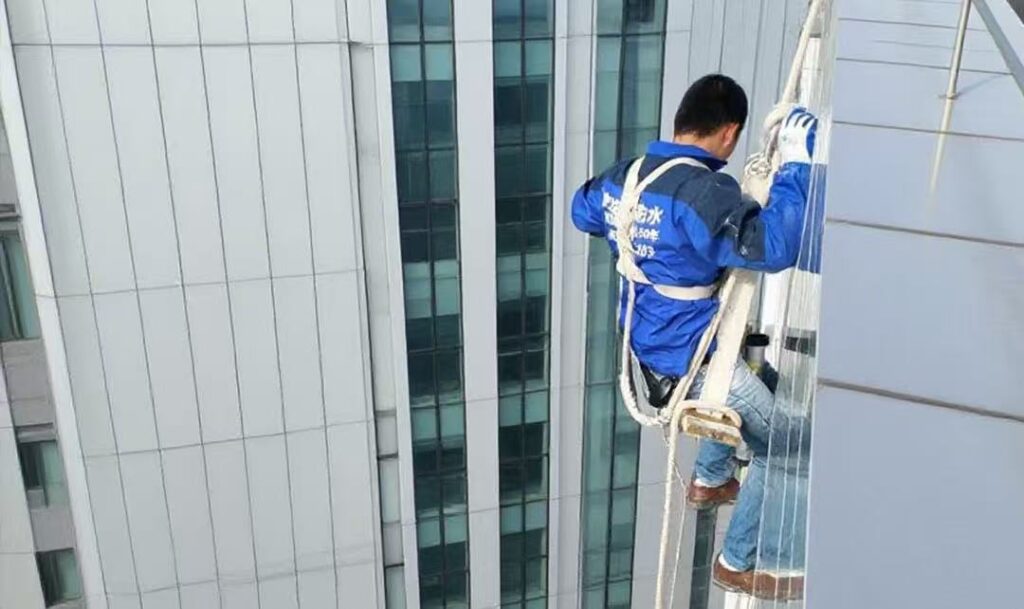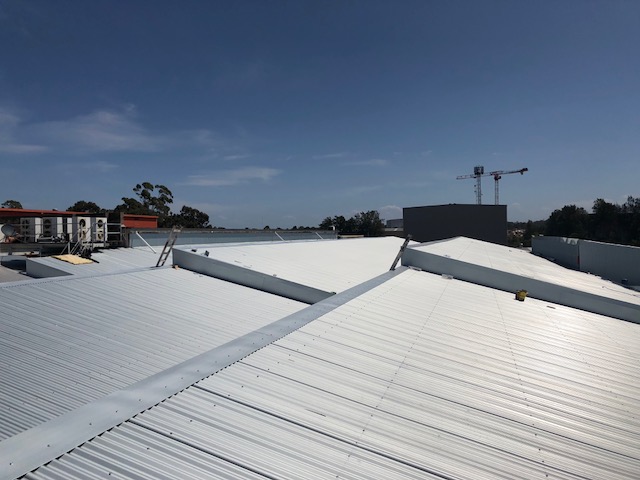
A tile roof leak is often treated as a surface problem: find the cracked tile, apply sealant, and wait for the next rain. Sometimes that works. More often, especially on older tiled roofs, the visible defect is only one part of the water path. Before engaging a Kuching tile roof waterproofing contractor, the first task is not choosing a coating. It is understanding where rainwater is entering, how it travels under the tiles, and which roof details are allowing the leak to reach the ceiling.
Start With the Leak Pattern, Not the Roof Surface
The ceiling stain gives useful information, but it does not prove that the entry point is directly above it. On a tiled roof, water can enter near a ridge, valley, side flashing, pipe penetration, cracked tile or loose tile overlap, then run along battens, underlay, timber members or slab surfaces before appearing indoors.
A contractor should first ask where the stain appears, when it appears and how quickly it dries. A leak that appears only during long rain may point to overflow, failed overlaps or water backing up at a valley. A leak that appears quickly during wind-driven rain may suggest exposed side laps, cracked ridge bedding or poor flashing detail. A damp patch that remains even after rain stops may indicate trapped moisture in ceiling materials, insulation or timber.
For a tiled roof, the first inspection should connect the indoor leak location with the roof geometry above it. The contractor should check ridges, valleys, flashings, penetrations and tile laps before recommending full roof coating. A cracked tile may be obvious, but water often enters through roof details rather than through the main tile field.
This early diagnosis matters because tile roof waterproofing is not always a single-product repair. Replacing broken tiles, rebedding ridge caps, sealing penetrations, correcting flashing and treating selected areas may be more appropriate than coating everything.
Check the Details That Handle the Most Water
On a tiled roof, the flat tile area is not always the weakest point. The details that collect, redirect or concentrate water often fail first. In Kuching, where frequent rain can expose small defects repeatedly, these details deserve careful inspection before any waterproofing proposal is accepted.
Important areas include:
1. Ridge caps and hip lines where mortar bedding, pointing or sealant may crack.
2. Valleys where high water volume, leaf blockage or poor tile cutting can push water under the tiles.
3. Wall abutments and side flashings where tiles meet parapet walls, higher walls or extensions.
4. Pipe penetrations, vents and antenna points where small openings are often sealed with ageing sealant.
5. Gutters and downpipes where overflow may wet the roof edge or backflow under tile courses.
6. Tile overlaps and side laps where tiles may have shifted, lifted or been installed with insufficient cover.
7. Skylights or roof windows, if present, because their perimeter flashing must be integrated with the tile profile.
These are not decorative details. They control water movement. A roof coating applied over tiles will not correct a valley that overflows, a flashing that terminates poorly, or a ridge cap that has separated from its bedding. If these details are not inspected first, the repair may look complete while the water entry path remains open.
Decide Whether the Tiles Are the Problem or the Under-Roof Layer Is
A tiled roof is a layered system. The roof tiles shed most rainwater, but they are not usually designed to behave like a continuous waterproof membrane. Beneath the tiles, there may be sarking, underlay, battens, timber support or a concrete roof structure, depending on the building.
This is why a leak does not always mean every tile has failed. The contractor should inspect whether the roof tiles are cracked, displaced, porous, poorly overlapped or contaminated with moss and dirt. At the same time, the inspection should consider whether the under-roof layer has been damaged or whether water is bypassing it at joints and penetrations.
If many tiles are loose, badly weathered or no longer locking properly, waterproofing by surface coating alone may have limited value. If the tiles are generally sound but water enters at specific junctions, targeted repair may be more reasonable. If the underlay has deteriorated extensively, the roof may require more intrusive work than external sealing.
This distinction affects cost and durability. A homeowner may ask for “roof waterproofing,” but the real need could be tile replacement, flashing correction, ridge repair, gutter improvement or a coating system applied only after defects are corrected.
Inspect Adhesion and Surface Condition Before Considering Coating
Some tiled roofs are coated to reduce water absorption, improve appearance or protect the surface. However, a coating can only perform properly if the existing surface can accept it. A dirty, powdery, moss-covered or previously coated tile roof may not provide reliable adhesion.
Before recommending a roof coating, a contractor should check whether the tiles are stable, cleanable and dry enough for application. Old coatings should be assessed for peeling, chalking or poor bonding. Areas with algae, dirt, oil residue or trapped moisture require preparation before coating is considered.
The roof pitch also matters. Steeper tiled roofs shed water quickly, but they are harder and riskier to access. Low-pitch tiled roofs may hold water longer at overlaps and valleys, which can make detailing more important. If water regularly ponds behind debris or at blocked drainage points, applying a coating without improving water flow may only hide the real issue.
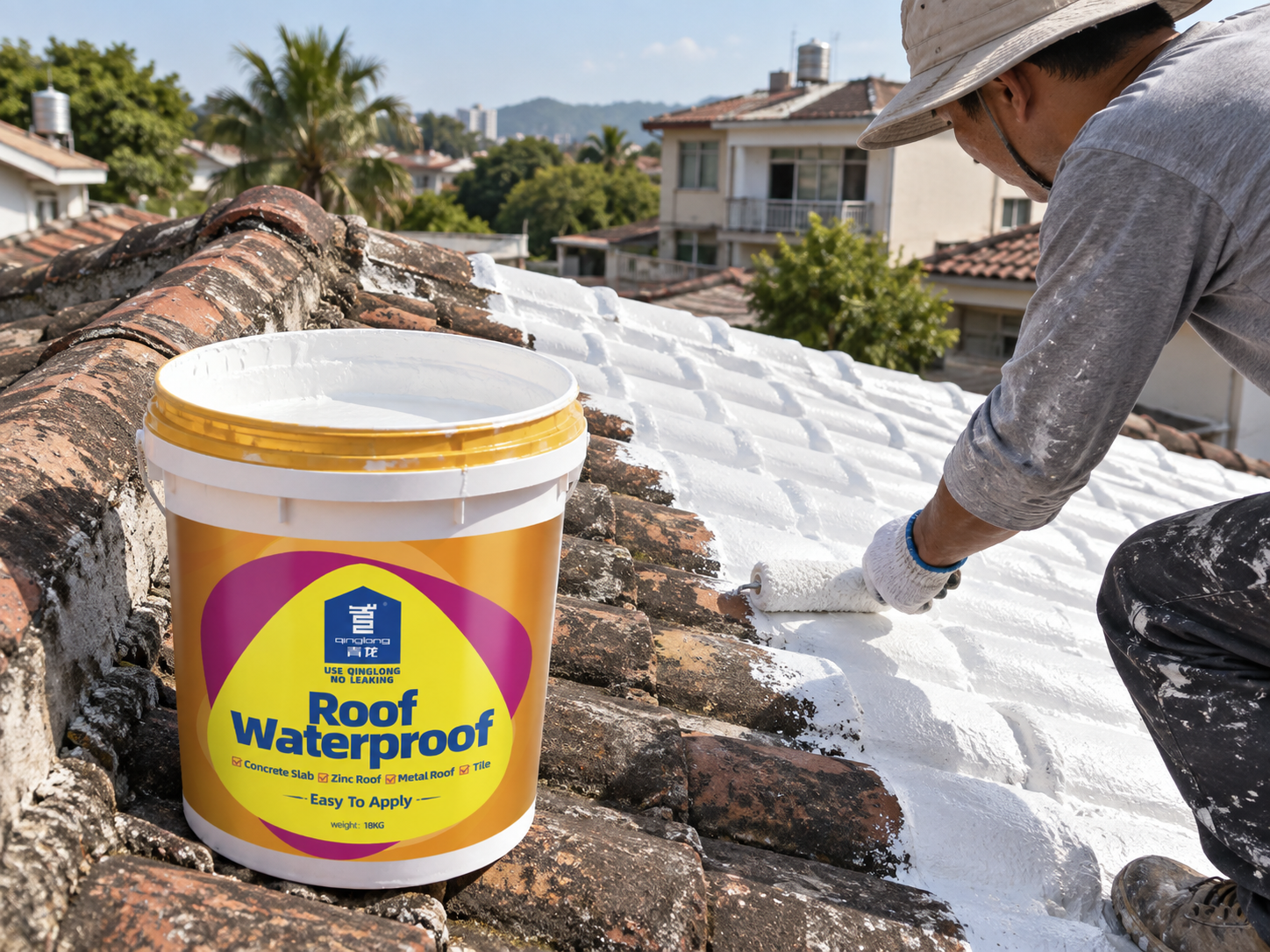
For suitable tiled roof areas, QingLong Waterproofing may recommend relevant materials such as QL-Roofing Waterproof Coating or compatible sealants as part of a wider repair system. The product choice should still depend on tile condition, exposure, adhesion, movement at details and the final finish expected by the owner.
Do Not Ignore Gutters, Downpipes and Roof Edge Overflow
Many tiled roof leaks are blamed on roof tiles when the actual trigger is poor drainage. Gutters filled with leaves, undersized downpipes, blocked outlets or sagging gutter sections can cause rainwater to spill back toward the roof edge, fascia or wall.
This is especially important where the leak appears near eaves, upper-floor ceilings, bedroom walls or exterior wall junctions. If water is overflowing at the gutter line, repairing tiles higher up the roof may not solve the dampness. The contractor should inspect whether rainwater can leave the roof fast enough during heavy downpour.
Roof edge details can also be weak where extensions have been added. A newer roof section may discharge water onto an older tiled roof, or two roof planes may meet without a properly formed valley or flashing. These site-specific junctions often need more attention than the main tiled area.
A practical inspection should therefore include both waterproofing defects and drainage behaviour. If drainage is the cause, the repair scope may involve cleaning, realigning or upgrading gutters and outlets before sealing or coating work begins.
 What a Good Contractor Should Explain Before Quoting
A useful quotation should not only state the price and product. It should explain what was found and why the proposed repair matches the roof condition. For a tiled roof in Kuching, the contractor should be able to separate immediate leak control from longer-term roof waterproofing.
Before approving the work, ask the contractor to clarify:
1. Where is the likely water entry point?
The answer should refer to roof details, not only the ceiling stain.
2. Are the tiles structurally sound and properly seated?
Loose or broken tiles should be addressed before surface coating.
3. Are ridges, valleys, flashings and penetrations included in the repair scope?
These areas often determine whether the repair lasts.
4. Is coating necessary, or is targeted repair enough?
Full coating may be useful in some cases, but it should not replace proper detailing.
5. What surface preparation is required?
Cleaning, drying, removal of loose coating and treatment of cracks affect adhesion.
6. What weather window is needed for the work?
In a high-rain area, curing and drying time should be planned realistically.
The best answer is not always the biggest repair. It is the repair that addresses the actual water path.
Conclusion
For a tiled roof, the right starting point is not “Which coating is best?” but “How is water entering and where is the roof detail failing?” Cracked tiles are easy to see, but ridge caps, valleys, flashings, penetrations and drainage often decide whether the leak returns. A Kuching tile roof waterproofing contractor should inspect these areas first, then recommend a repair scope that fits the roof condition rather than applying a general solution.
If you need help assessing a tiled roof leak or deciding whether coating, sealing or detailed repair is more suitable, you can contact QingLong Waterproofing for a site-condition discussion.