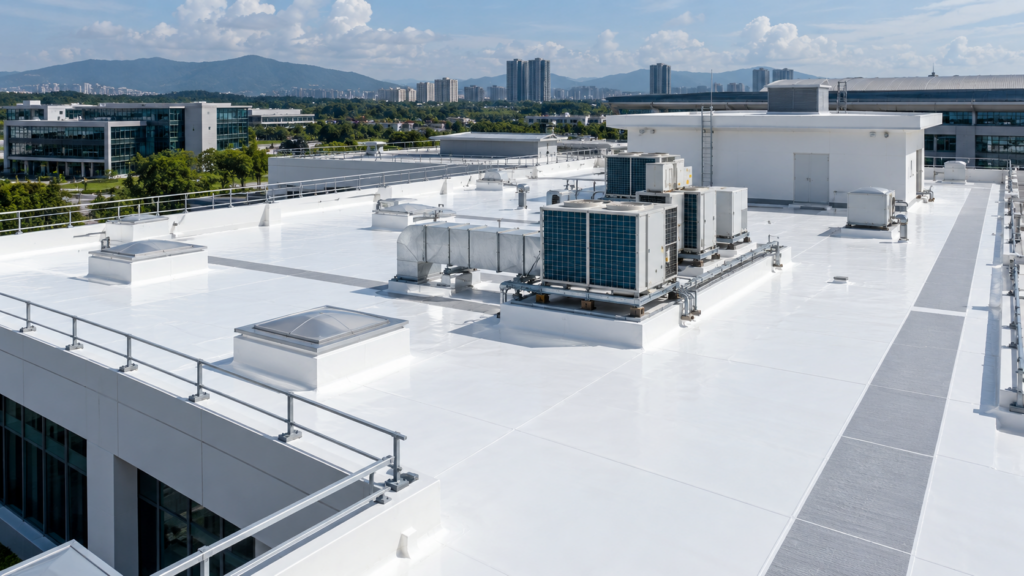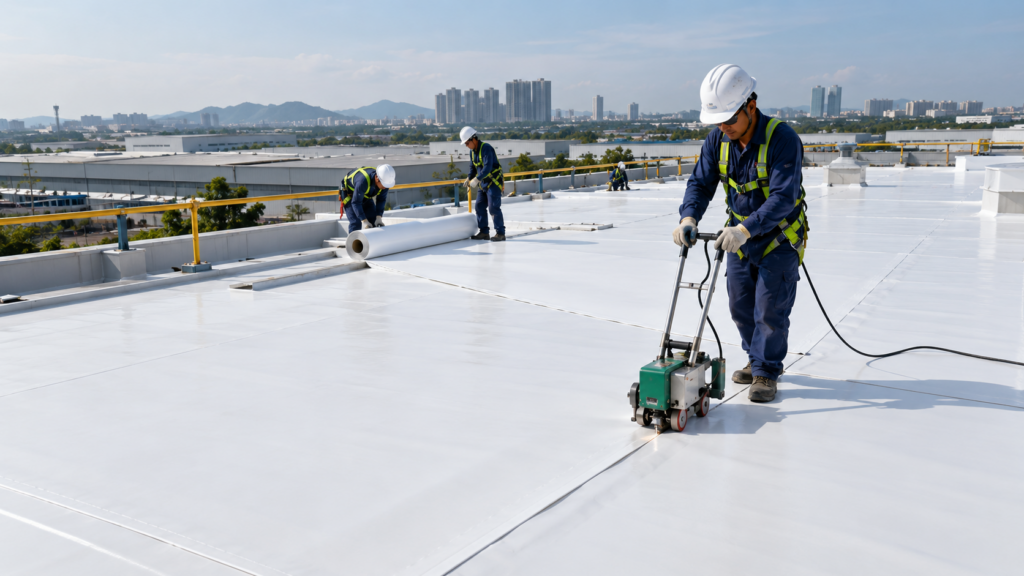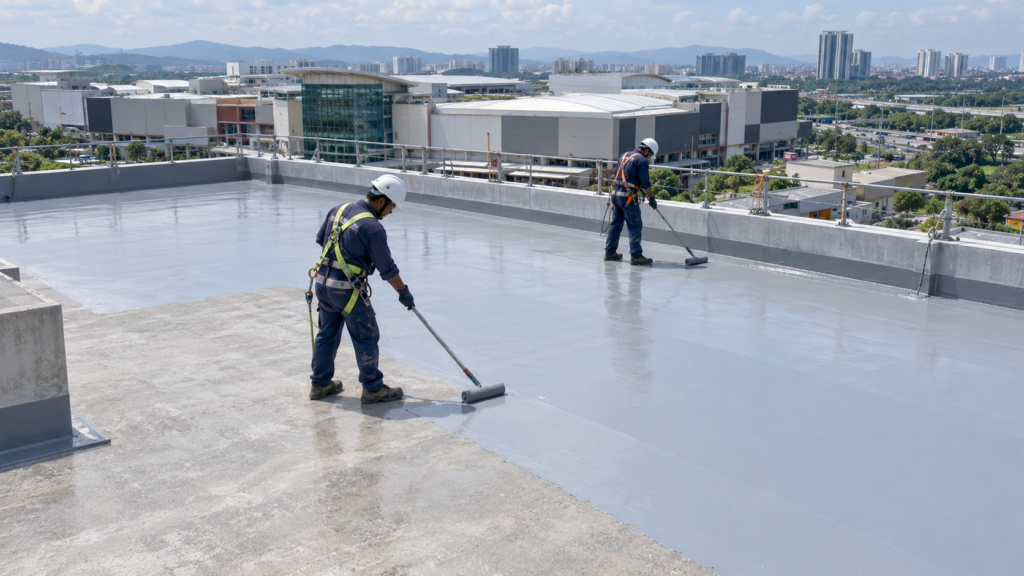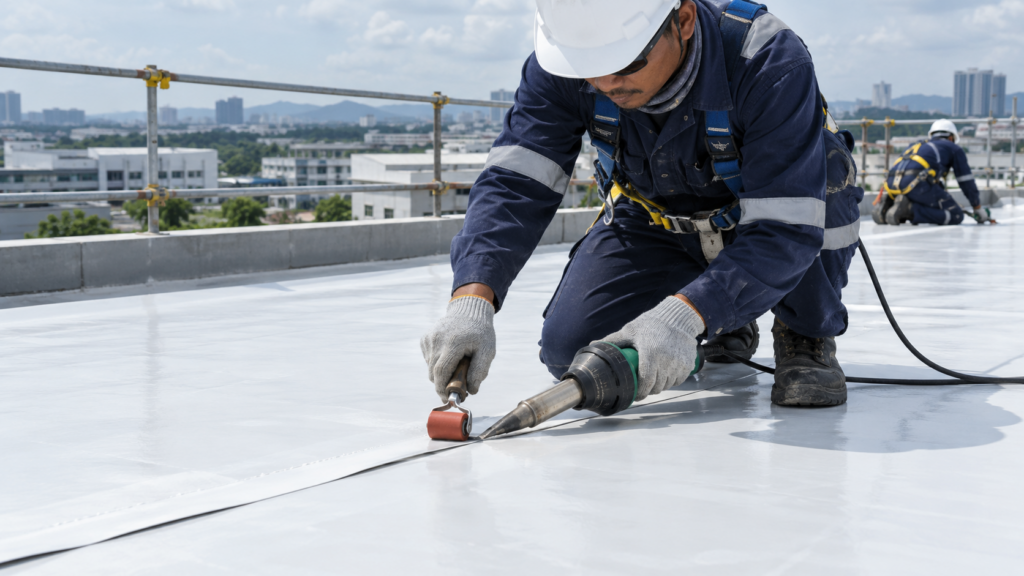
A commercial roof leak in Subang is rarely just a wet ceiling problem. For a shoplot, warehouse, office block or light industrial building, the leak may affect tenants, stock, electrical systems, production areas or customer-facing spaces. That is why a free inspection should not be treated as a quick walk on the roof followed by a quotation. Before choosing a commercial roof waterproofing system in Subang, the inspection should help identify where water may be entering, why the existing roof is vulnerable, and whether the proposed repair scope matches the actual roof condition.
A Useful Inspection Starts With the Roof Type, Not the Leak Stain
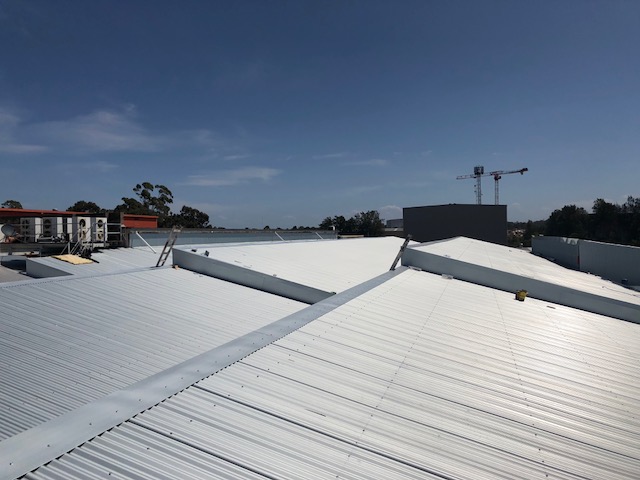
The first thing a proper roof inspection should establish is the type of roof being assessed. A metal deck roof, reinforced concrete flat roof, RC gutter, rooftop slab, plant room roof and tiled roof deck all fail in different ways.
For a commercial roof, this matters because the waterproofing method cannot be selected only from the complaint. A brown ceiling stain below a warehouse roof may come from a loose metal roof fastener, a rusted sheet lap, a damaged gutter, condensation around roof insulation, or water tracking from a higher junction. On an RC flat roof, the same visible symptom may point to ponding water, cracked screed, failed membrane termination, pipe penetration leakage or movement at a construction joint.
A free inspection should therefore record the roof construction and the likely water path. If the inspection jumps straight from “there is a leak” to “recoat the whole roof”, the building owner still does not know whether the quotation is solving the right problem.
For commercial roof waterproofing in Subang, a free inspection should check more than the visible leak point. It should assess the roof type, drainage condition, joints, penetrations, previous waterproofing, substrate condition and areas where water may travel before appearing indoors. This helps decide whether local repair, system renewal or further investigation is needed.
Drainage and Ponding Often Decide the Repair Scope
Many commercial roof problems are linked to how water leaves the roof. This is especially important for flat concrete roofs, box gutters, internal gutters and low-slope metal roofing.
During an inspection, the roof should be checked for ponding marks, blocked outlets, undersized drainage points, sagging gutter lines, debris build-up and water staining around overflow paths. On a roof that holds water after rain, a simple surface coating may not perform as expected if the product is not suitable for prolonged standing water or if the substrate remains damp beneath the coating.
The inspector should also look at whether water is being directed towards vulnerable details. For example, water ponding near an upstand, pipe penetration or membrane termination increases the chance of leakage at that detail. On a commercial building, roof equipment such as air-conditioning units, duct supports and service platforms can also interrupt water flow and create hidden ponding zones.
This is where the inspection becomes decision-useful. If drainage is the main weakness, the repair scope may need to include outlet clearing, falls correction, gutter refurbishment or detail upgrading before waterproofing is applied. Waterproofing material alone cannot compensate for a roof that continuously traps water in the wrong places.
Penetrations, Joints and Terminations Need Close Attention
Commercial roofs usually have more interruptions than residential roofs. Air-conditioning pipes, cable trays, exhaust vents, skylights, signage frames, service penetrations, access hatches and roof-mounted equipment all create potential entry points.
A meaningful free inspection should check how these details are sealed and whether the waterproofing system is properly terminated around them. Failed sealant, cracked mortar fillets, exposed screw heads, loose flashing, open laps and poorly dressed membrane edges are common weak points. These are not always obvious from ground level or from a quick look at the main roof surface.
Expansion joints and construction joints also deserve attention. If there is movement at the joint, applying a rigid coating across it may only delay the problem. The inspection should identify whether the joint needs flexible treatment, reinforcement, compatible sealant, membrane detailing or a separate joint waterproofing approach.
This detail-level assessment is especially important for occupied commercial premises. A small untreated penetration can continue leaking even after a large area has been recoated, leading the owner to think the waterproofing system failed when the actual issue was incomplete detailing.
Existing Coatings and Substrate Condition Affect Adhesion
Before any commercial roof waterproofing work is proposed, the inspector should check what is already on the roof. Many commercial buildings have gone through previous repair attempts: acrylic coatings, bituminous patches, PU coatings, cementitious slurry, sealant repairs, torch-on membrane, metal patch plates or local crack filling.
The question is not simply whether there is an old coating. The important issue is whether the existing layer is still bonded, compatible and dry enough to receive another waterproofing system. If the old coating is peeling, chalking, blistering, softening, contaminated with oil or trapping moisture, applying a new layer over it may create early adhesion failure.
For concrete roofs, the inspection should note hollow screed, cracks, surface powdering, damp patches and weak repairs. For metal roofs, it should check corrosion, loose fasteners, sheet laps, damaged ribs, previous sealant buildup and areas where foot traffic has deformed the sheet.
A responsible inspection should not promise that every roof can be recoated directly. Sometimes surface preparation is enough. Sometimes local removal is needed. In worse cases, the existing waterproofing layer or screed may need to be removed before a reliable system can be installed.
The Inspection Should Connect Indoor Evidence With Roof Evidence
A roof inspection should not only happen outside. For commercial buildings, the underside evidence often helps confirm whether the suspected roof area makes sense.
Inside the building, the inspector should check the position of ceiling stains, damp patches, mould growth, rust marks, damaged ceiling boards, electrical risk areas and whether leakage happens only during wind-driven rain or after prolonged rainfall. In some cases, water may travel along steel members, slab interfaces, ceiling voids or service penetrations before becoming visible far from the entry point.
This is important in Subang commercial properties where a single roof may cover multiple tenancy areas, extensions, back-of-house spaces or mezzanine zones. The complaint may come from one tenant, but the water entry point may be above another part of the building.
A useful inspection should therefore compare the indoor symptom with the roof layout. If the two do not match, the report or recommendation should say so. That prevents the owner from approving repair at the wrong roof zone simply because the stain appears below it.
What the Free Inspection Should Produce Before You Approve Work
The value of a free inspection is not only the site visit. It is the clarity it gives before money is spent. After the inspection, a building owner or property manager should understand the likely leakage source, the vulnerable roof details, the condition of the existing surface and the recommended repair scope.
A practical inspection outcome should include:
• The roof area inspected and roof type identified
• Key defects observed, preferably with photos
• Whether drainage, penetrations, joints or surface failure are involved
• Whether previous waterproofing can be retained or needs removal
• Whether local repair may be enough or wider waterproofing is recommended
• Any limitations, such as inaccessible areas or need for further testing
If the inspection only produces a lump-sum quotation without explaining these points, the decision becomes price-based rather than condition-based. That is risky for commercial roofs because the cheapest repair may ignore the detail that is actually allowing water in.
For larger or complicated buildings, a free inspection may not replace a full diagnostic survey, water testing, moisture assessment or consultant-led investigation. The inspection should be honest about that limitation. A preliminary visit can narrow the issue, but some leaks require deeper investigation before final specification.
Choosing the Waterproofing Approach After Inspection
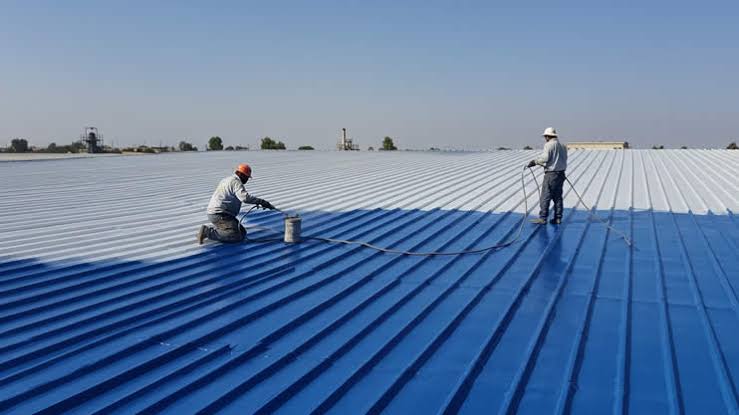
The best waterproofing approach depends on what the inspection proves. A metal roof with loose fasteners and lap leakage may need fastener treatment, lap sealing, rust preparation and a compatible roof coating. A concrete flat roof with cracked screed and ponding may need substrate repair, drainage correction and a waterproofing system suitable for the exposure. A roof with repeated leakage at penetrations may require detail reconstruction rather than broad surface coating.
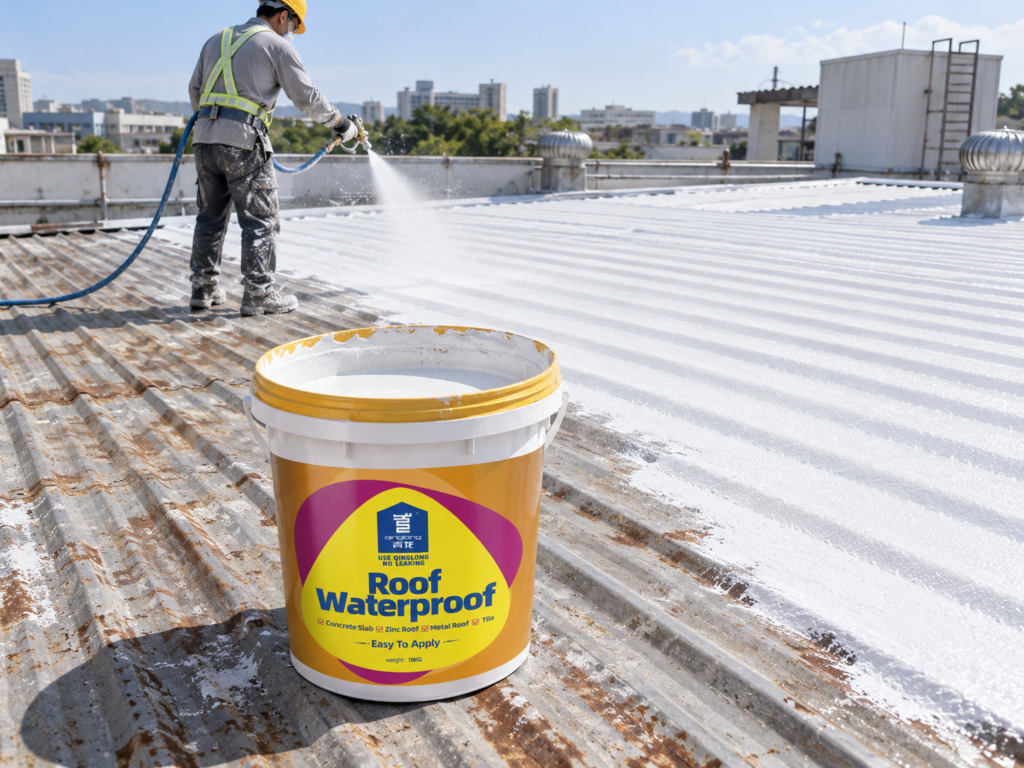
QingLong Waterproofing supplies and applies waterproofing products for residential, commercial and industrial projects, including roof waterproofing systems, sealants, cement-based waterproofing materials and coating solutions. The correct recommendation should still be based on roof condition, substrate preparation, exposure, drainage and the intended service environment.
For commercial roof waterproofing in Subang, the inspection should lead to a repair scope that matches the building’s risk. A shoplot with minor local leakage does not need the same approach as a warehouse roof affecting operations or an office building with repeated tenant complaints.
Conclusion
A free inspection is useful only if it reduces uncertainty. For a commercial roof, that means checking the roof type, drainage, penetrations, joints, previous waterproofing and indoor evidence before recommending a repair. The aim is not to find a product as quickly as possible, but to understand whether the roof needs local repair, detail correction, substrate preparation or a wider waterproofing system.
If your building requires commercial roof waterproofing in Subang, you can contact QingLong Waterproofing to discuss the roof condition and request a suitable recommendation based on the site requirements.